Home · Sights · Scuola Grande di San Rocco
What you are looking atI
Scuola Grande di San Rocco
San Polo
- 1The Sala TerrenaThe ground-floor hall, its walls painted with the life of the Virgin, from the Annunciation to the Assumption.
- 2The staircaseA monumental stair under a dome, leading from the lower hall to the upper.
- 3The Sala SuperioreThe great upper hall: the Old Testament on the ceiling, the life of Christ on the walls.
- 4The Sala dell'AlbergoThe board room, dominated by Tintoretto's enormous Crucifixion.
- 5The Pianta carvingsFrancesco Pianta's wooden figures of 1657 and 1658, running round the upper hall.
- 6The TreasuryThe confraternity's silver and liturgical objects, kept in the building.
The sight in fullII
Reading the place
Why it matters
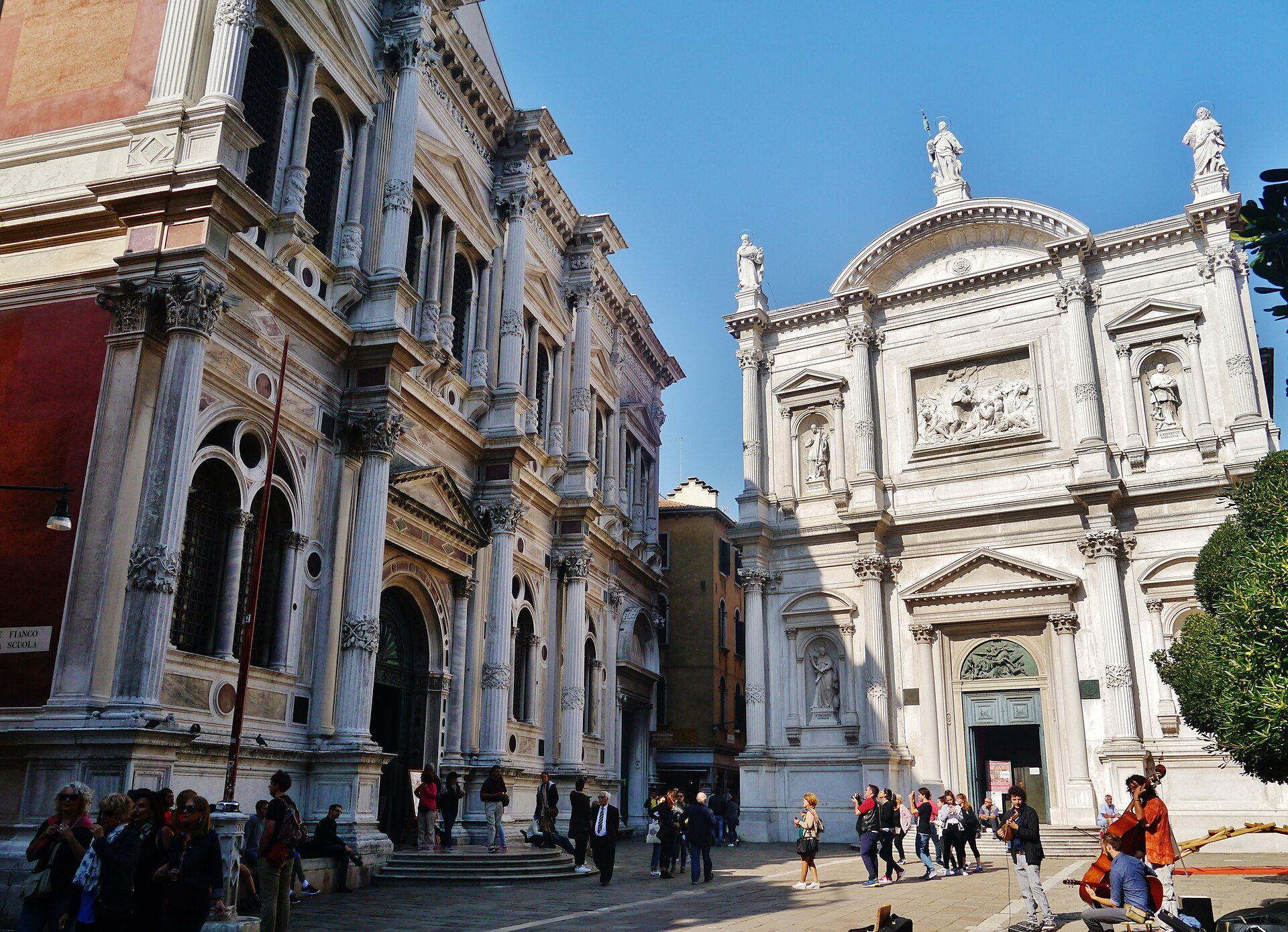
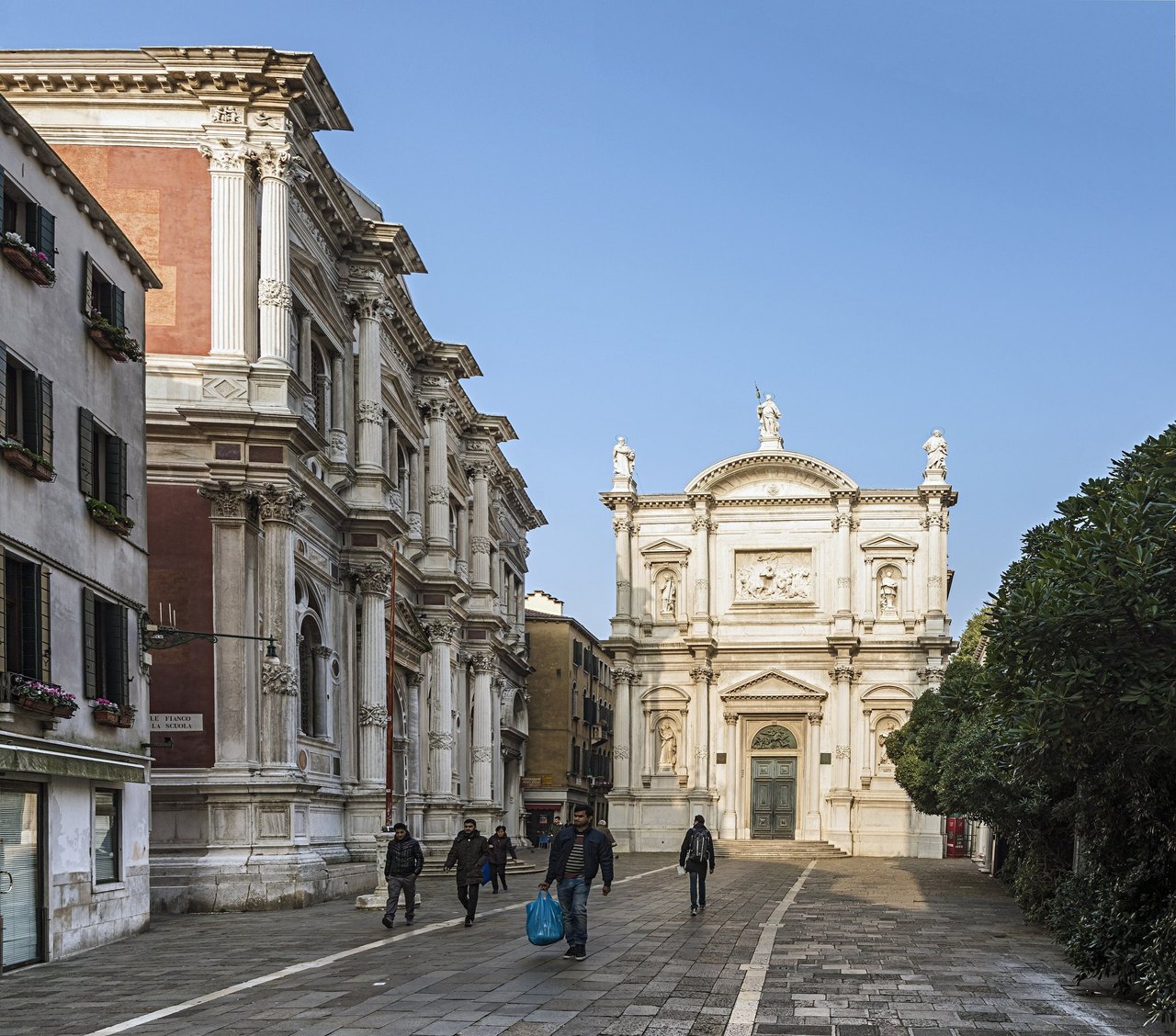
The Scuola Grande di San Rocco is the seat of a lay confraternity founded in 1478 and named after Saint Roch, a saint Venetians trusted to protect them from the plague. Its members were wealthy citizens, and their brotherhood grew into the richest of the scuole of Venice, the charitable confraternities of the city.
What makes it one of the great sights of the city is Tintoretto. Between 1564 and 1587 he and his workshop, his son Domenico among them, painted every picture in the building, more than sixty canvases, and they are still in the rooms they were painted for, in a building that has hardly changed since it was finished. It is the only one of the historic Scuole Grandi to have survived the fall of the Republic, and the confraternity is still active, still doing charitable work and still looking after its paintings.
Building a house for a saint
The confraternity acquired the relics of Saint Roch in 1485, and his popularity as a protector against plague made it rich quickly. It chose a site beside the church of San Rocco, which holds the relics, and in January 1515 entrusted the design of its new headquarters to Pietro Bon. Sante Lombardo took over in 1524, Antonio Scarpagnino three years later, and after Scarpagnino's death in 1549 Giangiacomo dei Grigi finished the building in September 1560.
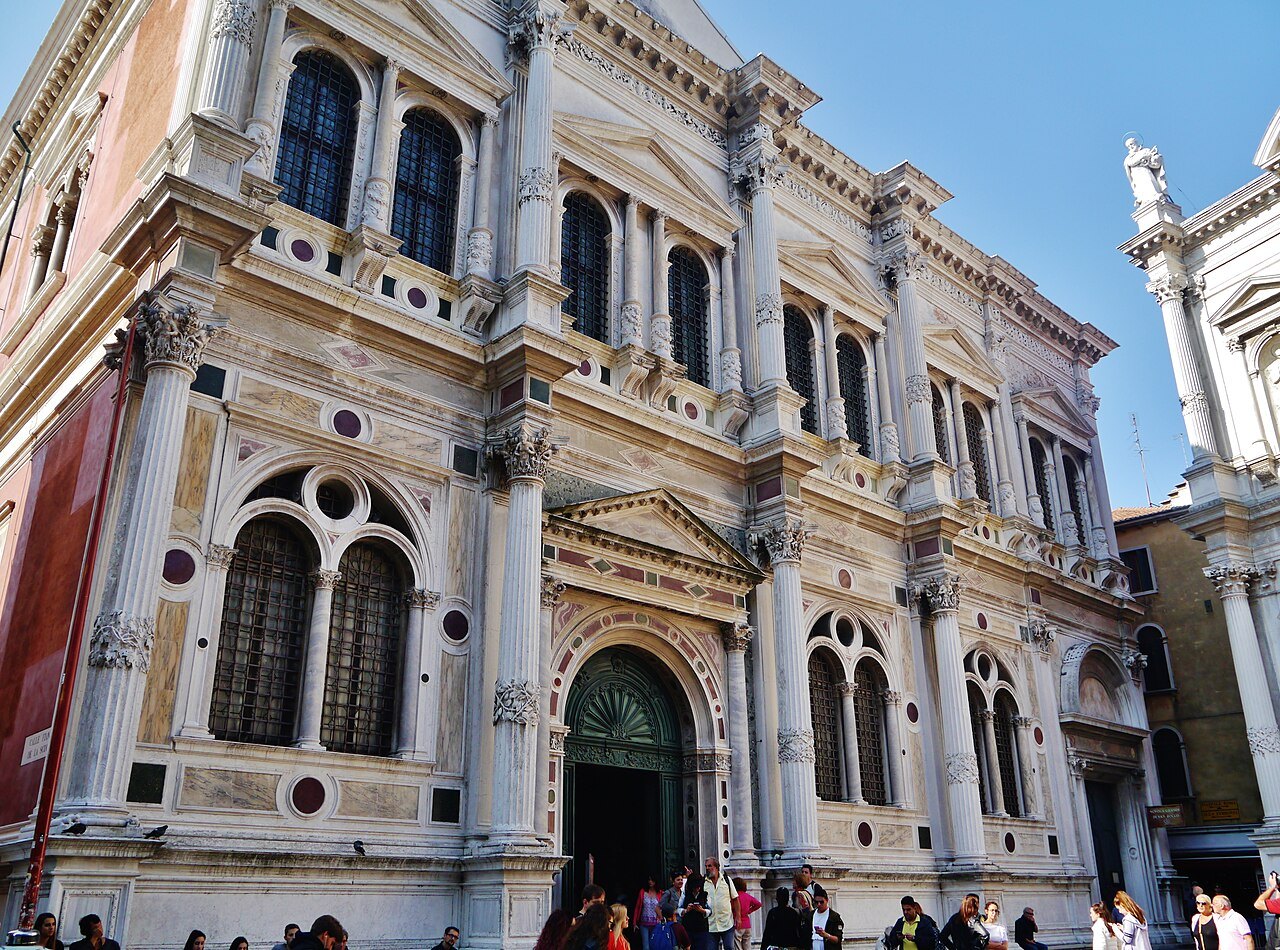
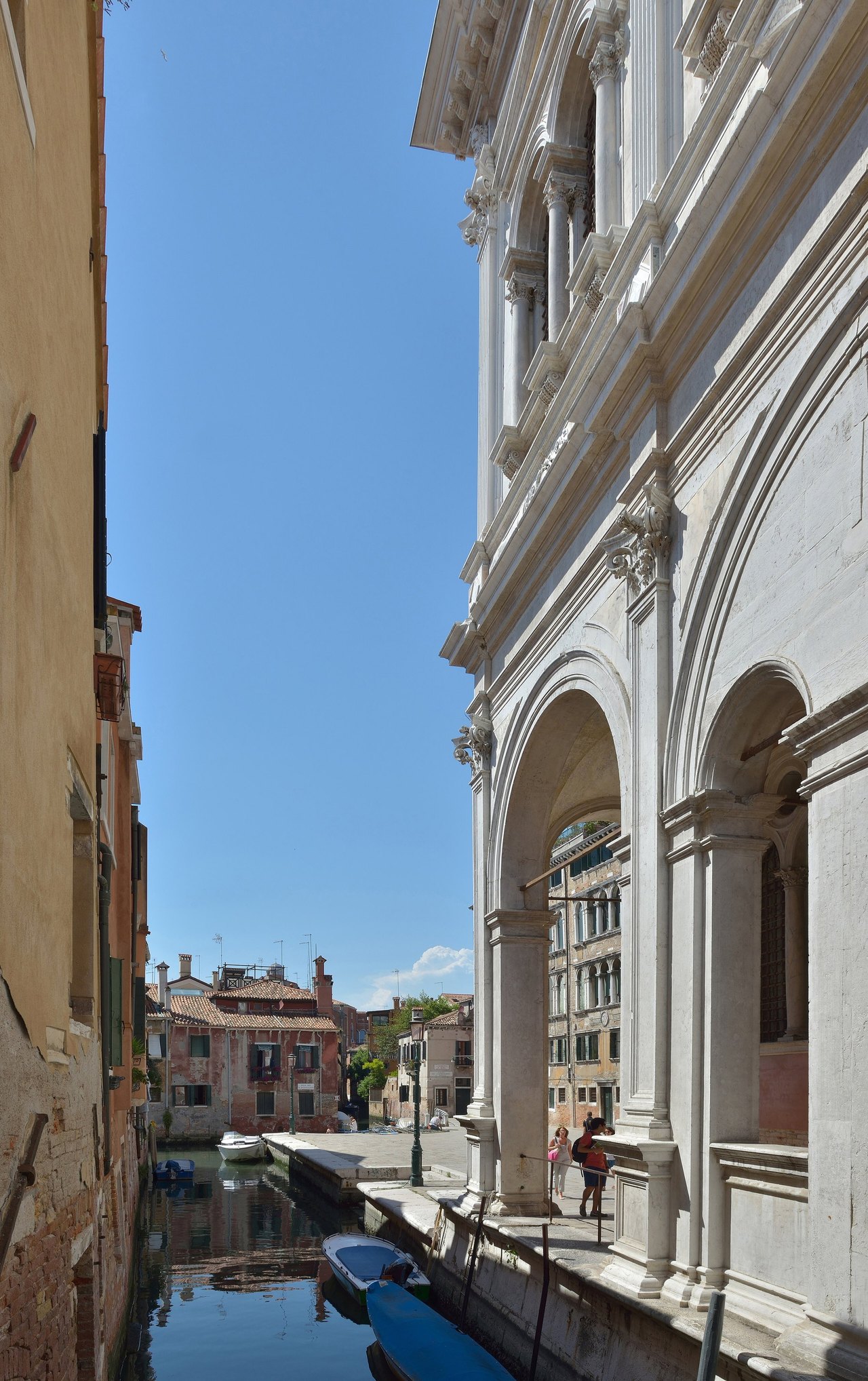
The plan follows the other scuole of Venice: two great halls, one on the ground floor and one above, joined by a grand staircase. The ground-floor hall, the Sala Terrena, has a nave and two aisles and opens onto the campo. The upper hall, the Sala Superiore, was where the members met, with a wooden altar; beyond it lies the Sala dell'Albergo, where the governing boards of the confraternity sat.
What you actually see
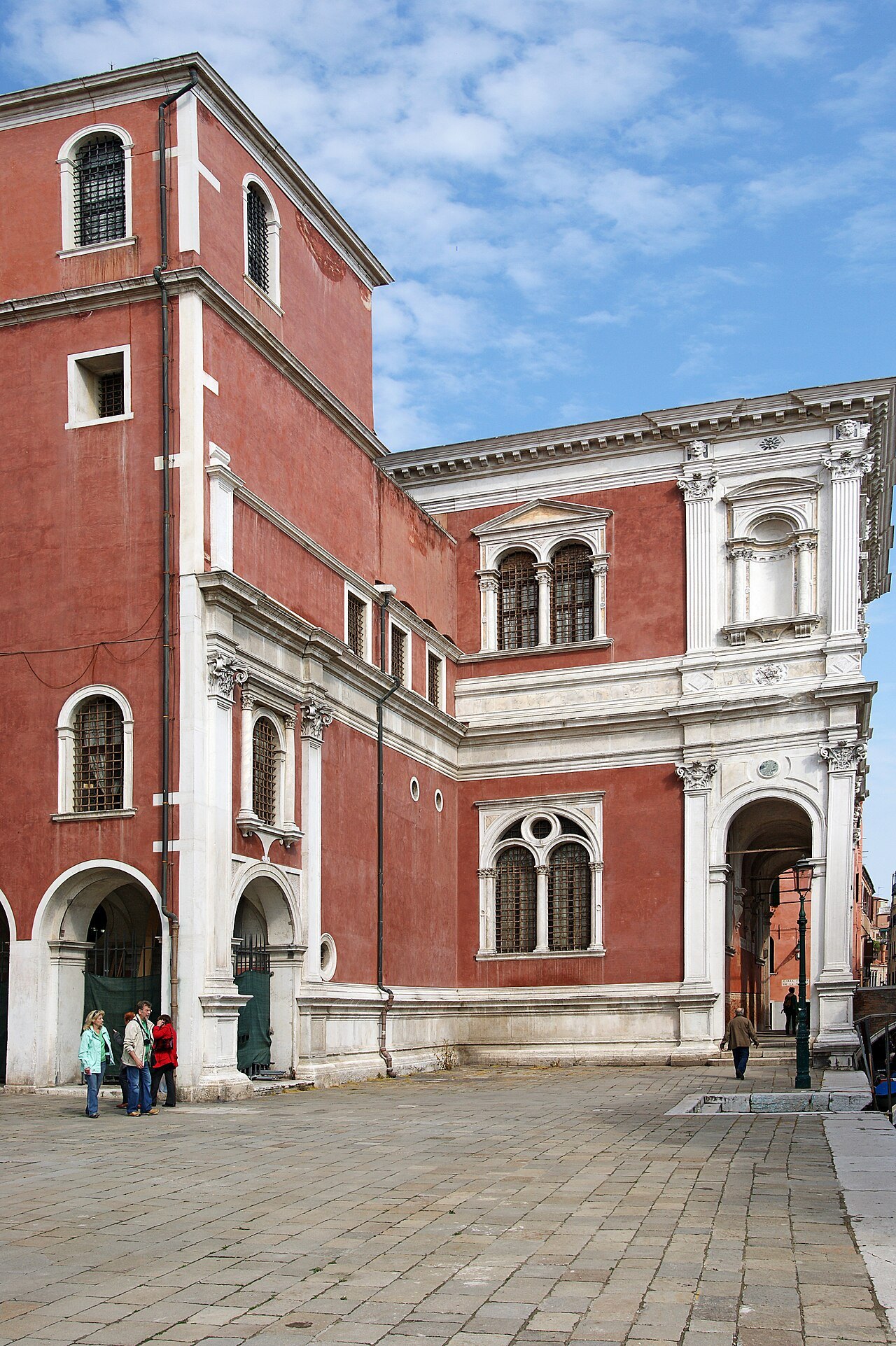
Start downstairs. The paintings of the Sala Terrena honor the Virgin and tell her life in large canvases: the Annunciation, the Adoration of the Magi, the Flight into Egypt, the Slaughter of the Innocents, the Presentation in the Temple and the Assumption, with two solitary saints, Mary Magdalene and Mary of Egypt, reading in the wilderness near the end.
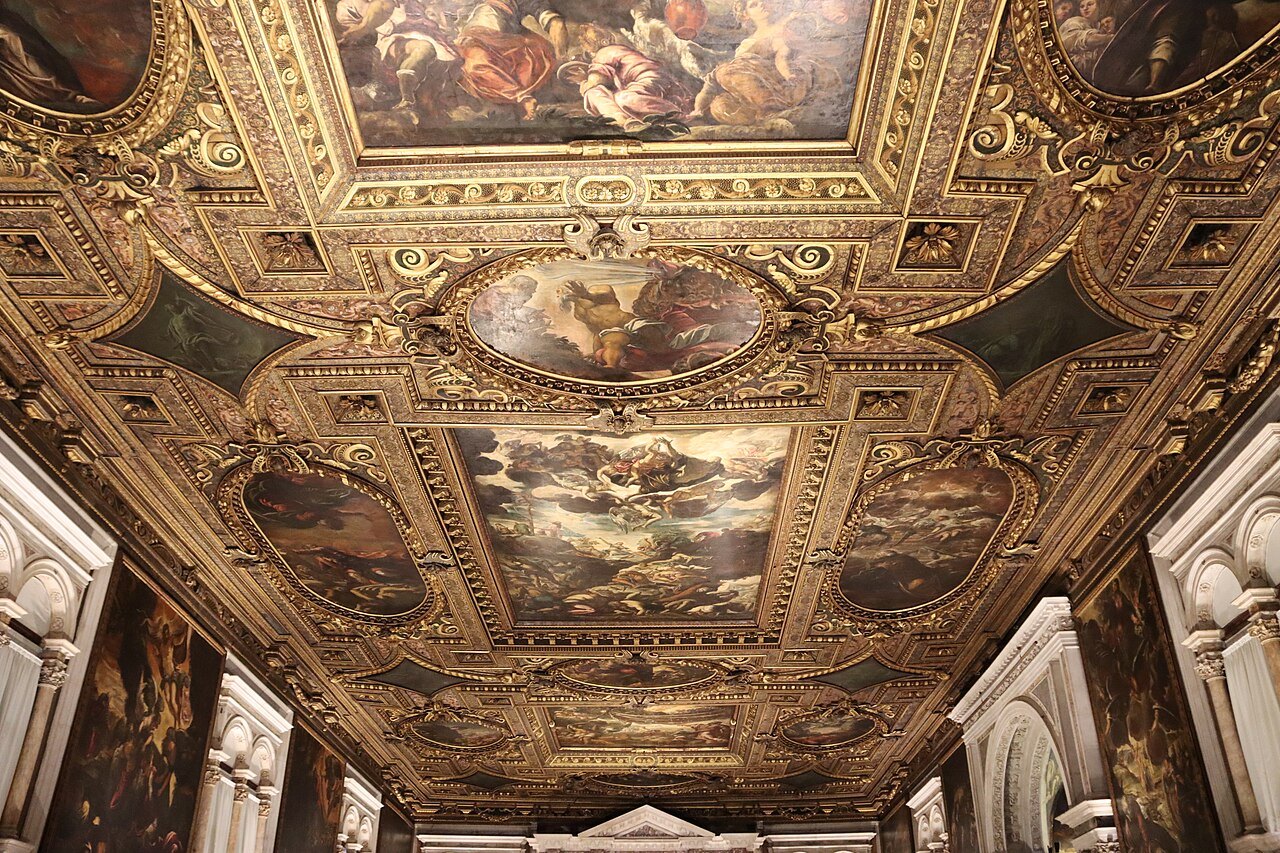
Climb the staircase to the Sala Superiore. Here the ceiling carries scenes from the Old Testament, Adam and Eve, Jacob's Ladder, Moses striking water from the rock, the fall of manna, the bronze serpent, and the walls the life of Christ, from the Adoration of the Shepherds and the Baptism to the Last Supper, the Agony in the Garden, the Resurrection and the Ascension. Read together, they tell the whole biblical story from the Fall to the Redemption, the Old Testament overhead answered by the New around you.
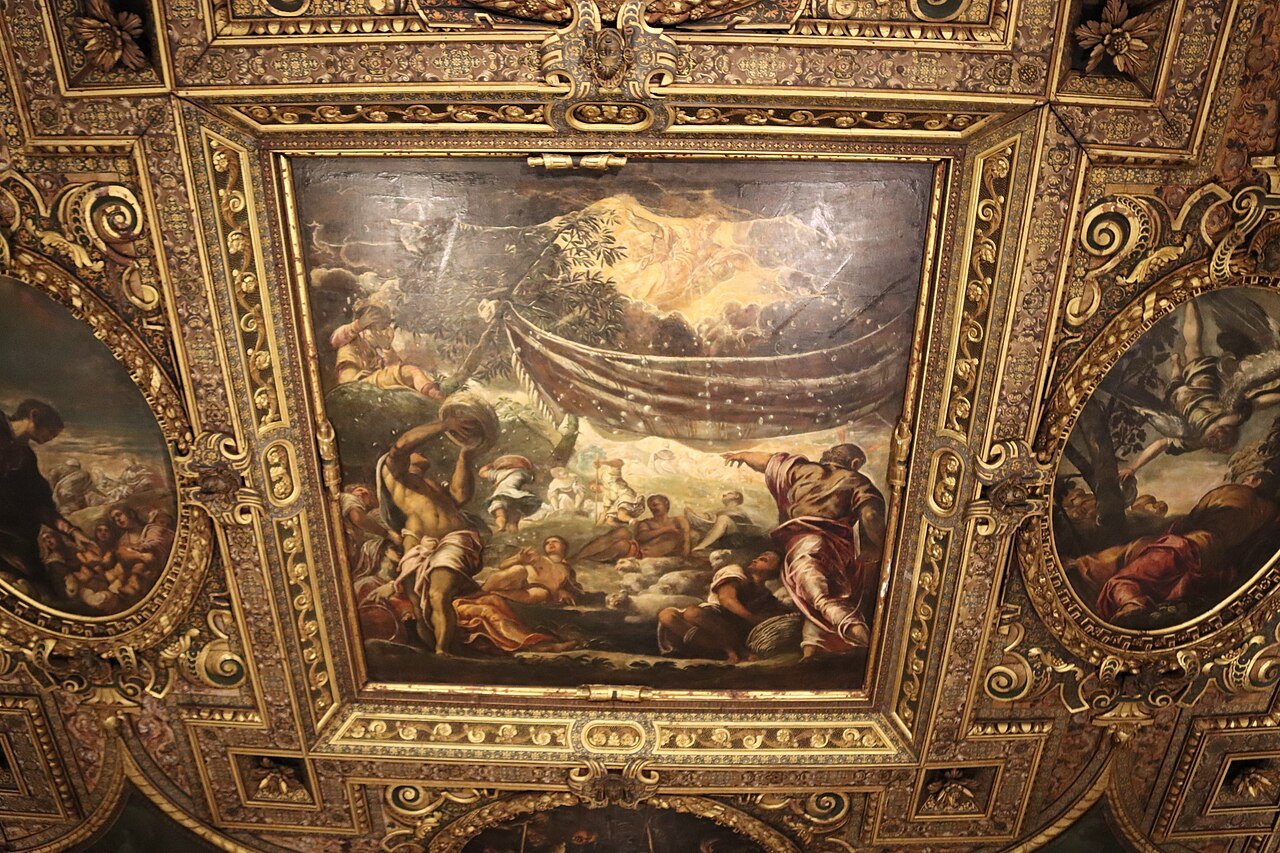
Find the quieter panels too: the Passover and the pillar of fire, Elijah fed by the angels, Elisha sharing out bread and the vision of Ezekiel on the ceiling, and on the walls the Temptation of Christ, the healing of the paralytic, the multiplication of the loaves and fishes and the raising of Lazarus.
Round the lower walls of the hall run carved wooden panels of allegorical figures by Francesco Pianta, made in 1657 and 1658, including a sculpture of Tintoretto with his brushes and a panel carved to look like a bookcase. The hall also holds works by Titian and by Palma il Giovane.
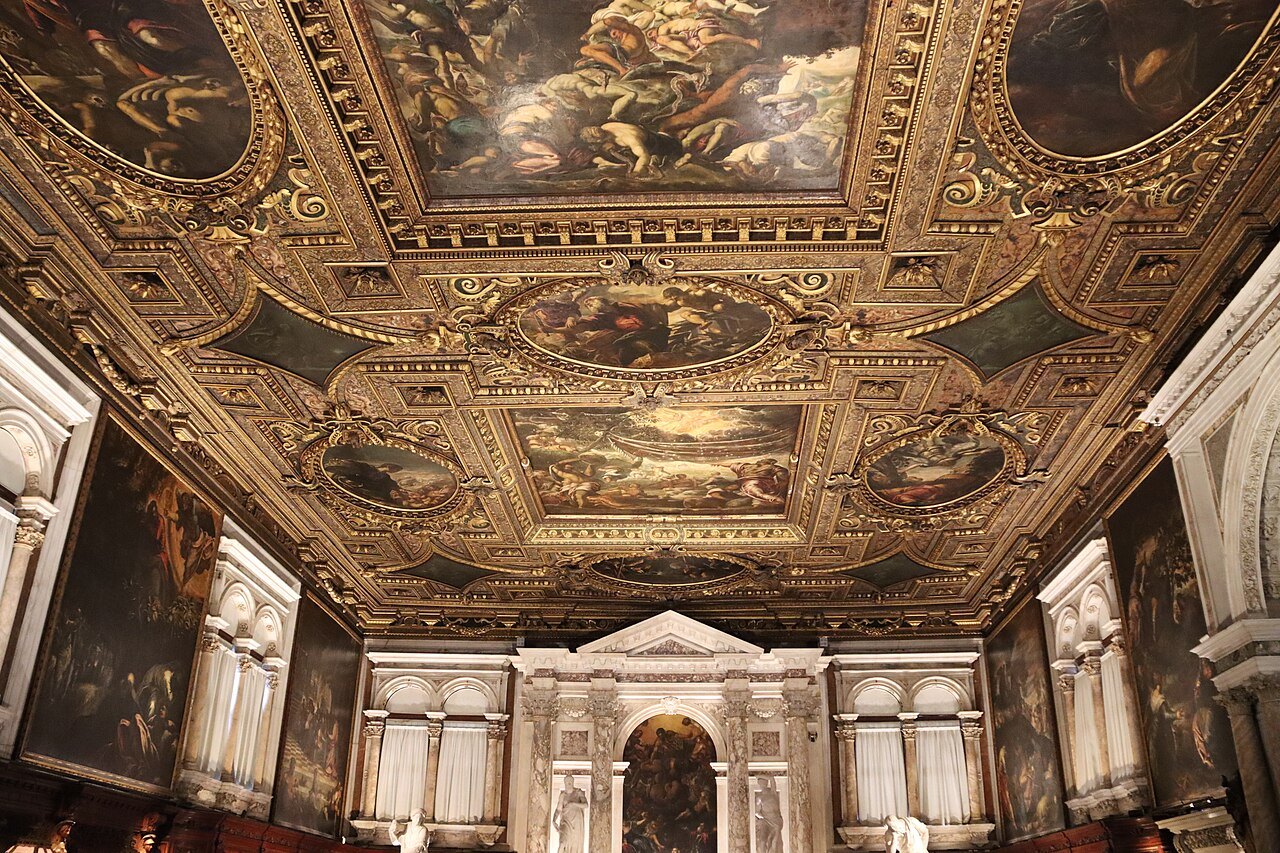
The Sala dell'Albergo is smaller and the most concentrated room in the building. Its ceiling shows the Apotheosis of Saint Roch among allegories of the other Scuole Grandi, the guilds of Saint John, Saint Mark, Saint Theodore, the Carità and the Misericordia, and one whole wall is filled by Tintoretto's Crucifixion, a vast crowded scene around the cross, faced by Christ before Pilate, the Crowning with Thorns and the Ascent to Calvary.
Music in the halls
In its heyday the Scuola was one of the city's important patrons of music. Giovanni Gabrieli played the organ here as well as at St Mark's and wrote music for the building, and an English traveler, Thomas Coryat, described how the music here impressed him in his Crudities of 1611. In 1958 Stravinsky conducted the first performance of his Threni here.
How to visit
The Scuola opens every day of the year except Christmas and New Year's Day, with the hours on its official site, where the confraternity notes that admission fees go to restoring its artworks and to its charitable work. You do not need to book in advance.
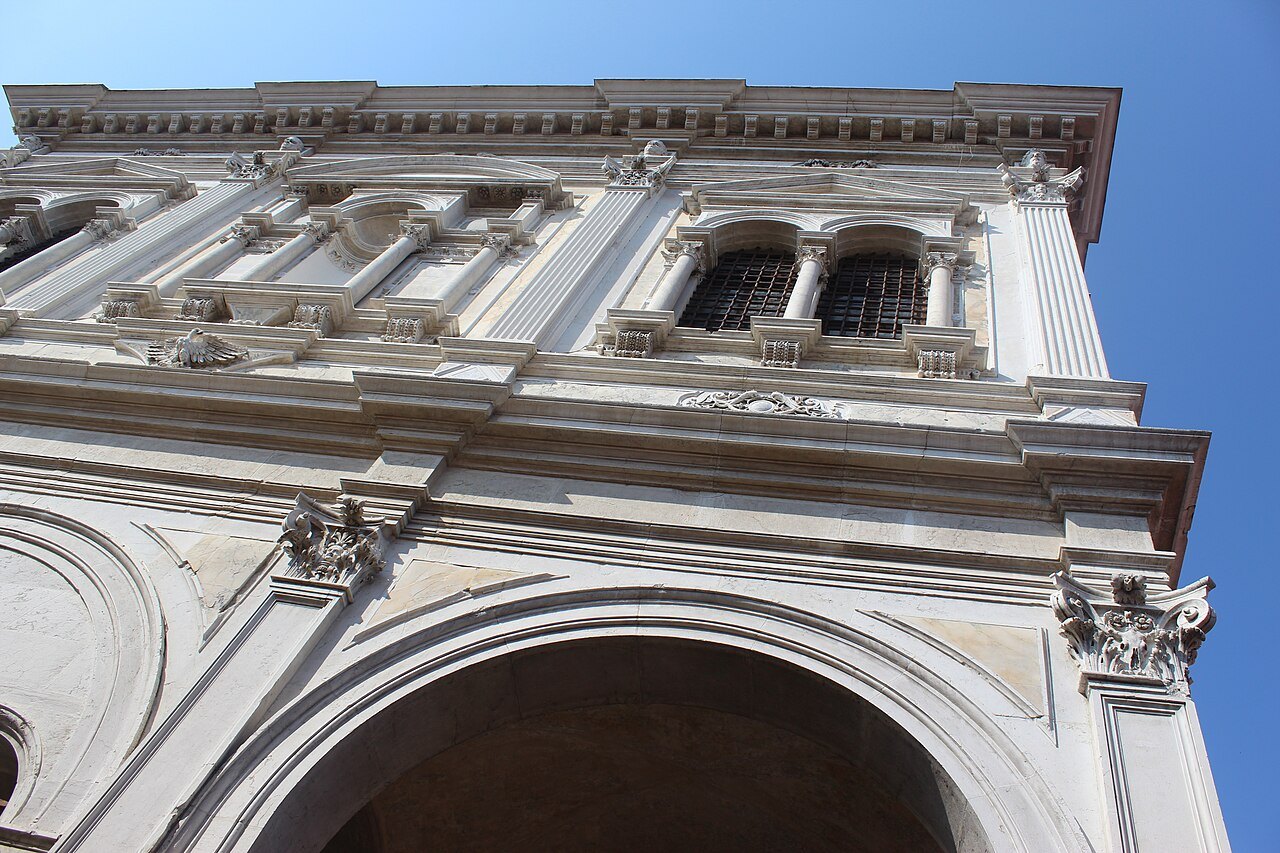
Allow at least an hour and a half. The ceilings are high and the canvases dark, so give your eyes time to adjust, and look at the ceiling of the upper hall in pieces rather than all at once. The confraternity also keeps a treasury of silver and liturgical objects.
The church of San Rocco beside it holds the saint's relics. The Frari is a minute's walk away across the campo, and the two together make the start of the homepage walk; from there the lanes lead through San Polo to the Rialto market.
Honest notes
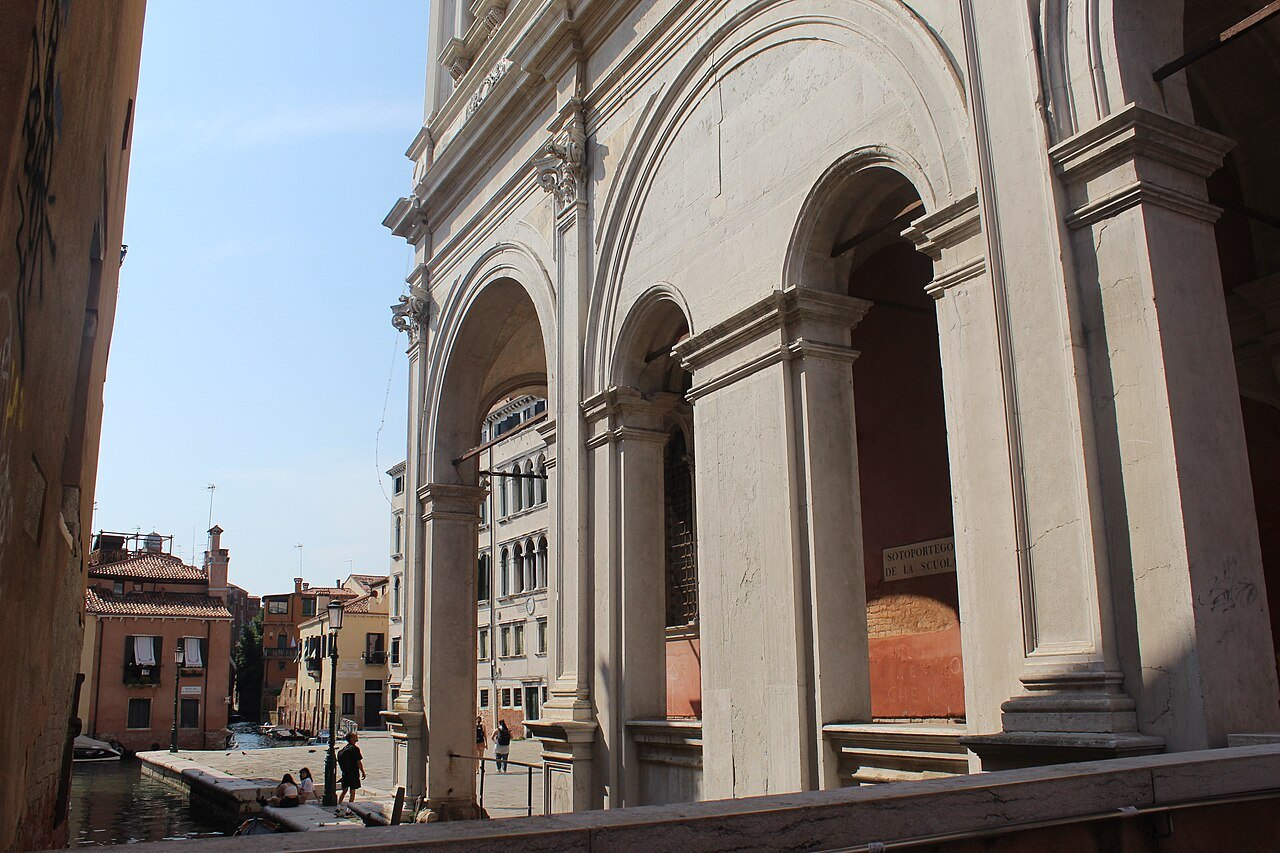
The paintings needed saving. They were in need of conservation, and they have been restored with the help of the World Monuments Fund. Even restored, many are dark and hang high, and the effect is of the whole building rather than of single pictures, which is exactly what makes the Scuola unlike a museum: the paintings are still doing the job they were made for, in the rooms they were made for.
Where to go nextIII
Nearby
- Nearby · San PoloThe FrariA Franciscan church of plain red brick outside and one of the richest interiors in Venice: Titian's Assumption over the high altar, the city's last rood screen, and the tombs of doges, of Titian himself and of Canova's heart.Read the page →
- Nearby · San PoloThe Rialto MarketThe city's market has stood on this bank of the Grand Canal since 1097: fish under the arcades of the Pescaria, fruit and vegetables in the Erbaria beside it, in the oldest quarter of Venice.Read the page →
- Nearby · DorsoduroThe AccademiaFive centuries of Venetian painting in a medieval confraternity, its church and a convent Palladio never finished: Bellini, Carpaccio, Giorgione's Tempest, Titian, Tintoretto and Veronese's vast Feast in the House of Levi.Read the page →