Home · Getting Here
Every way inI
Where each arrival puts you
By airMarco Polo Airport
The city's airport, on the mainland near Tessera, about seven and a half kilometers northeast of the center. Buses run to Piazzale Roma and to Mestre station; water shuttles and water taxis cross the lagoon.
By airTreviso Airport
A smaller airport about thirty kilometers from Venice, used mainly by low-cost airlines, which sometimes call it Venice-Treviso. Coaches run to Mestre and to the edge of the island city.
By railVenezia Santa Lucia
The terminus in the island city itself, on the Grand Canal in Cannaregio. Step out of the station and the canal and the water-bus landing are in front of you.
By railVenezia Mestre
The mainland junction station, one stop short of the island. Trains continue across the lagoon to Santa Lucia; do not get off here unless you are staying on the mainland.
By roadPiazzale Roma
The bus station at the end of the road bridge, and the last place a bus or car can reach. A footbridge crosses the Grand Canal to the railway station.
By carTronchetto
The island car park beside Piazzale Roma. The People Mover, an elevated shuttle train, links it to Piazzale Roma in about three minutes.
In fullII
Getting Here
The city ends at the water
The historic center of Venice is the largest car-free urban area in Europe. Everything that comes by land, trains, buses, taxis and private cars, stops at its northwestern edge, where a railway viaduct of 1846 and the Ponte della Libertà, the road bridge opened in 1933, cross nearly four kilometers of lagoon from the mainland. Beyond the railway station and the bus square at the end of those bridges, the city is crossed only on foot or by boat, as it has been for centuries.
That shapes every arrival. Whatever brings you here, the last part of the journey is a walk over bridges or a ride on the water, and the question to settle before you leave home is not only how to reach Venice but how to get from its edge to where you are staying (see getting around).
Venice is not Mestre
The municipality of Venice is much bigger than the island city. On the mainland across the lagoon lies Mestre, one of its boroughs and its most populous center, where far more people live than in the historic city itself. Mestre has its own main railway station, Venezia Mestre, a junction on the lines from Milan, Bologna and Trieste, and many hotels described as being in Venice are there.
The mistake visitors make is to get off the train at Venezia Mestre, or to book a room there without realizing it is on the mainland. If you are staying in the island city, stay on the train: most trains to Venice continue across the viaduct to Santa Lucia, the terminus on the Grand Canal. A room in Mestre can be a reasonable choice, since buses, a tram line and frequent trains cross the lagoon, but it is a commute, not a stay in Venice (see where to stay).
By air
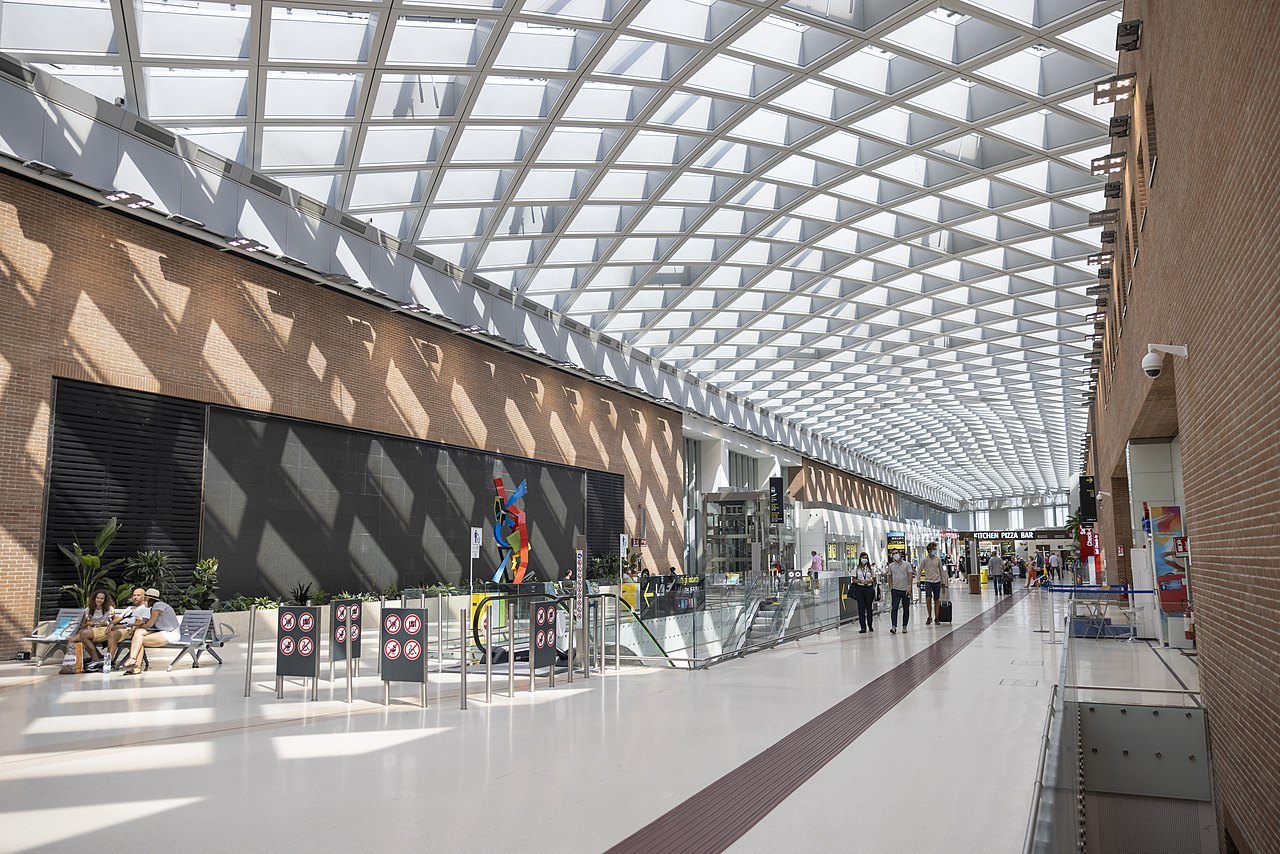
Marco Polo Airport, named after the Venetian traveler, is the city's airport and one of the busiest in Italy, with flights from across Europe and some long-haul routes to North America and the Middle East, a few of them seasonal. It stands on the mainland near the village of Tessera, about seven and a half kilometers, some four and a half miles, northeast of the center.
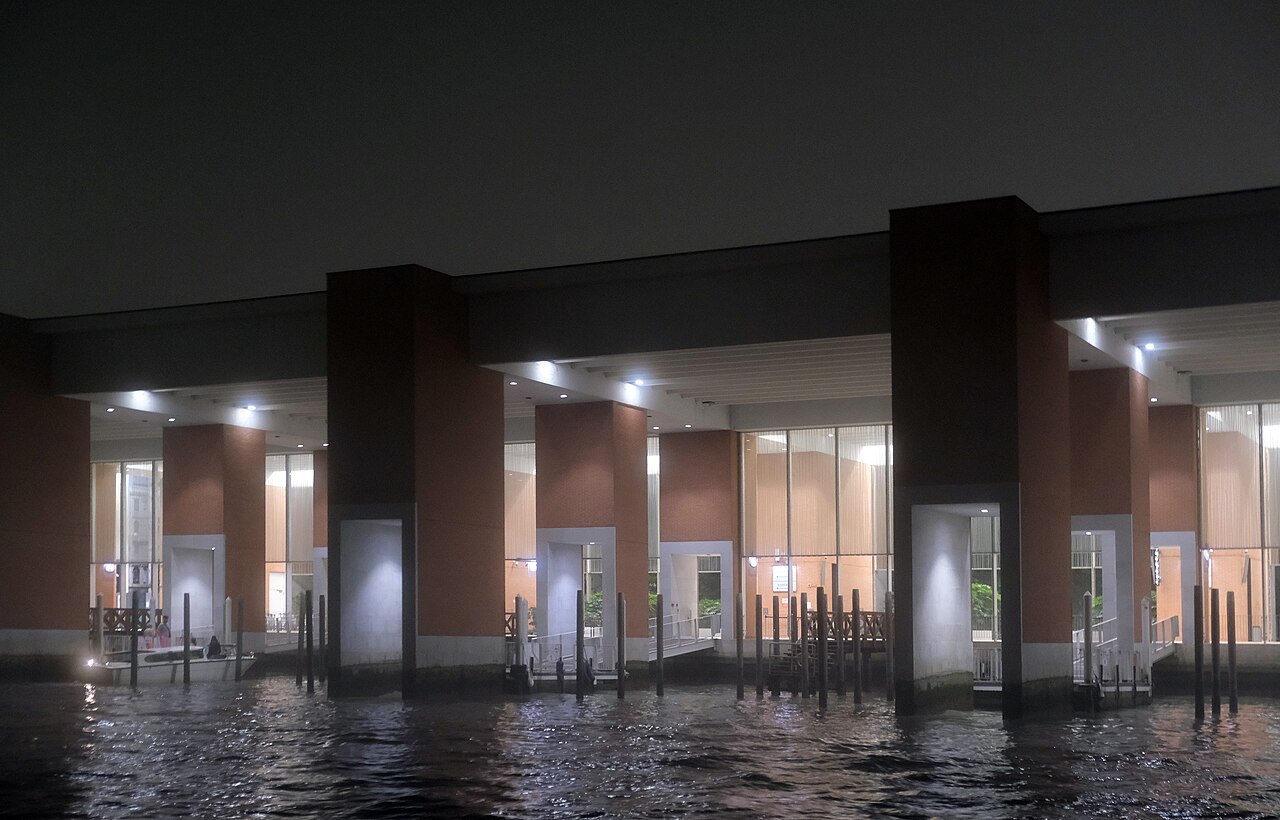
From the airport there are three ways into the city. Buses run to Piazzale Roma, run by the provincial company ATVO and by the city company ACTV, and other buses go to Mestre and its railway station. Alilaguna water shuttles run across the lagoon to Venice, the Lido and Murano, a slower crossing that brings you in by water, the way visitors arrived for most of the city's history. A water taxi is the fastest and most expensive way of all, and the only one that can take you close to many hotel doors.
Treviso Airport lies about thirty kilometers, nineteen miles, from Venice, just outside the town of Treviso, and is used mainly by low-cost airlines, some of which call it Venice-Treviso. It is not in Venice. Coaches connect with flights and run to Mestre station and to Tronchetto at the edge of the island city, and a local bus goes to Treviso's own station for the train.
By train
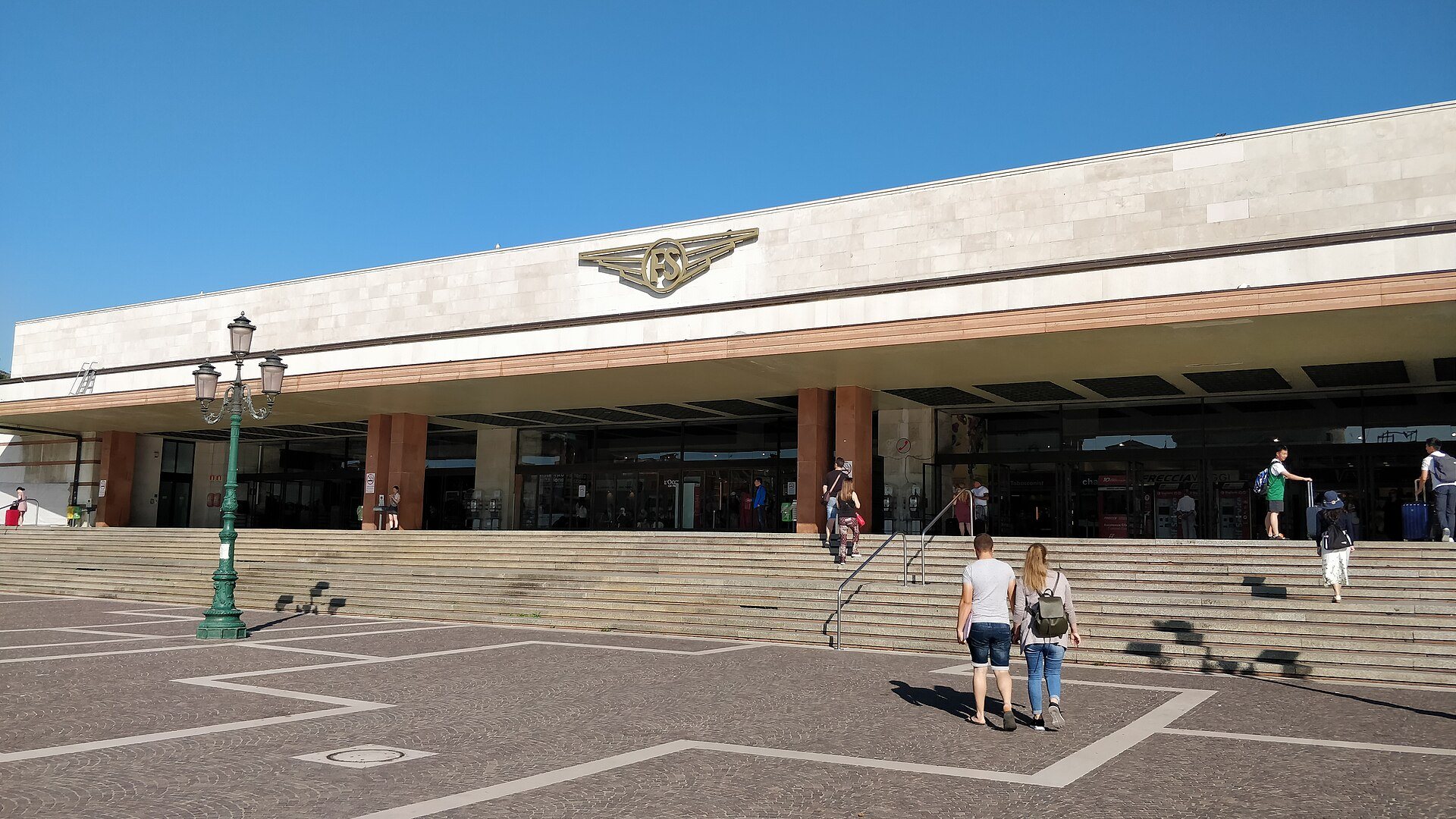
The train is the easiest way to arrive. Venezia Santa Lucia is a terminus on the northern edge of the historic city, in Cannaregio, near the western end of the Grand Canal, and few railway stations open onto anything like it: you walk out of a low modernist hall, completed in 1952, and the Grand Canal is right at the foot of the steps, with the water-bus landing called Ferrovia beside it and the Ponte degli Scalzi crossing to Santa Croce.
The station took its name from the church of Santa Lucia, demolished with a convent in 1861 to make room for it. It has twenty-three platforms, and it is served by high-speed trains from Rome, Florence, Bologna, Milan and Turin, by regional trains from across the Veneto, and by international day trains from Vienna, Munich, Innsbruck and Zurich. Overnight sleeper trains arrive from farther away, and the luxury Venice Simplon-Orient-Express from London and Paris ends its journey here.
Check that your ticket reads Venezia Santa Lucia and not only Venezia Mestre. Luggage storage is available in the station's main hall if you arrive before you can check in.
By road
The Ponte della Libertà, designed by the engineer Eugenio Miozzi and opened in 1933, is the only road into the historic center. It runs beside the railway viaduct, with a tram track each way and a path for walkers and cyclists, and it ends at Piazzale Roma, the city's bus station. Buses from Mestre, the airports and the rest of the Veneto terminate there.
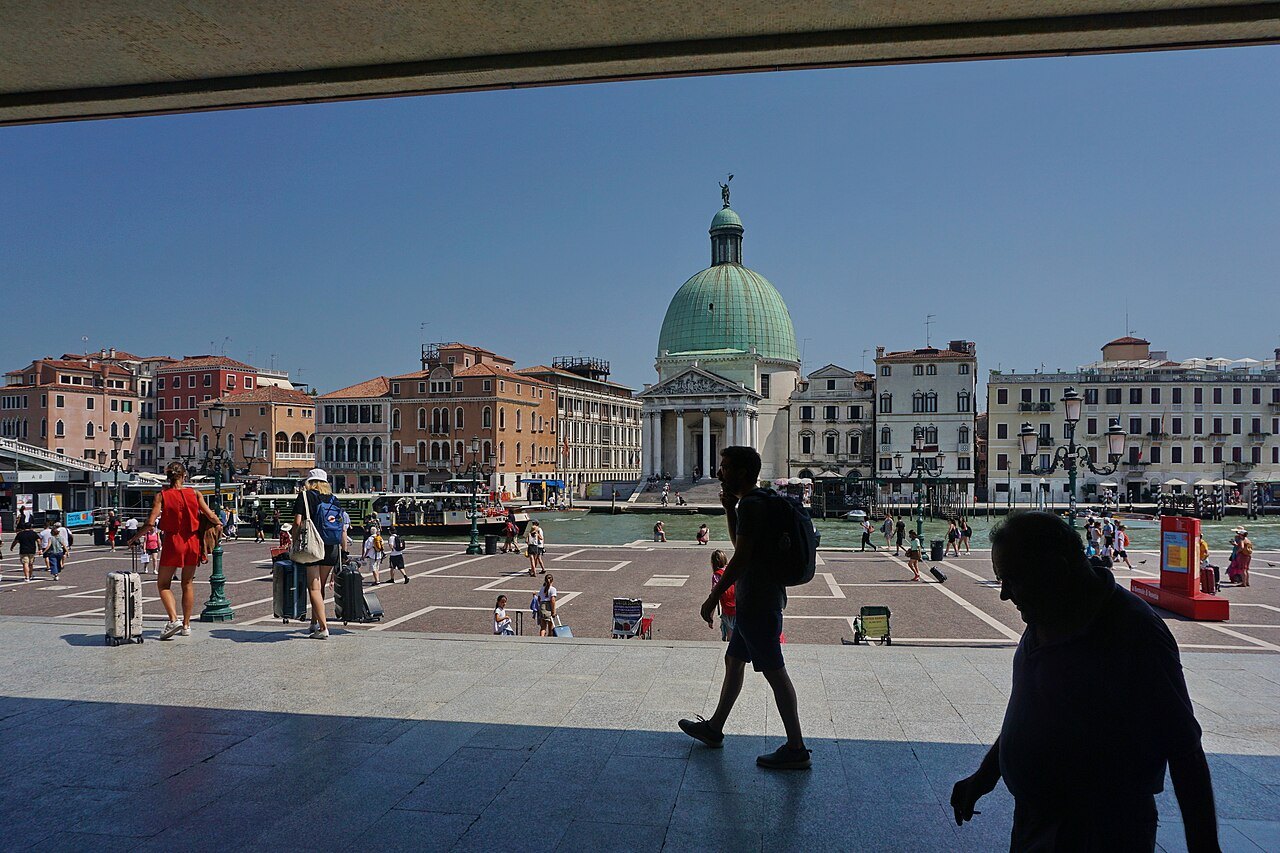
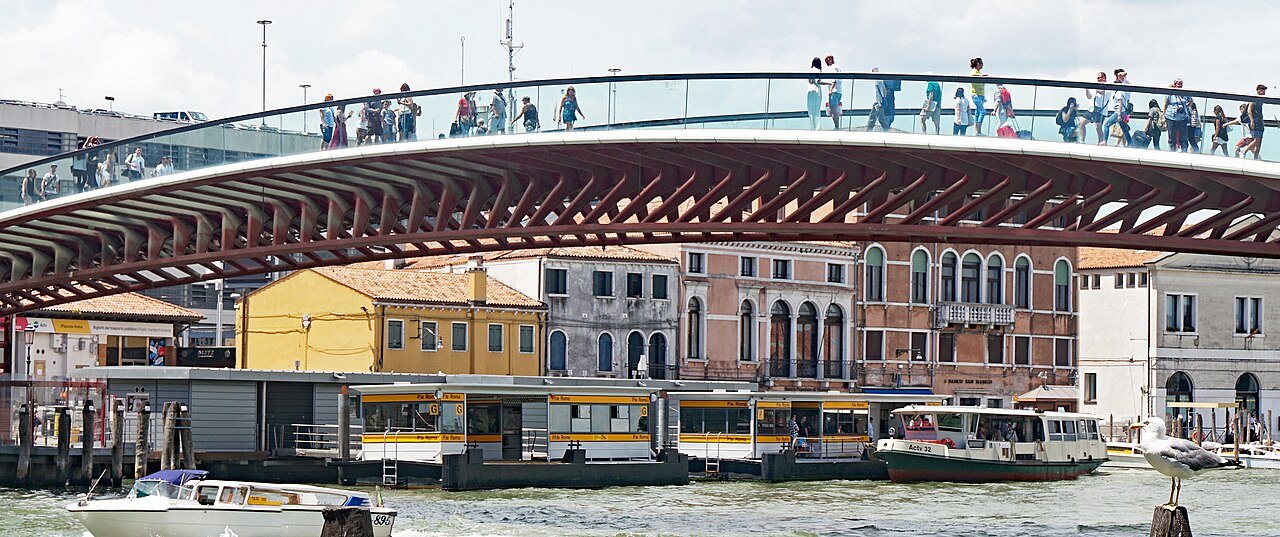
Piazzale Roma and the neighboring island of Tronchetto are the only places in the island city that a car or bus can reach, and both have large car parks. Beyond them there is no road at all. The People Mover, an automated elevated shuttle train opened in 2010, links Tronchetto, the cruise terminal and Piazzale Roma on a short line of eight hundred and seventy meters. From Piazzale Roma, the Ponte della Costituzione, the newest bridge over the Grand Canal, crosses to the railway station.
The last stretch, with luggage
From the station or Piazzale Roma, your choices are the water bus, a water taxi, or your own feet. The water bus stops at landings all along the Grand Canal and around the city; find out before you arrive which landing is nearest your lodging, and how many bridges lie between it and your door. Most bridges have steps, so wheeled luggage has to be carried up and down each one.
Addresses in Venice can mislead. Each of the six sestieri has its own house numbering, running into the thousands in no easily readable order, so an address such as a sestiere name and a number tells you the district but not the street. Ask your lodging for the name of the nearest campo or landing, and use a map on your phone.
On certain days the city also charges day visitors an access fee and asks them to register before they come, a measure first tried in 2024. Visitors staying overnight in the municipality pay a lodging tax instead. The rules have changed from season to season, so check the city's official site for the dates and exemptions before you travel (see booking ahead).
Some links on this page are affiliate links. If you book through one we may earn a commission, at no extra cost to you. It does not affect what is recommended here, and no sight page on this site carries one.
Arranged before you land:
Seen on the wayIII
More photographs
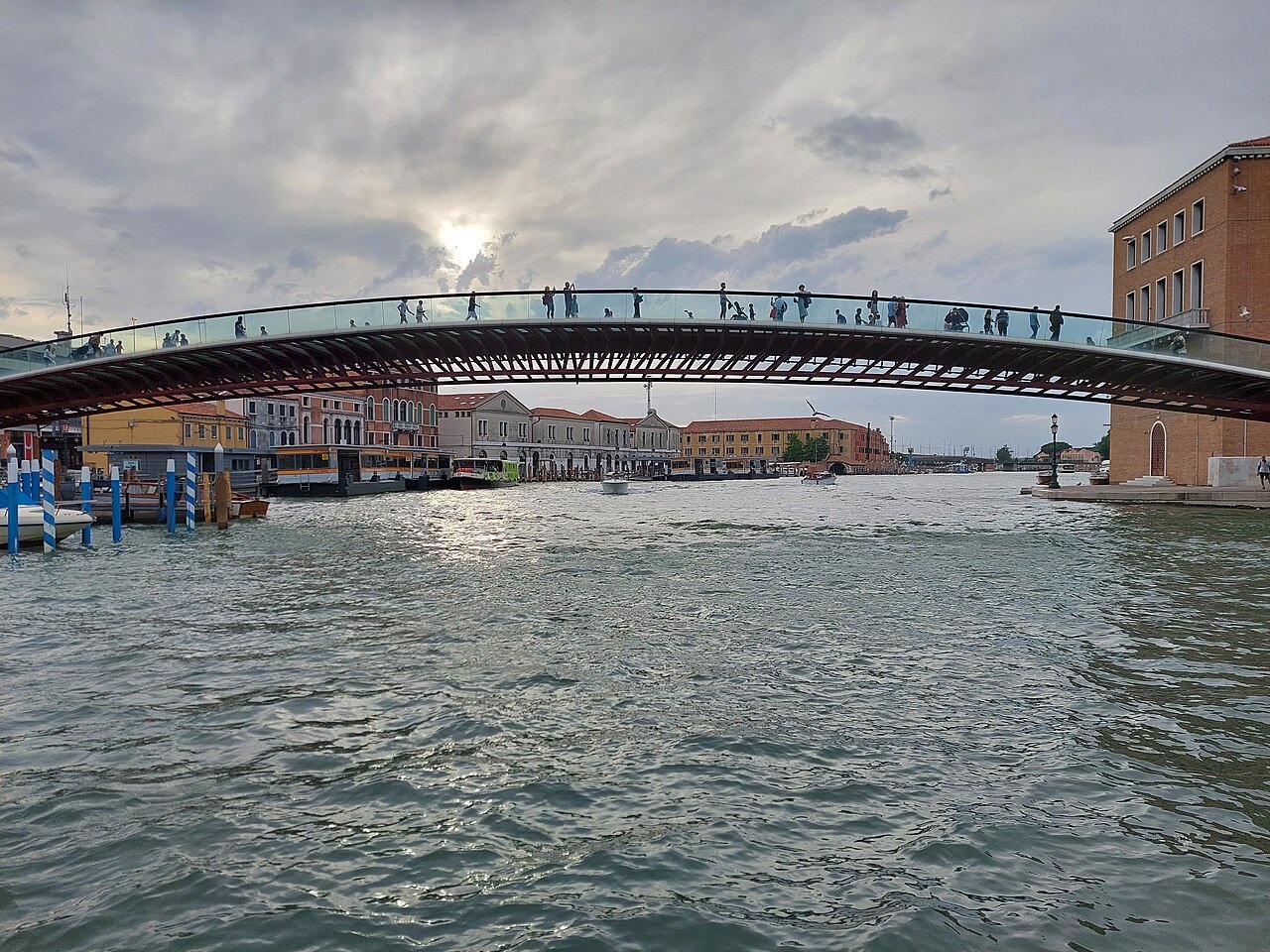
The Ponte della Costituzione from the waterMeri Valenti (TCI), Wikimedia Commons, CC BY 4.0 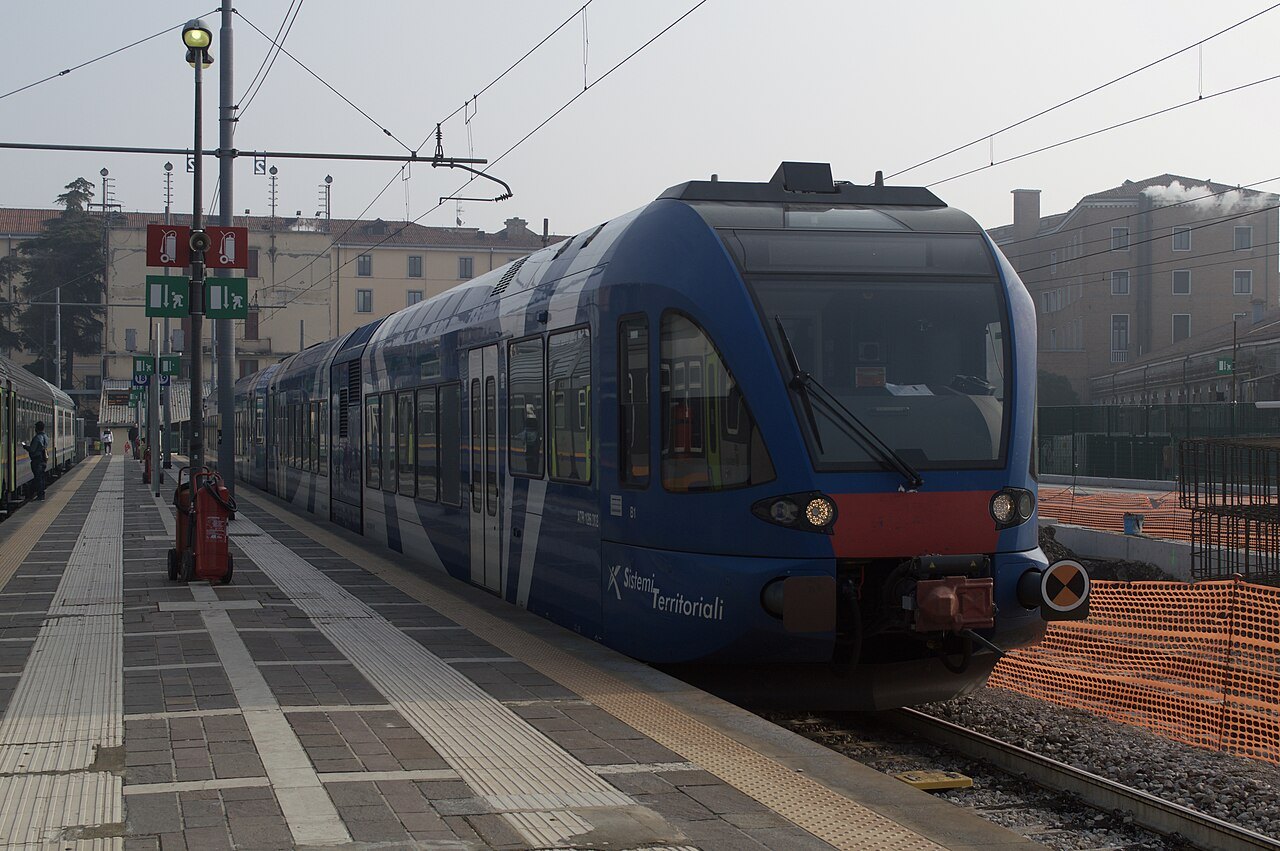
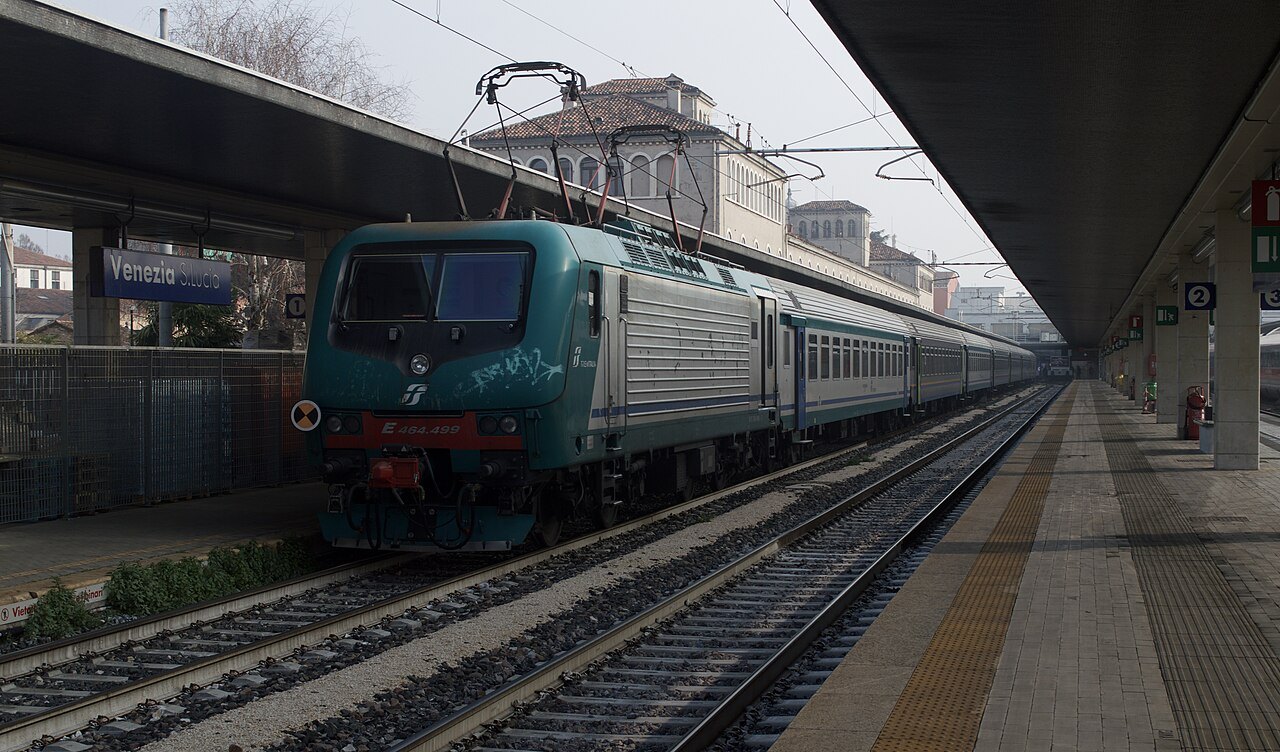
A blue regional train at Santa Lucia stationPhil Richards from London, UK, Wikimedia Commons, CC BY-SA 2.0 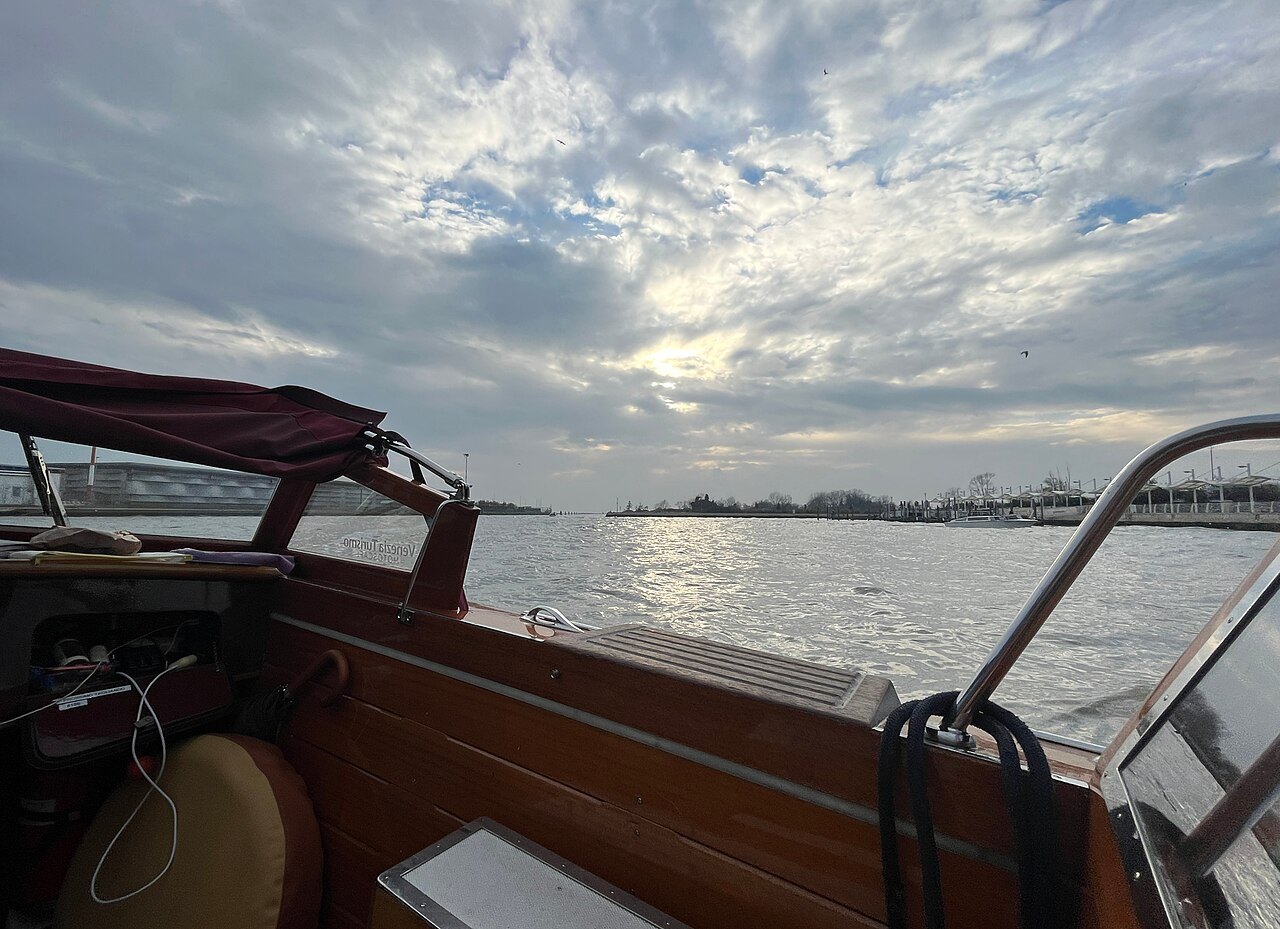
A water taxi leaving the airport's water terminalBenoît Prieur, Wikimedia Commons, CC0