Home · Sights · The Rialto Market
What you are looking atI
The Rialto Market
San Polo
- 1The PescariaThe arcaded fish hall on the Grand Canal, a Gothic Revival building of the twentieth century.
- 2The ErbariaThe fruit and vegetable stalls along the canal beside the Fabbriche Nuove.
- 3San Giacomo di RialtoThe small church at the heart of the market, by tradition the oldest in the city.
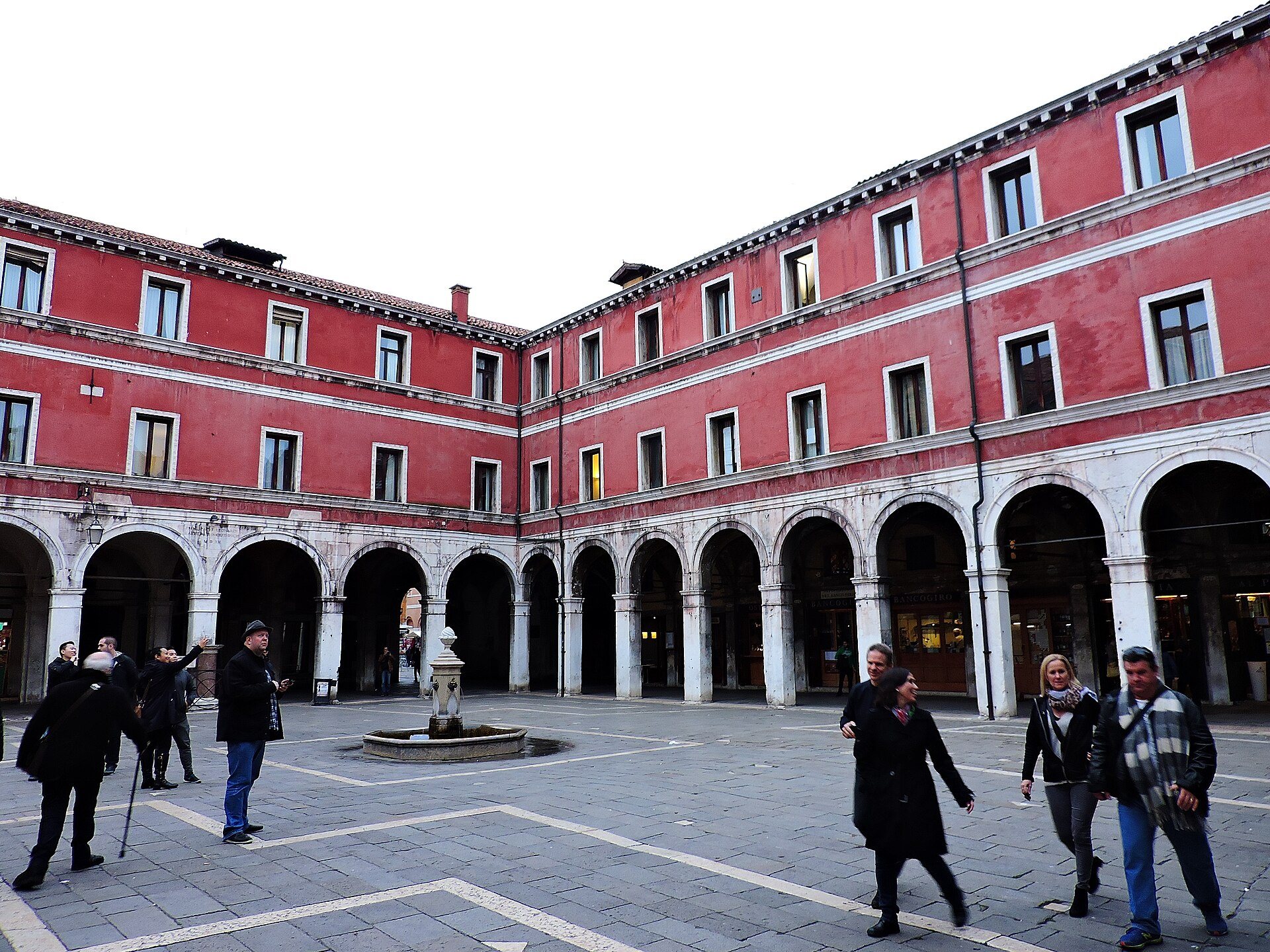
- 4The FabbricheSansovino's Fabbriche Nuove and the older Fabbriche Vecchie, built for the market's magistrates.
- 5The CamerlenghiThe palace of the Republic's treasurers on the bend of the canal at the foot of the bridge.
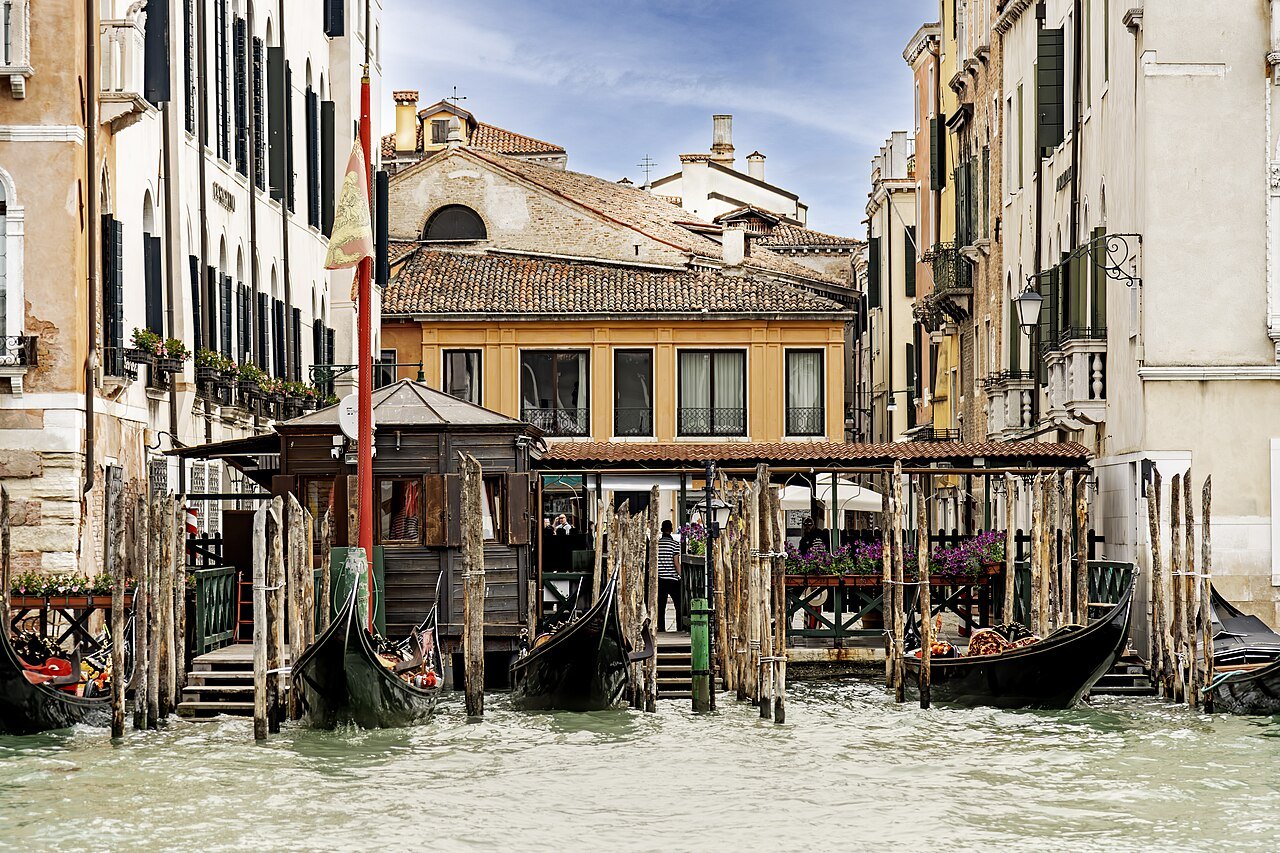
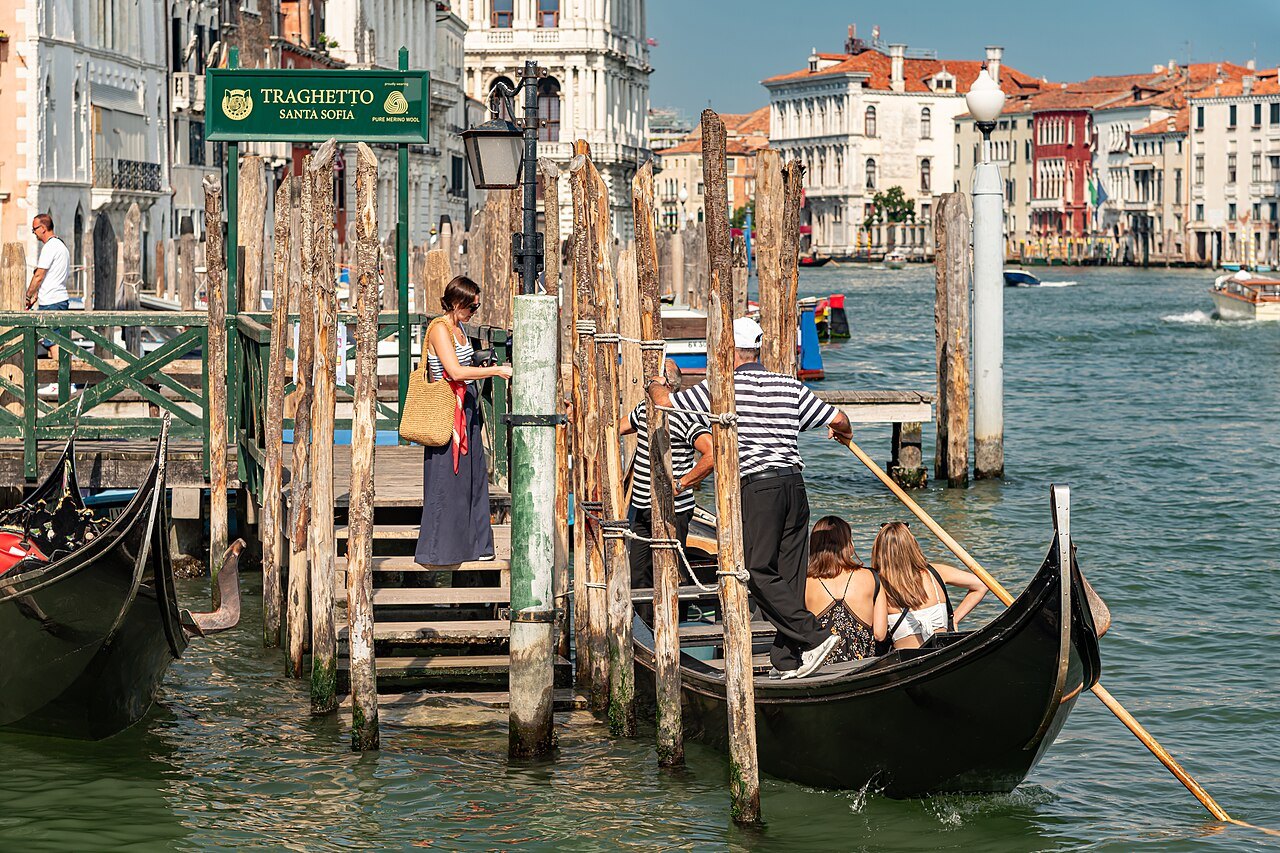
- 6The Traghetto Santa SofiaThe gondola ferry that crosses the canal from the Pescaria to the Cannaregio bank.
The sight in fullII
Reading the place
Why it matters
Rialto is where Venice began. Its name comes from rivus altus, the deep channel, the old name of the Grand Canal whose banks the first islands here lined, and Venetian tradition dates the city itself to 25 March 421, with the consecration of the church of San Giacomo di Rialto. In the early ninth century the doge moved his seat from Malamocco to these islands, and the city grew outward from them.
In 1097 the city's market moved here, and it has stayed for more than nine centuries. For much of that time Rialto was not only a food market but the commercial heart of a trading empire: the banks, the insurers, the tax offices and the magistrates who ruled trade all stood around the church, and goods from the East came off the galleys at its quays. What remains today is a daily market for the city, the Erbaria for fruit and vegetables and the Pescaria for fish, still worked by Venetians and still the best place to see what the lagoon eats.
The market that ran an empire
The area was laid out by trade. The Republic divided it by what was sold: the Erbaria for vegetables, the Naranzeria for fruit, the Beccaria for meat, the Casaria for cheese, the Pescaria for fish, the Ruga dei Oresi for jewelers and goldsmiths and the Ruga dei Spezieri for spices from the East. At the foot of the bridge the Riva del Ferro and the Riva del Carbon on the San Marco side took iron and coal, and the Riva del Vin on the San Polo side took wine. The market grew by politics as well as trade: after the failed conspiracy of Bajamonte Tiepolo in 1310, Doge Pietro Gradenigo had the Tiepolo family's palaces and warehouses here pulled down and gave the space to the market.
In 1514 a fire destroyed almost everything here except the church of San Giacomo. The rebuilding over the following decades gave the market its present shape. The Palazzo dei Camerlenghi, begun in 1525 on the bend of the canal, housed the magistrates of trade; the Fabbriche Vecchie went up in the same years; and the Fabbriche Nuove, by Jacopo Sansovino, followed in 1553. In 1524 the Banco del Giro, the public bank the Republic founded to keep money flowing to its merchants, opened beside the church.
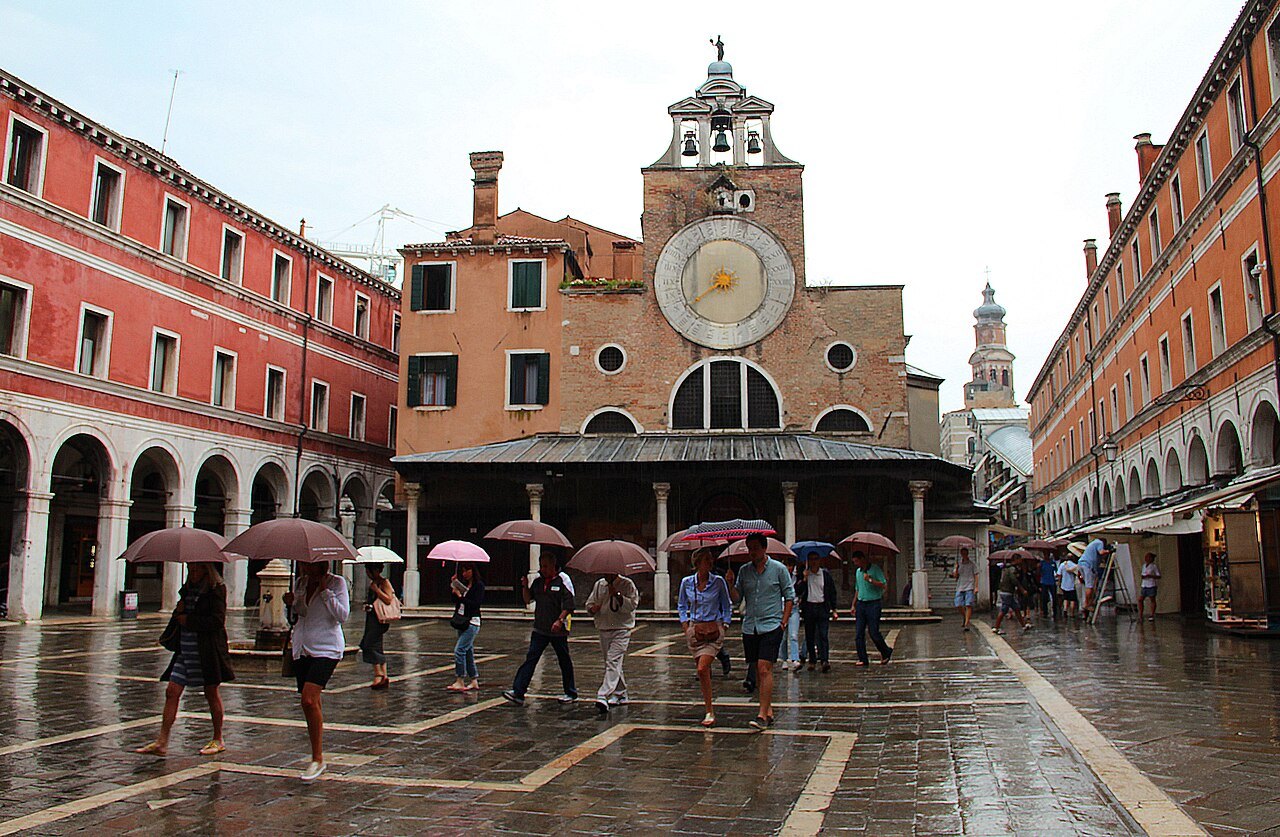
Across the bridge the market continued in spirit along the Mercerie, the chain of lanes to Piazza San Marco where silks, fine cloth and luxury goods were sold. The whole heart of the city was, in effect, one market.
What you see
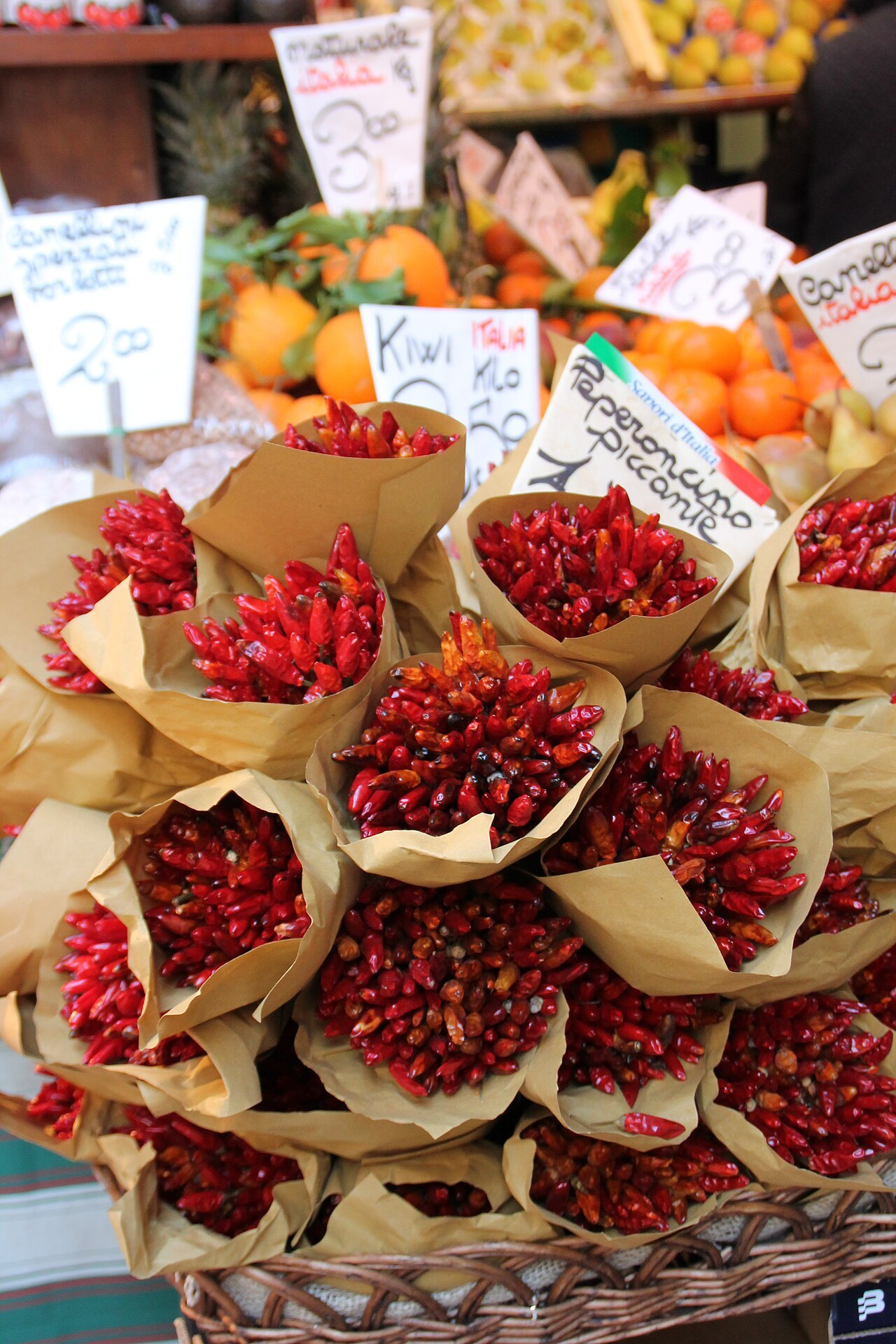
Come from the Rialto Bridge down the ramp on the San Polo side, past the Palazzo dei Camerlenghi, and the Ruga dei Oresi leads straight on under arcades. To the right, along the water, the Erbaria spreads its stalls of fruit and vegetables in front of the Fabbriche Nuove, Sansovino's long arcaded building.
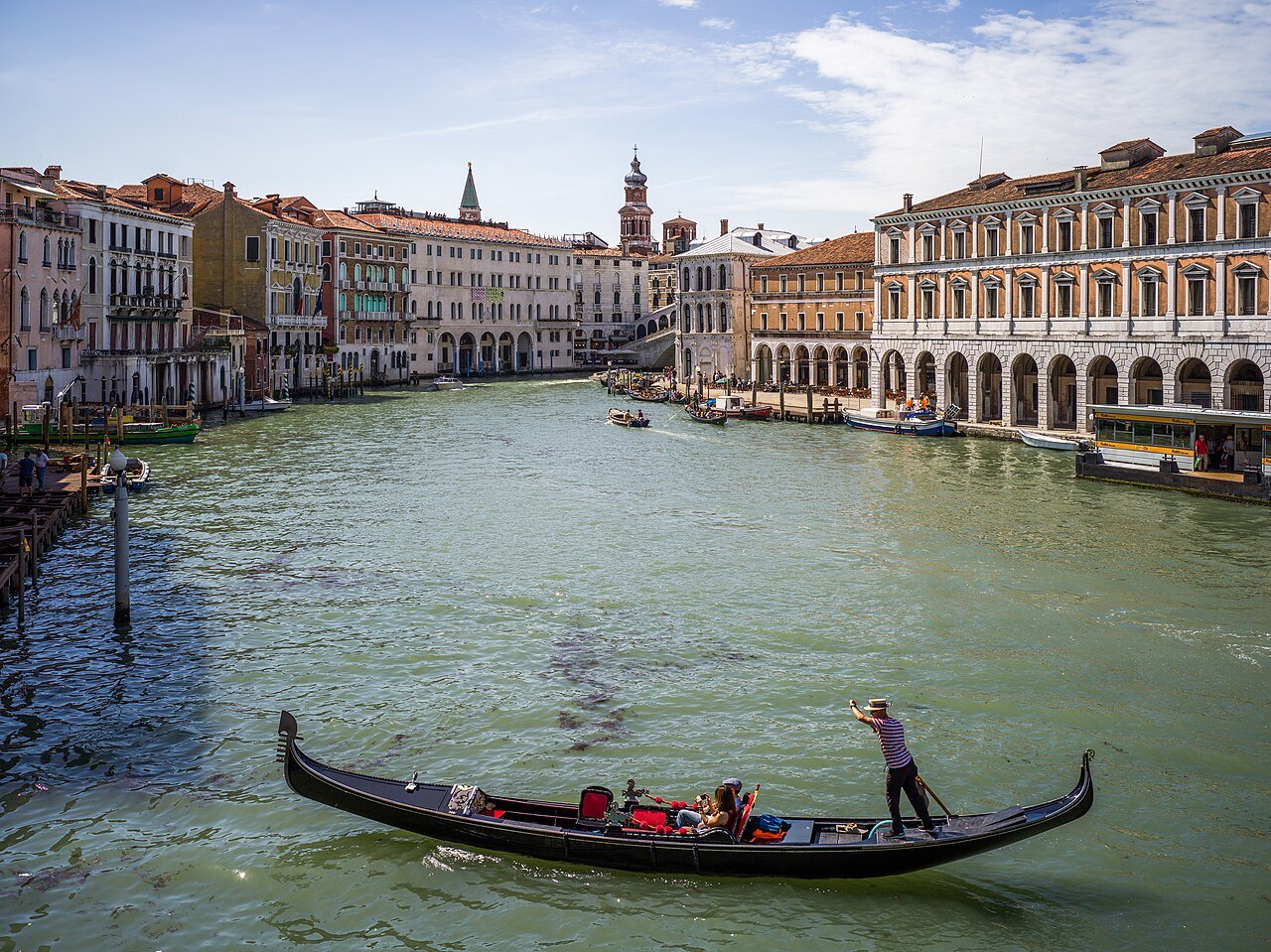
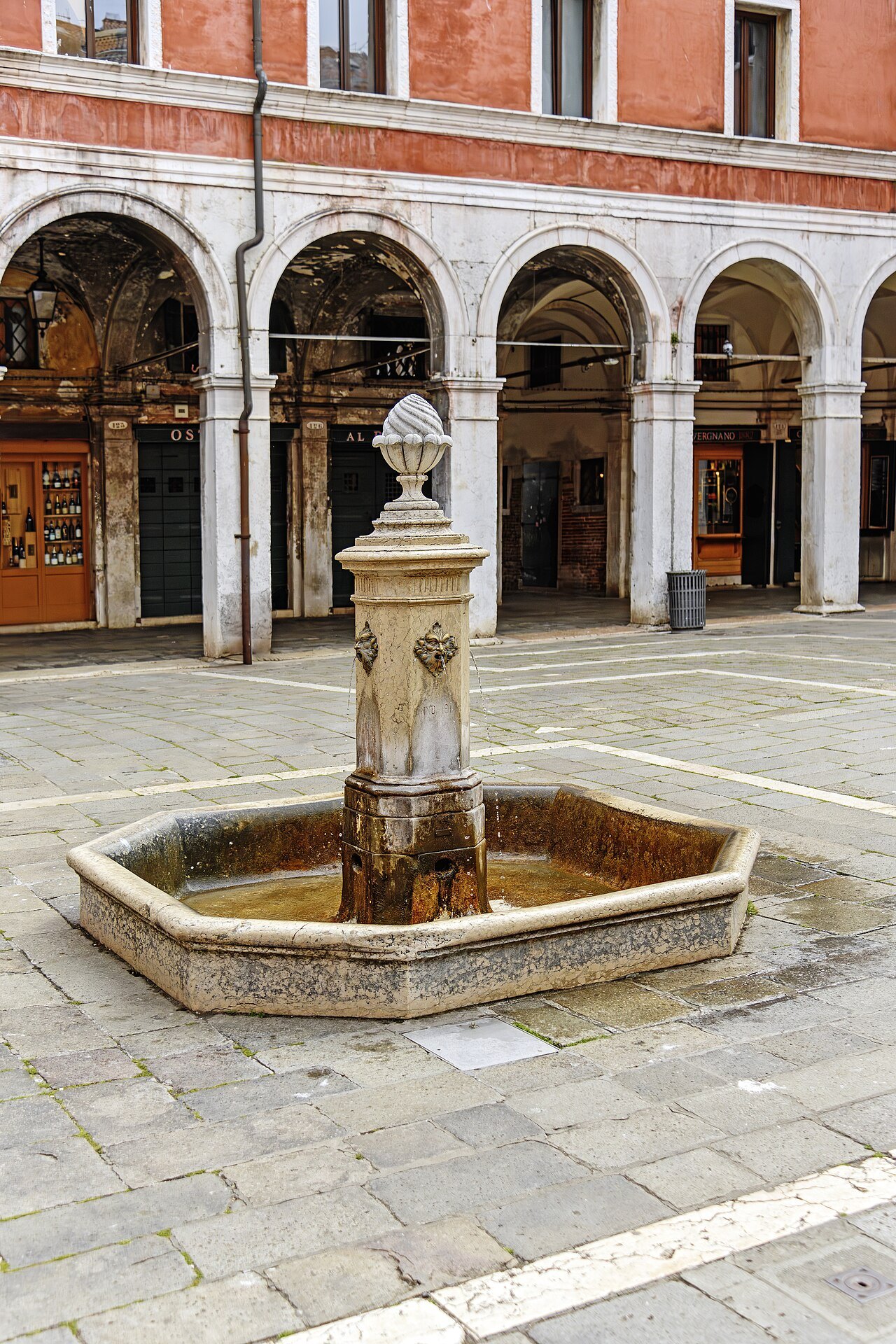
In the small square behind stands San Giacomo di Rialto, known as San Giacometto, the church by which Venice dated its birth. The Fabbriche Vecchie close the square around it, and the Campo San Giacometto, where the fruit market stood until the end of the 1990s, is now lined with bars.
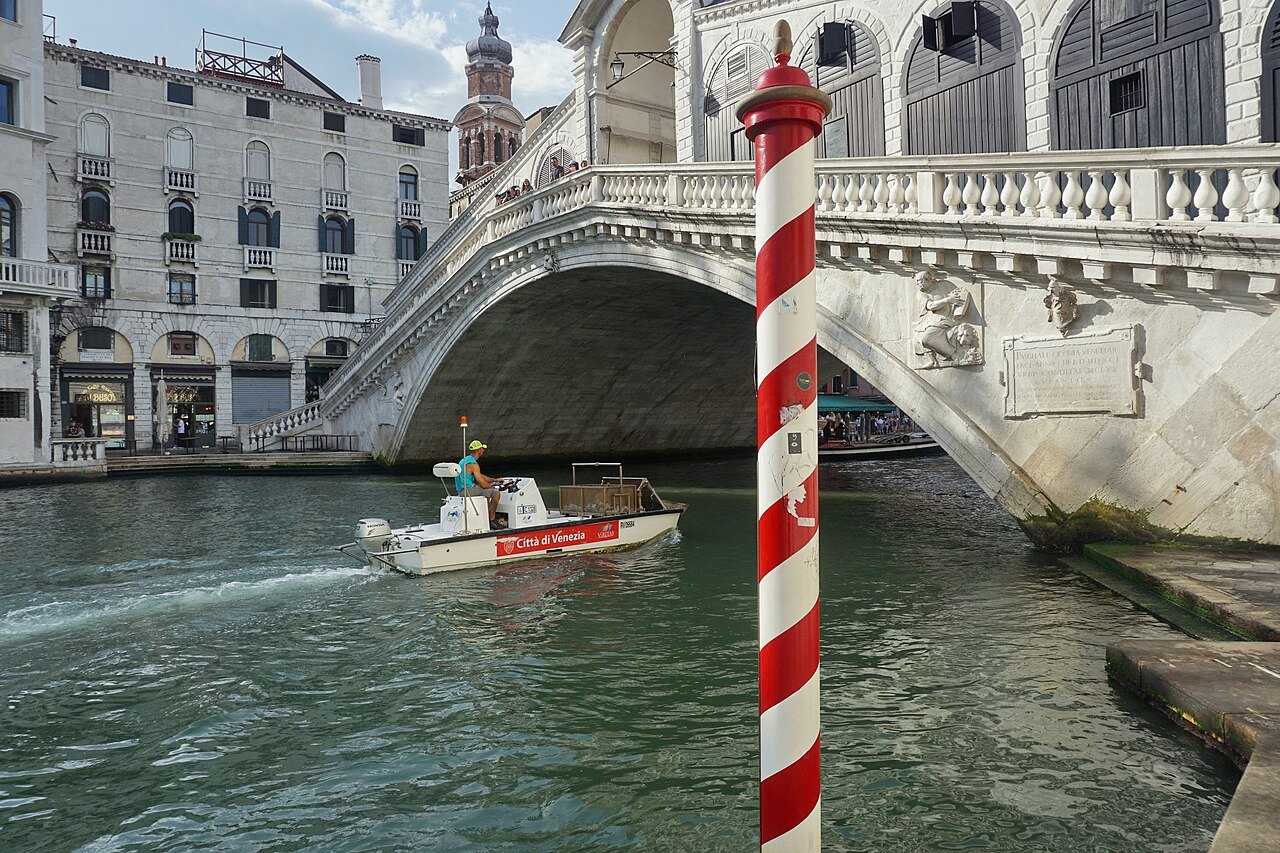
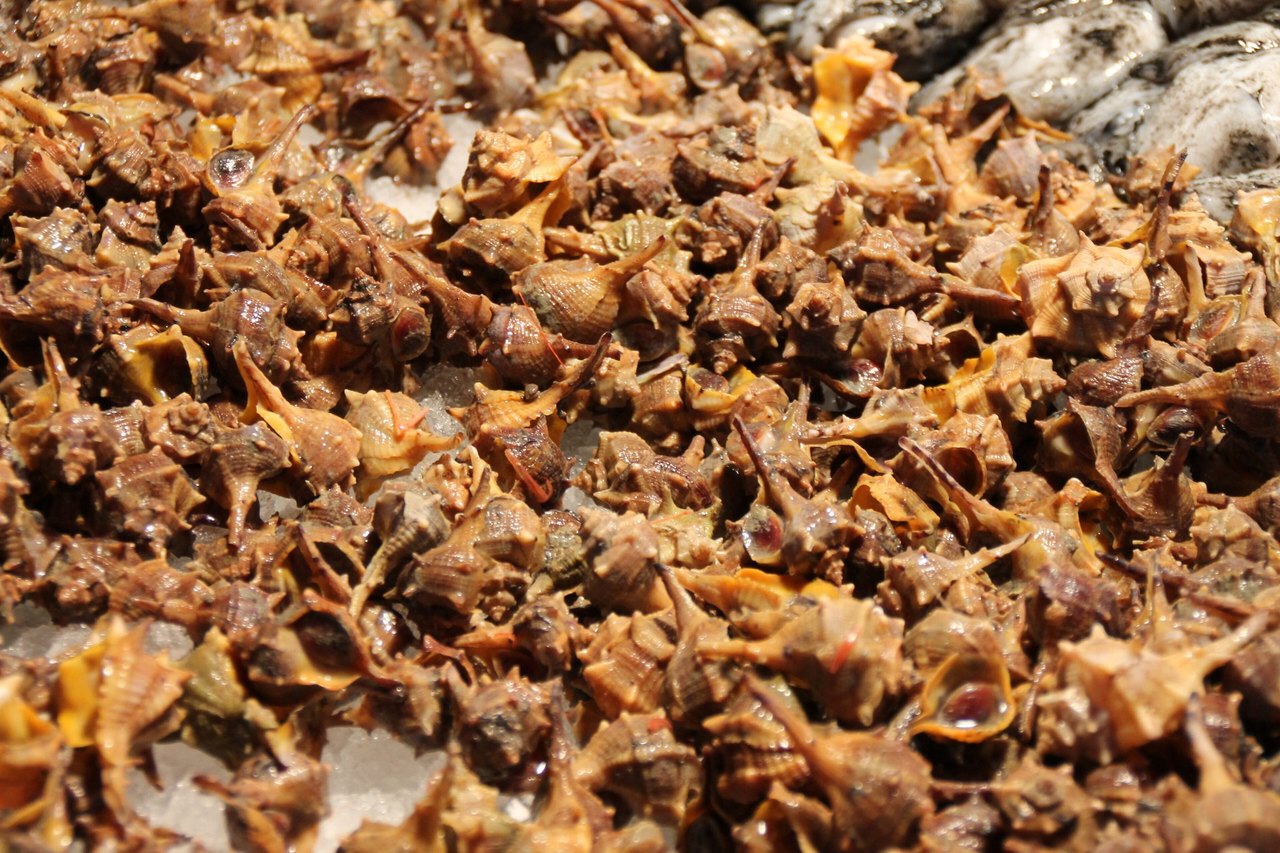
Walk on along the canal and you reach the Pescaria, the fish market, under the arcades of a Gothic Revival hall built in the twentieth century in the style of the old Venetian palaces, open to the water on one side. Here the day's catch is laid out on ice: fish from the Adriatic and the lagoon, shellfish, cuttlefish and, in their brief seasons, the lagoon's own specialties, such as moleche, the soft-shell crabs caught in the few hours after they molt, and schie, the tiny shrimp that Venetians fry and serve on soft white polenta.
At the Pescaria's end a gondola ferry, the Traghetto Santa Sofia, crosses the Grand Canal to the Cannaregio bank near the Ca' d'Oro.
How to visit
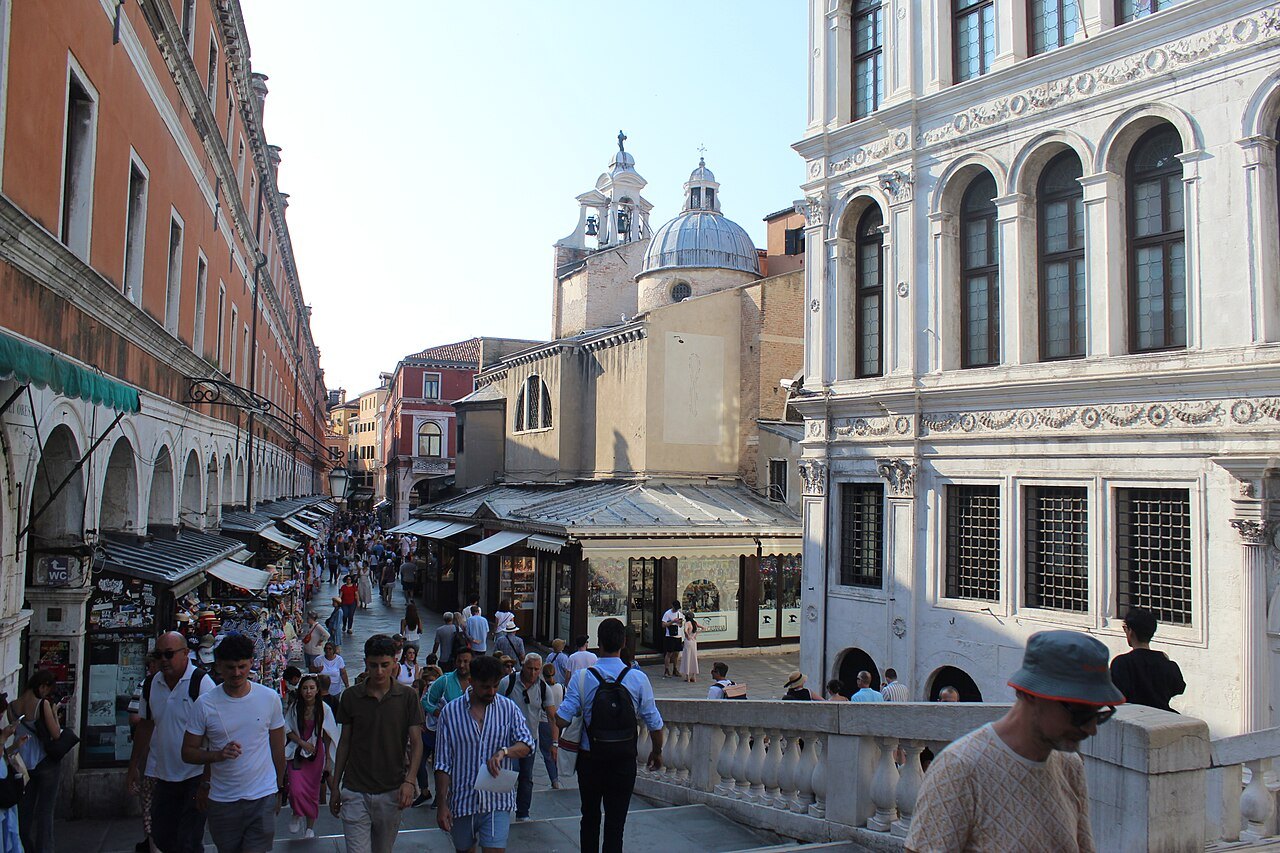
The market is a morning place. The stalls are busiest early, when Venetians do their shopping; the fish market does not trade every day, so check before you plan a visit around it. Come on foot from the bridge, or by water bus to one of the Rialto landings.
It is a working market, not a show. Stand clear of the stalls when people are buying, ask before you photograph a stallholder, and do not handle the fish. Many stalls sell to visitors too, from fruit in season to the dried goods and spices that recall the Ruga dei Spezieri, and this guide lists no prices; they are set at the stall.
Afterwards, the bars around Campo San Giacometto and in the lanes behind serve cicchetti, the small snacks Venetians eat standing with a glass of wine. (See eating and drinking.) The market fits naturally into the first morning of a visit, before the bridge fills.
Honest notes
The Rialto is no longer the general market of the city, and in recent decades much of the old trade around it has given way to businesses aimed at visitors. The daily market and the courts of Venice, which occupy the Fabbriche, still keep the area working, but more and more of the shops around it now serve tourism. The fish hall looks medieval and is not: it dates from the twentieth century, built on the site of the old fish market in the manner of a Gothic palace.
Where to go nextIII
Nearby
- Nearby · San Marco · San PoloThe Rialto BridgeFor two and a half centuries the only way to walk across the Grand Canal: a single stone arch of 1591, carrying two ramps of shops to a portico at the top, at the heart of the city's oldest quarter.Read the page →
- Nearby · CannaregioThe Ca' d'OroThe House of Gold on the Grand Canal, the best-surviving Gothic palace in Venice, built for Marino Contarini between 1421 and 1437, gilded once, stripped by later owners, and saved by Baron Franchetti as a gallery.Read the page →
- Nearby · San Marco · San Polo · DorsoduroThe Grand CanalThe city's main street is water: a reverse S nearly two and a half miles long through the middle of Venice, lined with more than 170 palaces, crossed by only four bridges and best seen from a boat.Read the page →