Home · Getting Around
Once you are hereI
Six ways to move
On footOn foot
The main way to get about. Lanes are narrow, most bridges have steps, and a map on your phone helps more than street signs do.
On the waterThe water bus
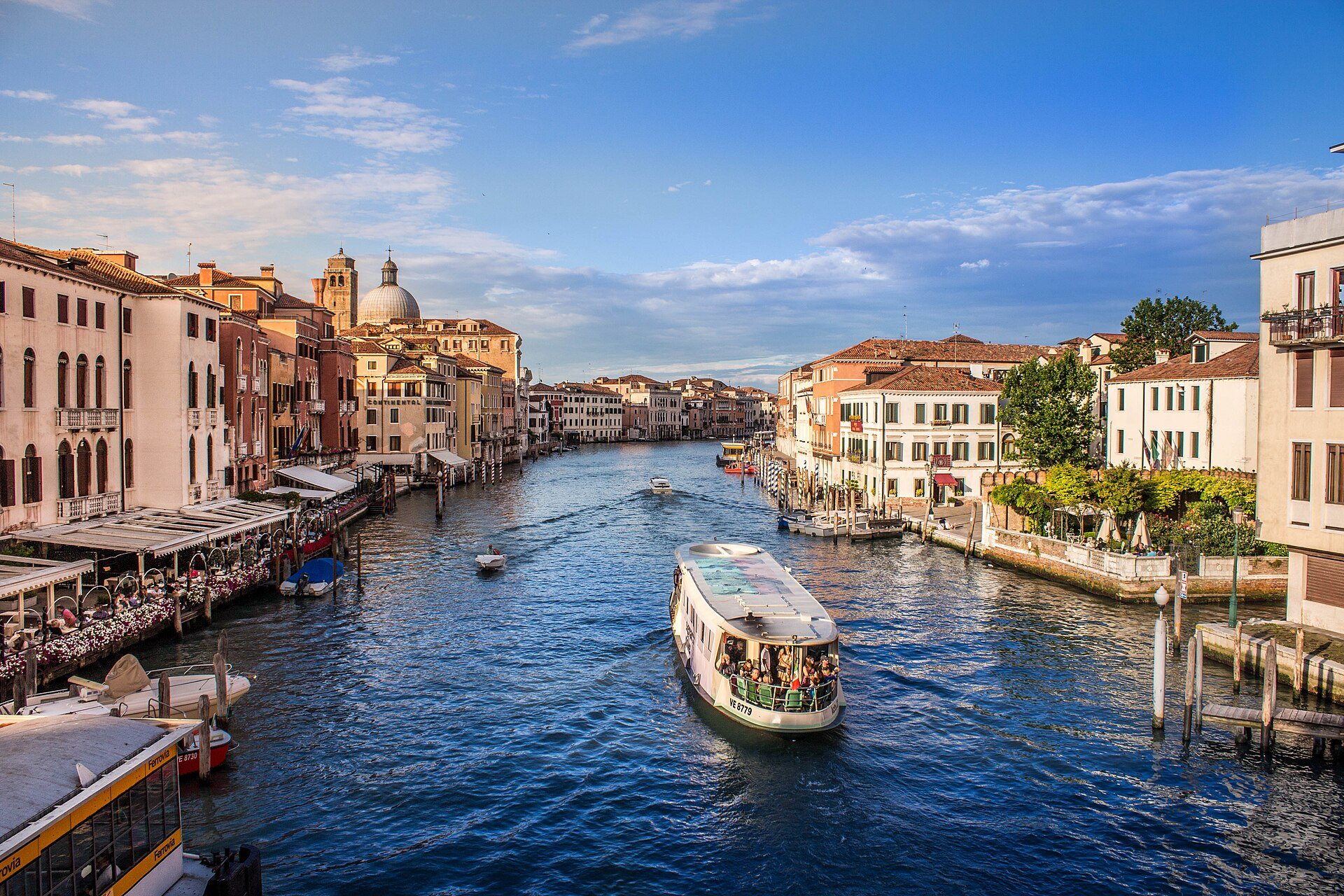
The vaporetto, run by the city company ACTV, is the city's bus: numbered lines along the Grand Canal, around the city and out to the islands, some of them through the night.
On the waterThe traghetto
A gondola ferry rowed by two oarsmen straight across the Grand Canal at points far from a bridge. Venetians stand for the short crossing.
On the waterWater taxis
Private motorboats hired for a trip, fast and costly, and able to reach landings close to many hotel doors.
On the waterThe gondola
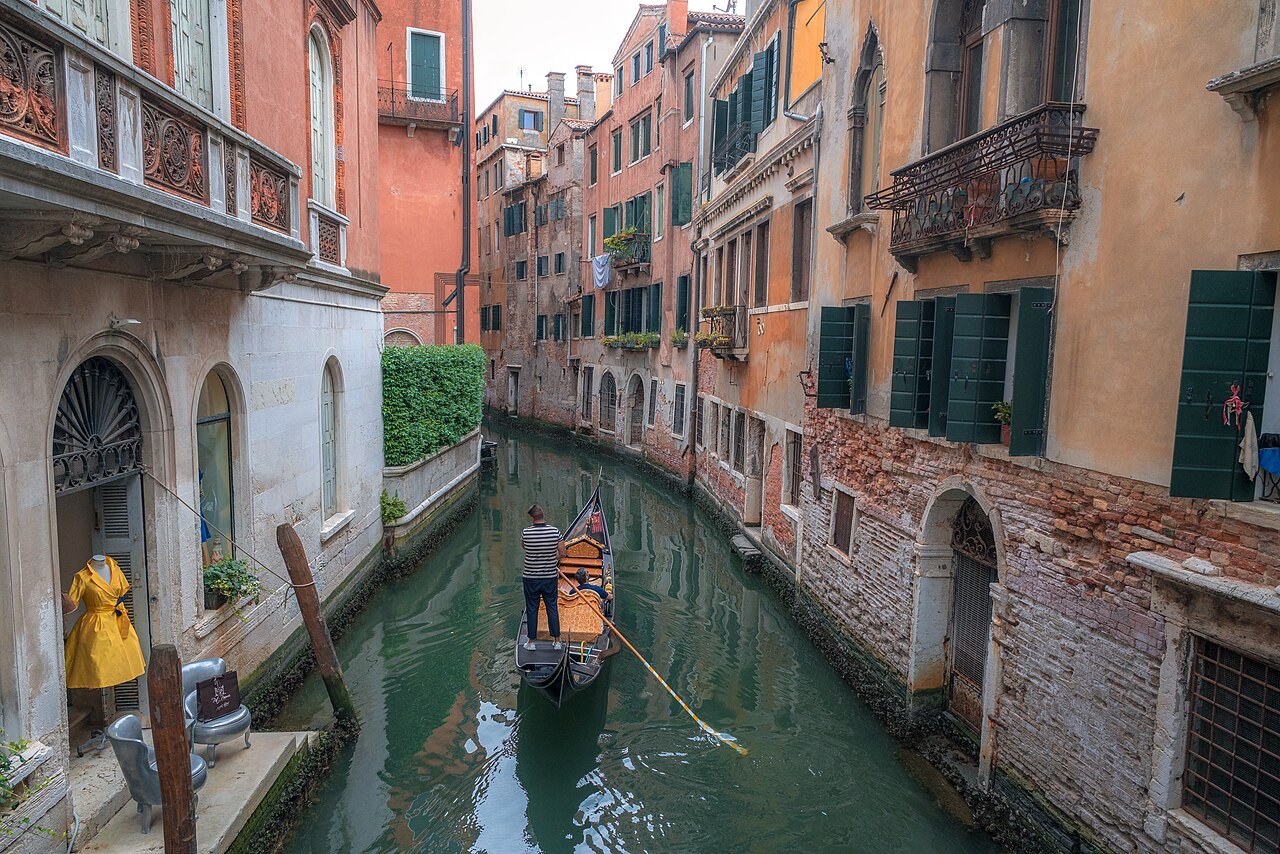
Rowed by one of about four hundred licensed gondoliers, now hired by visitors for a ride through the small canals rather than for getting anywhere.
By roadBuses on the Lido
The Lido and Pellestrina are the only islands of the lagoon with roads and buses, reached by water bus from the city.
In fullII
Getting Around
A city with no roads
The historic center of Venice is built on more than a hundred small islands in a shallow lagoon, separated by canals and joined by more than four hundred bridges. Beyond the railway station and the bus square at its northwestern edge, there are no cars, no buses and no bicycles in its lanes; as in past centuries, everything moves on water or on foot. Goods arrive on barges, ambulances and fire engines are boats, and the city's buses are water buses.
For a visitor this means two things. Distances are short, but routes are rarely straight, and the canals decide where you can go. And the boats are not an attraction laid on for tourists but the transport system itself, used every day by the people who live here.
Walking, and how not to get lost
Walking is the way to see Venice, and on most days it is also the quickest way between two points in the center. The lanes have their own vocabulary. A calle is a street, and a ruga or salizada an older, wider one; a campo is a square, and a campiello a small one; a fondamenta runs along the bank of a canal, a riva faces open water, and a sotoportego passes under a building. Piazza San Marco is the only square in the historic center called a piazza. The names of lanes and squares are painted directly on the walls, on signs Venetians call nizioleti.
Even so, visitors get lost, and it is part of the experience. The house numbers are no help: each of the six sestieri numbers its buildings on its own system, from one to several thousand, in no order a stranger can follow. Aim for the landmarks, Rialto, San Marco, the station, Piazzale Roma, and trust a map on your phone. When you reach a dead end on the water, turn back; many lanes end at a canal with no bridge.
Be kind to the city as you walk. Keep to one side on narrow lanes and bridges, do not stop in the middle of a bridge to take photographs, and never sit down to eat on church steps or monuments.
The water bus
The vaporetto, the little steamer, is the city's bus. Strictly the name belongs to the large, wide boats on the slow lines along the Grand Canal, but everyone uses it for all the water buses of ACTV, the public transport company. The first one appeared on the Grand Canal in 1881, in competition with the gondoliers. The network runs day and night, most of the boats have disability access, and several lines run only in the summer season, from April to October.
Line 1 is the one visitors know. It starts at Piazzale Roma, runs the whole length of the Grand Canal stopping at almost every landing, and continues to the Lido; from the station to San Marco it can take up to forty-five minutes, and it is the cheapest tour of the canal there is (see the Grand Canal). Line 2 is faster, making fewer stops, and some of its boats go round by the Giudecca Canal instead, calling at San Giorgio Maggiore, which Line 1 does not. Other lines circle the city and run out to Murano, Burano and the other islands (see the lagoon).
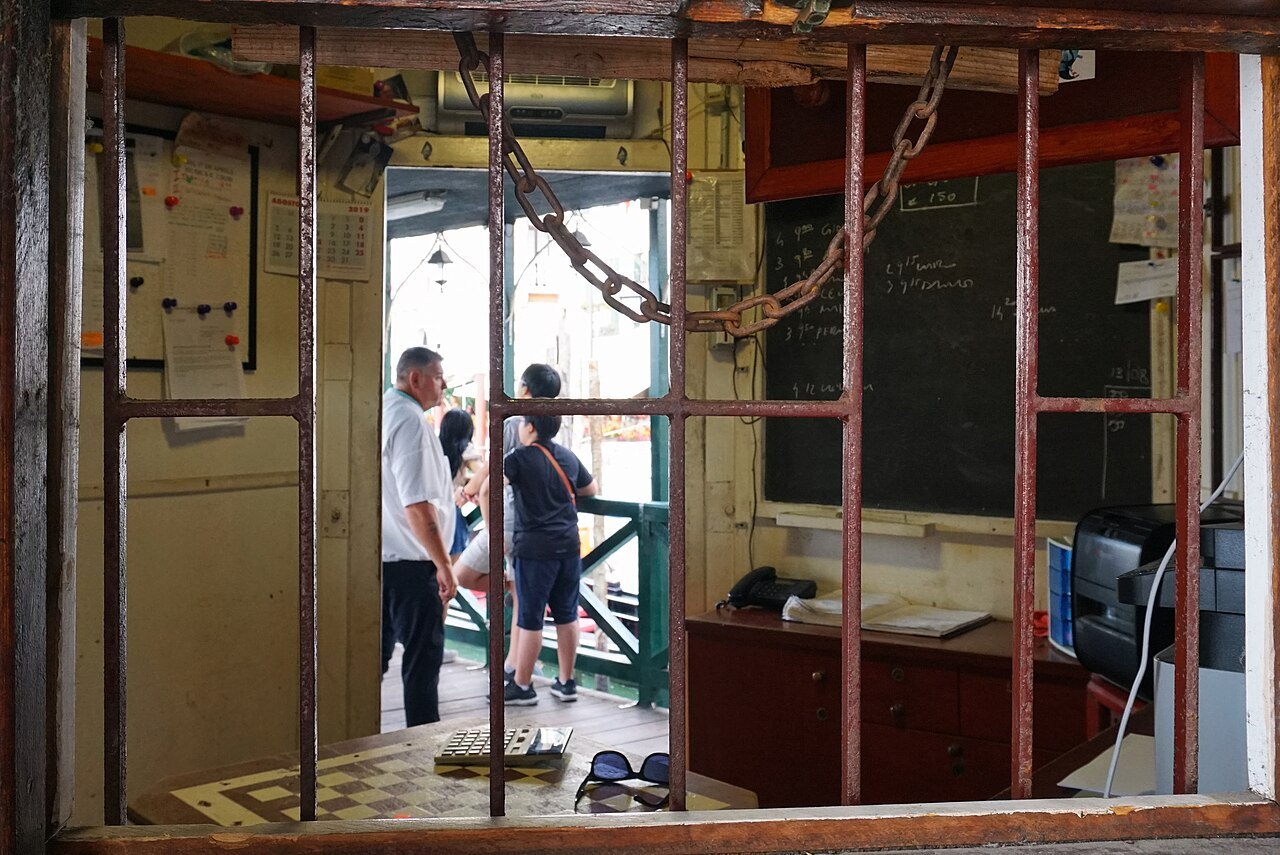
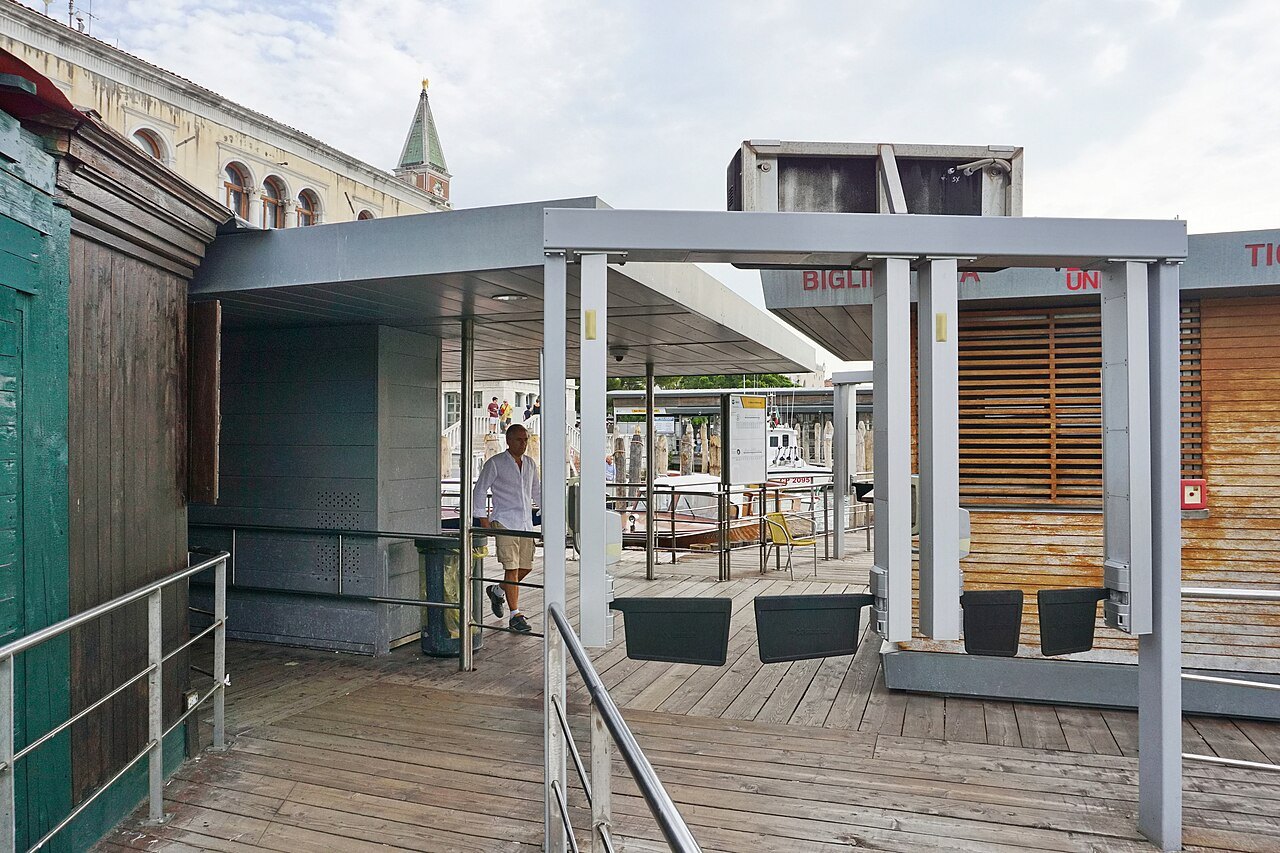
Buy tickets or a time-based travel card before you board, from the machines and ticket offices at the main landings or online through the city's Venezia Unica site, and tap it on the reader at the landing each time you travel; contactless bank cards can also be used. Each landing is a floating pontoon with its own name and line numbers; check which side of the canal and which direction you need before the boat pulls in.
The traghetto
Only four bridges cross the Grand Canal in its whole length: the Rialto, the Accademia, the Scalzi and the modern Costituzione by the station. Between them, the gondola still does the job it has done for centuries. At a few fixed points, a traghetto, a plain gondola rowed by two oarsmen, ferries foot passengers straight across the canal. It is one of the very few kinds of gondola still in everyday use by Venetians themselves.
The crossing takes a couple of minutes. The ferry points and the days they work change with the season and the number of gondoliers available, so treat a traghetto as a welcome shortcut if it is running rather than a crossing to plan a day around.
Gondolas and water taxis
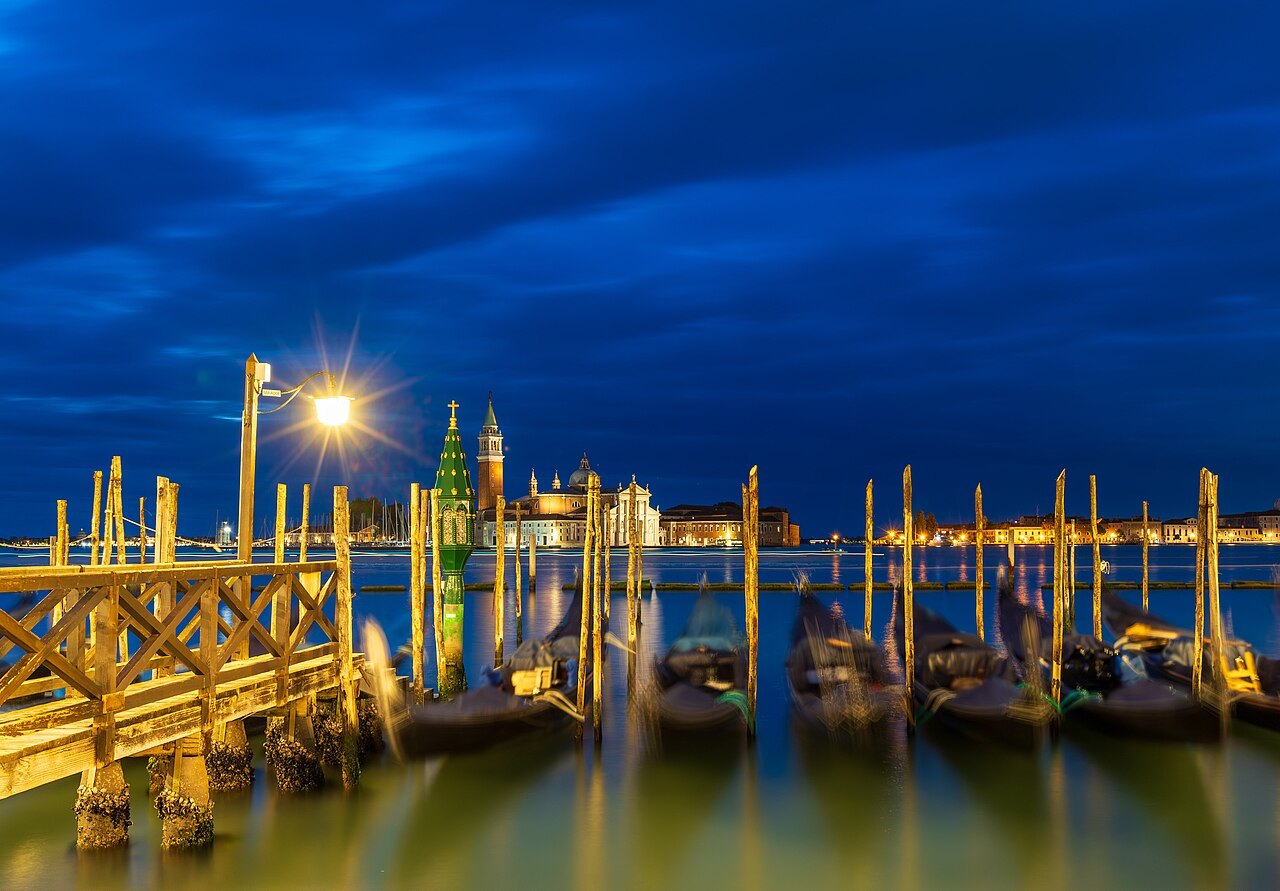
There are about four hundred licensed gondoliers in Venice and a similar number of gondolas, down from some ten thousand boats two centuries ago. A gondolier is licensed by a guild after training, an apprenticeship and an exam on Venetian history and landmarks, languages and the handling of the boat. Today the gondola's main role is to carry visitors on rides at fixed rates, and a ride through the small canals, away from the Grand Canal's traffic, is the way to see the city from the water at the pace it was built for. Agree the length of the ride and the rate before you step in.
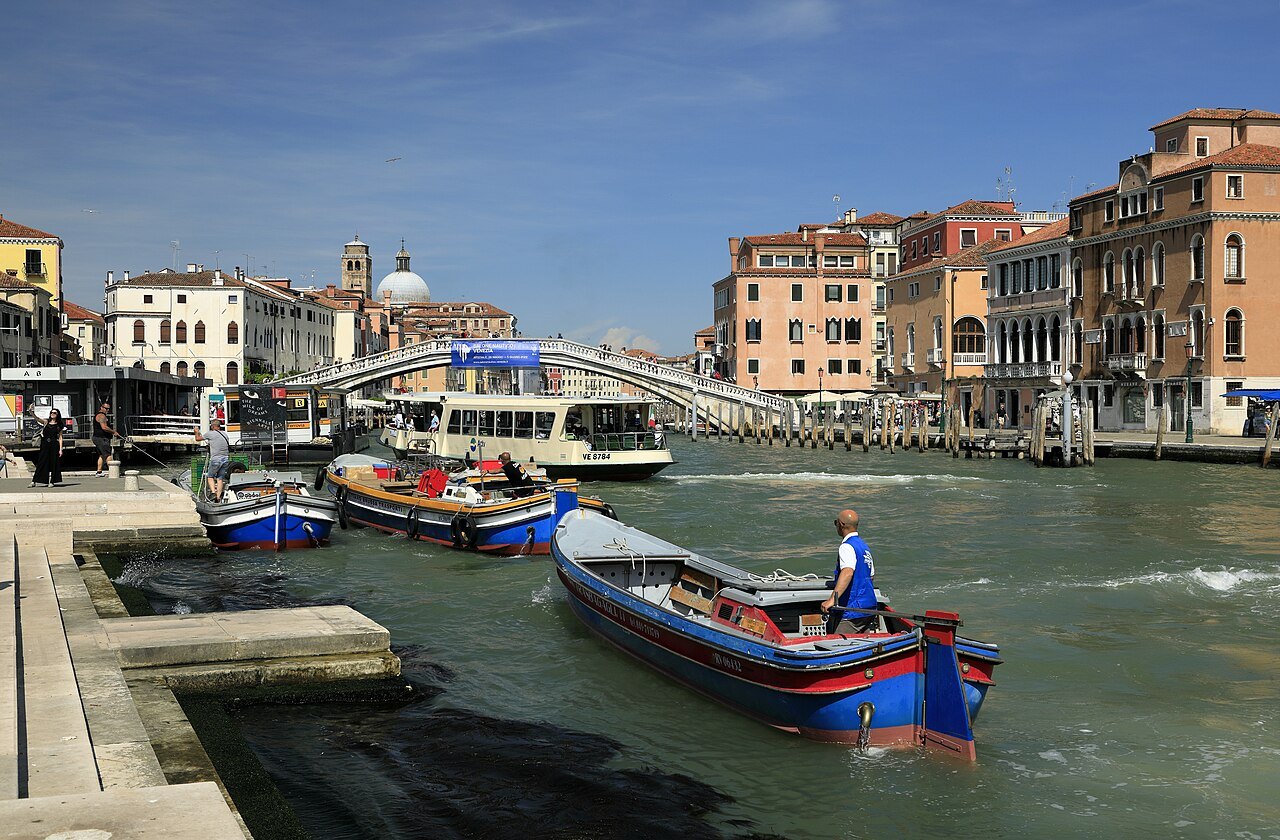
Water taxis are private motorboats hired for a single trip. They are the fastest way across the city and out to the airport, and the most expensive, but for a group with luggage arriving at a hotel with its own landing they can make sense. Agree the fare before you board.
The Lido, the tides and the season
The Lido and Pellestrina, the long islands that separate the lagoon from the Adriatic, are the exceptions: road traffic and buses are allowed there, and water buses link them to Venice, Murano and Burano.
Two things change how the city moves. On days of high water, the acqua alta, the lowest parts of the city, above all Piazza San Marco, can flood at high tide. The city's tide center forecasts these tides a day or two ahead, sirens sound across the city before a very high one, and the water rises and falls with the tide rather than staying (see when to come). And in the busiest months the water buses on the Grand Canal fill up; walk when you can, and use the boats for the long stretches and the islands.
Plan your days by district rather than by list, and you will spend more of them looking at Venice and less of them in transit (see the sestieri and itineraries).
Seen on the wayIII
More photographs
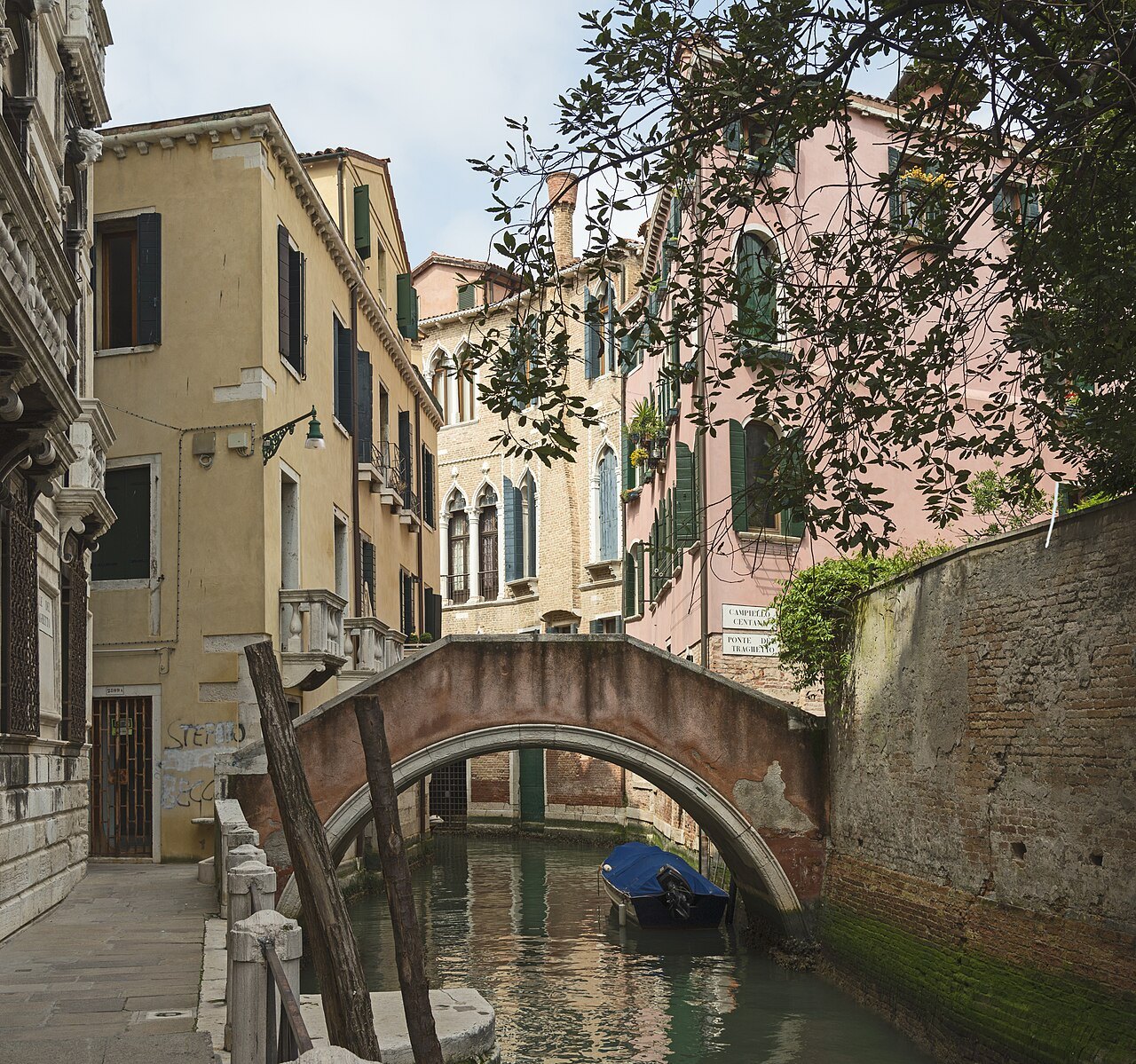
The Ponte del Traghetto over a quiet canalDidier Descouens, Wikimedia Commons, CC BY-SA 4.0 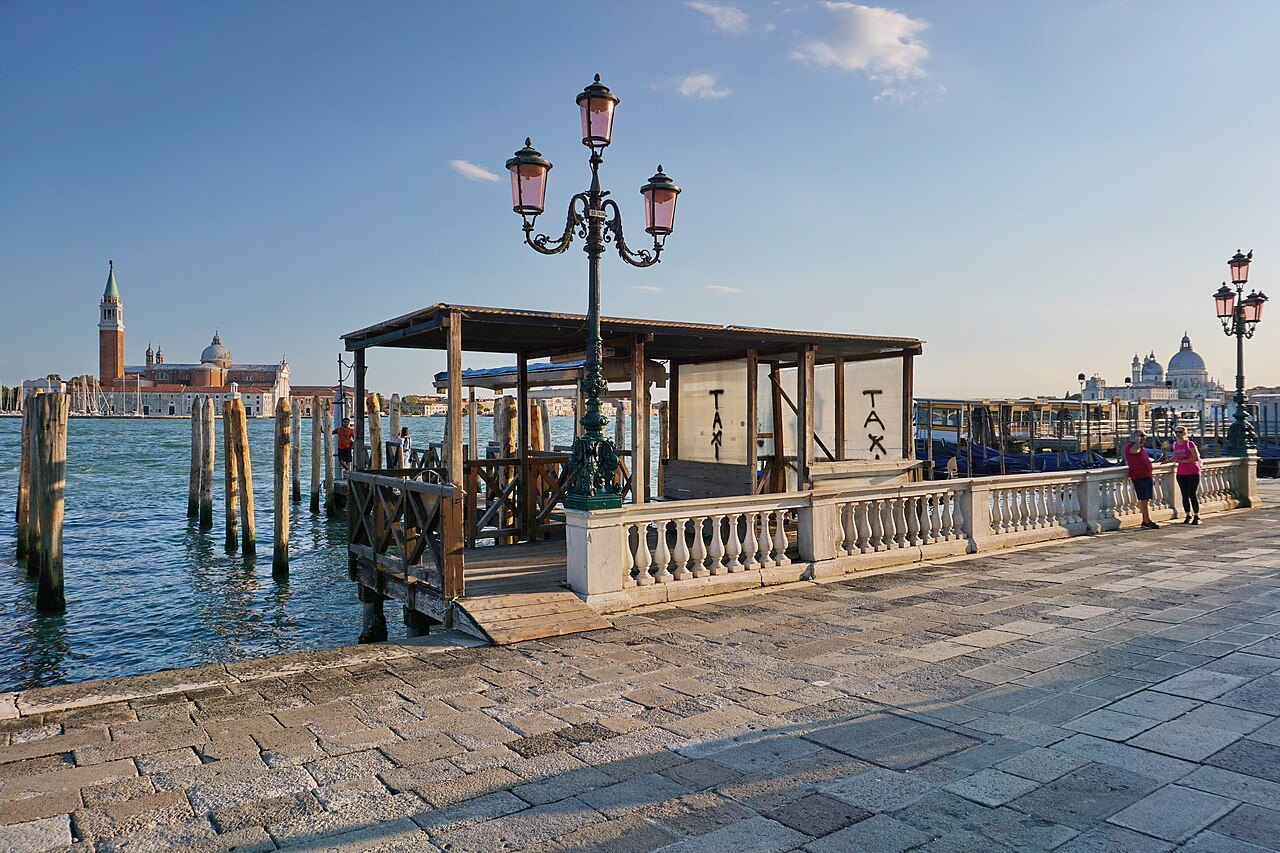
The water-taxi stand on the Riva degli SchiavoniArmin Kleiner, Wikimedia Commons, CC BY-SA 4.0 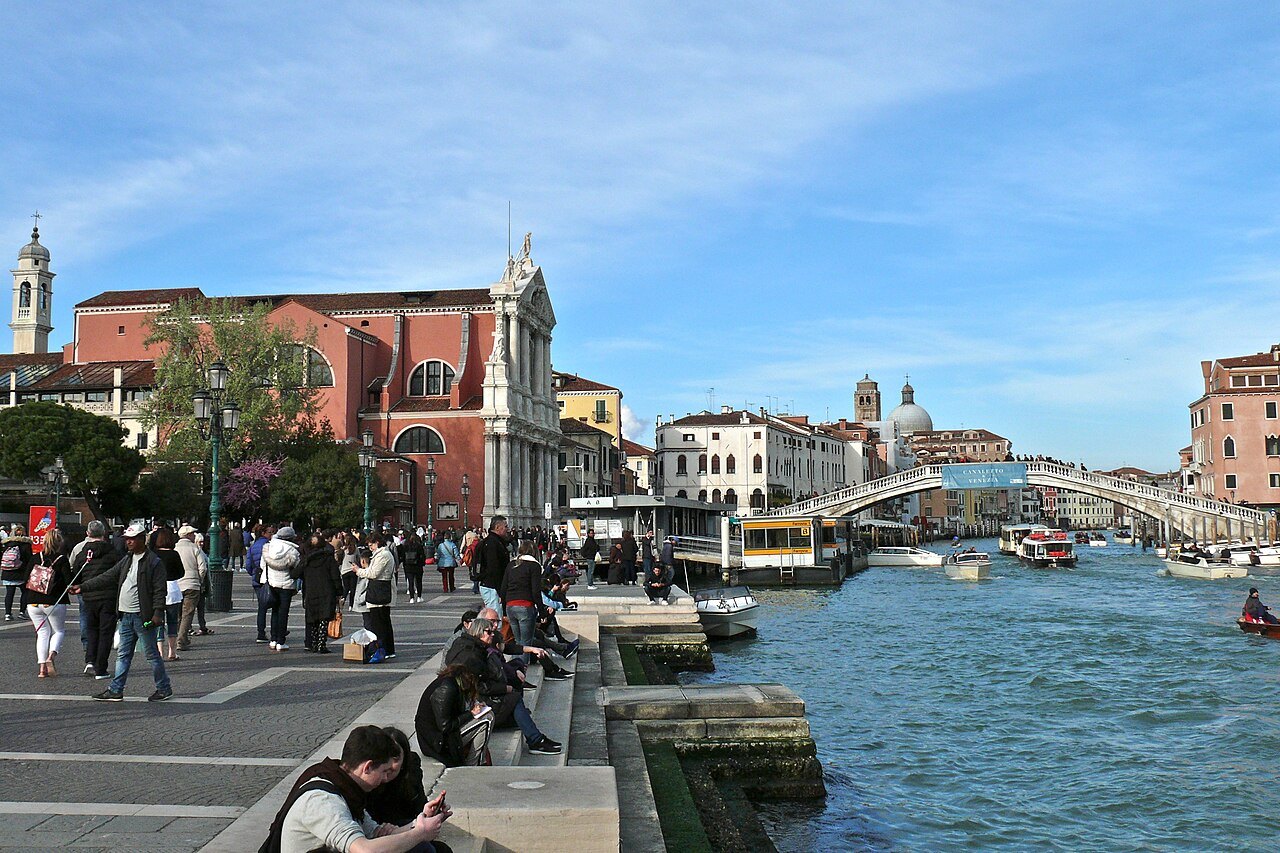
The Scalzi church and bridge on the Grand Canal by the stationMichael Wittwer, Wikimedia Commons, CC BY-SA 4.0