Home · When to Come
The yearI
Month by month
A band of lagoon green marks the months whose notes mention the high tides.
- JanuaryThe coldest month, with a daily average around 39°F. Damp, often misty, and within the season of high tides; snow is possible.
- FebruaryCarnival month in most years: about two weeks of masks and costume ending on Shrove Tuesday, and the busiest weeks of winter.
- MarchWinter lingers; snow is still possible early in the month, and Carnival sometimes falls here when Easter is late.
- AprilSpring and the start of the season: several water-bus lines begin their summer service, and the access-fee days for day visitors begin.
- MayWarm and busy. The Festa della Sensa, on the feast of the Ascension, marries the city to the sea, and the Biennale opens.
- JuneLong days and full streets. The Sensa can fall early in the month, and the access-fee days continue on weekends and holidays.
- JulyThe warmest month, with a daily average near 75°F, and humid. The Redentore fireworks light the basin on the third weekend.
- AugustHot and crowded, as all Italy is on holiday. The Film Festival opens on the Lido late in the month.
- SeptemberStill warm. The Regata Storica races down the Grand Canal on the first Sunday, and the Film Festival ends early in the month.
- OctoberMilder, with the season winding down and the first high tides; the summer-only water-bus lines finish at the end of the month.
- NovemberThe heart of the high-water season. On the twenty-first the Festa della Salute crosses the Grand Canal on a bridge of boats.
- DecemberShort days, damp cold and high tides, and the Biennale closed; snow is possible from late November.
In fullII
When to Come
The climate
Venice has a four-season climate, humid subtropical in the classification geographers use, with cool, damp winters and warm, humid summers. The daily average in January is about 39°F and in July about 75°F, and rain falls fairly evenly through the year, so there is no dry season to aim for. Snow is not uncommon between late November and early March, and in the hardest winters of the past the canals and parts of the lagoon froze, though that has become rarer as the climate has warmed.
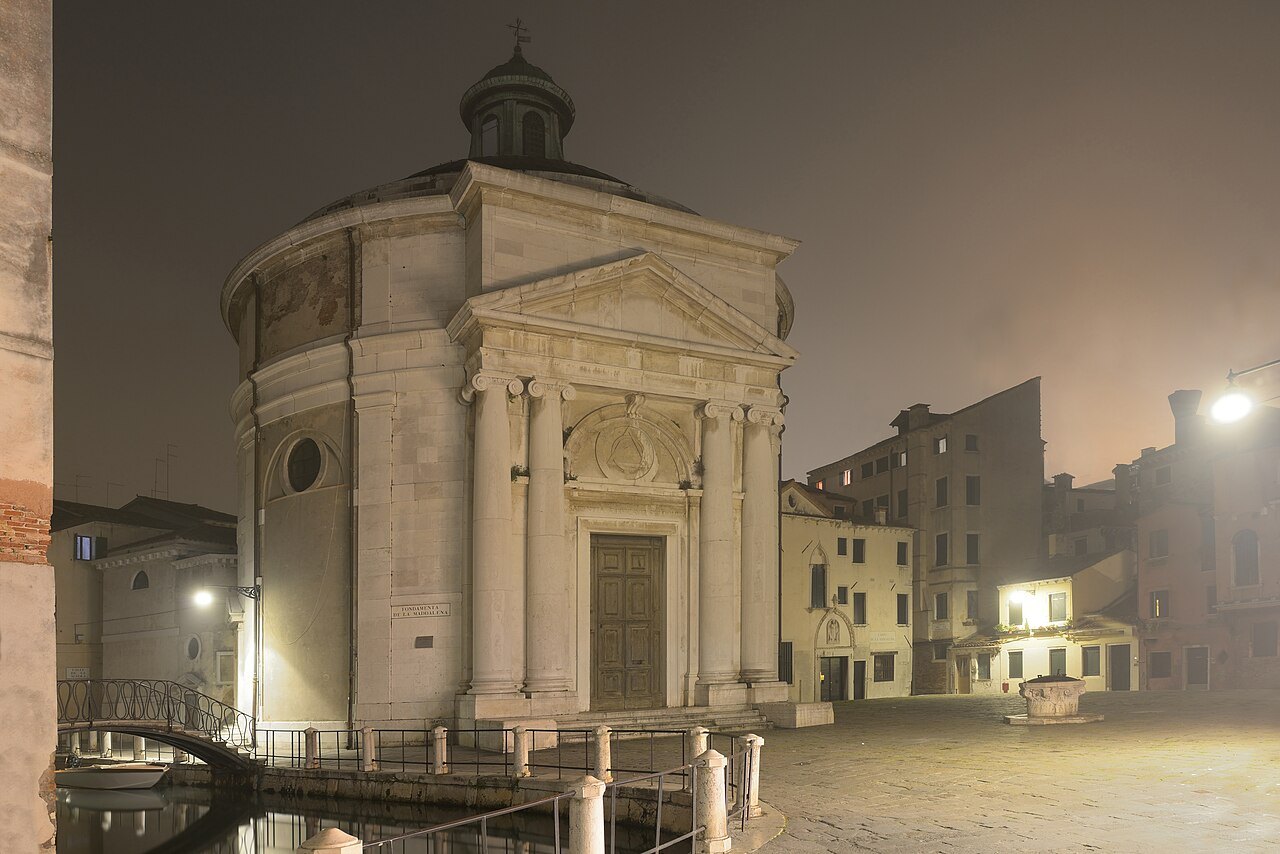
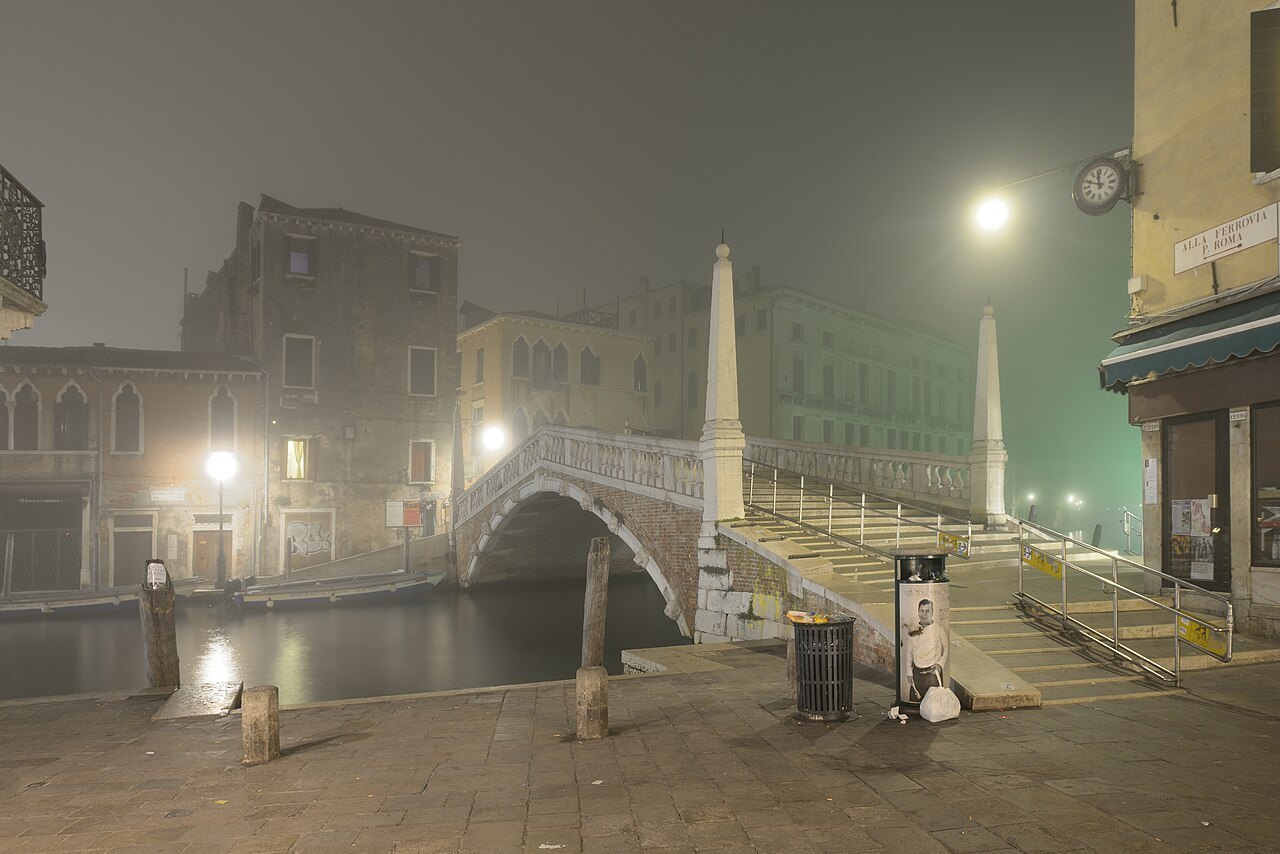
What the figures leave out is the lagoon. In winter mist can lie on the water for days, and the city and the islands disappear into it; in summer the heat is heavy and damp, the canals are warm, and the stone holds the heat into the evening. Both are part of the place. Spring and autumn are the mildest seasons, and the most comfortable for walking.
High water
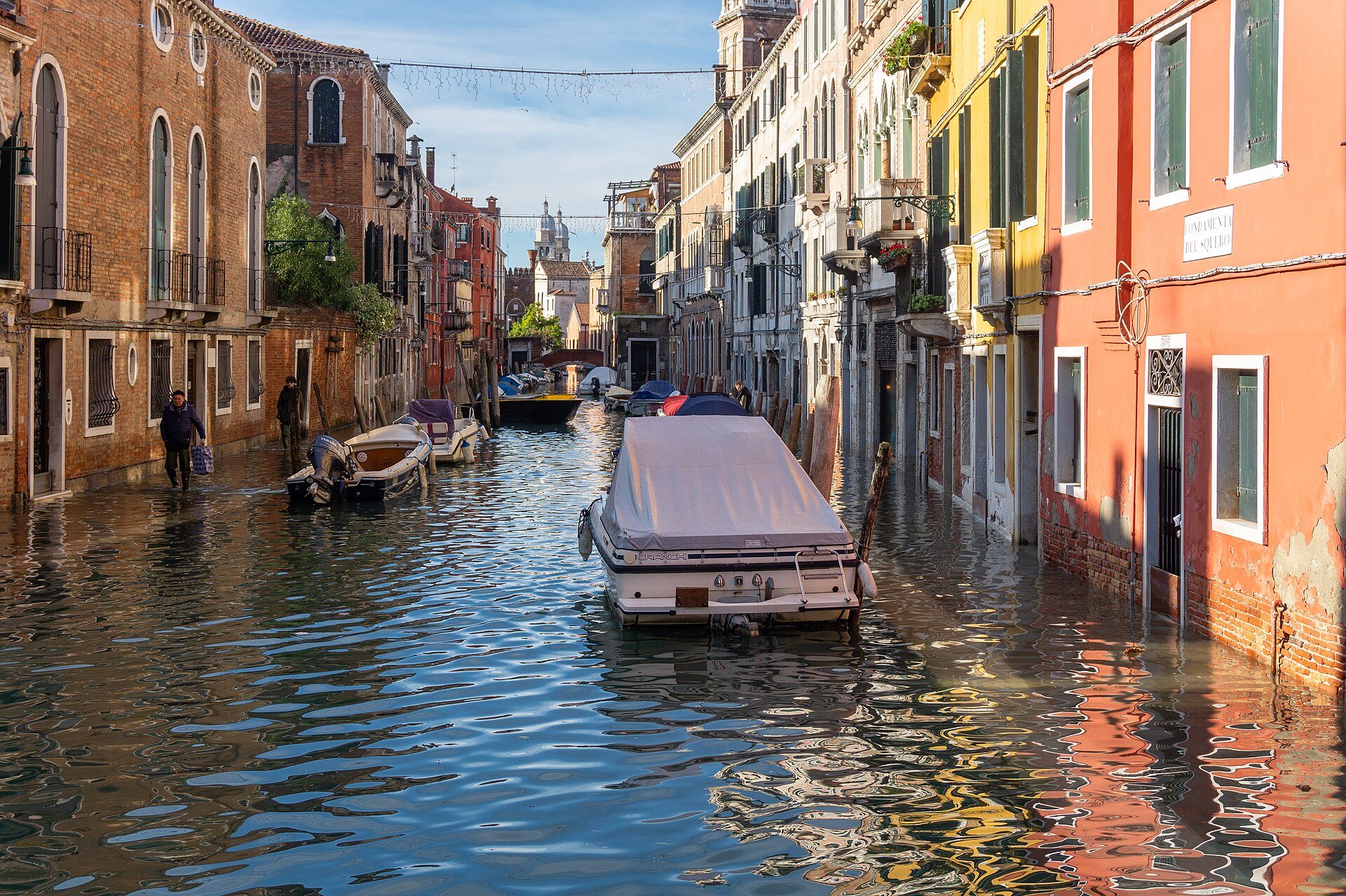
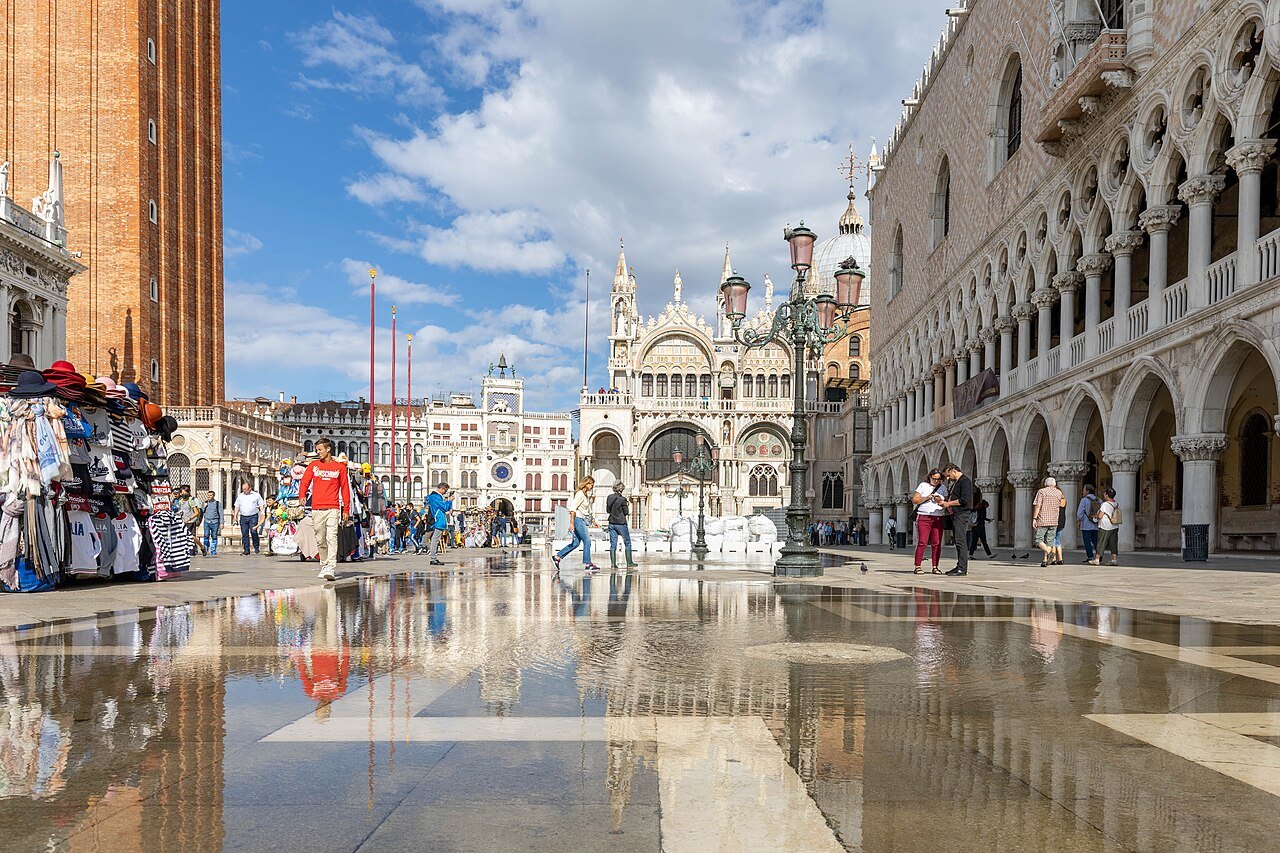
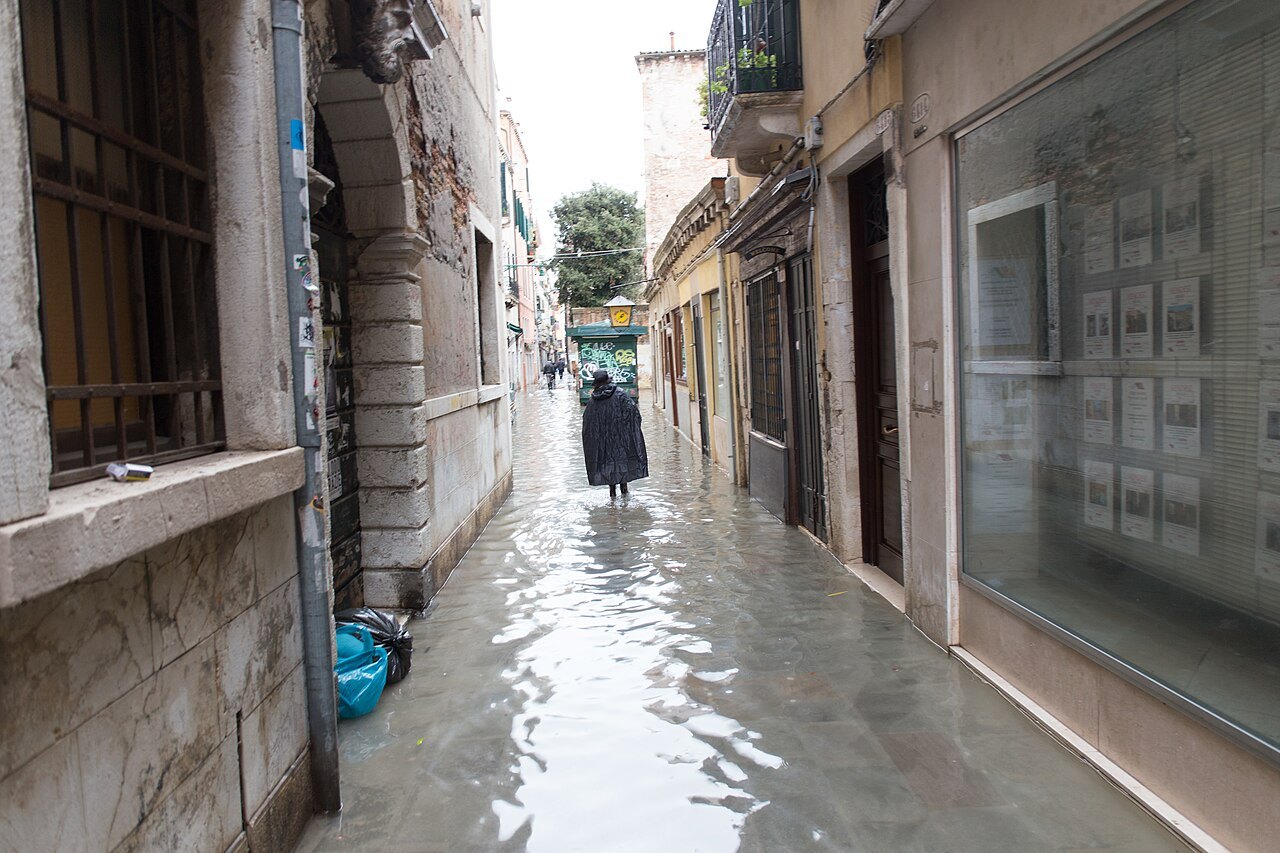
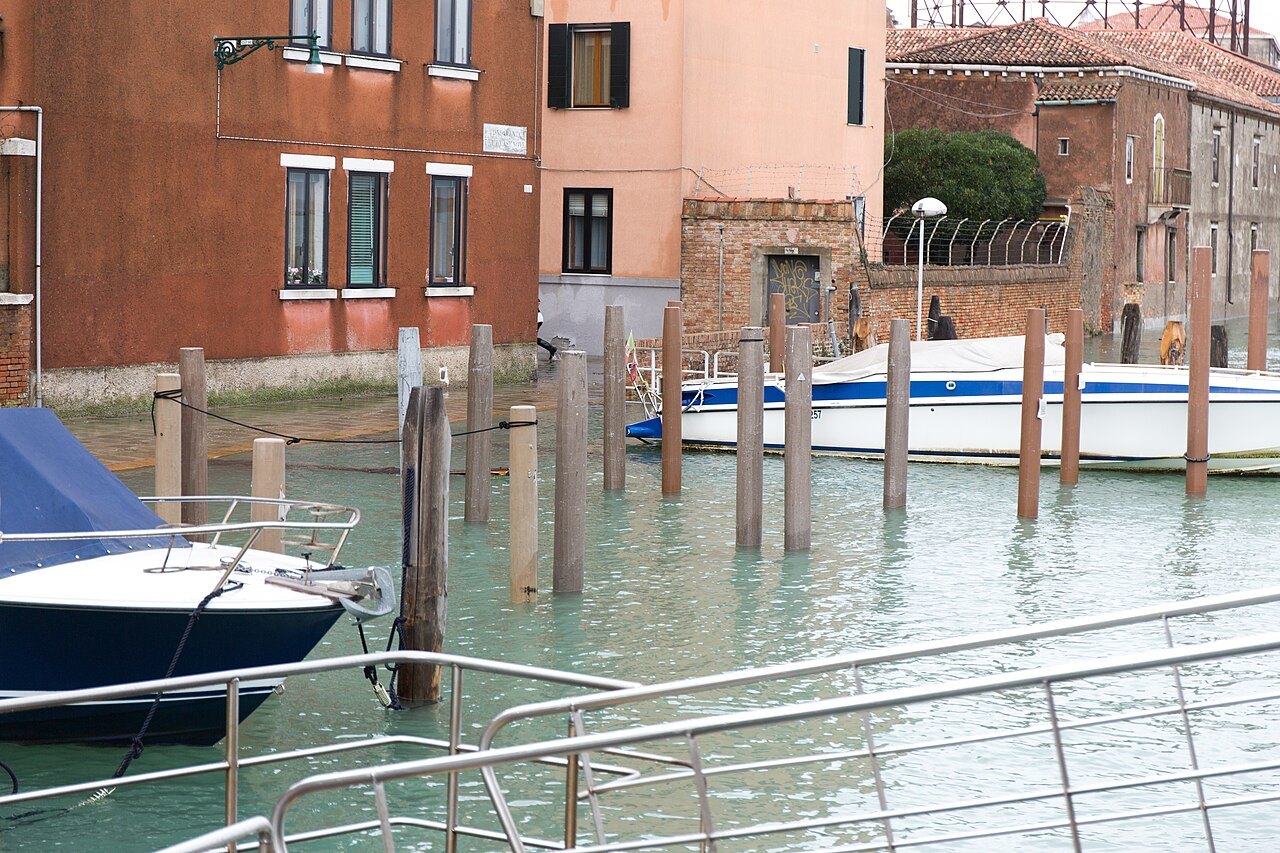
Between autumn and spring, the acqua alta, the high water, can flood the lowest parts of the city. It happens when the ordinary tides are pushed higher by the seasonal winds, above all the sirocco blowing up the Adriatic, which hold the water back in the lagoon. The lowest point of the city is the area around St Mark's Basilica, where the square floods first; the flooding elsewhere varies with the height of each quay and pavement and its distance from a canal.
The city's tide center forecasts the tides, usually for the next two days, and before a very high one sirens sound across the city with a sequence of tones that rises with the expected level. The water comes and goes with the tide. The worst floods in memory came on 4 November 1966, with the water at a record 194 centimeters, and on 13 November 2019, when more than eighty percent of the city was under water.
Since October 2020, the MOSE barriers, rows of hollow gates on the seabed at the three inlets of the lagoon, have been raised against the highest forecast tides, and they have kept the water out of the lowest parts of the city, including Piazza San Marco, on days it would once have flooded. High water is less of a threat to a visit than it was, but in the high-water months pack shoes you do not mind getting wet, and check the forecast (see the lagoon).
The crowds
The harder problem is people. Venice receives many millions of visitors a year, and in the peak season Piazza San Marco and the approaches to the Rialto can become too crowded to walk through. Much of the crowd is day visitors, who arrive in the morning and leave in the evening, and for that reason the city charges day visitors an access fee on its busiest days, mostly weekends and holidays between April and July, and asks them to register in advance. Visitors staying the night pay a lodging tax instead (see getting here).
The practical answer is to stay overnight. In the early morning and the evening, when the day visitors have gone, even the center is quiet, and the lanes a few minutes from the main routes are quiet all day. Book the busiest sights ahead in any season (see booking ahead), and if you can, come outside the summer months.
The city's own feasts
Venice keeps a calendar of festivals that are older than tourism. Carnival, which traces its origins to the Middle Ages, was abolished with the Republic in 1797 and revived in 1979; it lasts about two weeks and ends on Shrove Tuesday, the day before Lent, with masks and costumes everywhere and the densest crowds of the winter.
On the feast of the Ascension, the Festa della Sensa recreates the Marriage of the Sea: after a procession of boats, the mayor, in the role the doge once played, throws a ring into the lagoon, and a regatta opens the local rowing season. On the third Sunday of July, the Festa del Redentore gives thanks for the end of the plague of 1576; a bridge of boats crosses the Giudecca Canal to Palladio's church of the Redentore, and on the Saturday night the basin fills with boats for a great display of fireworks.
On the first Sunday of September the Regata Storica, the most important sporting event of the city's year, brings a procession of historic boats and then races rowed in the Venetian style down the Grand Canal. And on 21 November the Festa della Madonna della Salute gives thanks for the end of the plague of 1630: a bridge of boats is laid across the Grand Canal, and the city's officials and thousands of Venetians walk across it in procession from San Marco to the Salute for a service of thanksgiving.
The Biennale and the Film Festival
The Venice Biennale, first held in 1895, is one of the oldest and most important exhibitions of contemporary art in the world. The Art Biennale is held in even years and the Architecture Biennale in odd years, each running from spring into late autumn, with national pavilions in the gardens and the old ropewalks of the Arsenale in Castello. The Venice Film Festival, founded in 1932 and the oldest in the world, takes place on the Lido every year in late August or early September.
Both fill the city's hotels. If you are coming for them, book early; if you are not, check their dates before you choose yours.
Choosing a season
Every season has a price. Winter, from November to February, brings the fewest visitors outside Carnival, the lowest light and the most atmospheric city, but also damp cold, mist, short days and the high-water season, and some water-bus lines run only from April to October. Summer brings long days, the Redentore and the start of the Film Festival, but heat, humidity and the densest crowds of the year.
Spring and autumn are the compromise most visitors choose, and they are the best seasons for walking: April and May, before the heat, and late September and October, after it, with the Regata Storica and the Biennale still open. Whenever you come, the rhythm of the day matters as much as the month. Go out early, rest in the middle of the day, and walk again in the evening, when the city belongs to the people who live in it and to those who stayed the night (see itineraries).
Seen on the wayIII
More photographs
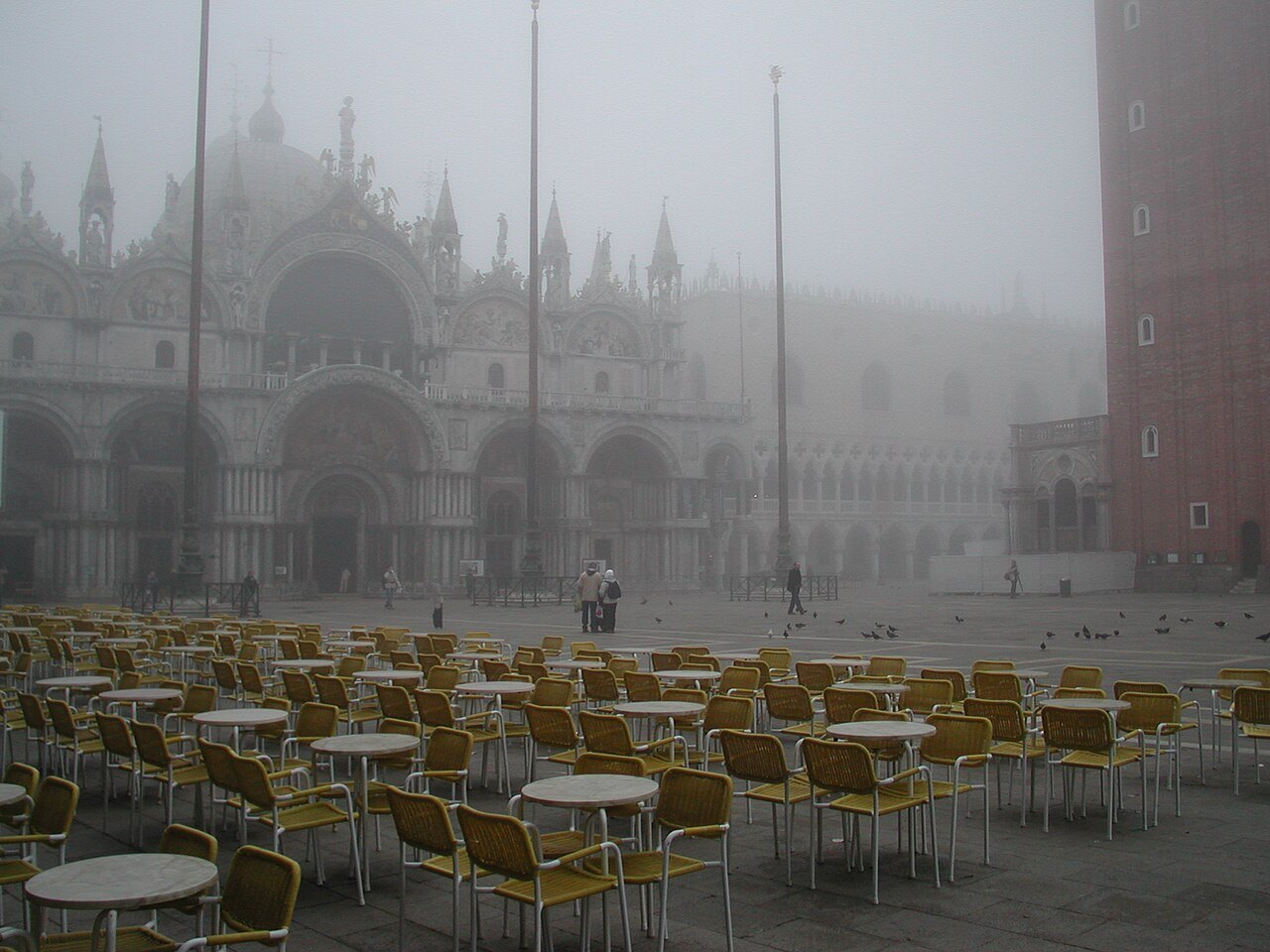
Piazza San Marco and the basilica in winter fogUnknown, Wikimedia Commons, CC BY-SA 2.5 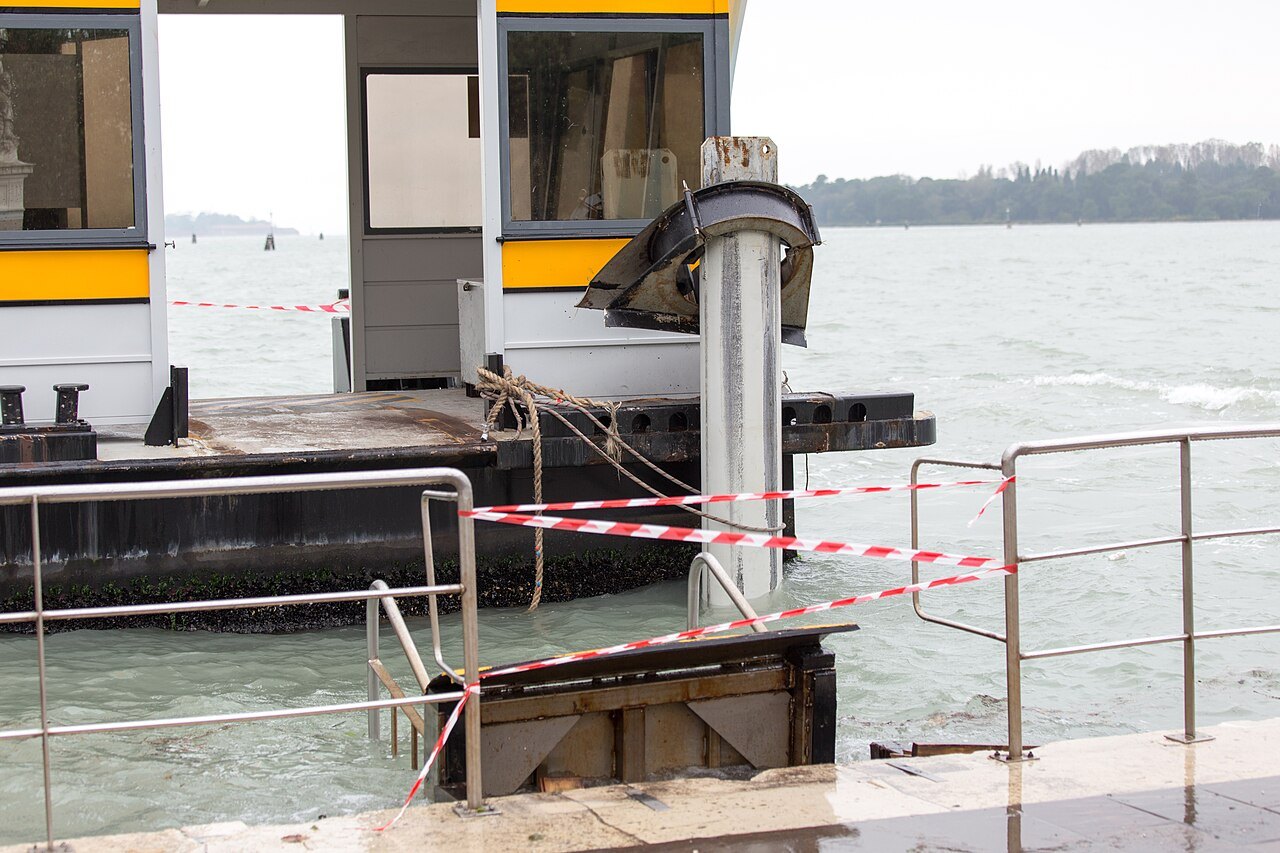
A water-bus landing closed off during high waterGodeNehler, Wikimedia Commons, CC BY-SA 4.0 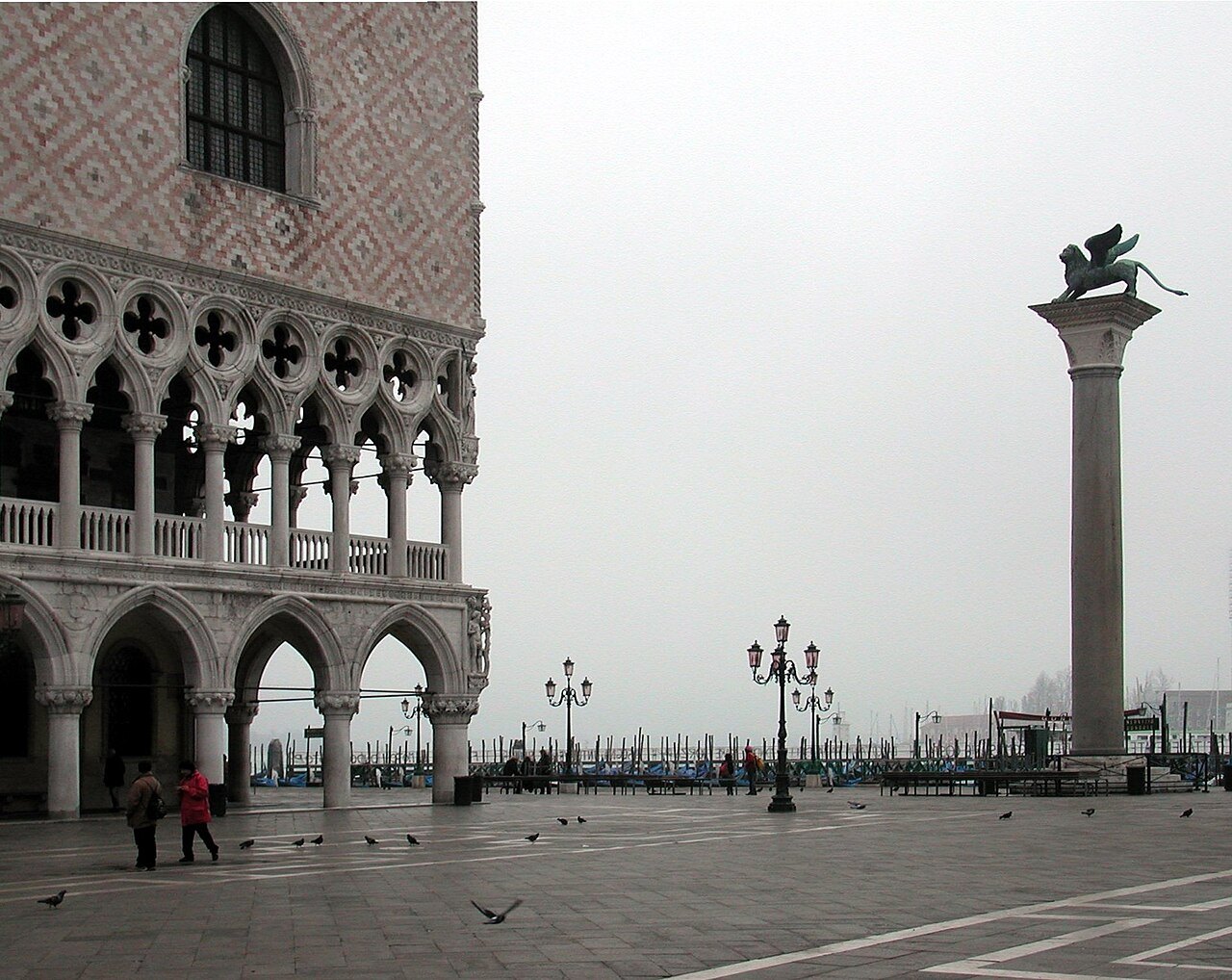
The Piazzetta in fog, the Doge's Palace and the lion columnUnknown, Wikimedia Commons, CC BY-SA 2.5