For a thousand years Venice ruled the mainland behind its lagoon, and the cities of the Veneto still carry its lion. Padua, Vicenza, Treviso and Verona are each a short train ride from Santa Lucia, the villas of the Brenta line the old waterway to Padua, and Chioggia keeps the lagoon's other fishing town at its southern inlet.
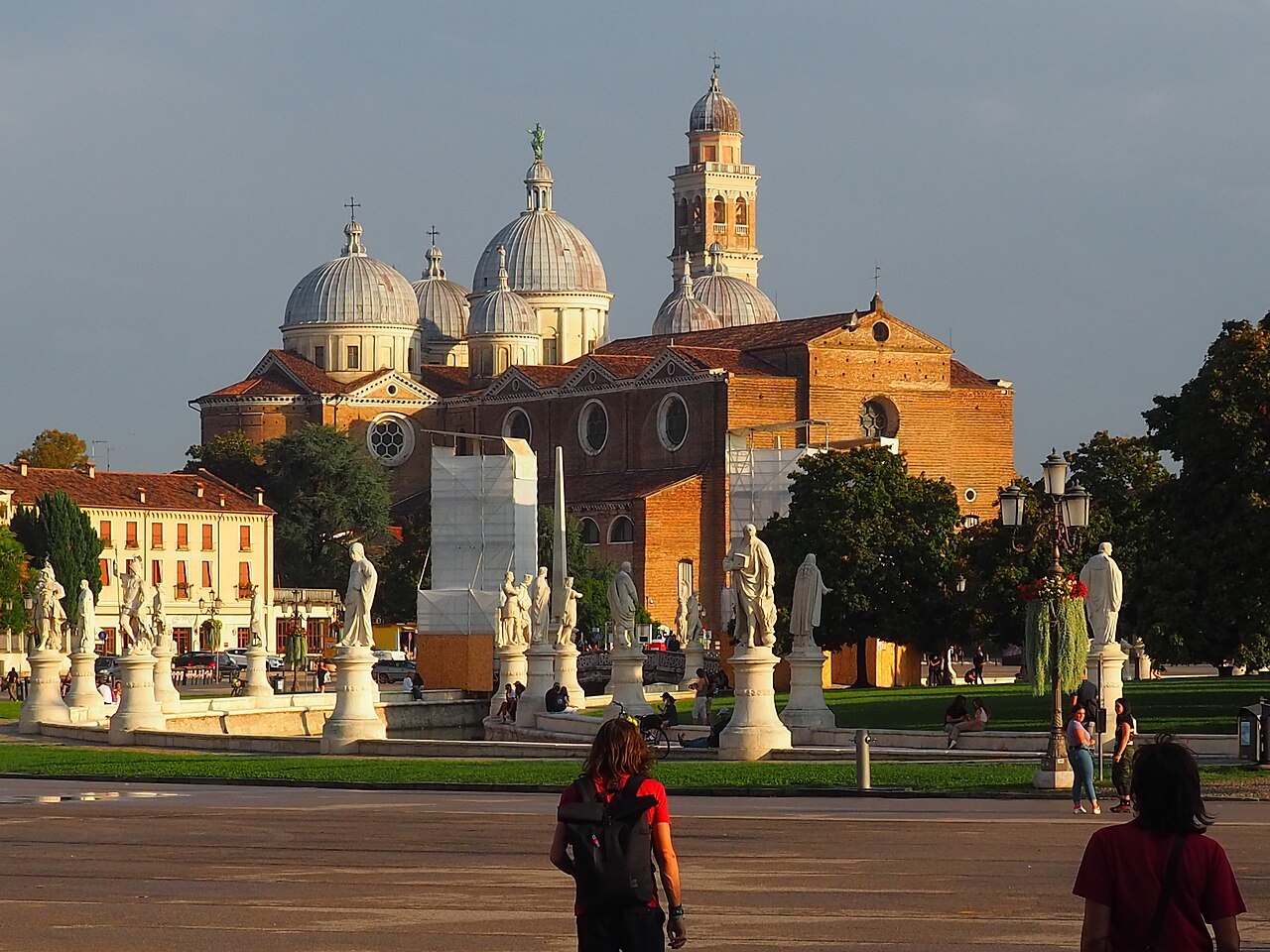
The Prato della Valle and the basilica of Santa Giustina in PaduaThreecharlie, Wikimedia Commons, CC BY-SA 4.0By train from Santa Lucia, about forty kilometers westPaduaA university city since 1222, with Giotto's frescoes in the Scrovegni Chapel, the Basilica of Saint Anthony and the world's oldest botanical garden.
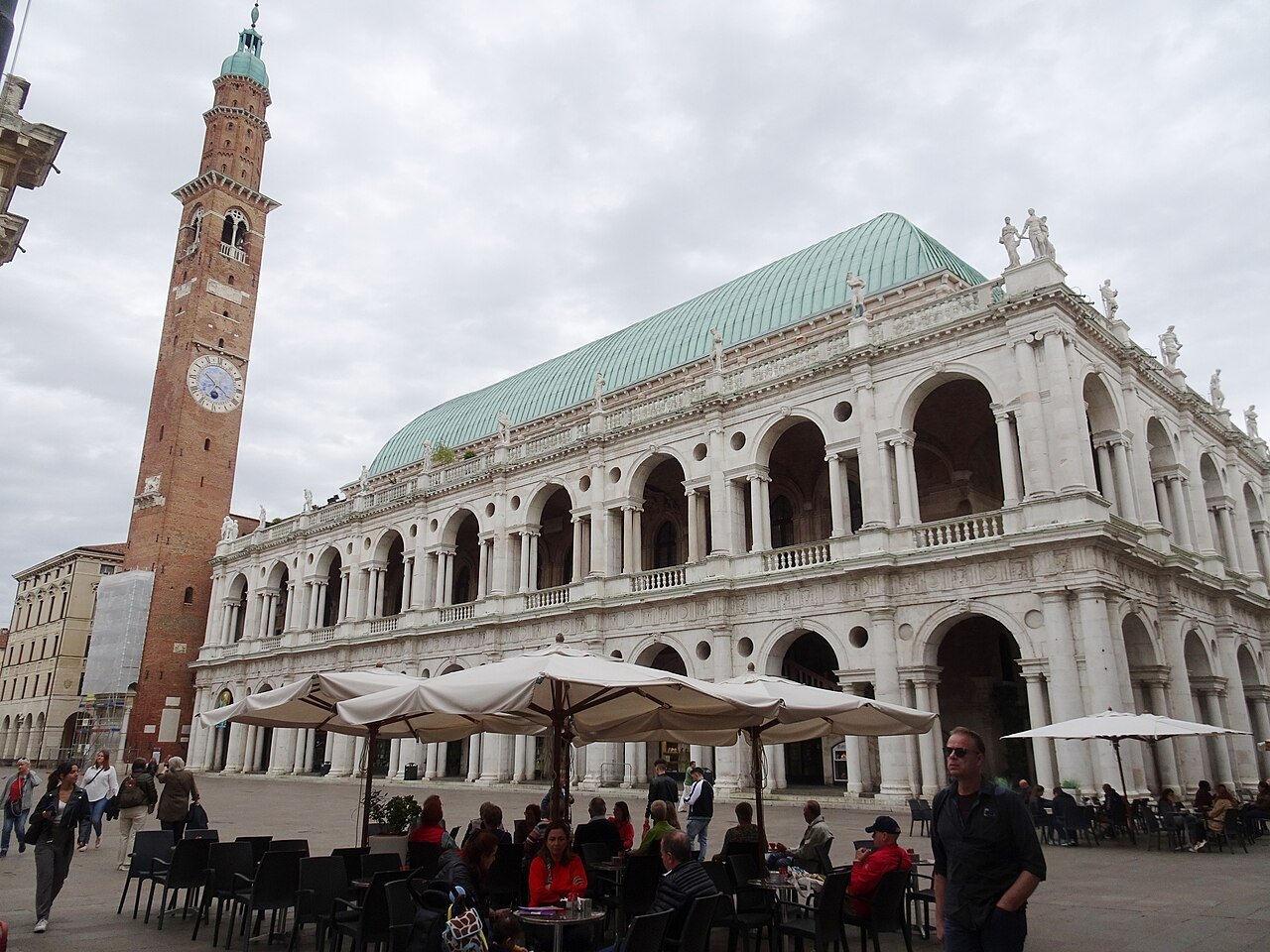
The Basilica Palladiana and its tower in VicenzaPalickap, Wikimedia Commons, CC BY-SA 4.0By train, about sixty kilometers westVicenzaThe city of Palladio, with his palaces, the villas around it, and the Teatro Olimpico, his last work.
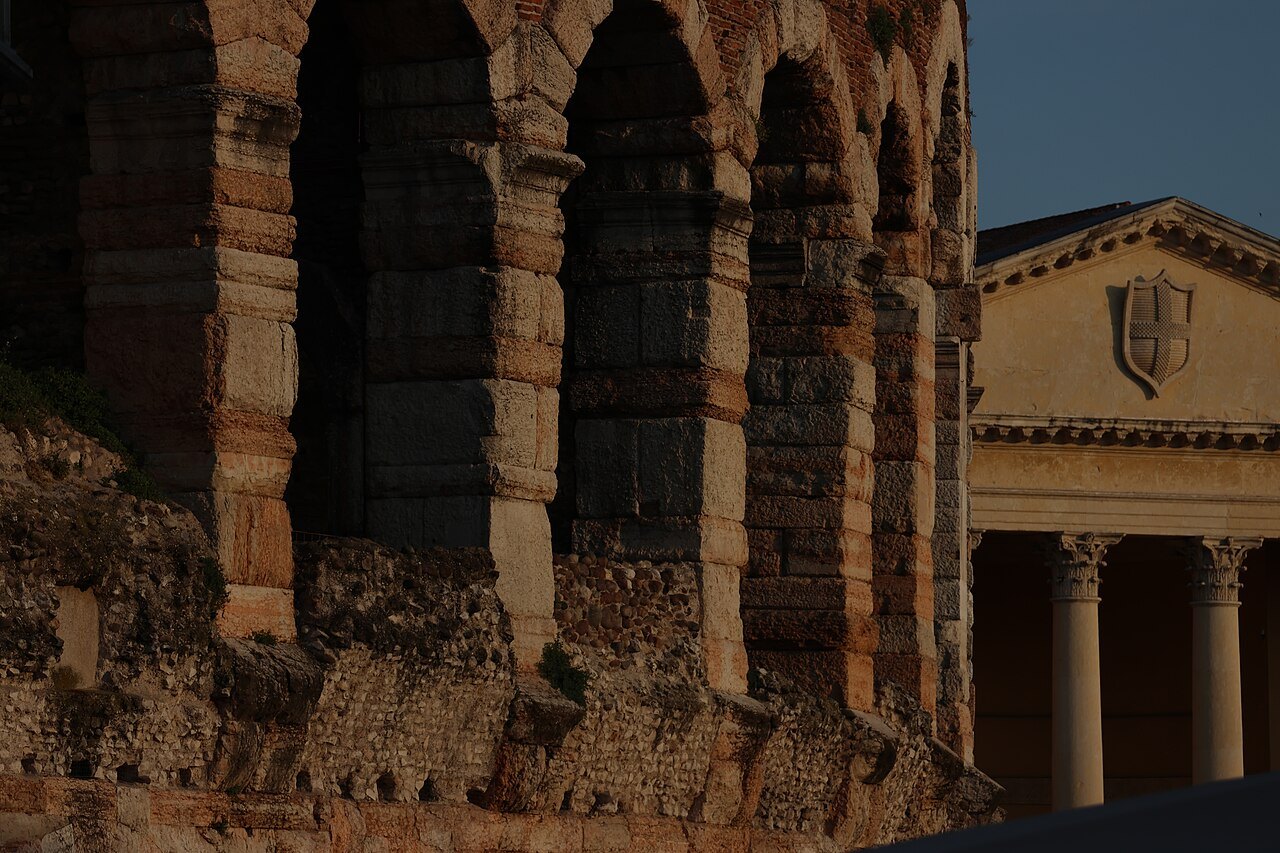
The arches of the Arena in VeronaSamueleop, Wikimedia Commons, CC BY-SA 4.0By train on the main line west toward MilanVeronaThe Veneto's largest city, with its Roman Arena, the monuments of the della Scala, and Shakespeare's Romeo and Juliet.
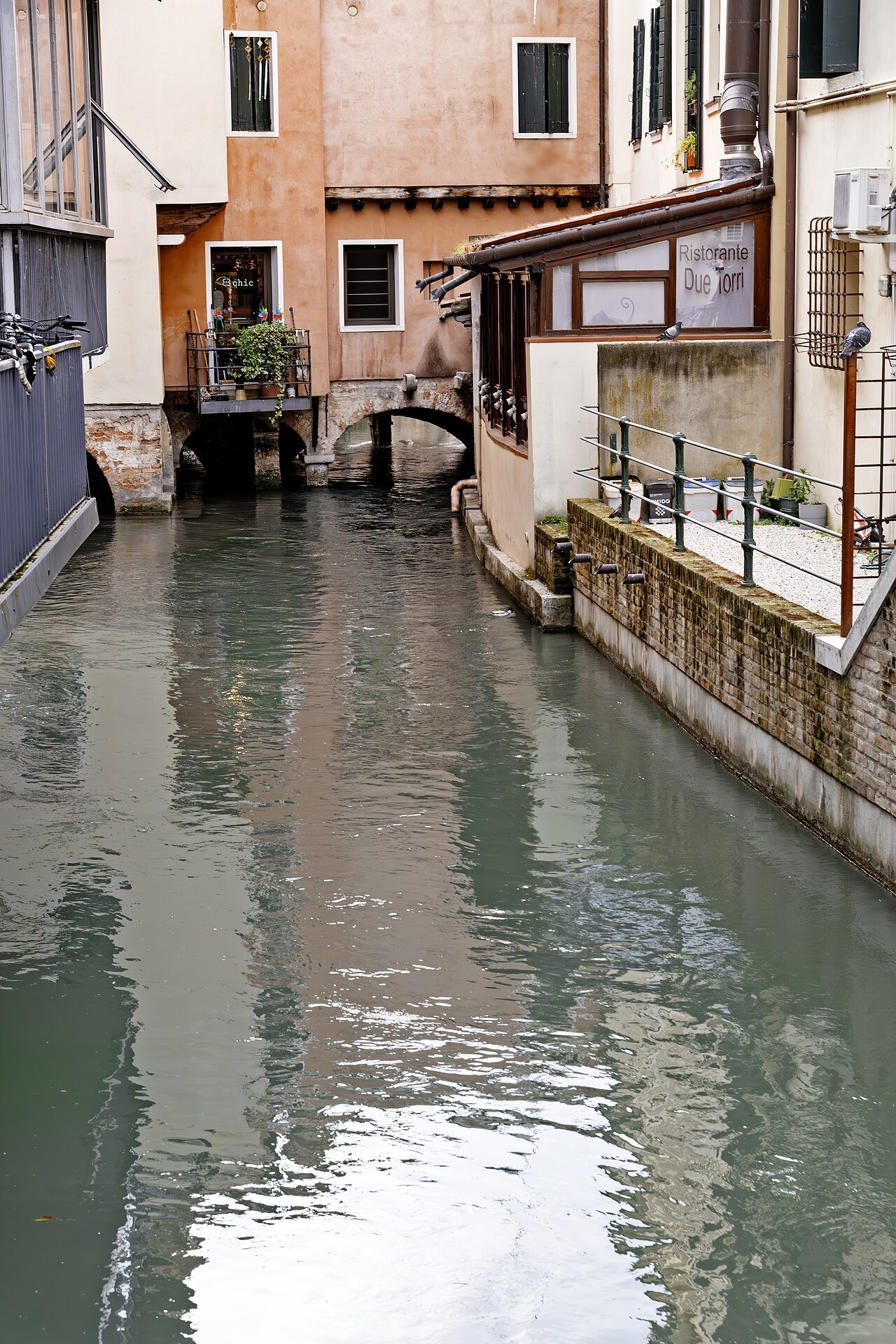
The Canale dei Buranelli in TrevisoDidier Descouens, Wikimedia Commons, CC BY-SA 4.0By train north across the plainTrevisoA walled town of canals on the Sile river, home of radicchio and, it is thought, of tiramisù.
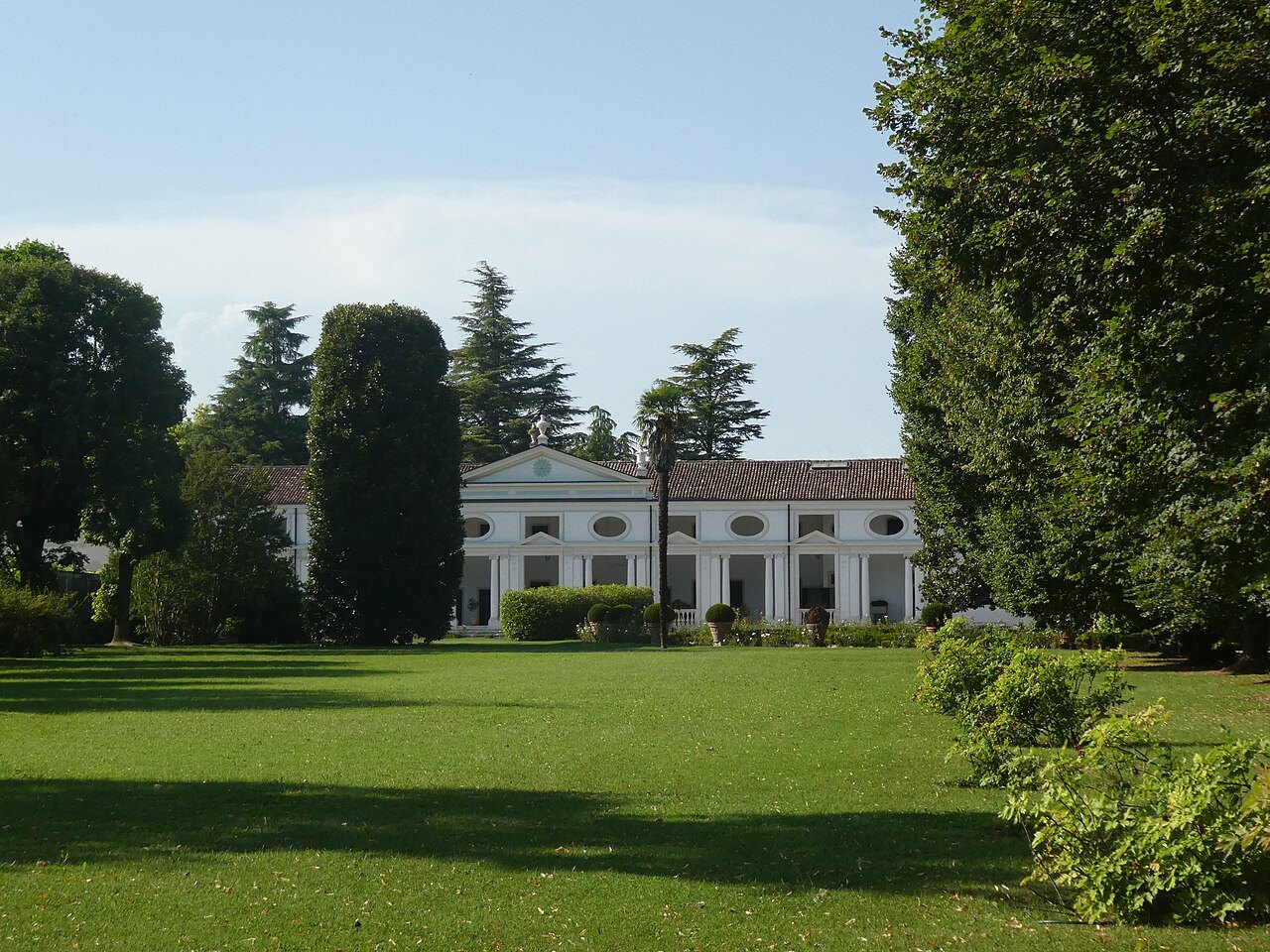
The garden front of Villa Pisani at StraSyrio, Wikimedia Commons, CC BY-SA 4.0By bus or riverboat along the canal toward PaduaThe Brenta RivieraThe Venetian nobility's summer villas along the Brenta canal, from Palladio's Malcontenta to the palace of Villa Pisani at Stra.
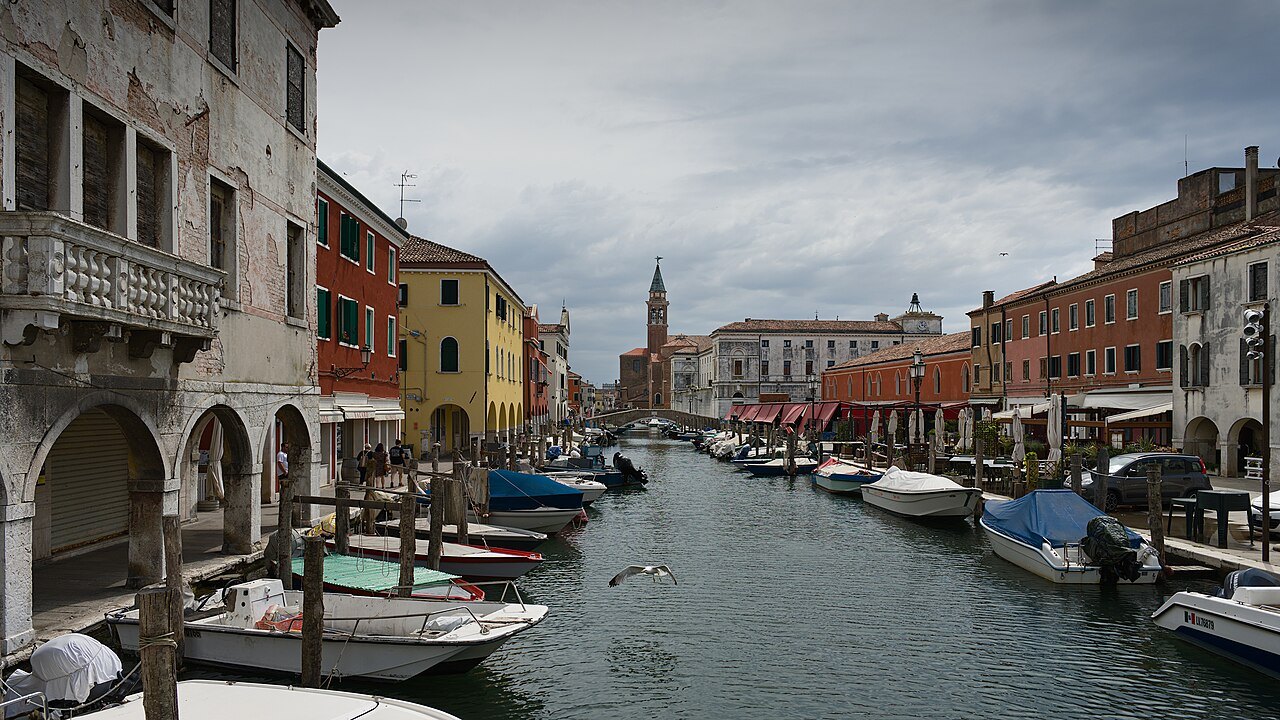
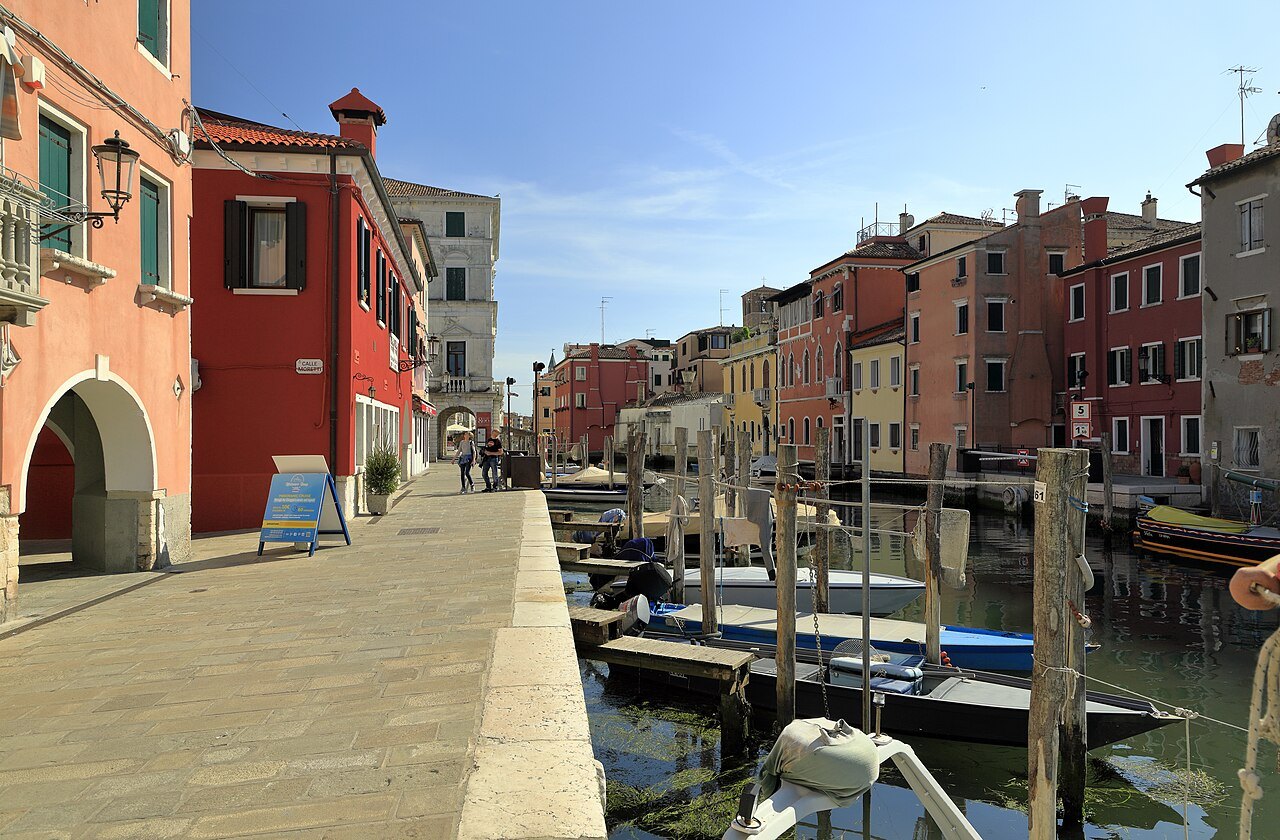
The Canal Vena in Chioggia, lined with boatsMiha Peče, Wikimedia Commons, CC BY 4.0By water and bus down the Lido and Pellestrina, or by bus on the mainlandChioggiaThe fishing town on an island at the lagoon's southern inlet, with its own canals and calli.
In fullII
Day Trips
The Republic's mainland
From the fifteenth century the Republic of Venice ruled not only its lagoon and its sea empire but a large territory on the Italian mainland, and the cities of the Veneto spent centuries under the lion of Saint Mark. Their squares still carry the lion on its column, their painters trained in Venice, and their nobles built villas along the rivers and canals that ran to the lagoon.
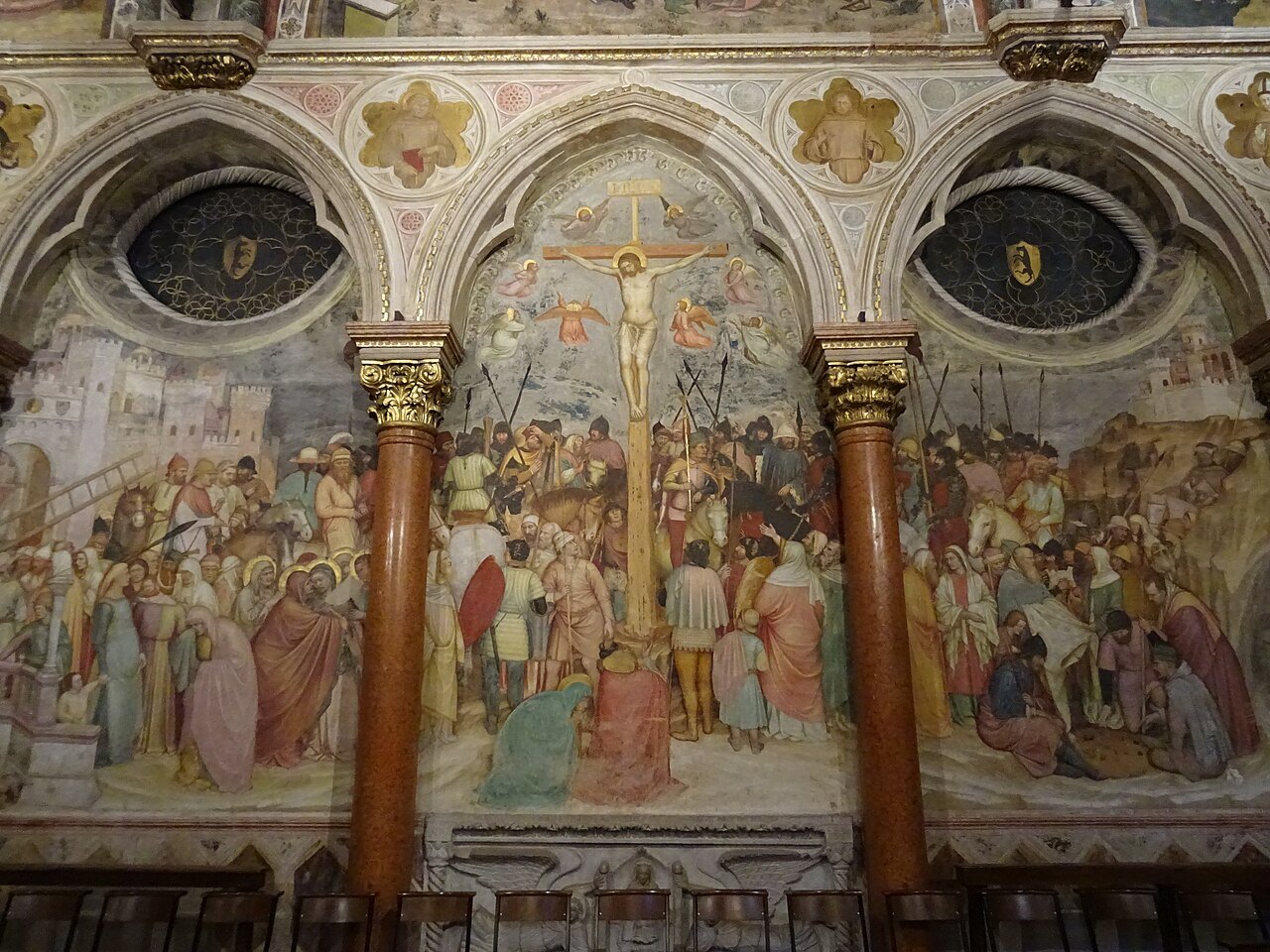
Frescoes in the chapel of San Giacomo in the Basilica of Saint Anthony, PaduaSyrio, Wikimedia Commons, CC BY-SA 4.0
That makes the Veneto the natural complement to a stay in Venice. After days of water and stone, a day on the mainland brings Roman ruins, Giotto, Palladio in his own city, and farmland and hills on the horizon. Every destination below is reached by public transport, most of them by the regional and high-speed trains from Santa Lucia that also stop at Venezia Mestre, and each fits comfortably into a day with the evening back in Venice (see getting here).
Padua
Padua lies on the river Bacchiglione, about forty kilometers west of Venice, and is the third city of the Veneto. It has been a university city since 1222, one of the oldest in the world, where Galileo taught. Its great sight is the Scrovegni Chapel, where Giotto and his team covered every inner surface, walls and ceiling, with a fresco cycle completed around 1305, one of the masterpieces of Western art; it is part of the city's fourteenth-century frescoes on UNESCO's World Heritage List.
The Basilica of Saint Anthony, known locally simply as Il Santo, draws pilgrims from all over the world, and in the square before it stands Donatello's equestrian statue of Gattamelata, the Venetian general. The botanical garden, founded by the university, is the oldest in the world and also on the World Heritage List. Check the Scrovegni Chapel's visiting arrangements before you go, and give it time. In 1610, in Padua, Galileo turned a homemade telescope on Jupiter and saw its moons.
Vicenza and the villas
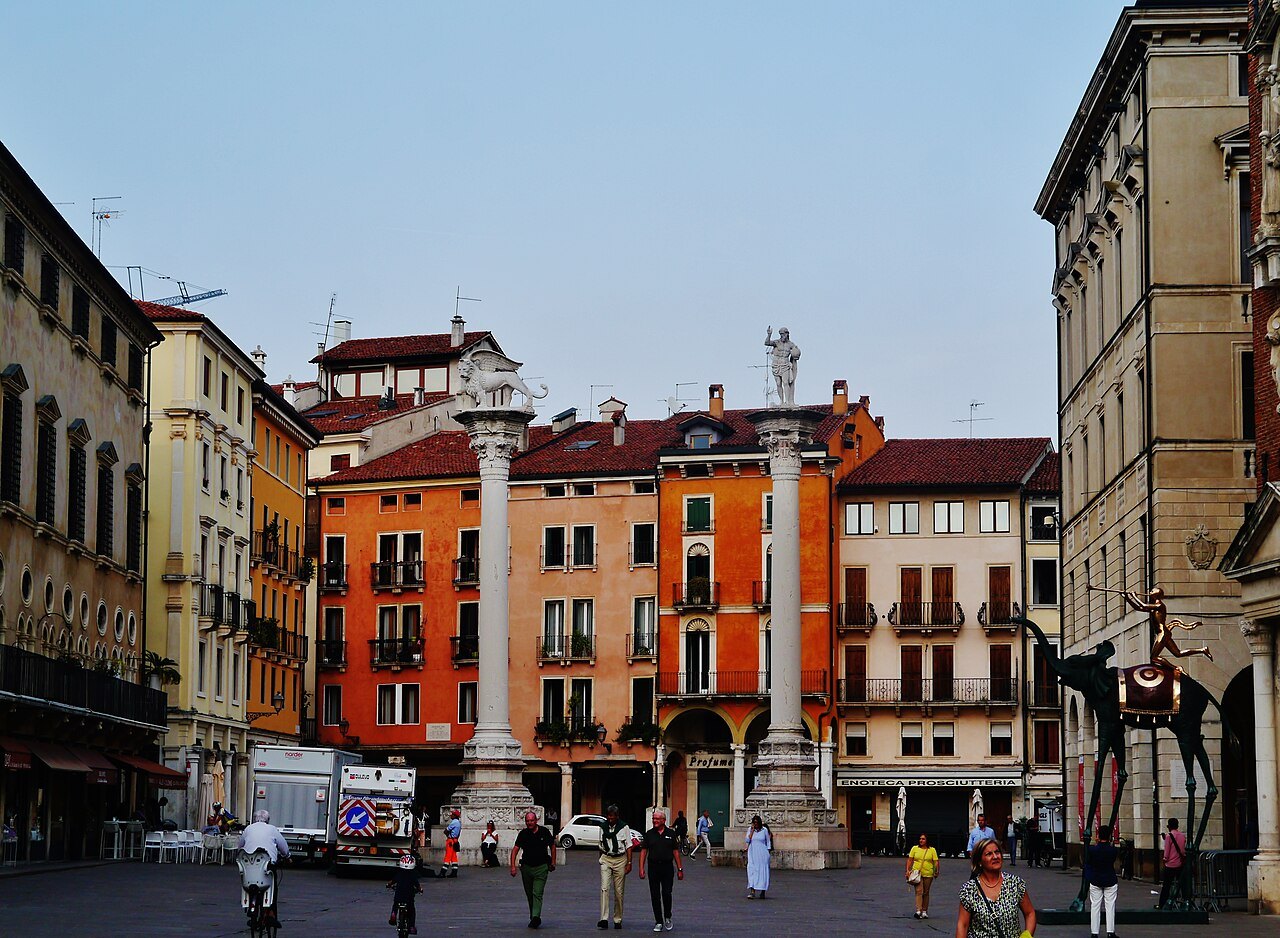
The Piazza dei Signori in Vicenza with its two columnsZairon, Wikimedia Commons, CC BY-SA 4.0
Vicenza, about sixty kilometers west of Venice at the foot of Monte Berico, is the city of Andrea Palladio, the architect of San Giorgio Maggiore. His palaces line its streets, and with the Palladian villas of the surrounding countryside the city has been a World Heritage Site since 1994. The Teatro Olimpico, built between 1580 and 1585, was Palladio's last work; its stage set, designed by Vincenzo Scamozzi to show streets receding into the distance, was installed for the first performance in 1585 and is the oldest surviving stage set in the world.
Closer to Venice, the Riviera del Brenta follows the Brenta canal, the old waterway between Venice and Padua, where Venetian families built summer villas between the fifteenth and eighteenth centuries. Among them are Palladio's Villa Foscari, called La Malcontenta, and the vast Villa Pisani at Stra, begun for the family of Doge Alvise Pisani, with a ballroom ceiling frescoed by Giambattista Tiepolo, now a national museum. The burchiello, the riverboat that once carried Venetian nobles along the canal, still runs as a tourist boat.
Verona and Treviso
Verona, the largest city of the Veneto, stands on the main line west toward Milan. It kept its Roman amphitheater, the Arena, through the Middle Ages, and an opera season is still held in it each summer; the monuments of the della Scala family, who ruled it in the thirteenth and fourteenth centuries, stand around its squares, and Shakespeare set Romeo and Juliet here. For a longer stay, Access Verona is the sister guide to the city, its Arena and its hills.
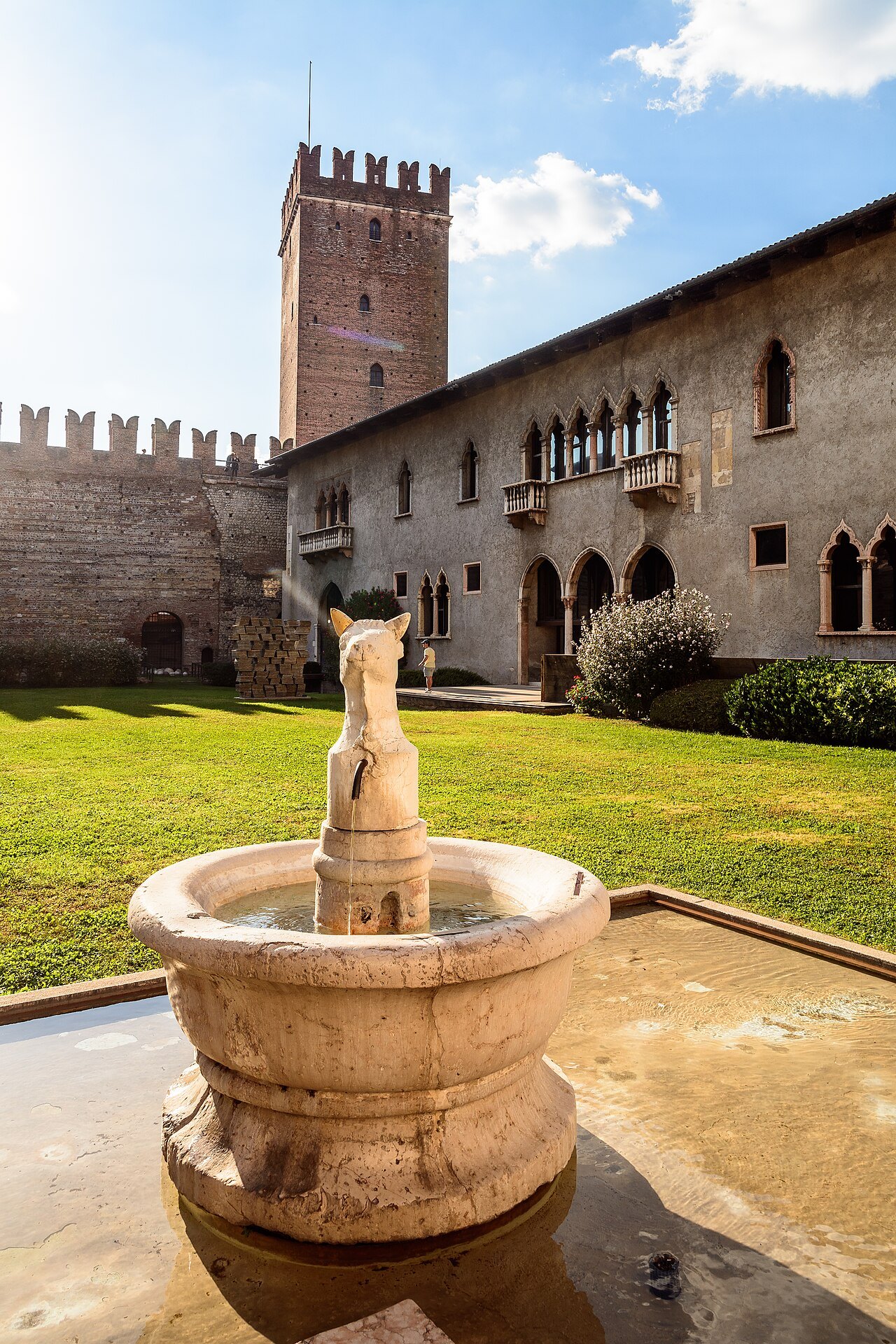
Castelvecchio in Verona, its courtyard and fountaindconvertini, Wikimedia Commons, CC BY-SA 2.0
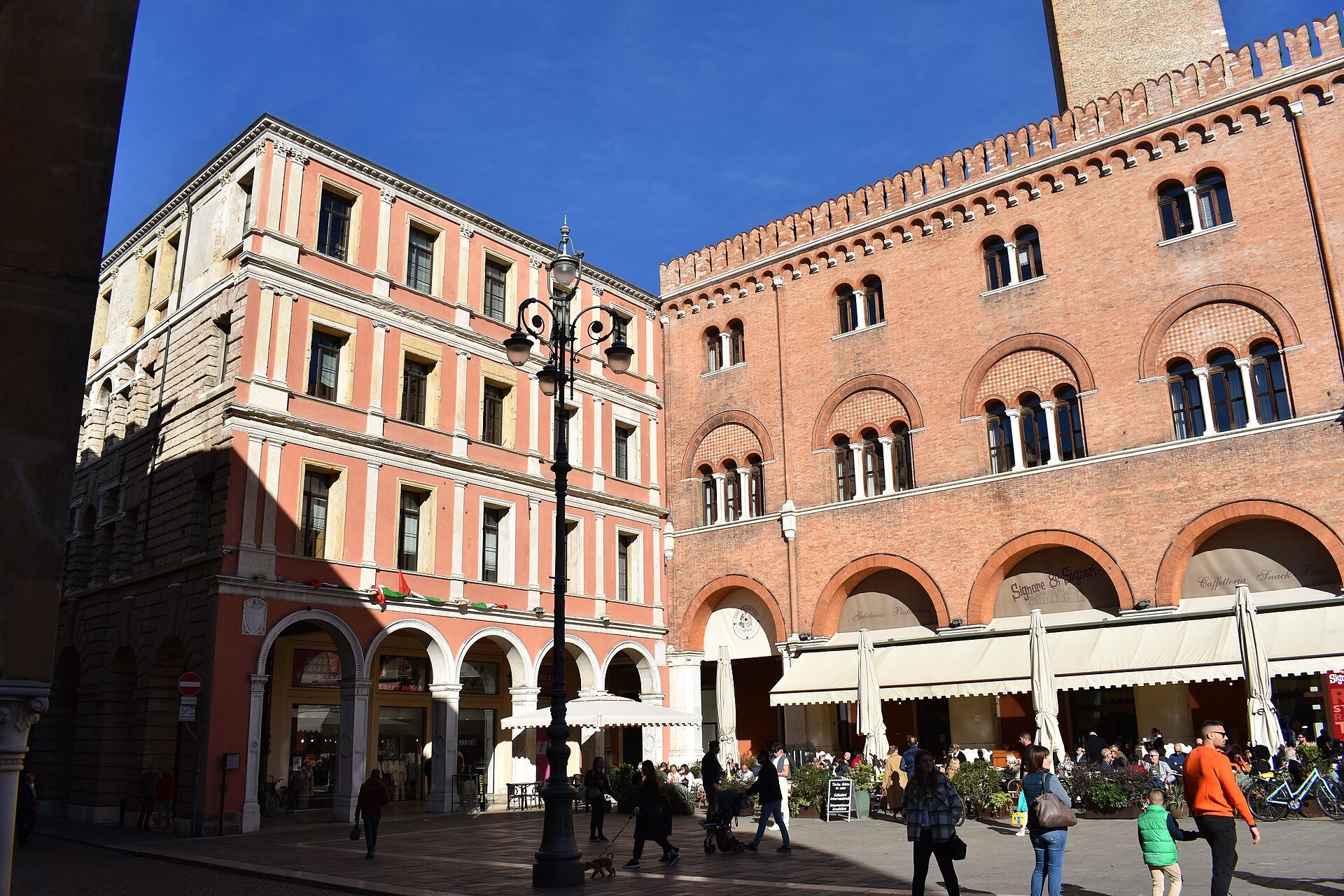
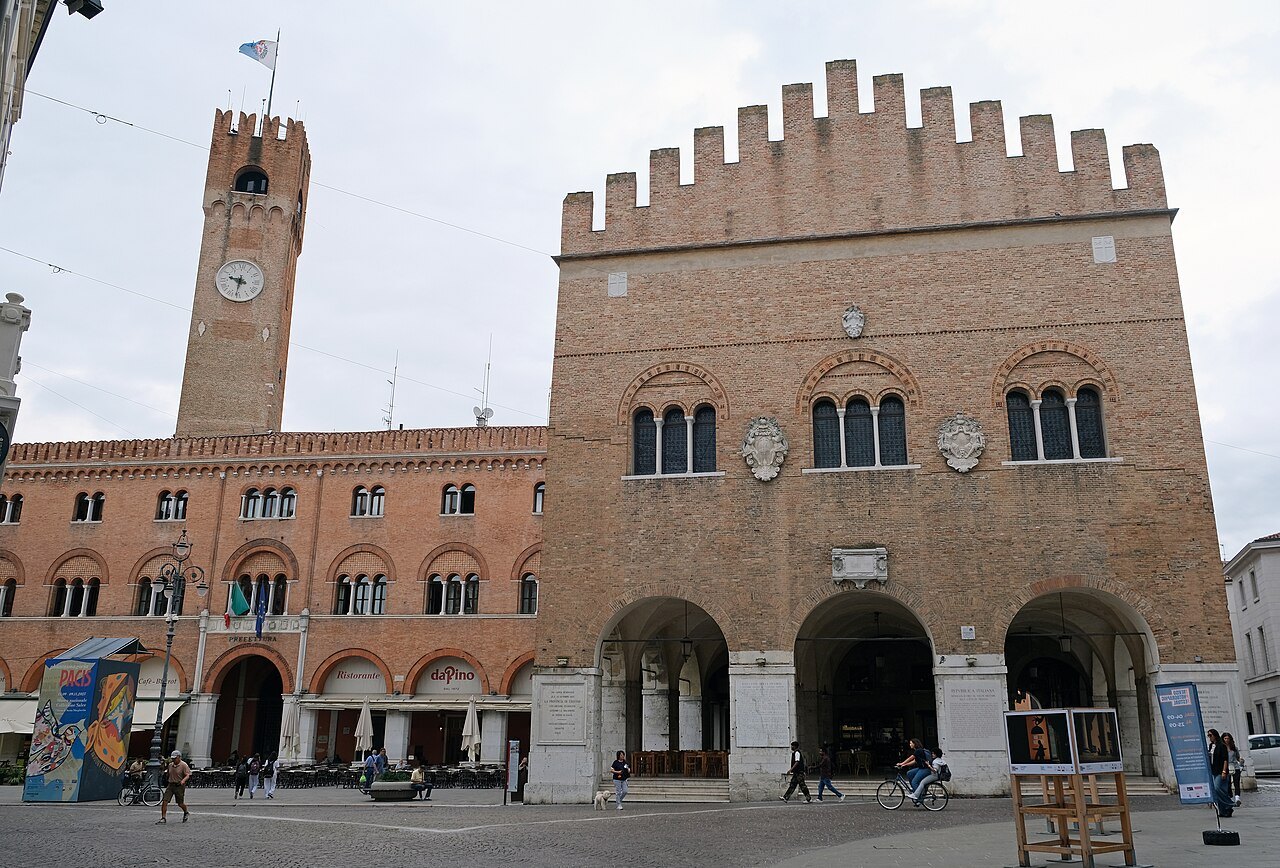
Treviso, north of Venice on the plain, is a smaller, quieter town inside the massive walls and ramparts Venice gave it, with canals of its own fed by the river Sile. It is known as the home of radicchio and of Prosecco wine, and is thought to be where tiramisù was invented. Its airport is the one some airlines call Venice-Treviso.
Chioggia
Chioggia stands on a small island at the southern entrance to the lagoon, about twenty-five kilometers south of Venice, joined by causeways to the mainland and to the beach suburb of Sottomarina. It is often called Little Venice, with canals, the chief of them the Canale Vena, and narrow streets called calli like the city's own, but it has always been a fishing town first, and fishing is still its living.
It was a free commune and a bishop's see from 1110, and in the War of Chioggia it was taken by Genoa in 1378 and recovered by Venice in 1380, in the long war between Genoa and Venice that still bears the town's name. The most rewarding way to reach it is the long way, down the lagoon by water bus to the Lido, by bus along the Lido and Pellestrina, and by boat again across the last inlet (see the lagoon).
Farther afield
The Palazzo dei Trecento in Treviso and its towerkallerna, Wikimedia Commons, CC BY-SA 4.0
The high-speed trains from Santa Lucia run south through Padua to Bologna and Florence, which puts two more great cities within a long day. Bologna, the capital of Emilia-Romagna, is the first major stop beyond the Veneto on that line, and Access Bologna covers its arcades, towers and table in the same way this guide covers Venice. Florence is under two hours from Santa Lucia on the fastest trains, and Access Florence is the place to plan the Uffizi and the Duomo before you go.
A day that far out is long, and both cities deserve a stay of their own. If you are touring Italy, the train makes an easy chain of them, and none of them needs a car.
Making the most of a day out
Take an early train and come back for the evening; Venice is at its best after dark. Buy tickets at the station or online, and check that your return runs to Santa Lucia rather than stopping at Mestre. In the busiest months, a day on the mainland is also a day away from the crowds of San Marco, and the cities of the Veneto are rarely as crowded as Venice itself.
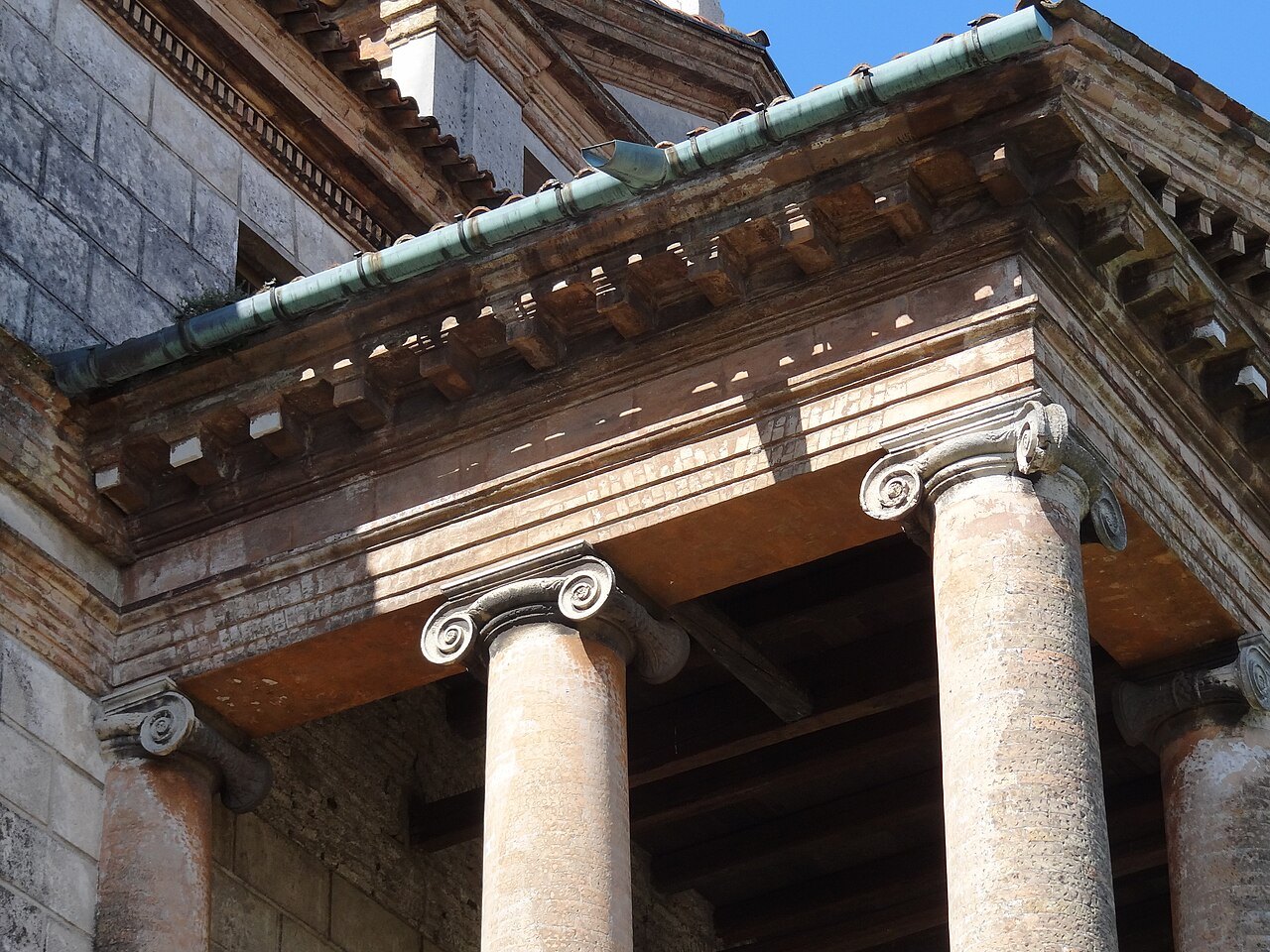
The columned portico of Palladio's Villa Foscari, La MalcontentaEsther Westerveld from Nieuwkoop, Nederland, Wikimedia Commons, CC BY 2.0
Keep the islands of the lagoon, Murano, Burano and Torcello, for a day of their own; they are part of Venice, not a day trip from it (see itineraries).
Seen on the wayIII
More photographs
A quay along the Canal Vena in ChioggiaFalk2, Wikimedia Commons, CC BY-SA 4.0
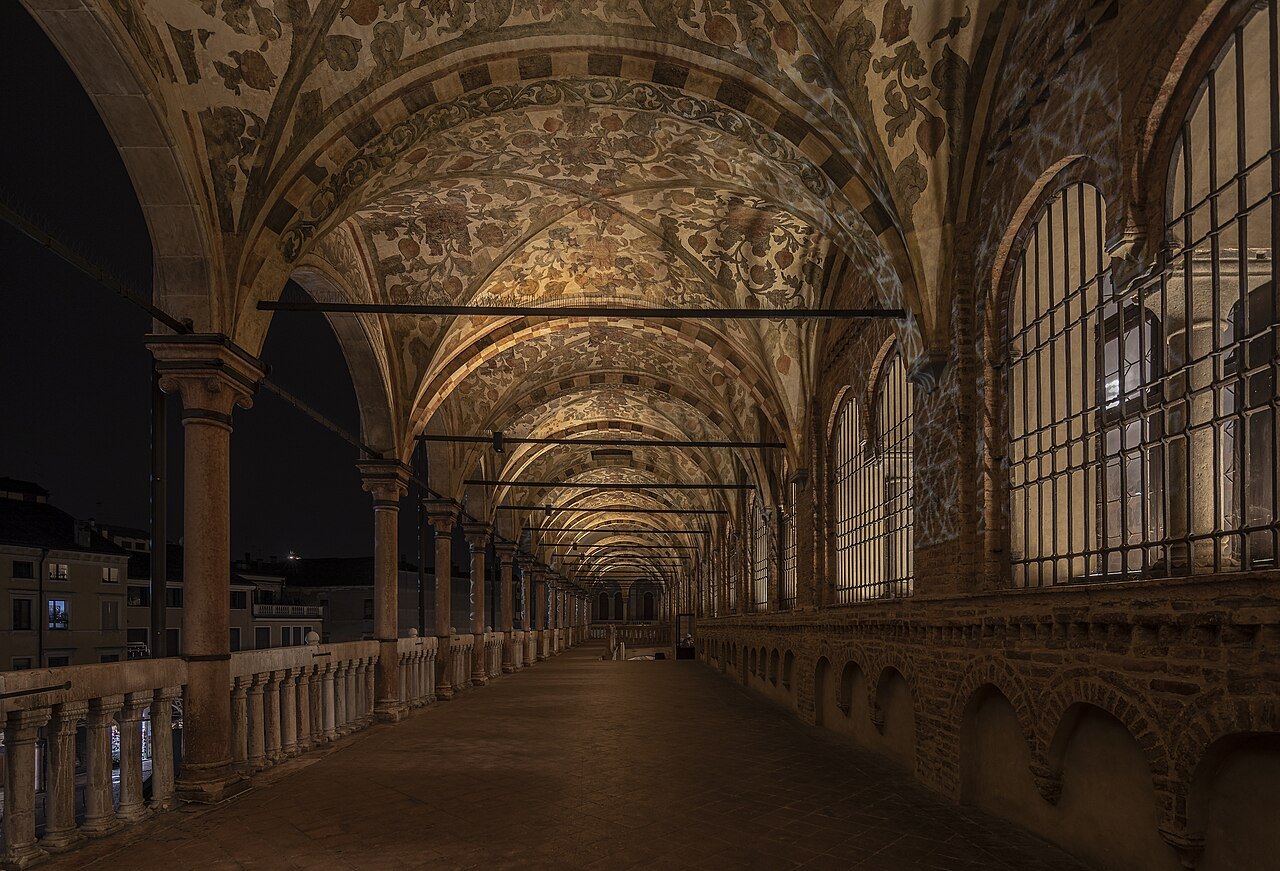
The painted loggia of the Palazzo della Ragione in PaduaMaurizio Moro5153, Wikimedia Commons, CC BY-SA 4.0
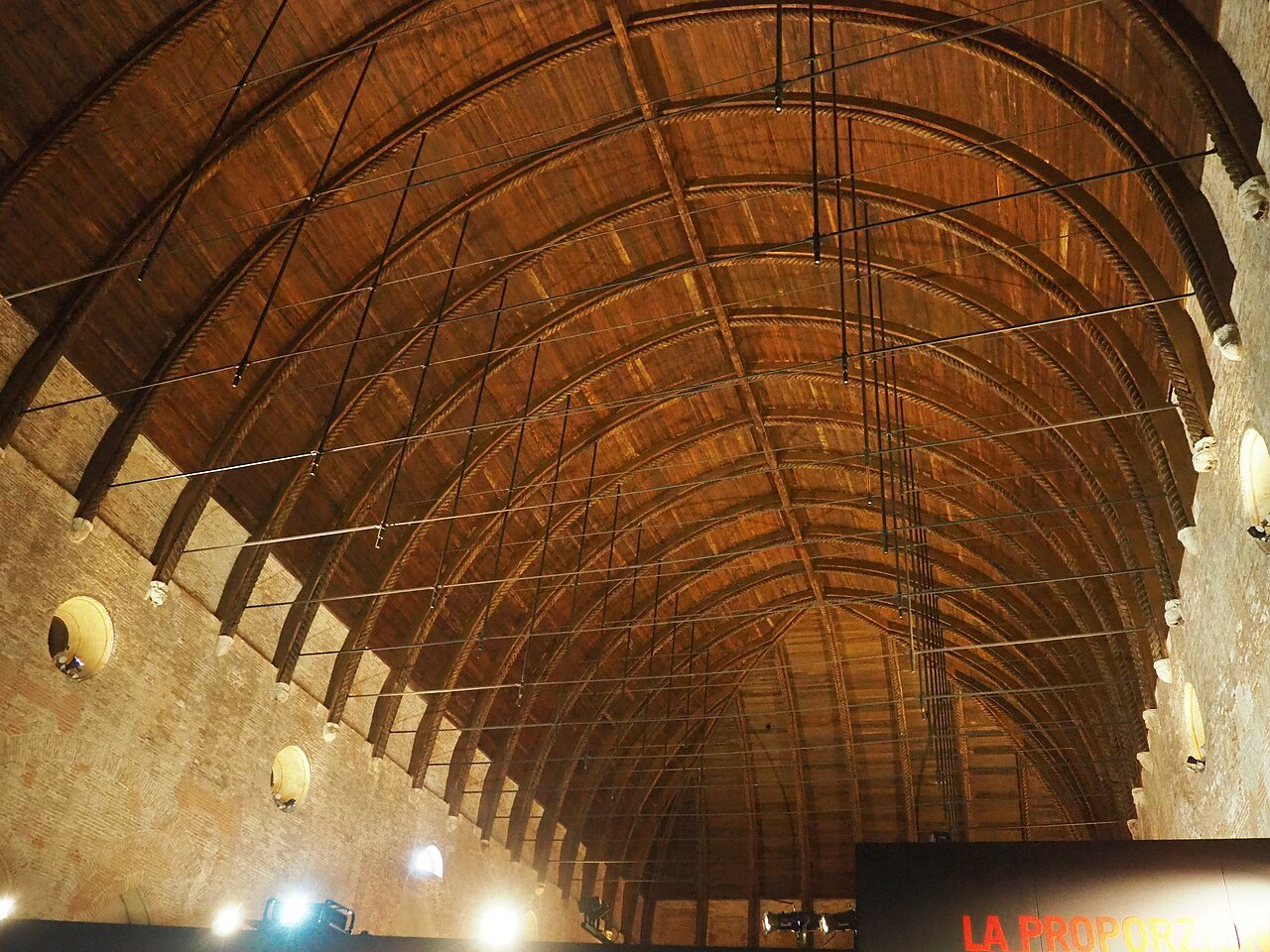
The great wooden vault of the Basilica Palladiana's hall in VicenzaThreecharlie, Wikimedia Commons, CC BY-SA 4.0