Home · Sights · San Giorgio Maggiore
What you are looking atI
San Giorgio Maggiore
Isola di San Giorgio
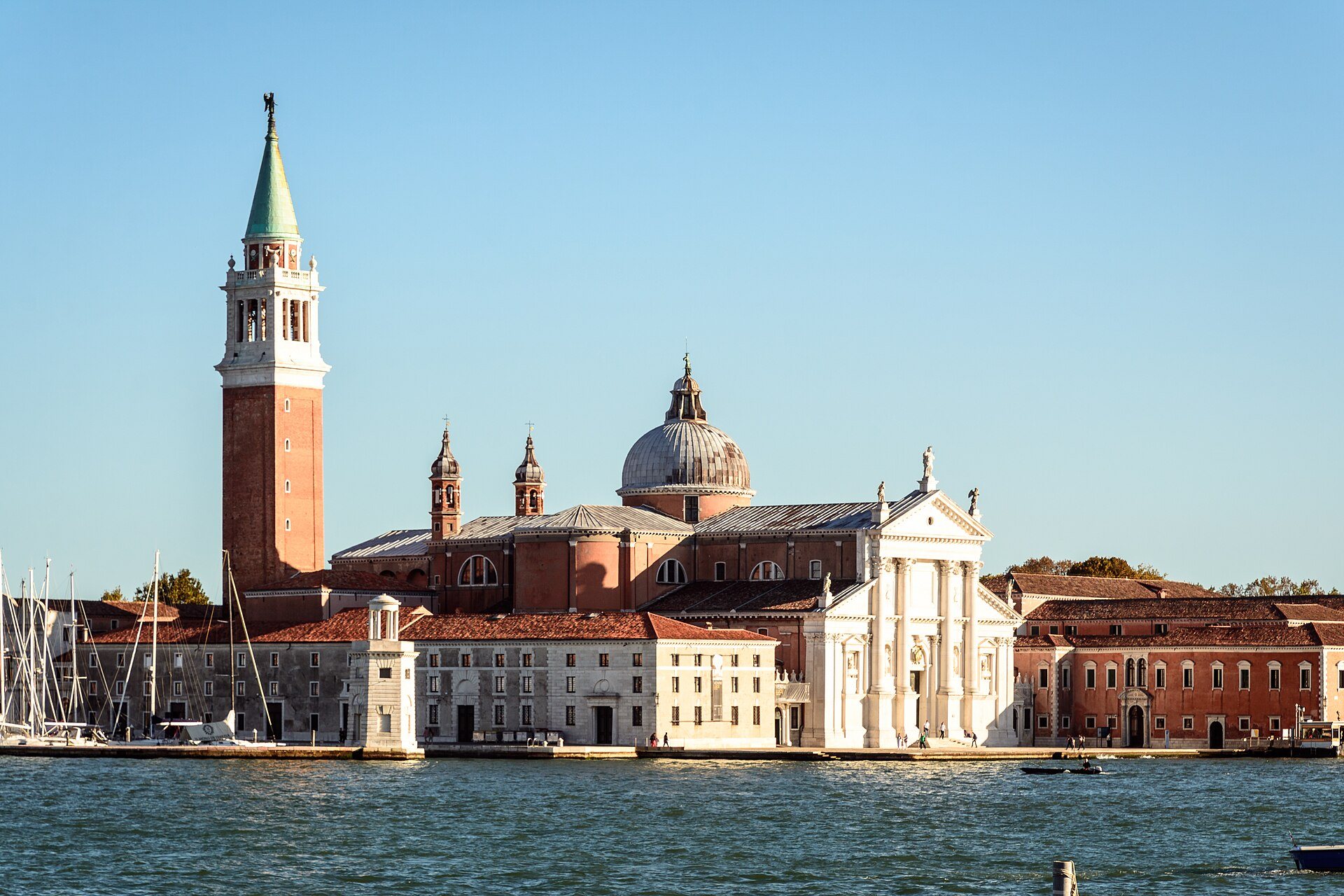
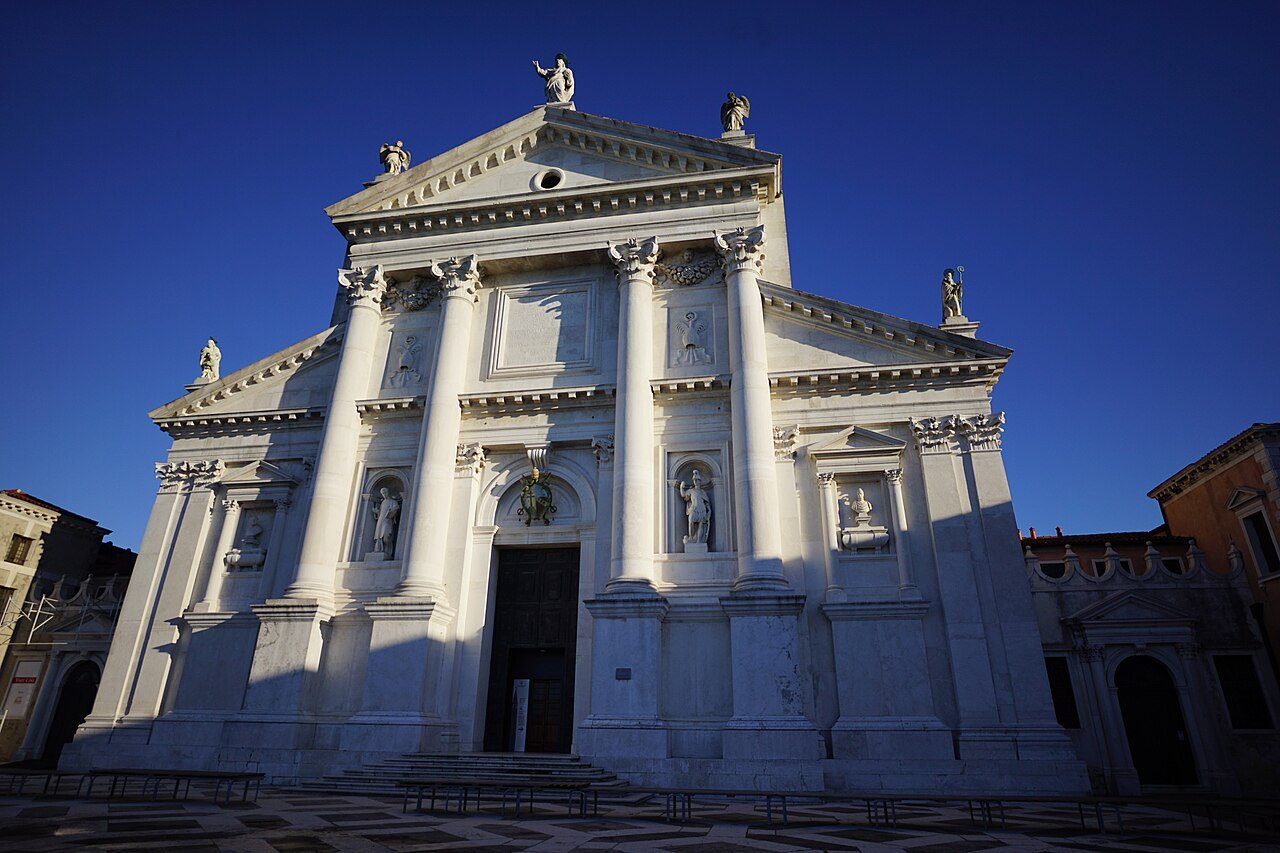
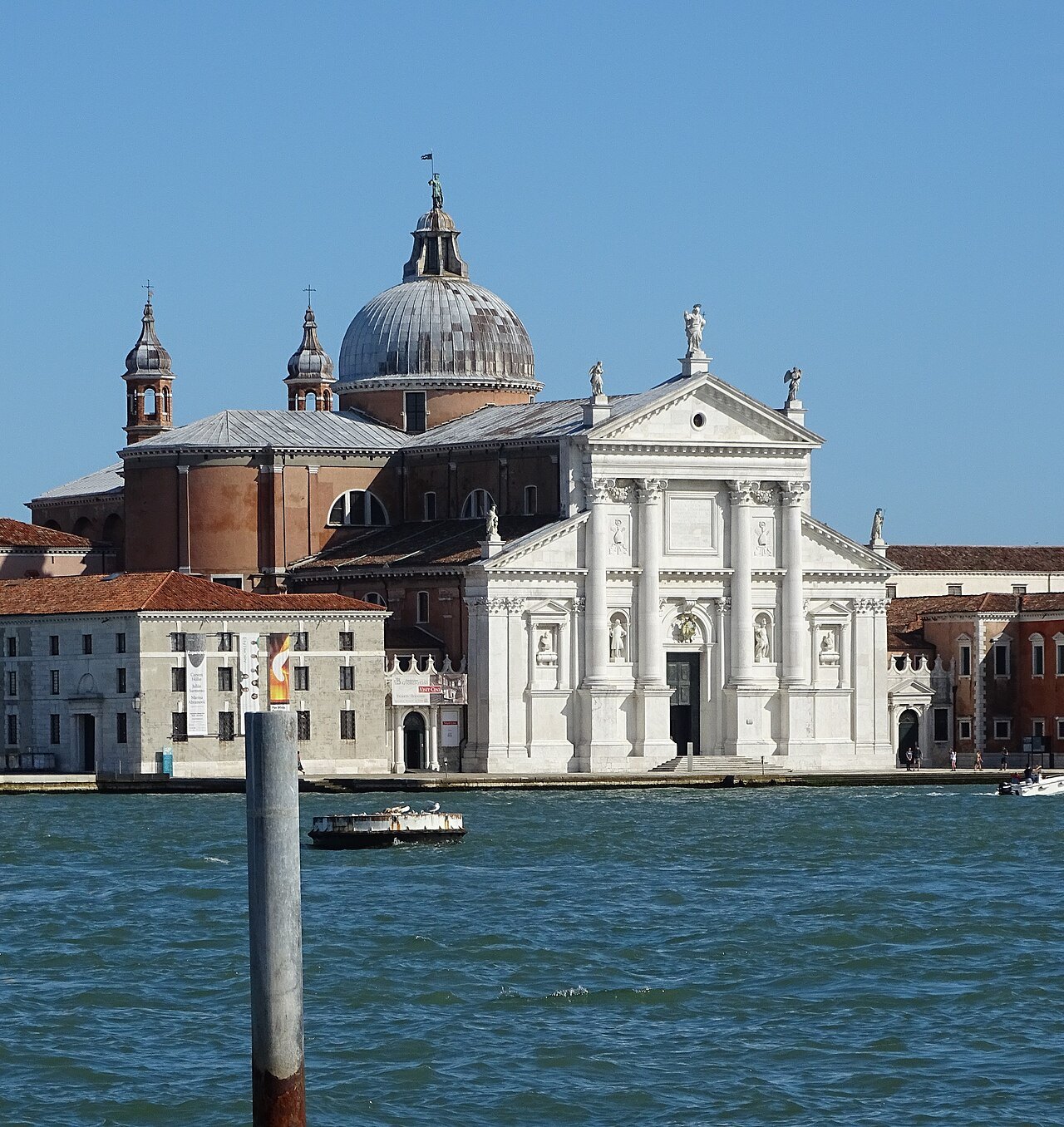
- 1The facadePalladio's white temple front of two superimposed pediments, finished in 1610 to his model.
- 2The interiorA bright, cool space of white walls and giant columns, a long nave set on a cross.
- 3Tintoretto's Last SupperThe great canvas on the right of the presbytery, paired with the Gathering of the Manna.
- 4The bell towerRebuilt in 1791 after the old tower fell, with a lift to the top and a view back over the city.
- 5The Cini FoundationThe old Benedictine monastery, now an arts center with a great library.
- 6The viewThe Piazzetta, the Doge's Palace and the Campanile head-on across the water.
The sight in fullII
Reading the place
Why it matters
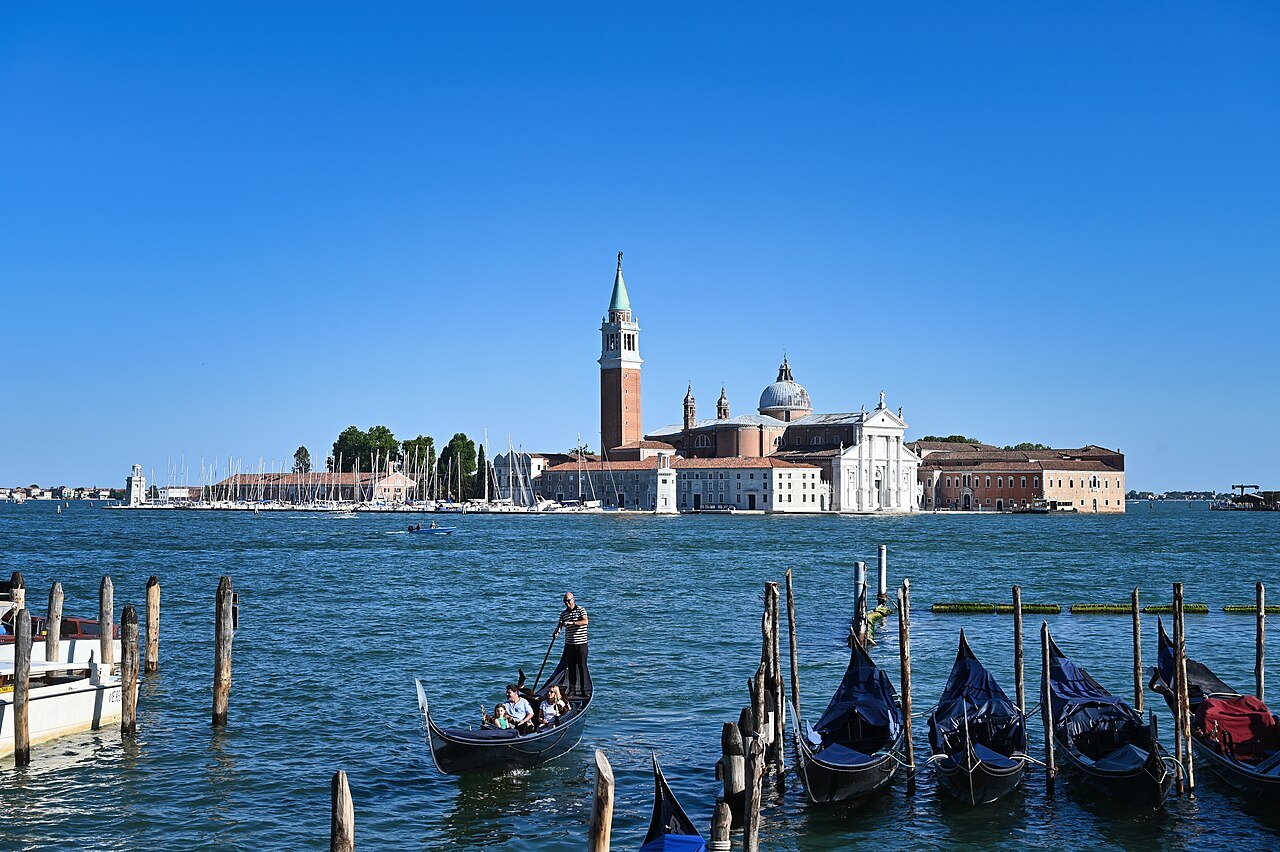
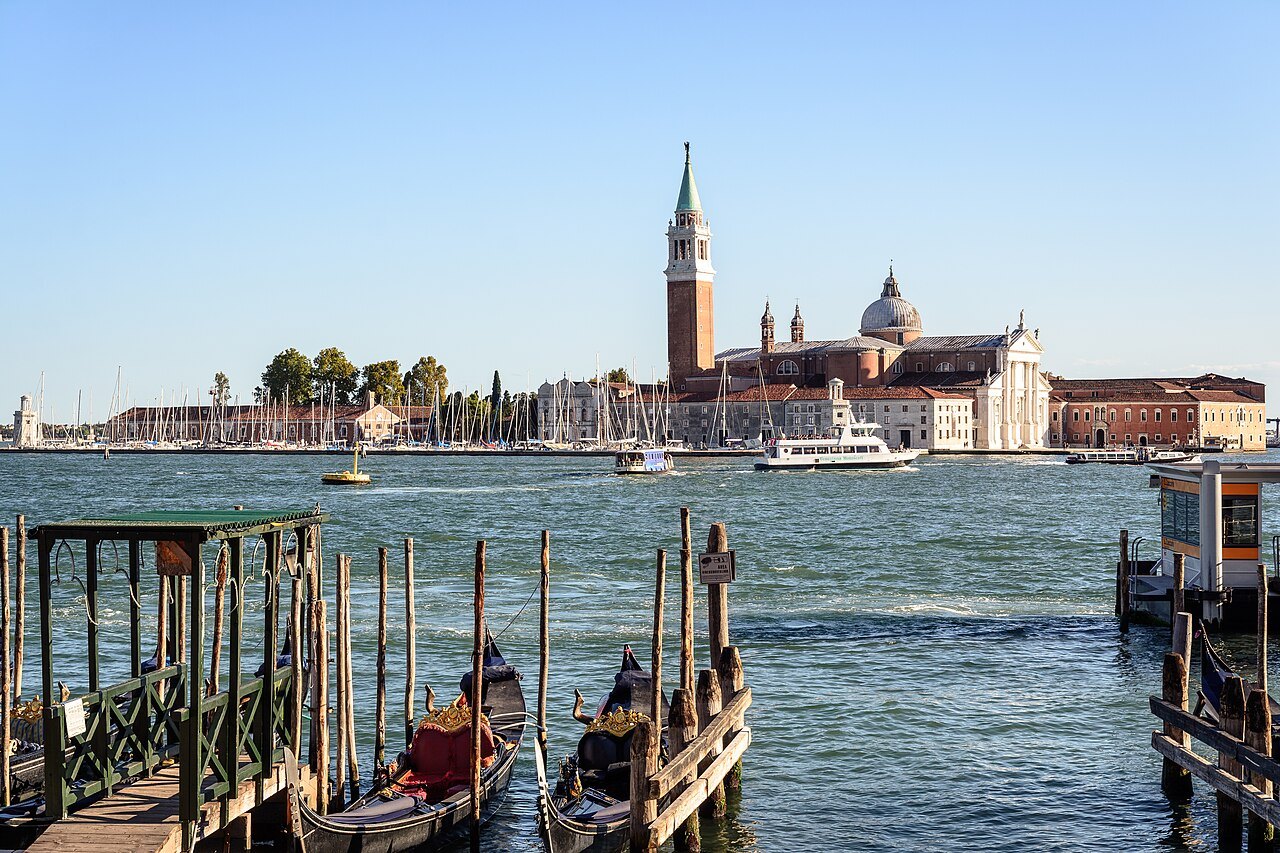
San Giorgio Maggiore is the island directly across the basin from Piazza San Marco, east of the Giudecca, and its church is one of the landmarks of Venice. Designed by Andrea Palladio and built between 1566 and 1610, its brilliant white marble facade stands above the water opposite the Piazzetta and closes the view from every part of the Riva degli Schiavoni.
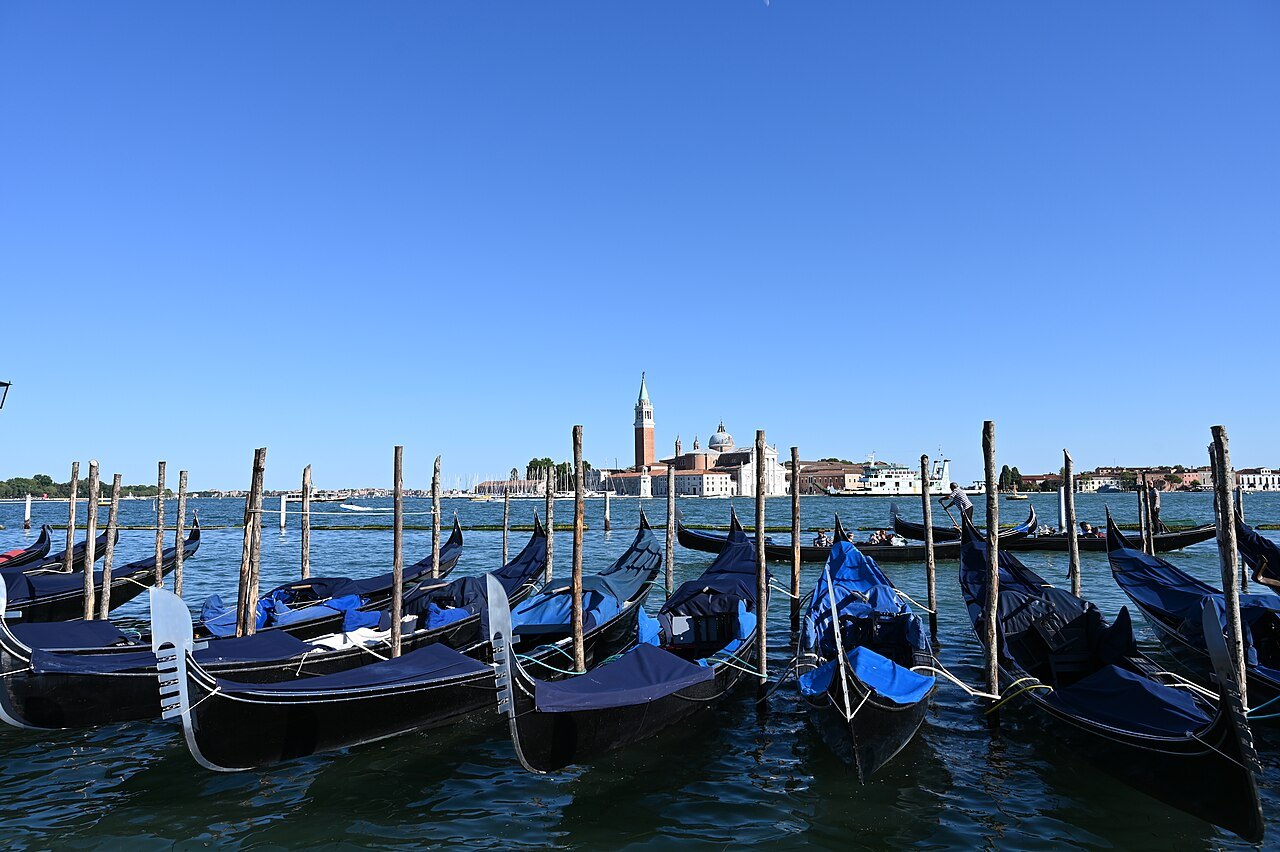
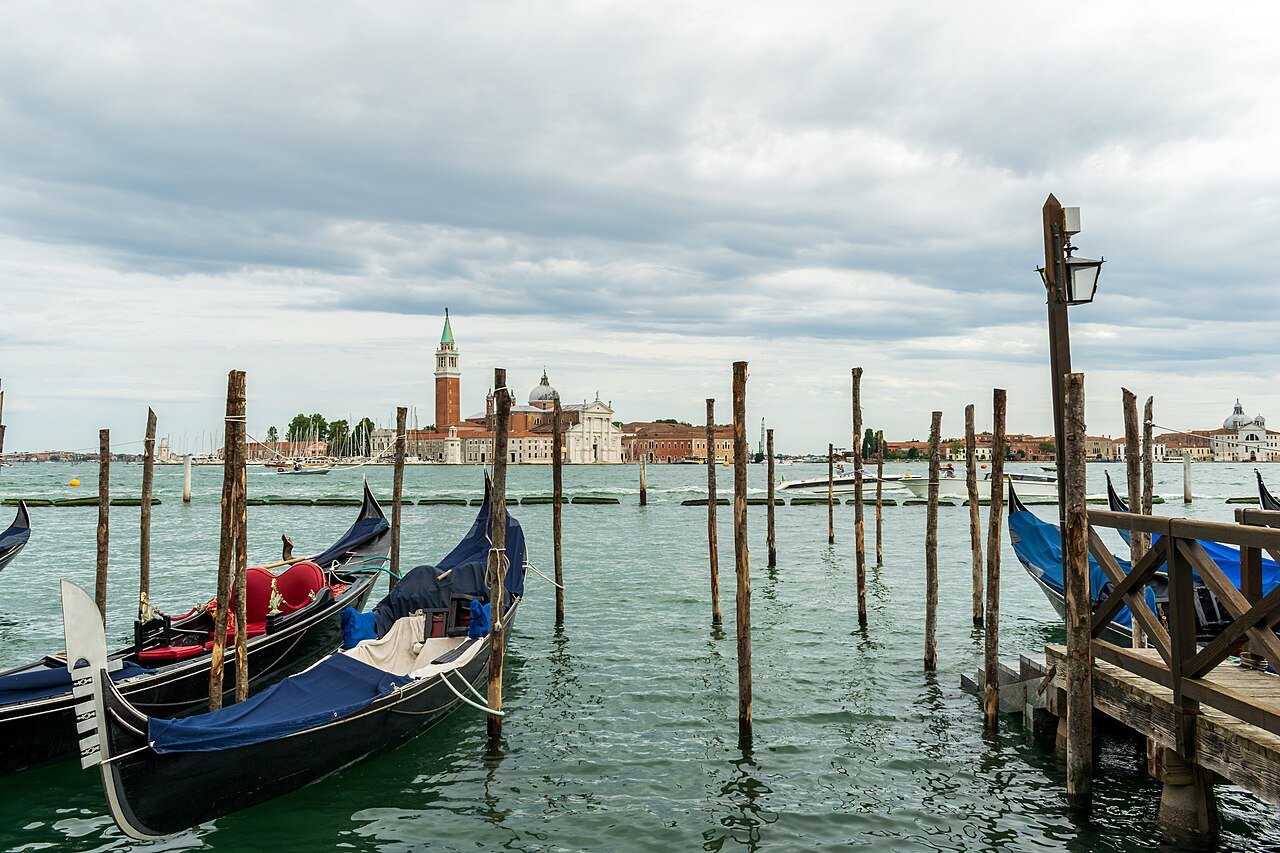
It is also the best place to look back at Venice. From the church steps the Doge's Palace, the Campanile, the domes of St Mark's and the Salute line up across the water, and from the top of its bell tower you see the whole city and the lagoon around it.
An island of monks
The island was probably occupied in Roman times, and after Venice was founded it was named Insula Memmia after the Memmo family who owned it. By 829 it had a church of Saint George, called Maggiore to tell it apart from San Giorgio in Alga. In 982 the Benedictine monk Giovanni Morosini asked Doge Tribuno Memmo to give him the whole island for a monastery; he drained its marshes, founded the Monastery of San Giorgio Maggiore and became its first abbot.
An earthquake destroyed its buildings in 1223, and they were rebuilt. By the sixteenth century the monks wanted a new church. Palladio arrived in Venice in 1560 while the monastery's refectory was being rebuilt and greatly improved it; in 1565 he was asked for a model of a new church, and in 1566 the model was approved and the foundation stone laid.
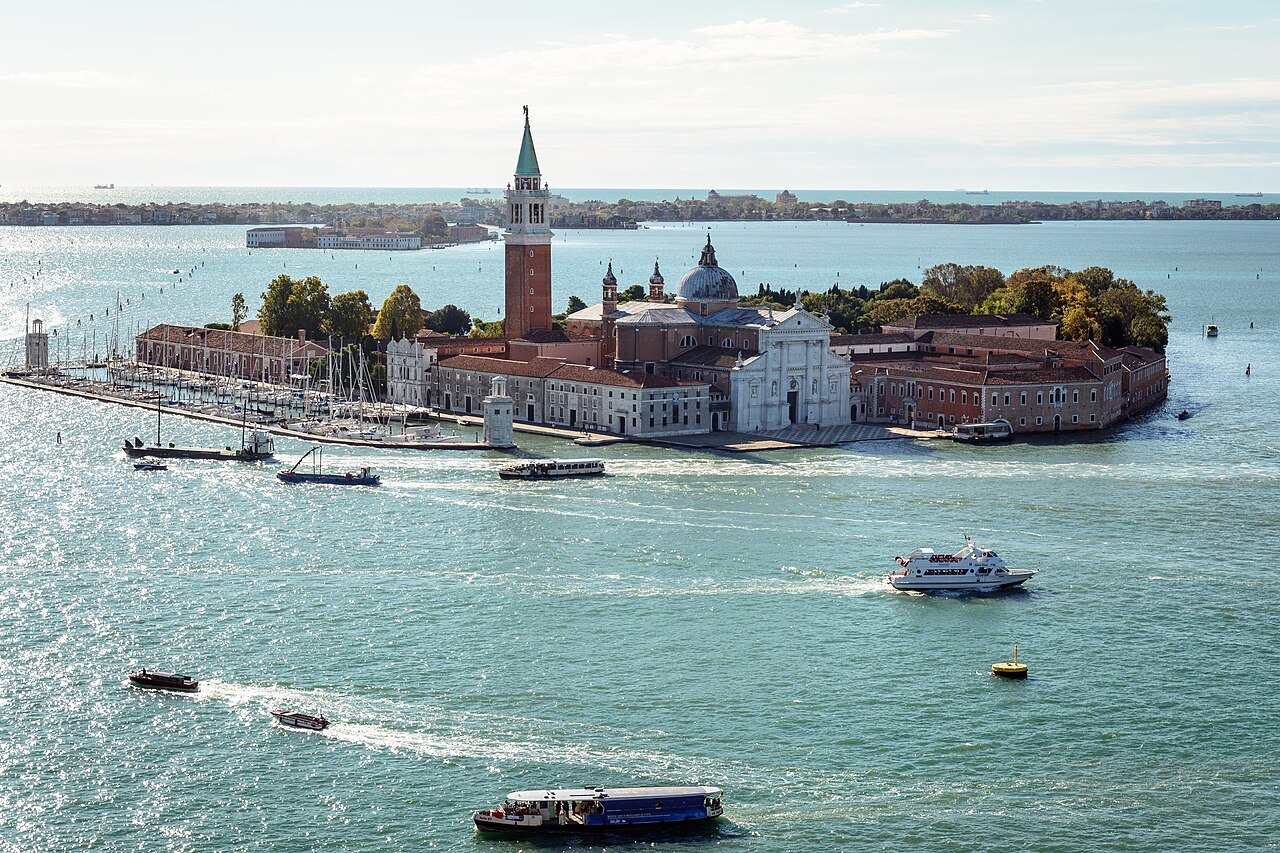
The body of the church was finished by 1575, but Palladio died in 1580 before the choir and the facade were built. The choir, apparently designed by him, followed between 1580 and 1589, and the facade was begun only in 1599, under a contract that bound the stonemasons to follow his model; it was completed in 1610.
What you actually see
The facade solved a problem that had troubled architects for a century: how to put the front of a classical temple on a Christian church with a tall nave and low side aisles. Palladio superimposed two temple fronts, a wide, low pediment across the whole width carried on pilasters, and a narrower, taller one over the nave on giant engaged columns raised on high pedestals. Statues of Saint George and Saint Stephen, to whom the church is also dedicated, stand either side of the door. Palladio had tried a similar answer shortly before on the facade of San Francesco della Vigna in Castello.
Inside, the church is bright and cool, all white walls and massive columns and pilasters with almost no decoration, a long basilican nave joined to a cross with transepts. The Benedictines kept control of the chapels instead of selling them to families to decorate as they liked; some altars went to distinguished families, but the monks controlled what went on them.
On either side of the presbytery hang two huge paintings by Tintoretto on the theme of the Eucharist, placed so they can be seen from the altar rail: The Last Supper and The Jews in the Desert, gathering the manna, the gift of food to the Israelites in the desert. His Entombment of Christ is in the Chapel of the Dead. Look also for Sebastiano Ricci's Virgin and Child with Saints in the chapel to the right of the high altar, and Jacopo Bassano's Adoration of the Shepherds on the first altar on the right.
The other altars tell the story of the families allowed in. The Morosini altar, left of the sanctuary, carries a painting by Jacopo and Domenico Tintoretto of the Risen Christ and Saint Andrew with Vincenzo Morosini and his family; the Tintorettos' Coronation of the Virgin is in the south transept; and on the left of the nave hangs Leandro Bassano's picture of Santa Lucia, whom by a miracle no one could move.
The bell tower and the island
The bell tower, first built in 1467, fell in 1774 and was rebuilt in neoclassical style by 1791. It was once climbed by easy ramps; there is now a lift. The view from the top takes in the basin with San Marco straight ahead, the Giudecca and the Redentore to the west, the Lido and the open lagoon to the south and east, and the roofs of the whole city.
The monastery beyond the church was nearly suppressed after the fall of the Republic, and the island became a free port with a new harbor in 1812 and then the home of Venice's artillery. Today the old monastery belongs to the Cini Foundation, an arts center known for its library, and the island also has an open-air theater, the Teatro Verde, and two yacht harbors.
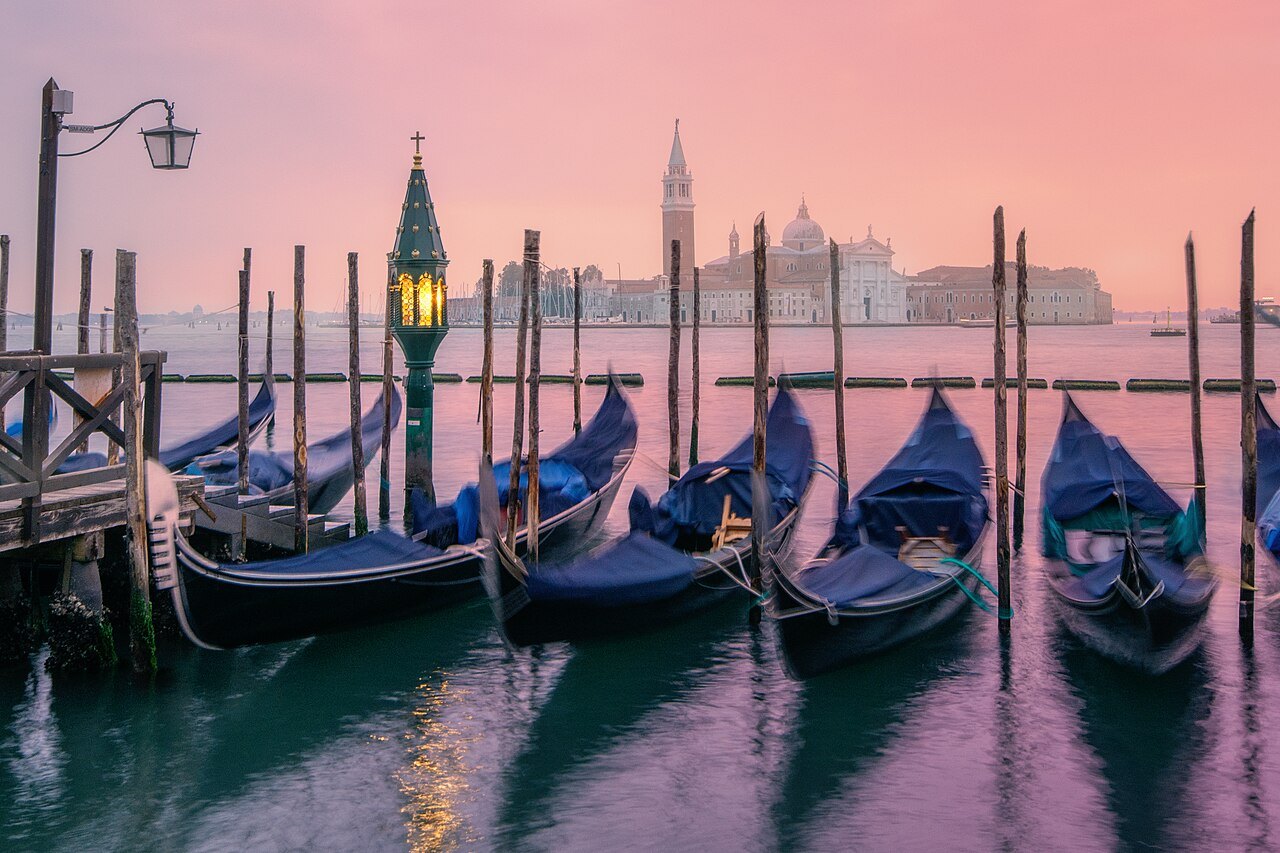
Painters and writers have always seen the island as part of the city's composition. Monet painted a series of San Giorgio across the water at dusk, and in A Passage to India E. M. Forster has his hero, landing on the Piazzetta, reflect that the island could hardly have risen from the waves without the church.
How to visit
Take the water bus: Line 2, running along the Giudecca Canal, stops at San Giorgio, while Line 1 does not. The bell tower is visited separately from the church; check the times for both before you go, as services close the church to visitors.
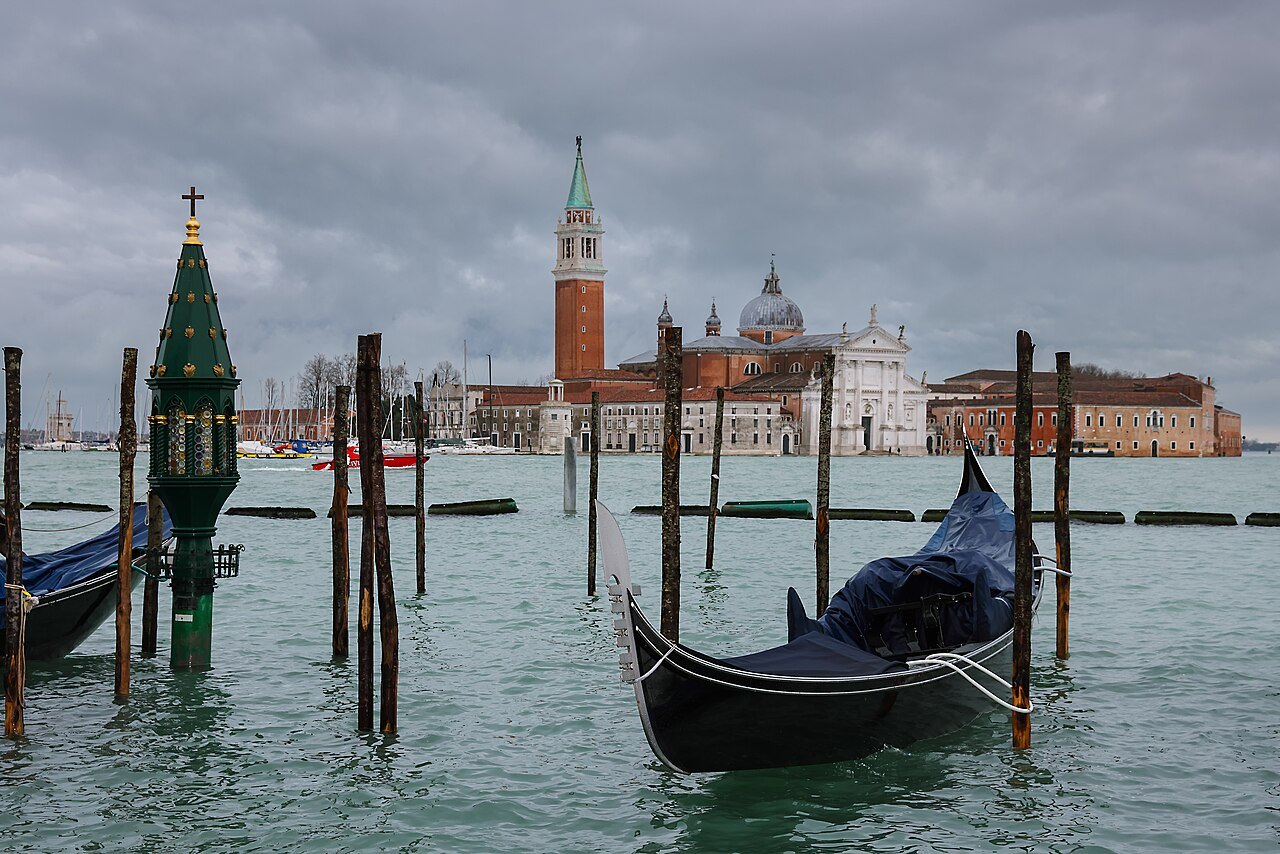
Allow an hour for the church, the tower and the view from the steps. The monastery buildings belong to the Cini Foundation; look at its own program if you want to see inside them. For the classic view of the church itself, stand on the Riva degli Schiavoni or at the end of the Piazzetta.
Where to go nextIII
Nearby
- Nearby · San MarcoThe Doge's PalaceThe seat of the Republic for a thousand years: the doge's home, the council chambers, the courts and the prisons in one pink-and-white Gothic palace on the water, with the Bridge of Sighs at its back door.Read the page →
- Nearby · San MarcoPiazza San MarcoThe square Venetians call simply la Piazza: a long arcaded room open to the sky, the basilica at one end, and the Piazzetta turning off it to the water between two granite columns.Read the page →
- Nearby · DorsoduroSanta Maria della SaluteThe votive church the Republic promised the Virgin in 1630, when plague had killed nearly a third of the city: Longhena's great white octagon on a million wooden piles, where the Grand Canal meets the basin.Read the page →