Home · Sights · The Peggy Guggenheim Collection
What you are looking atI
The Peggy Guggenheim Collection
Dorsoduro
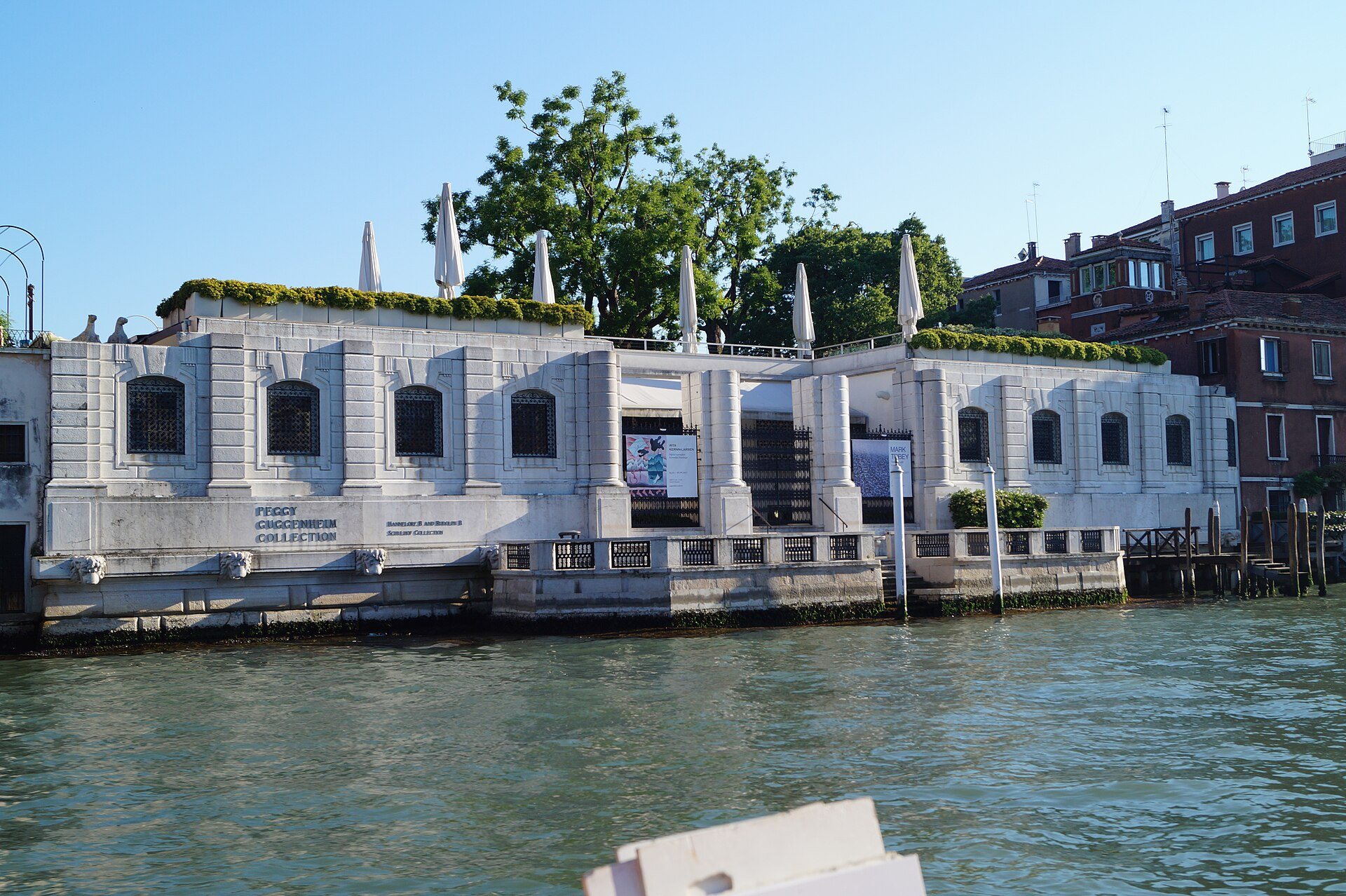
- 1The palaceA long, low, unfinished eighteenth-century front of white Istrian stone, a pause in the line of palaces.
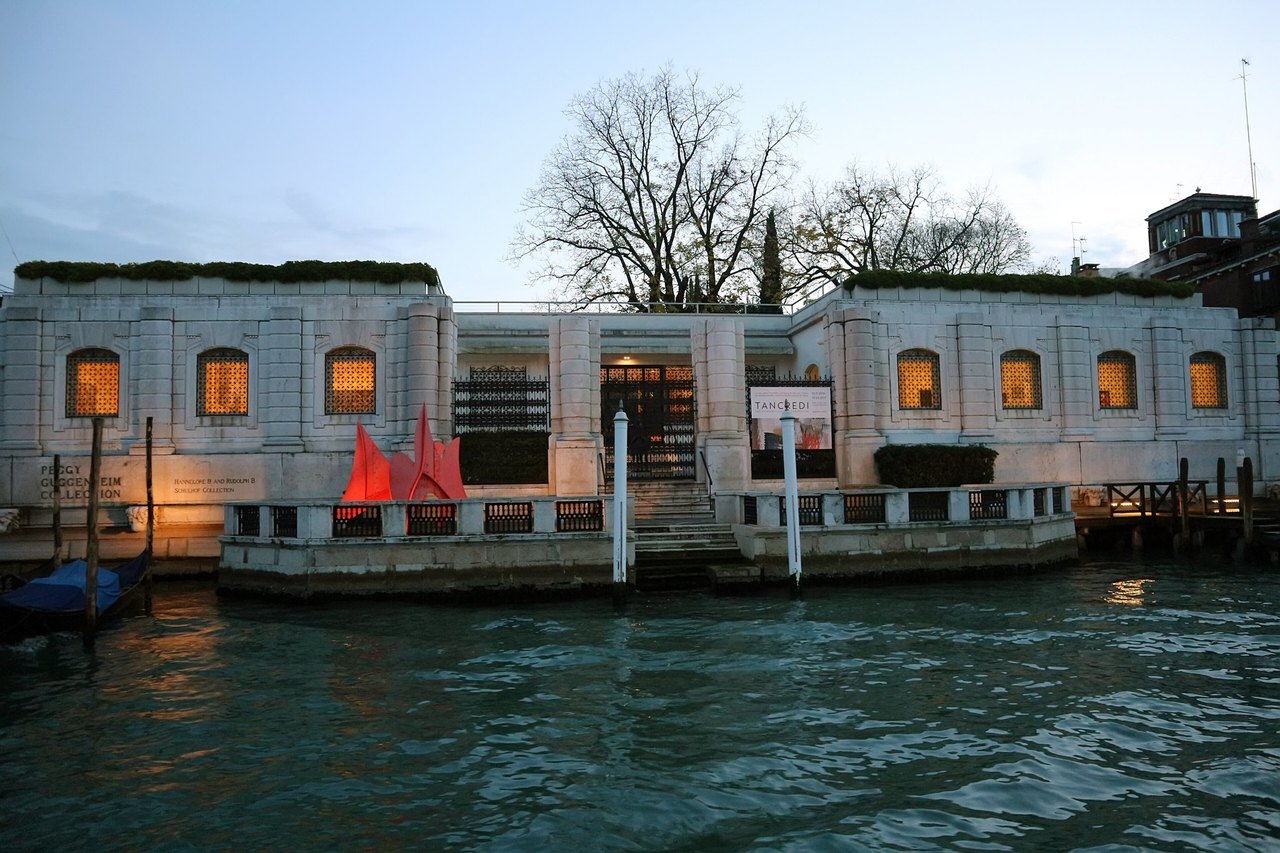
- 2The canal terraceThe terrace at water level, restored with the facade, looking straight across the Grand Canal.
- 3The collectionAbout three hundred works gathered mostly between 1938 and 1946, from Cubism to Pollock.
- 4The futuristsBoccioni, Carrà, Balla and Severini on long-term loan from the Gianni Mattioli Collection.
- 5The sculpture gardenThe Nasher Sculpture Garden behind the palace, completed in 1995.
- 6The Schulhof galleryEighty-three works given in 2012 by Rudolph and Hannelore Schulhof, in rooms of their own.
The sight in fullII
Reading the place
Why it matters
The Peggy Guggenheim Collection has been counted the most visited art museum in Venice and, after the Doge's Palace, the most visited site in the city. It is the private collection of modern art that the American heiress Peggy Guggenheim built up and lived with, shown in the palace on the Grand Canal that was her home for three decades.
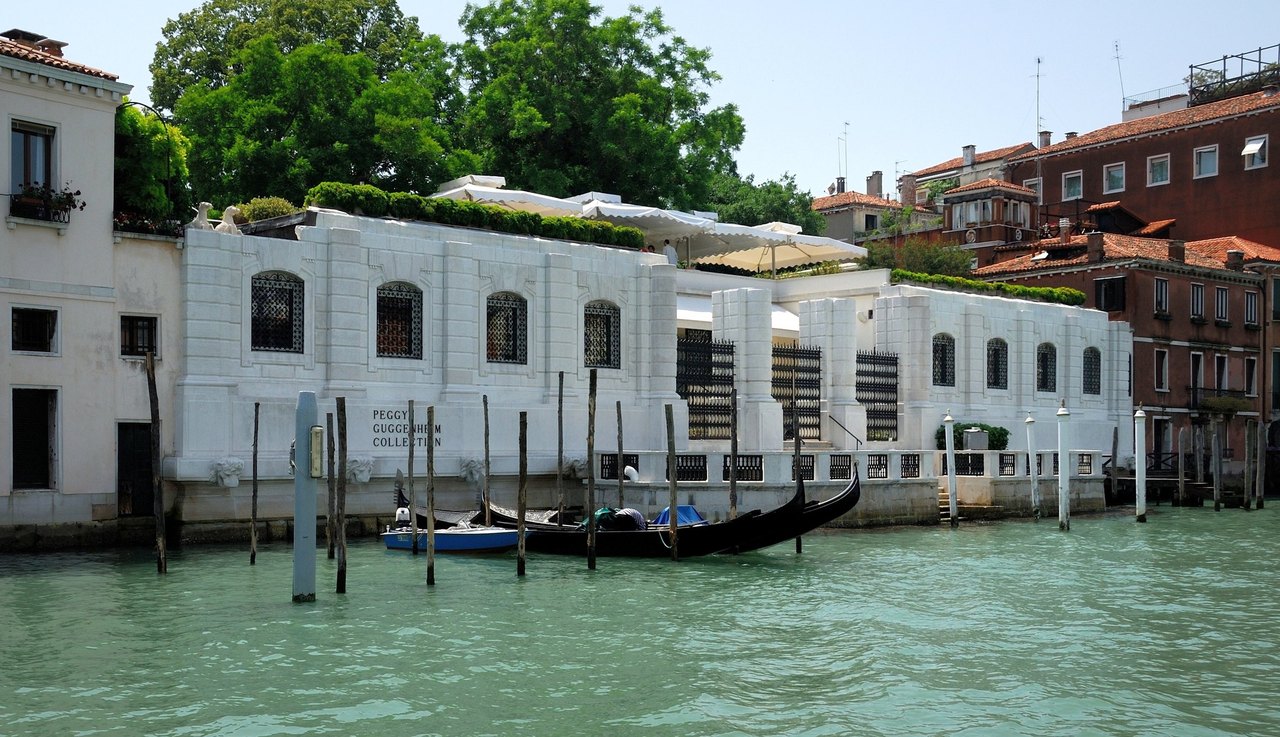
It is a small, personal museum and a welcome change after a morning of Titians. The rooms are domestic in scale, many of the works are masterpieces of their movements, and the setting, a single-story palace with a garden behind and a terrace on the water in front, is unlike any other museum in the city.
The collector
Peggy Guggenheim was a niece of the mining magnate Solomon R. Guggenheim, founder of the Guggenheim museum in America, and for a time the wife of the painter Max Ernst. She bought most of her collection between 1938 and 1946, in Europe in rapid succession as the Second World War began, and then in the United States, where she championed young American painters and helped launch Jackson Pollock.
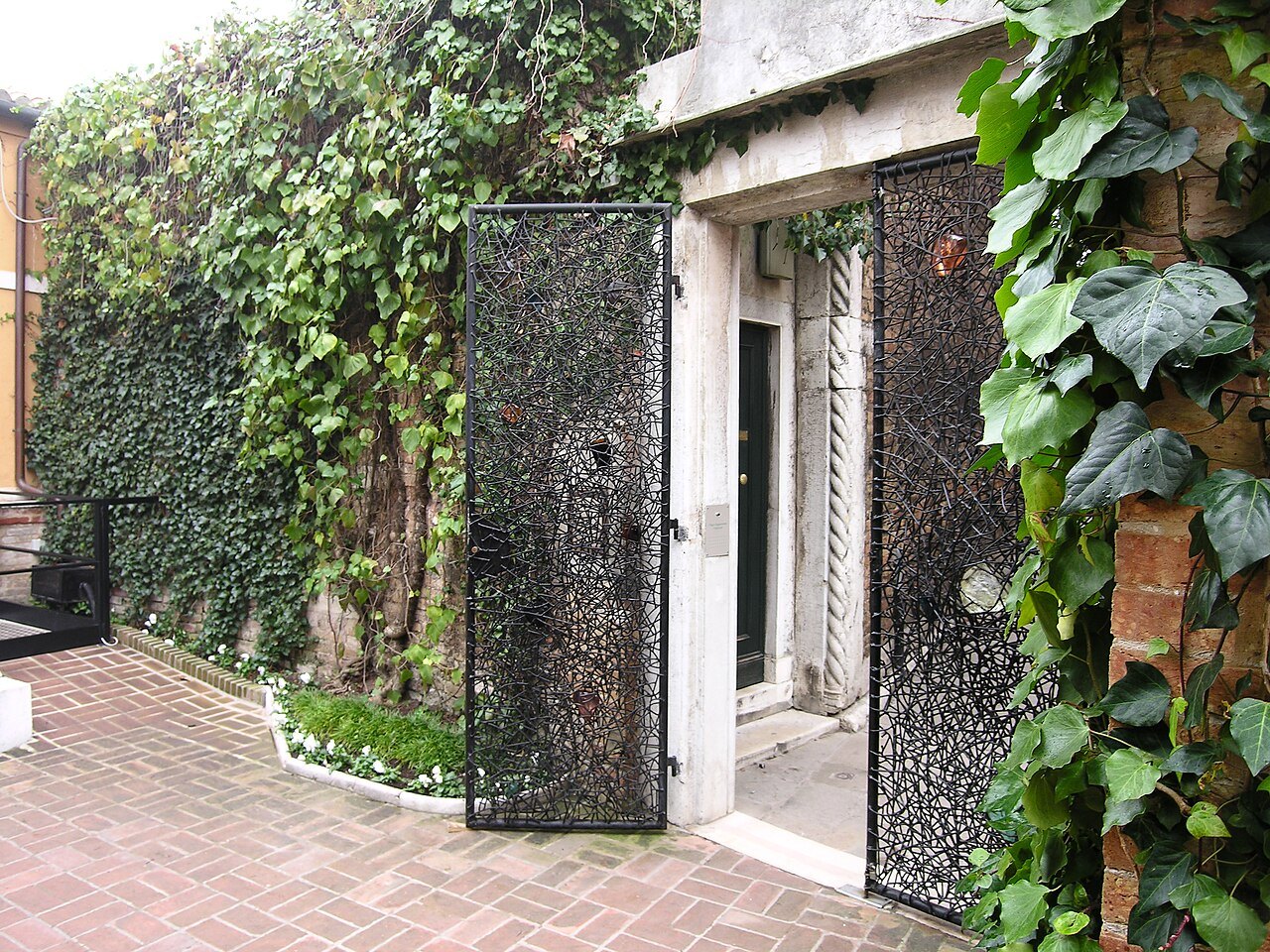
In 1949 she bought the Palazzo Venier dei Leoni in Dorsoduro and moved to Venice. From 1951 she opened her home, its garden and her collection to the public in the summer months, while the works were also lent to exhibitions around Europe and in America. In 1976 she gave the palace and some three hundred works to the Solomon R. Guggenheim Foundation. She died in 1979, and the foundation reopened the collection in April 1980 as a museum; since 1985 it has welcomed visitors all year. Philip Rylands ran it for thirty-seven years after her death; in 2017 her granddaughter Karole Vail, until then a curator at the foundation's flagship museum, succeeded him as director. Visitor numbers reached 350,000 a year by 2007.
An unfinished palace
People sometimes take the palace for a modern building. It is an eighteenth-century palace designed by the Venetian architect Lorenzo Boschetti and never finished, which is why it stands so unusually low among its neighbors on the canal. The museum itself describes its long, low facade of Istrian stone, set off by the trees of the garden behind, as a welcome pause in the stately line of palaces between the Accademia and the Salute.
After 1979 the foundation turned the main floor into galleries, restored the white facade and the canal terrace, and rebuilt a projecting arcaded wing, the barchessa. Neighboring apartments became a garden annex, a shop and more rooms in 1993; the Nasher Sculpture Garden and a café followed in 1995; a new entrance opened in 2003. Since 1993 the museum has doubled in size, from about two thousand square meters of space to about four thousand, as the two neighboring properties were bought in 1999 and 2000.
What you see
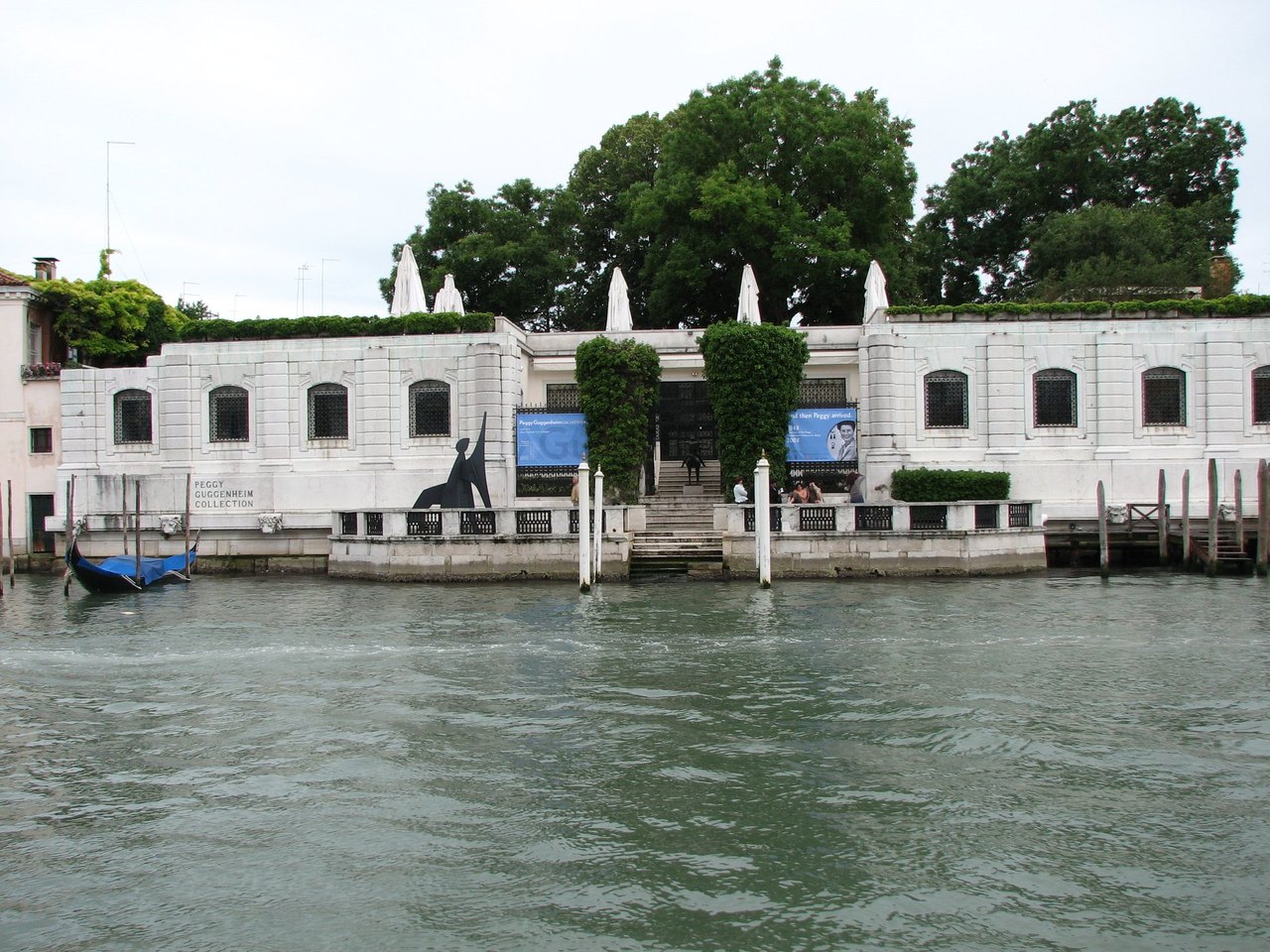
The permanent collection runs from Cubism through Surrealism to Abstract Expressionism. From Italy there are Giorgio de Chirico's Red Tower and Nostalgia of the Poet; from France, Braque's Clarinet, Duchamp's Sad Young Man on a Train, Léger and Picabia; from Spain, Picasso's The Poet and On the Beach, Miró and Dalí's Birth of Liquid Desires.
Among the other Europeans are Magritte's Empire of Light, Paul Klee's Magic Garden, Kandinsky, two Mondrian compositions, Max Ernst's Attirement of the Bride, Giacometti and a Bird in Space by Brâncuși. The Americans include Alexander Calder's Arc of Petals and Jackson Pollock's The Moon Woman and Alchemy. One room shows paintings by Peggy's daughter, Pegeen Vail Guggenheim.
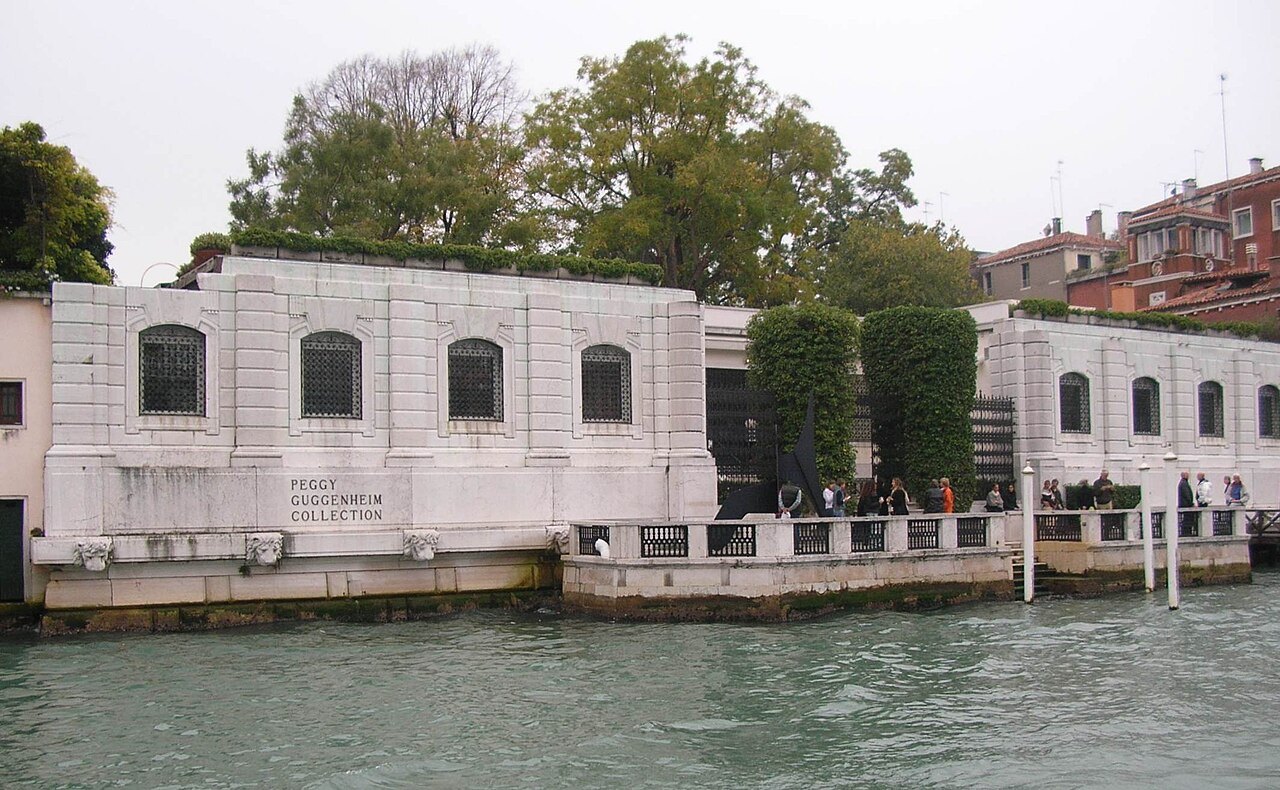
Two further collections live in the building. Twenty-six works on long-term loan from the Gianni Mattioli Collection are the heart of Italian futurism, with Boccioni's Dynamism of a Cyclist, Carrà's Interventionist Demonstration and works by Balla, Severini and Russolo. And in 2012 the museum received eighty-three works from the collection of Rudolph and Hannelore Schulhof, shown in a gallery of their own.
Save time for the garden, with its sculpture among the trees, and for the terrace on the canal, where the view goes across the water to the palaces of the San Marco bank.
How to visit
Buy timed tickets online on the museum's site, choosing an entry slot until they sell out; tickets are also sold at the door. The museum closes one day a week and on Christmas Day, and its hours are on the official site. Large bags, backpacks and suitcases are not allowed in; food and drink cannot be consumed anywhere inside, including the garden; and visitors are asked to dress suitably, which rules out swimwear and bare feet.
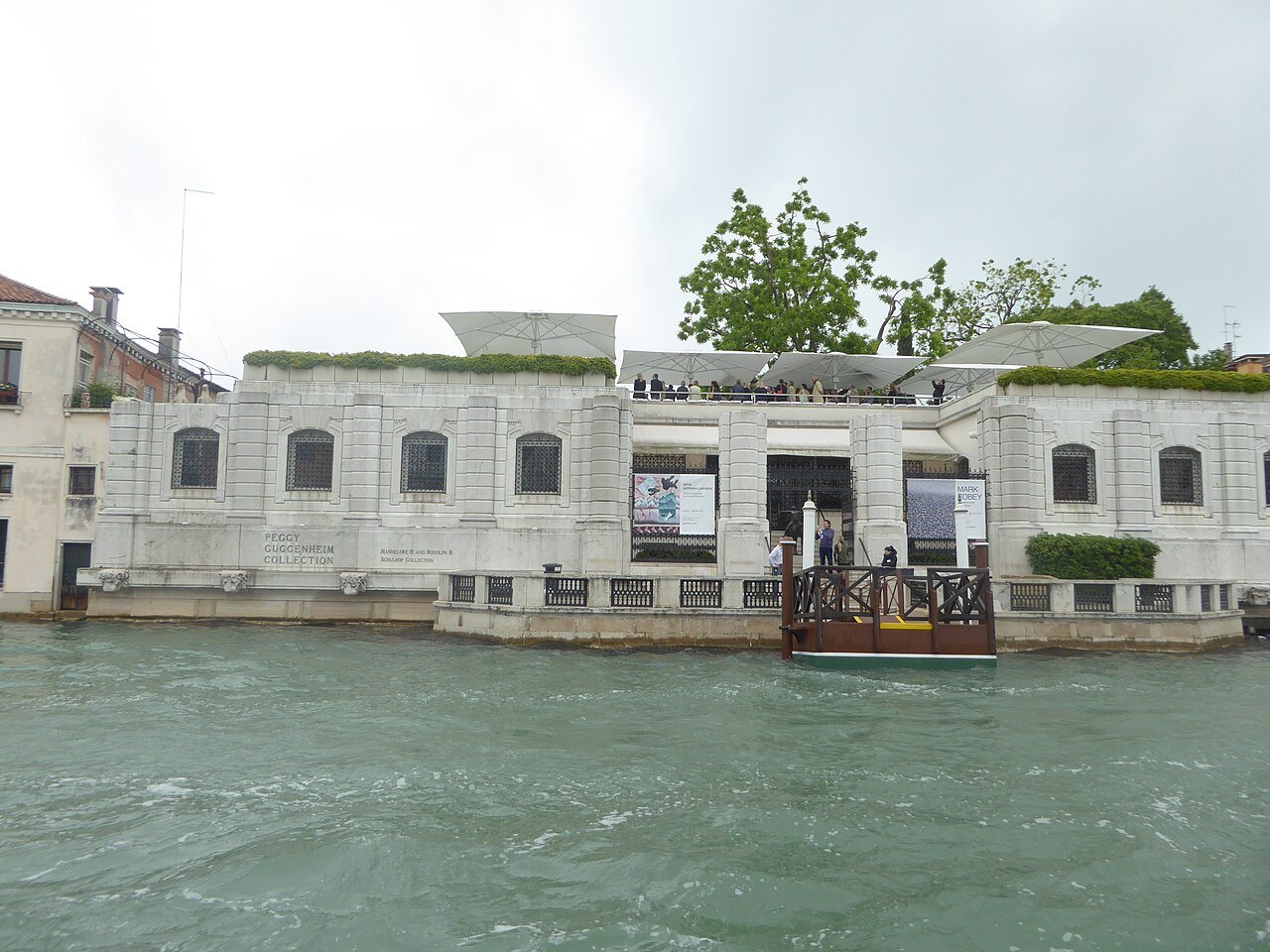
Allow an hour and a half. Guided tours in several languages can be booked by email through the museum. The nearest water-bus landings are Accademia and Salute; on foot it is a few minutes east of the Accademia bridge through the lanes of Dorsoduro.
Pair it with the Accademia for five centuries of painting in one day, or walk on to the Salute and the point of the Dogana at the mouth of the canal.
Honest notes
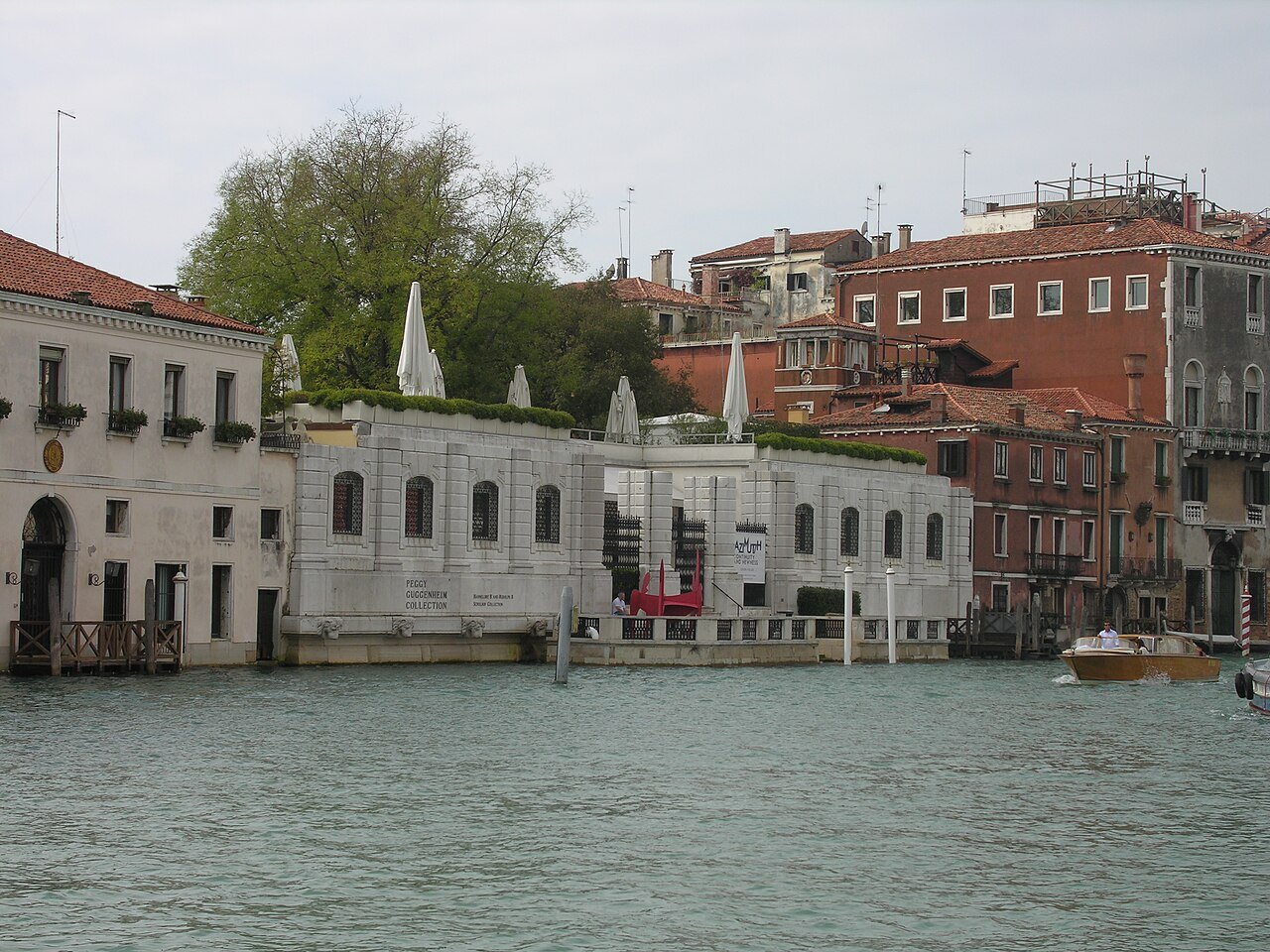
Some famous pieces on the terrace and in the garden are twentieth-century sculptures still in copyright, which is why no photograph of them appears on this site; the palace and the canal are photographed instead. Peggy Guggenheim's ashes are buried in the garden, and her descendants have gone to court more than once over how the collection is shown; French courts dismissed their claims in 1994, 2014 and 2015.
Where to go nextIII
Nearby
- Nearby · DorsoduroThe AccademiaFive centuries of Venetian painting in a medieval confraternity, its church and a convent Palladio never finished: Bellini, Carpaccio, Giorgione's Tempest, Titian, Tintoretto and Veronese's vast Feast in the House of Levi.Read the page →
- Nearby · DorsoduroSanta Maria della SaluteThe votive church the Republic promised the Virgin in 1630, when plague had killed nearly a third of the city: Longhena's great white octagon on a million wooden piles, where the Grand Canal meets the basin.Read the page →
- Nearby · San Marco · San Polo · DorsoduroThe Grand CanalThe city's main street is water: a reverse S nearly two and a half miles long through the middle of Venice, lined with more than 170 palaces, crossed by only four bridges and best seen from a boat.Read the page →