Home · Sights · Santa Maria della Salute
What you are looking atI
Santa Maria della Salute
Dorsoduro
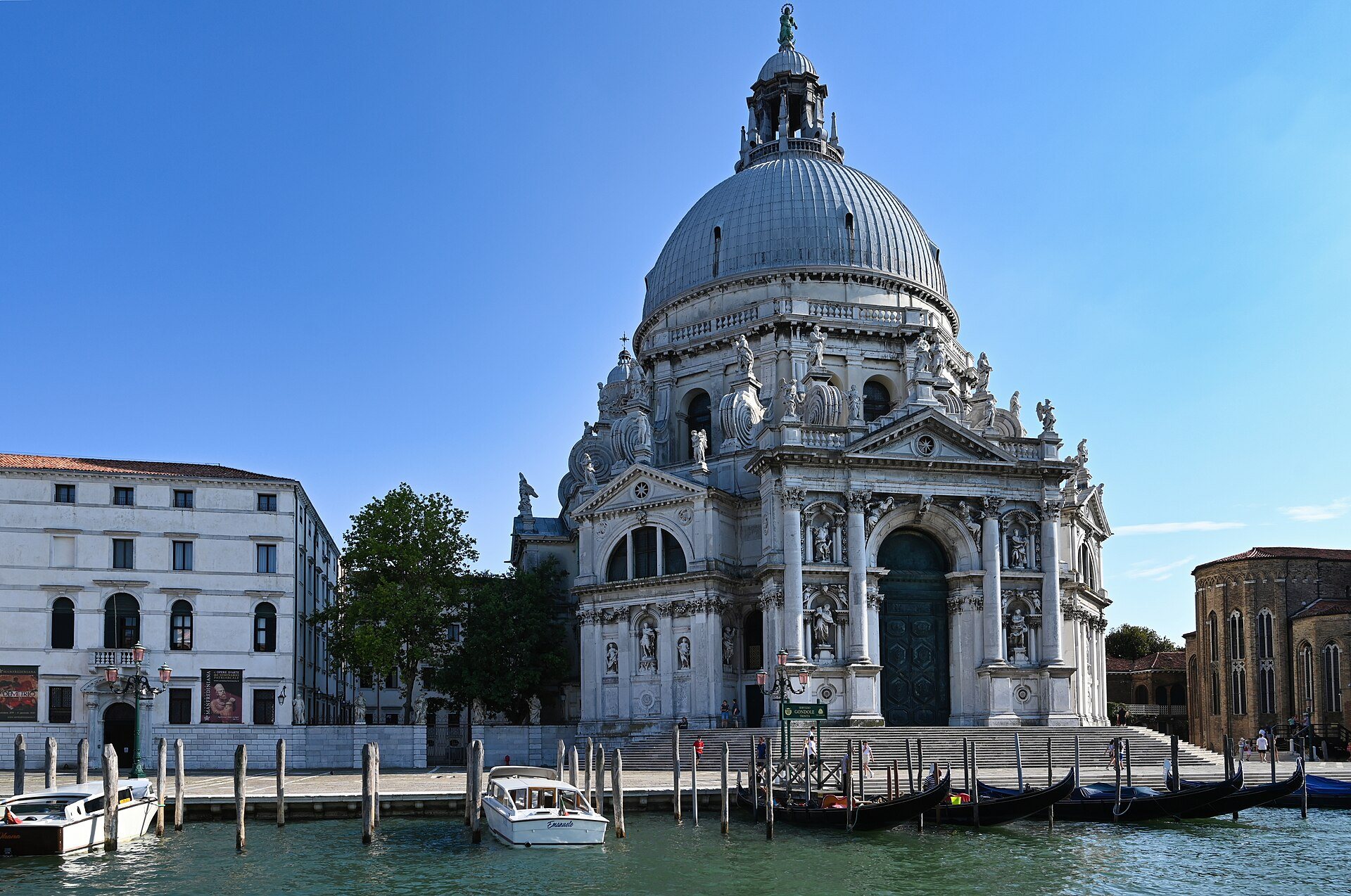
- 1The octagonAn eight-sided church of Istrian stone under a great dome, ringed with giant scroll buttresses.
- 2The facadeA triumphal arch of a front with the Evangelists, prophets and the Virgin on its crown.
- 3The high altarA Byzantine icon from Crete under Josse de Corte's sculpture of the Queen of Heaven expelling the Plague.
- 4The sacristyTitian's altarpiece and ceilings, and Tintoretto's Marriage at Cana with his self-portrait.
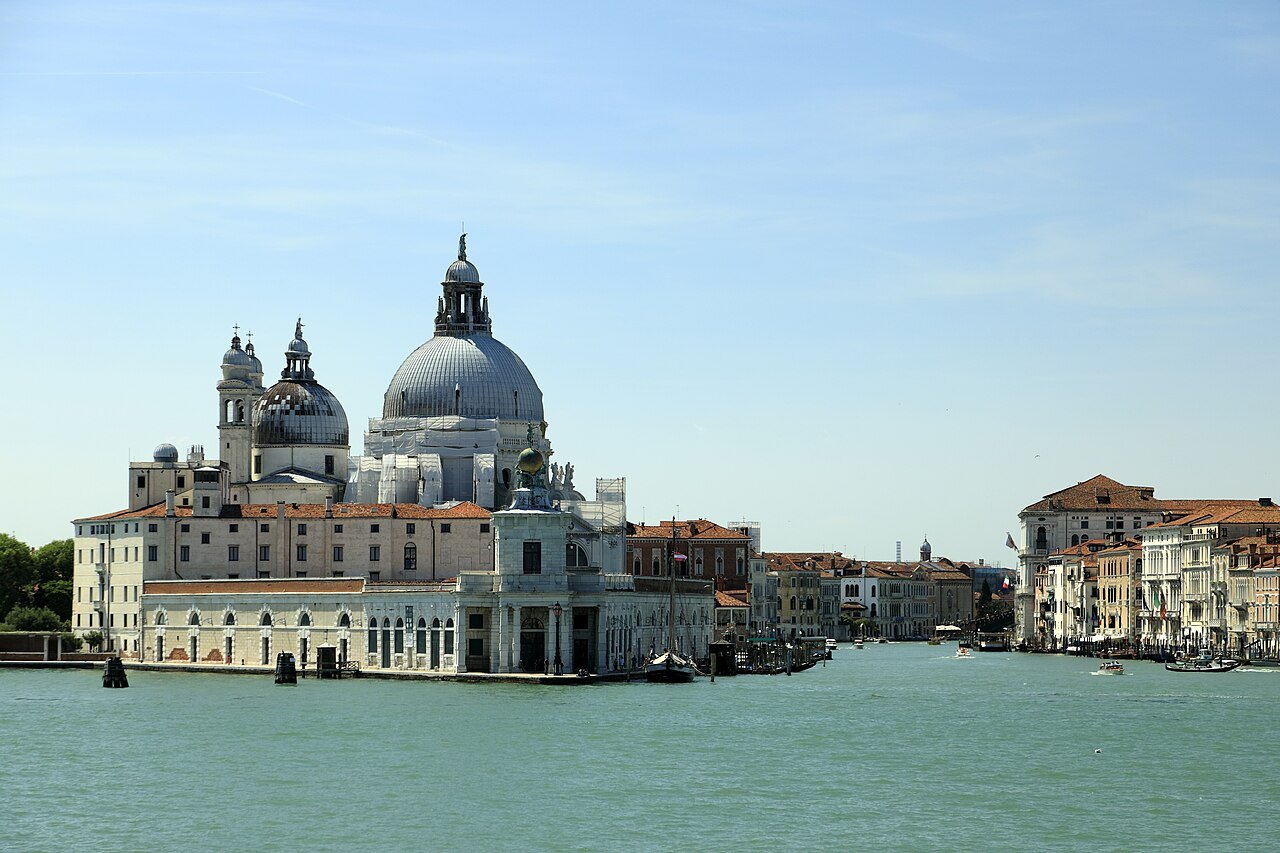
- 5The DoganaThe old customs house on the point beside the church, with the basin opening beyond.
- 6The feastEvery 21 November a pontoon bridge crosses the Grand Canal for the Festa della Salute.
The sight in fullII
Reading the place
Why it matters
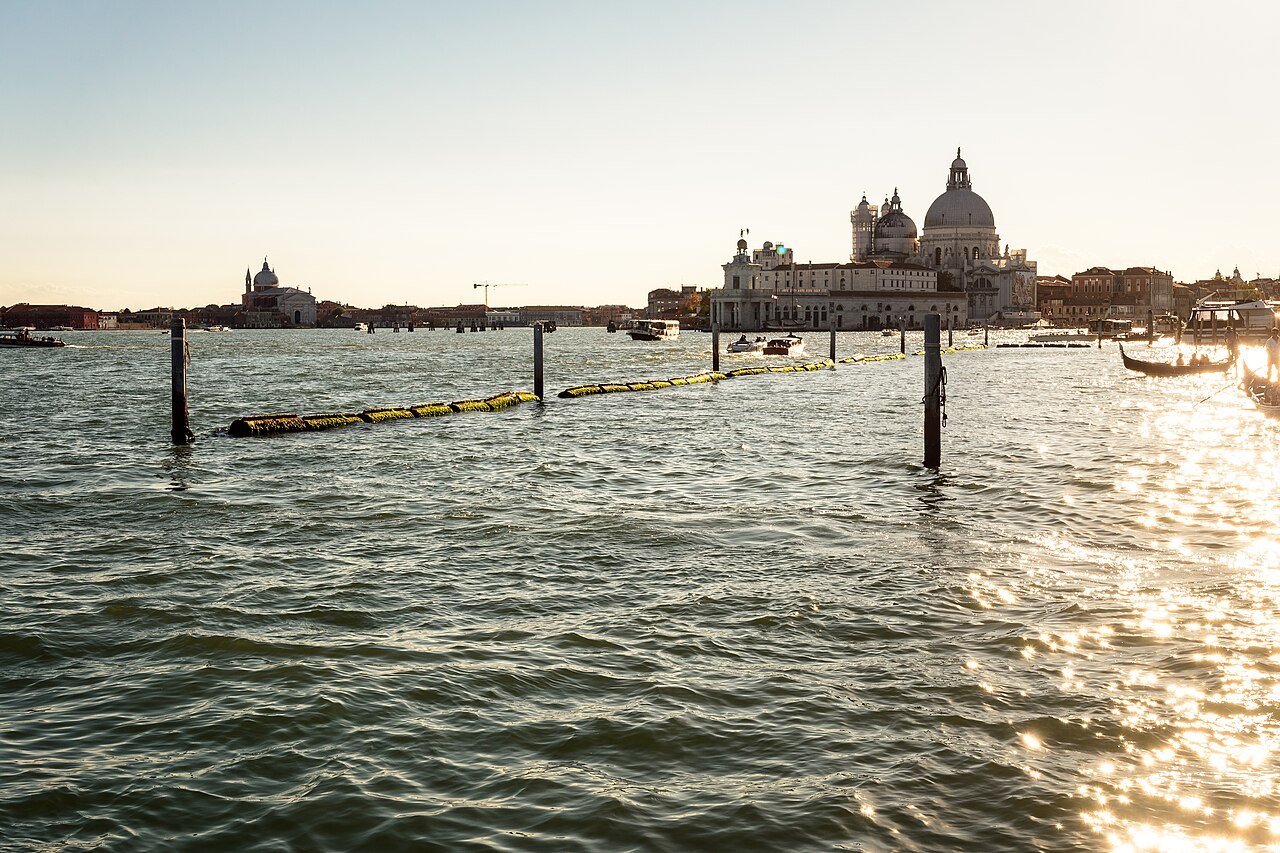
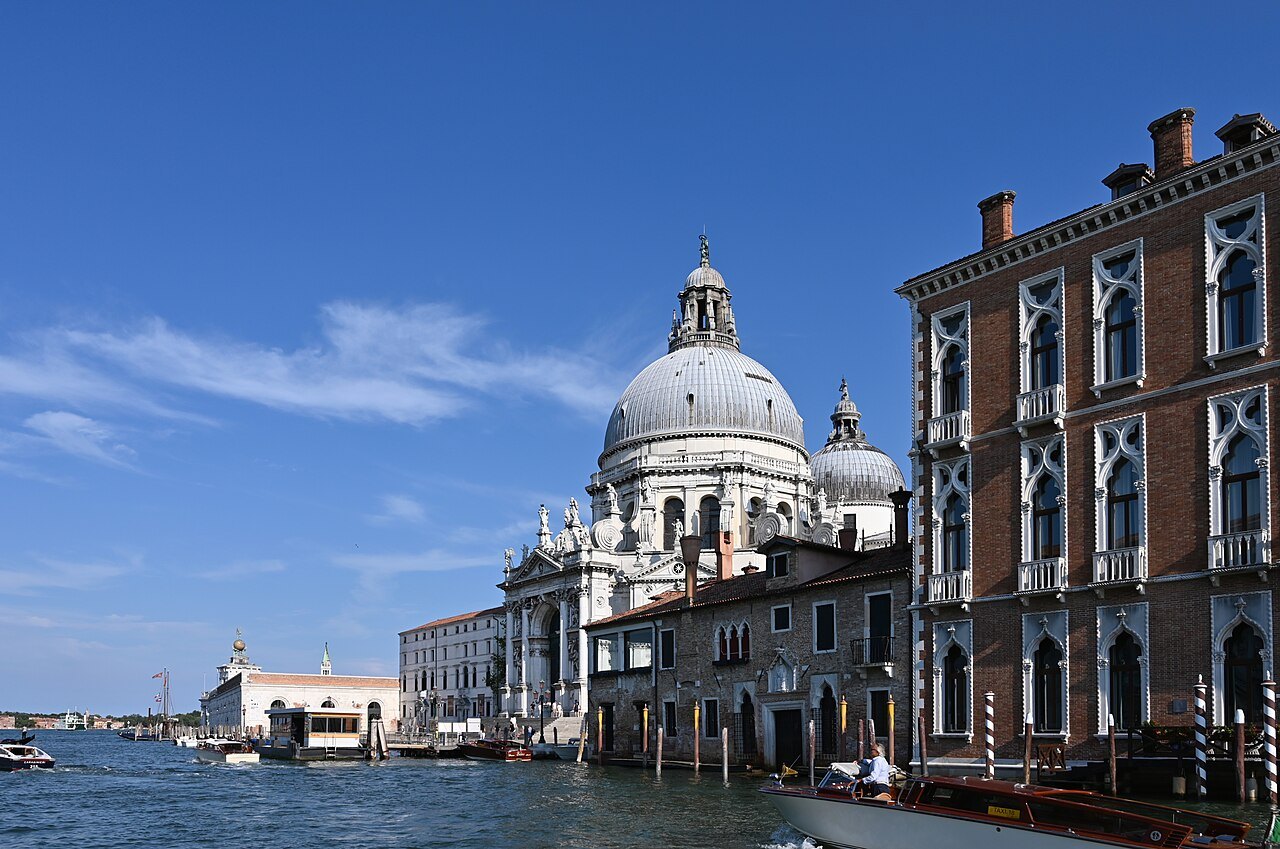
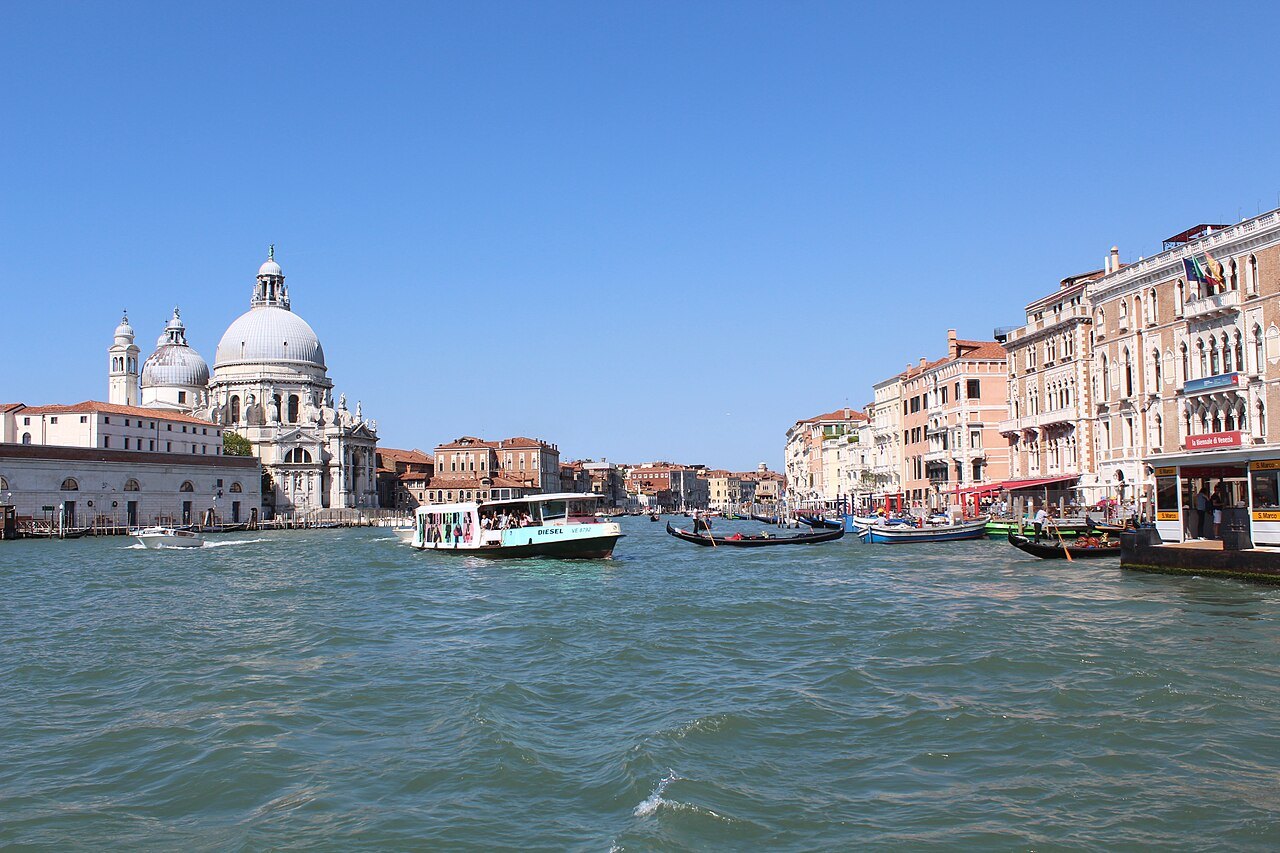
Santa Maria della Salute, Saint Mary of Health, known simply as the Salute, stands on the narrow point of Dorsoduro between the Grand Canal and the Giudecca Canal, facing the basin of San Marco. It is the most recent of the city's plague churches and one of its emblems: its dome closes every view down the canal from the Accademia, and it is the first great church you see from the water coming in from the Piazzetta.
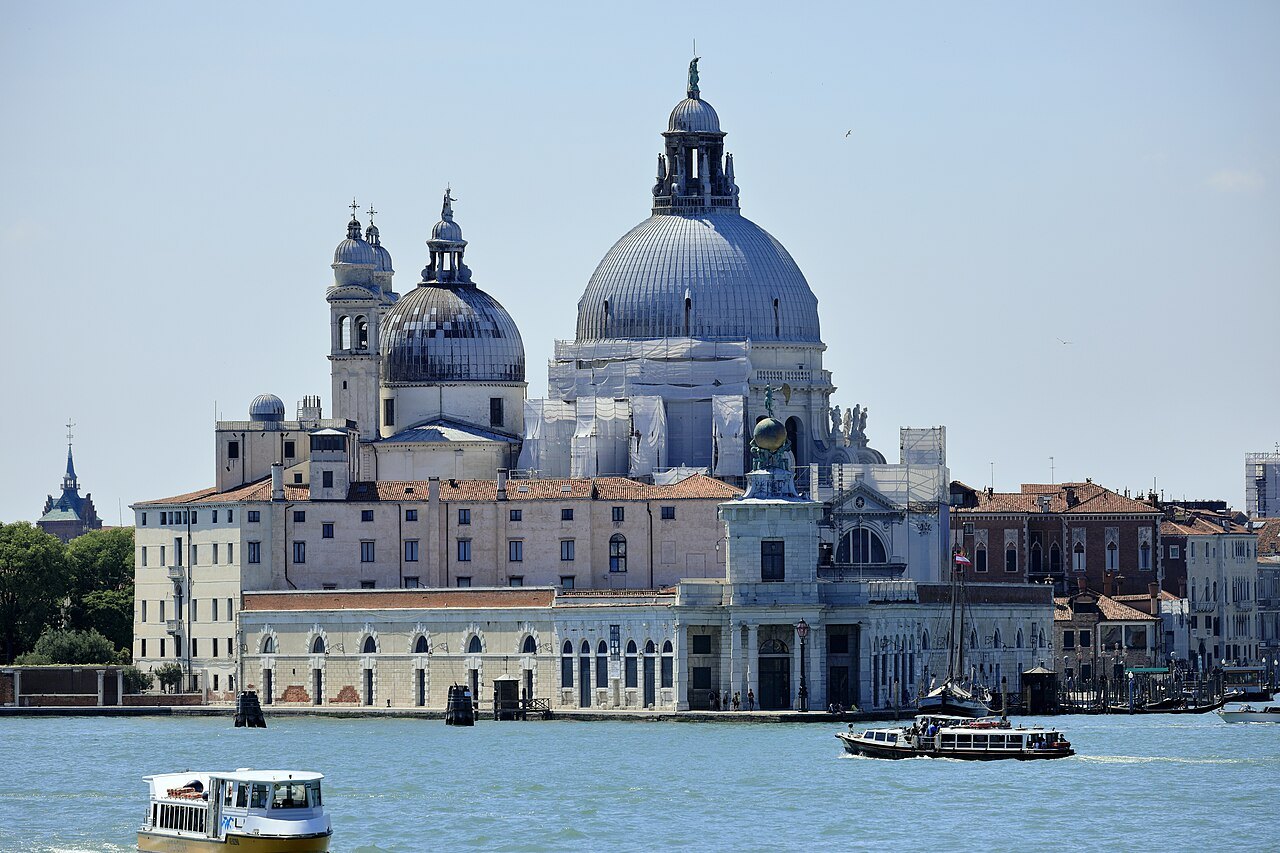
Its dome changed the skyline and quickly became a symbol of Venice, painted by Canaletto and Guardi, by Turner and Sargent, and by generations of visitors since.
A vow against the plague
In the summer of 1630 plague struck Venice. By 1631 it had killed nearly a third of the population: 46,000 people in the city and some 94,000 in the lagoon as a whole. Processions, displays of the sacrament and prayers at the churches of San Rocco and San Lorenzo Giustiniani failed to stop it.
On 22 October 1630 the Senate decreed that a new church would be built, as Palladio's Redentore on the Giudecca had been built after the plague of the 1570s, and that it would be dedicated not to a plague saint but to the Virgin, long held to be the Republic's protector. The Senate also decided to visit the church every year.
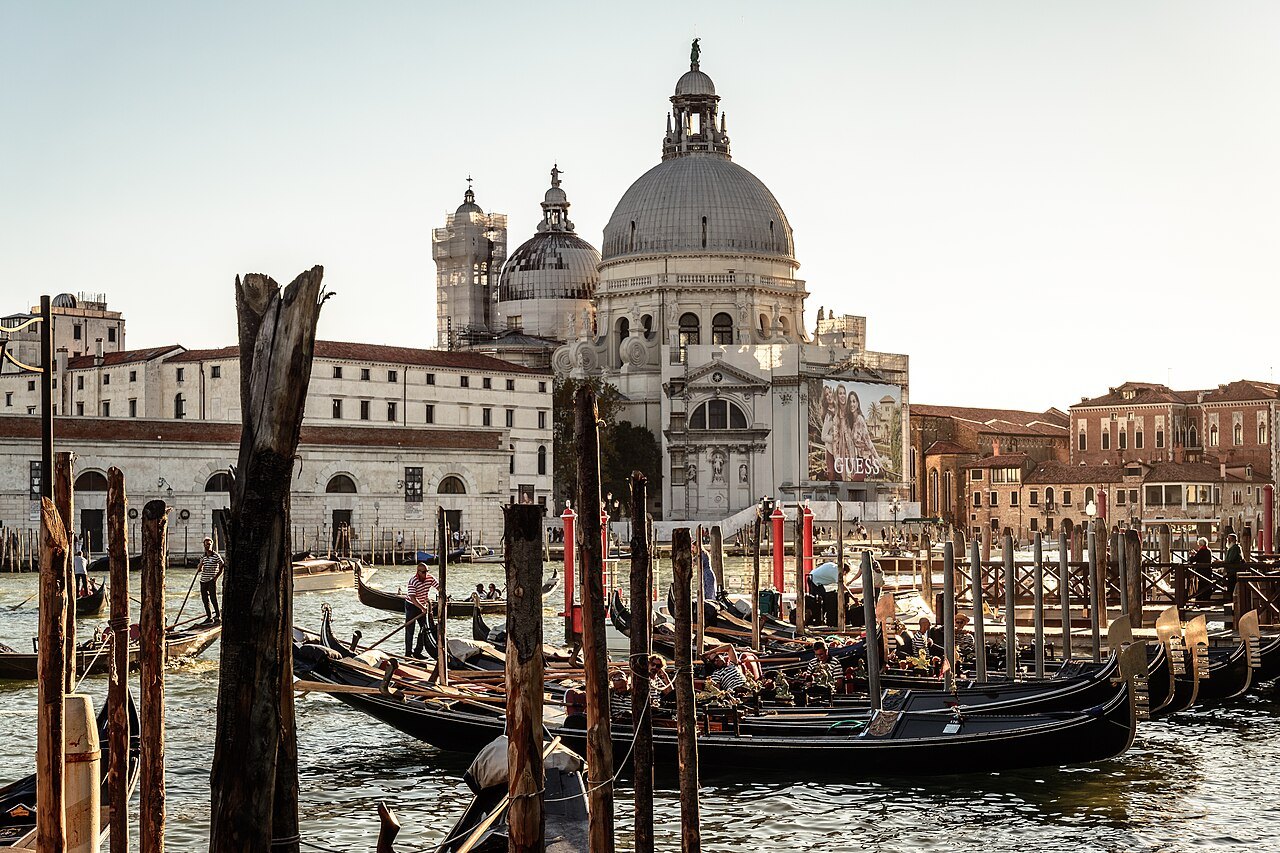
Eight sites were considered. This one was chosen partly because it could be reached in procession from Piazza San Marco, and partly because it formed an arc with San Giorgio, San Marco and the Redentore. Next to the customs house, the Dogana da Mar, the emblem of the city's trade, the church would stand for its piety. Buildings belonging to the patriarch were cleared, and demolition began by 1631.
Longhena's crown
A competition drew eleven designs. Most proposed a conventional long church like Palladio's. The winner was the twenty-six-year-old Baldassarre Longhena, whose design the Senate approved by sixty-six votes to twenty-nine. He described it as a church in the form of a rotunda, a work of new invention never built in Venice, shaped like a crown for the Virgin to whom it was dedicated. In a later memorandum he boasted that nothing like it had ever been built in the city, and dismissed his rival as poor in invention. The church was given to the Somascan Fathers, an order founded by the Venetian nobleman Jerome Emiliani, to run; and its design was soon copied abroad, from the shrine at Gostyń in Poland to the Rotunda of Xewkija on Gozo.
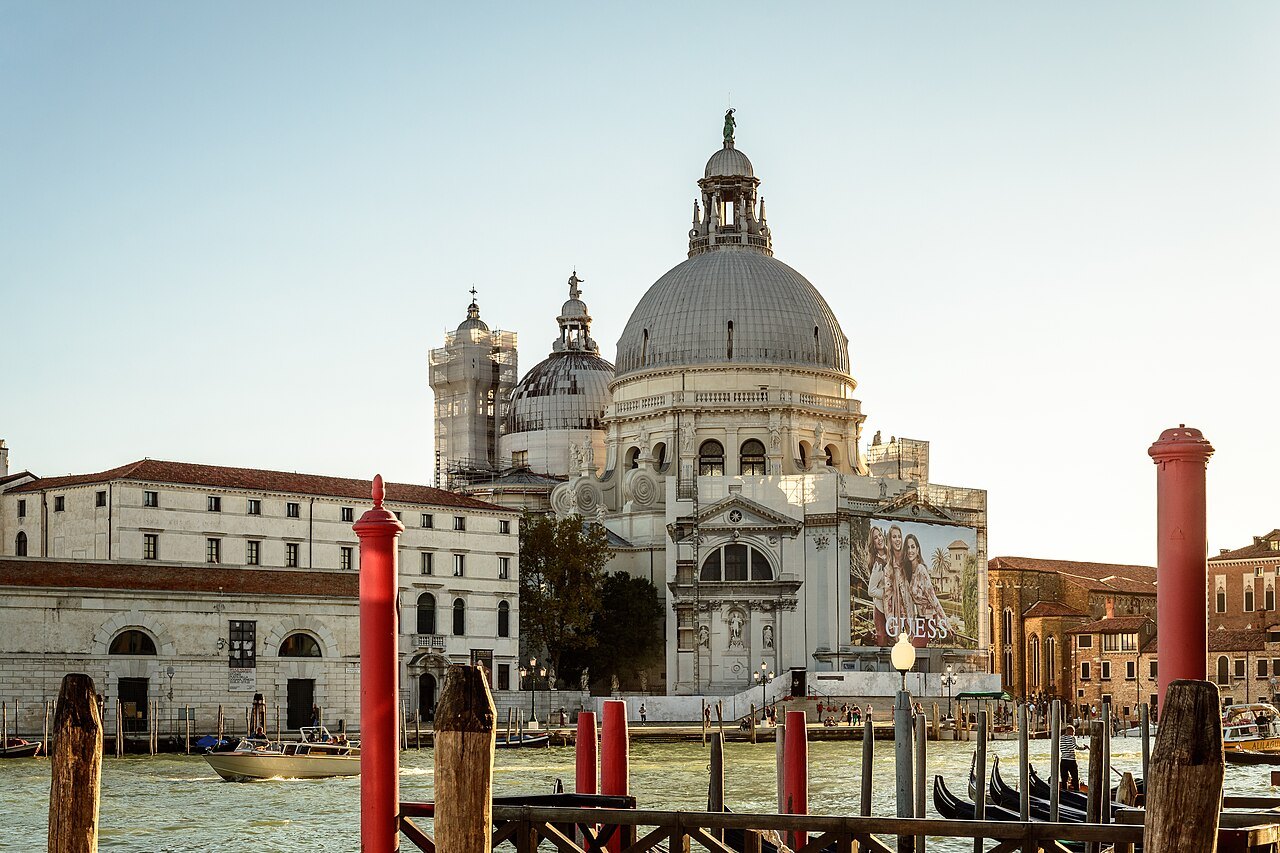
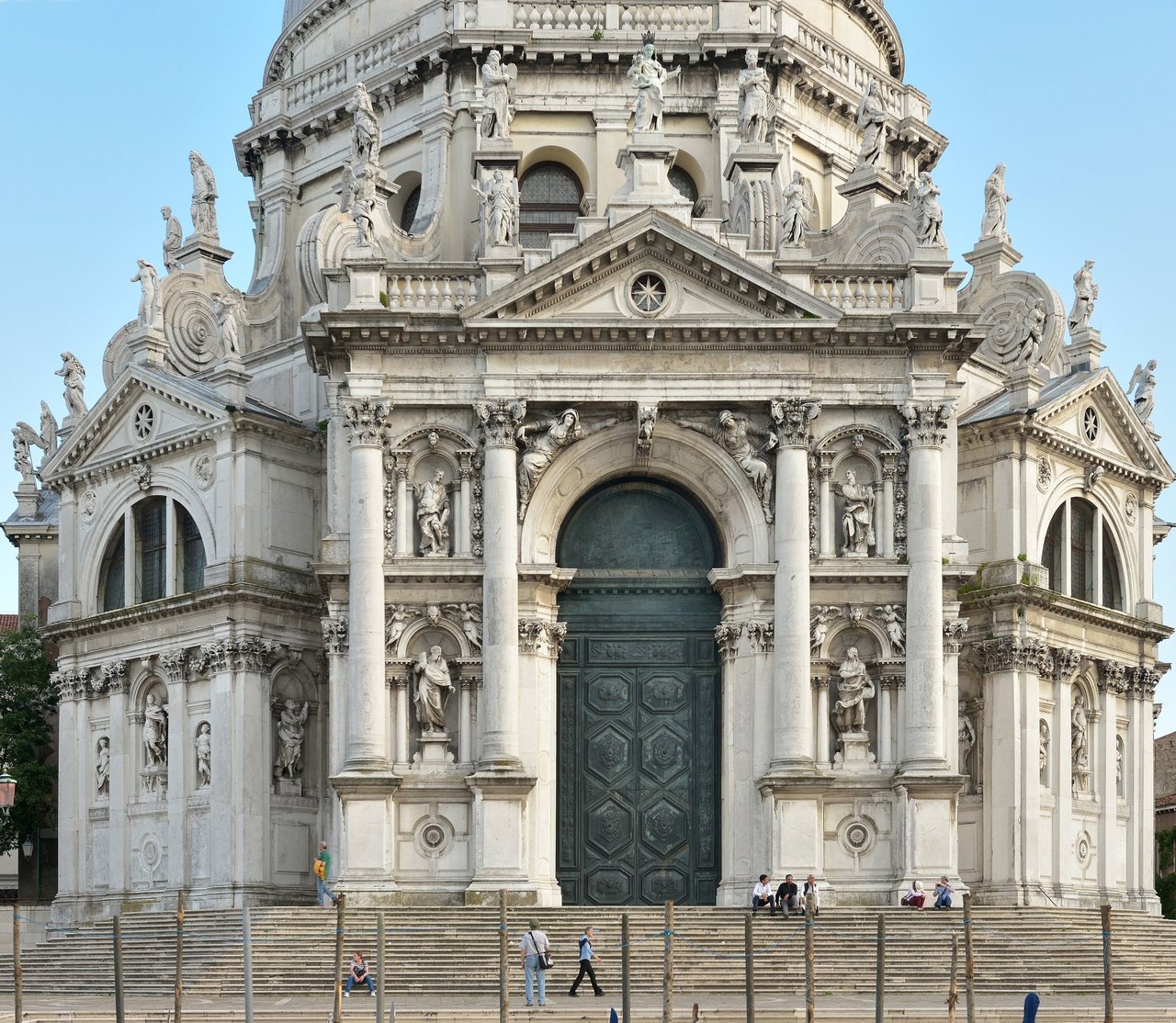
The church took the rest of his life. It was finished in 1681, the year before Longhena died. It stands on a platform of about a million wooden piles and is built of Istrian stone and marmorino, brick covered with marble dust. From the outside you see a vast octagon under a great dome, with a smaller dome and two bell towers behind; the huge scroll-shaped buttresses round the drum carry statues, and the main front is a triumphal arch of a portal crowded with the Evangelists, the prophets, Judith with the head of Holofernes and, at the top, the Virgin herself.
What you see inside
The interior is a single octagonal space, its architecture picked out in contrasting stone, ringed by radiating chapels, with a ring of saints standing on a balustrade above and the great dome overhead. It is full of Marian symbolism: the dome is the Virgin's crown and the eight sides the points of her star.
The three altars to the right of the entrance carry scenes from the life of the Virgin by Luca Giordano, and on the third altar to the left is Titian's Pentecost. At the high altar, designed by Longhena, stands a Byzantine icon of the Madonna and Child of the twelfth or thirteenth century, brought from Candia in Crete in 1669, beneath Josse de Corte's sculpted group of the Queen of Heaven expelling the Plague, of 1670.
The great sacristy, behind the altar, is the church's gallery. Titian is the most represented painter here, with the altarpiece of Saint Mark enthroned among saints Cosmas, Damian, Sebastian and Roch, three ceiling canvases of Cain and Abel, Abraham and Isaac and David and Goliath, and tondi of the Evangelists and the Doctors of the Church. On the wall hangs Tintoretto's Marriage at Cana, painted in 1561, which includes his self-portrait.
How to visit
Services close the church to visitors at times, and the great sacristy has its own entry, so check both before you go. Allow half an hour for the church and as long again for the sacristy.
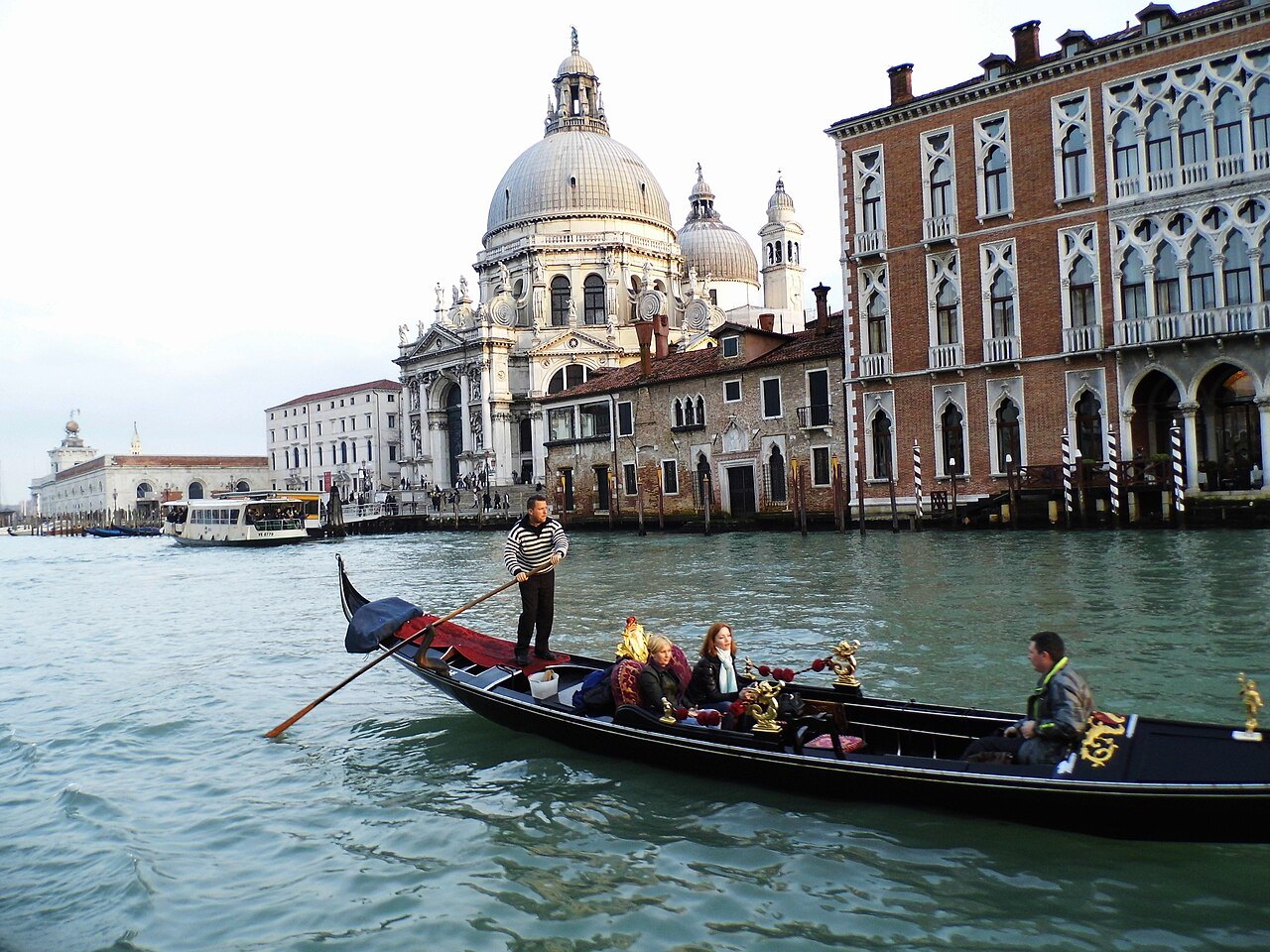
The nearest water-bus landing is Salute, on Line 1 of the vaporetto. On foot it is a short walk east from the Accademia and the Peggy Guggenheim Collection.
Walk on past the church to the tip of the point, the Punta della Dogana, where the customs house ends in a tower crowned by a figure of Fortune. From here you see the whole basin at once: the Doge's Palace, the Campanile, San Giorgio Maggiore and the Giudecca.
The feast of the Salute
Every year on 21 November, the Festa della Madonna della Salute, the city keeps the Senate's vow. A pontoon bridge is built across the Grand Canal, and Venetians walk over it from San Marco to the church to give thanks for the end of the plague, as the Senate once did in procession. It remains one of the great days of the Venetian year, and the most Venetian way to see the church (see when to come).
Where to go nextIII
Nearby
- Nearby · DorsoduroThe Peggy Guggenheim CollectionModern art in the unfinished palace where Peggy Guggenheim lived for thirty years: Picasso, Magritte, Pollock, Brâncuși and the Italian futurists, a garden of sculpture, and a terrace on the Grand Canal.Read the page →
- Nearby · DorsoduroThe AccademiaFive centuries of Venetian painting in a medieval confraternity, its church and a convent Palladio never finished: Bellini, Carpaccio, Giorgione's Tempest, Titian, Tintoretto and Veronese's vast Feast in the House of Levi.Read the page →
- Nearby · San Marco · San Polo · DorsoduroThe Grand CanalThe city's main street is water: a reverse S nearly two and a half miles long through the middle of Venice, lined with more than 170 palaces, crossed by only four bridges and best seen from a boat.Read the page →