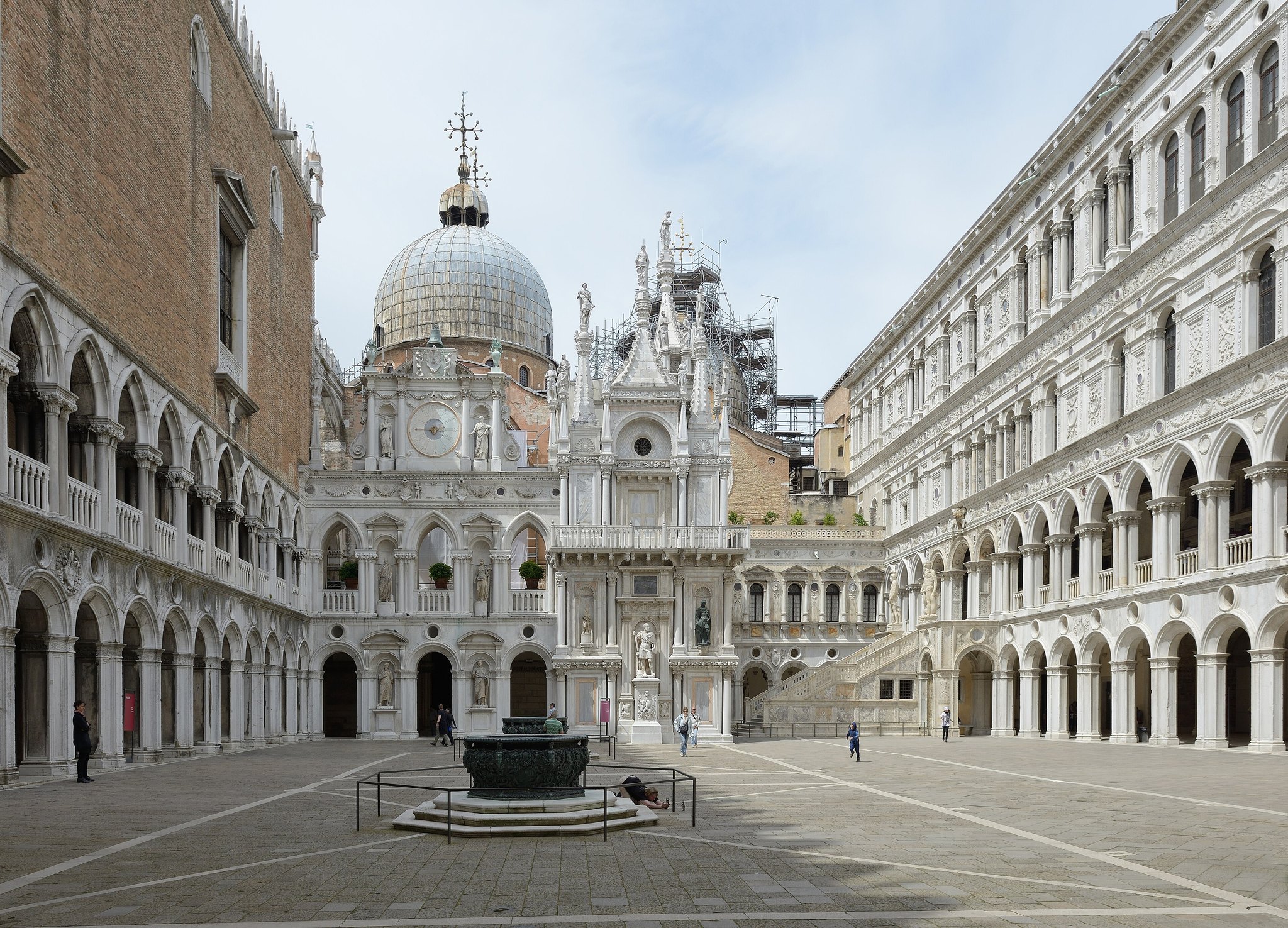

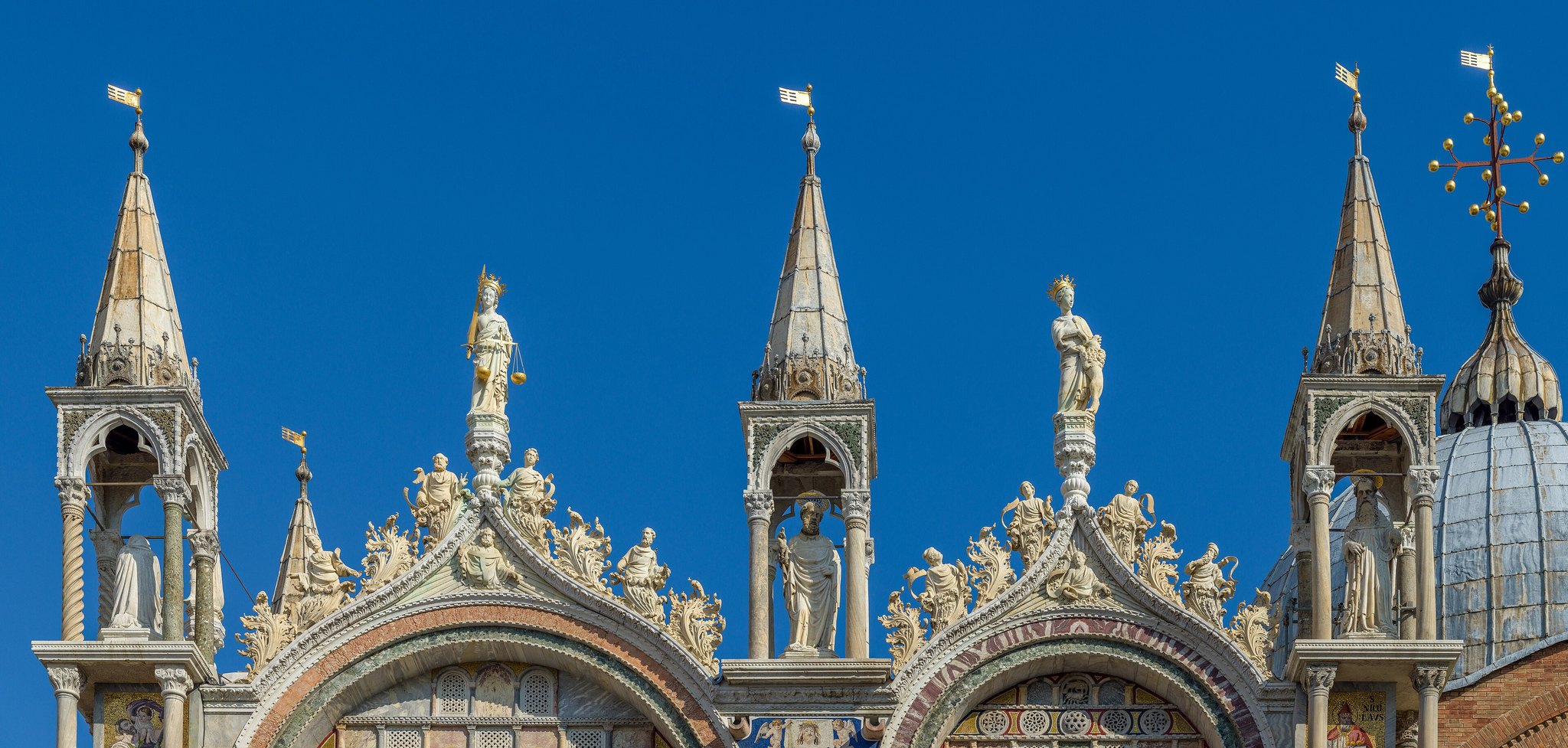
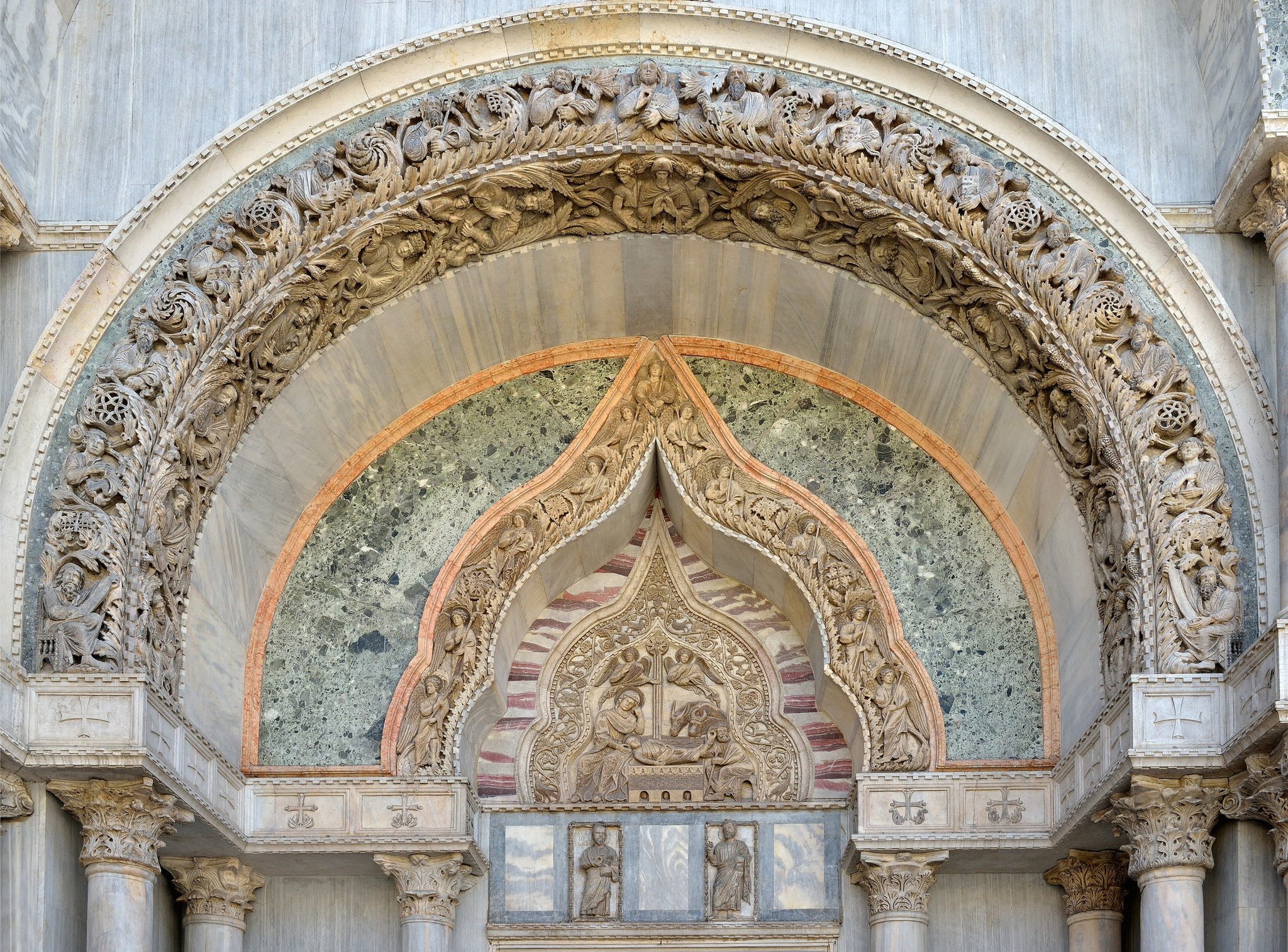
A Byzantine church on a Latin square, begun in 1063 to hold a body stolen from Alexandria, and encrusted for four hundred years afterwards with whatever the Venetian fleet brought home. It is less a building than a surface: eight thousand square metres of gold mosaic inside, and a front of looted marble and porphyry outside.
Almost nothing on it was made for it. The four bronze horses over the door were taken from Constantinople in 1204, and the ones outside now are copies — the originals are upstairs, out of the weather.
What it costs
Entry to the church itself is free. What is ticketed is everything worth queueing for: the Pala d’Oro altarpiece, the Treasury, and the museum upstairs with the original horses and the loggia over the square.
There is also a small paid booking that reserves an entry slot. It does not buy you anything inside; it buys you not standing in the queue, which in summer is the more valuable purchase.
When to go
First thing, or the last hour. The queue for free entry runs down the side of the square by mid-morning and there is no shade in it.
It is a working church, so it closes to visitors during services and for longer on Sunday mornings. Bare shoulders and knees are turned away at the door, and large bags have to be left at the deposit round the corner, which is free but adds twenty minutes.

Getting there
Vaporetto to San Marco (Vallaresso) or San Zaccaria, then walk. From the station, line 1 down the Grand Canal takes about forty minutes and is worth doing once for itself; line 2 is faster and misses the middle.

If you only have an hour
Go in, walk to the middle, and let your eyes adjust before looking up — the mosaics are unlit and read as brown until they do not. Then walk the length of the nave on the uneven marble floor, which is itself twelfth-century and rolls like water.
If you buy one extra, buy the museum: the horses at close range, and the loggia looking down on the square.
What people get wrong
Assuming free means quick. The free queue is the long one, and the ticketed parts have their own.
And photographing inside, which is not allowed in the church.

Nearby
Ticketing arrangements, closing days and boat timetables as published and checked on 5 September 2026. These change without much warning — confirm with the place itself before you travel. More sights, and how they fit together, in Landmarks & Sights.