Home · Sights · The Doge's Palace
What you are looking atI
The Doge's Palace
San Marco
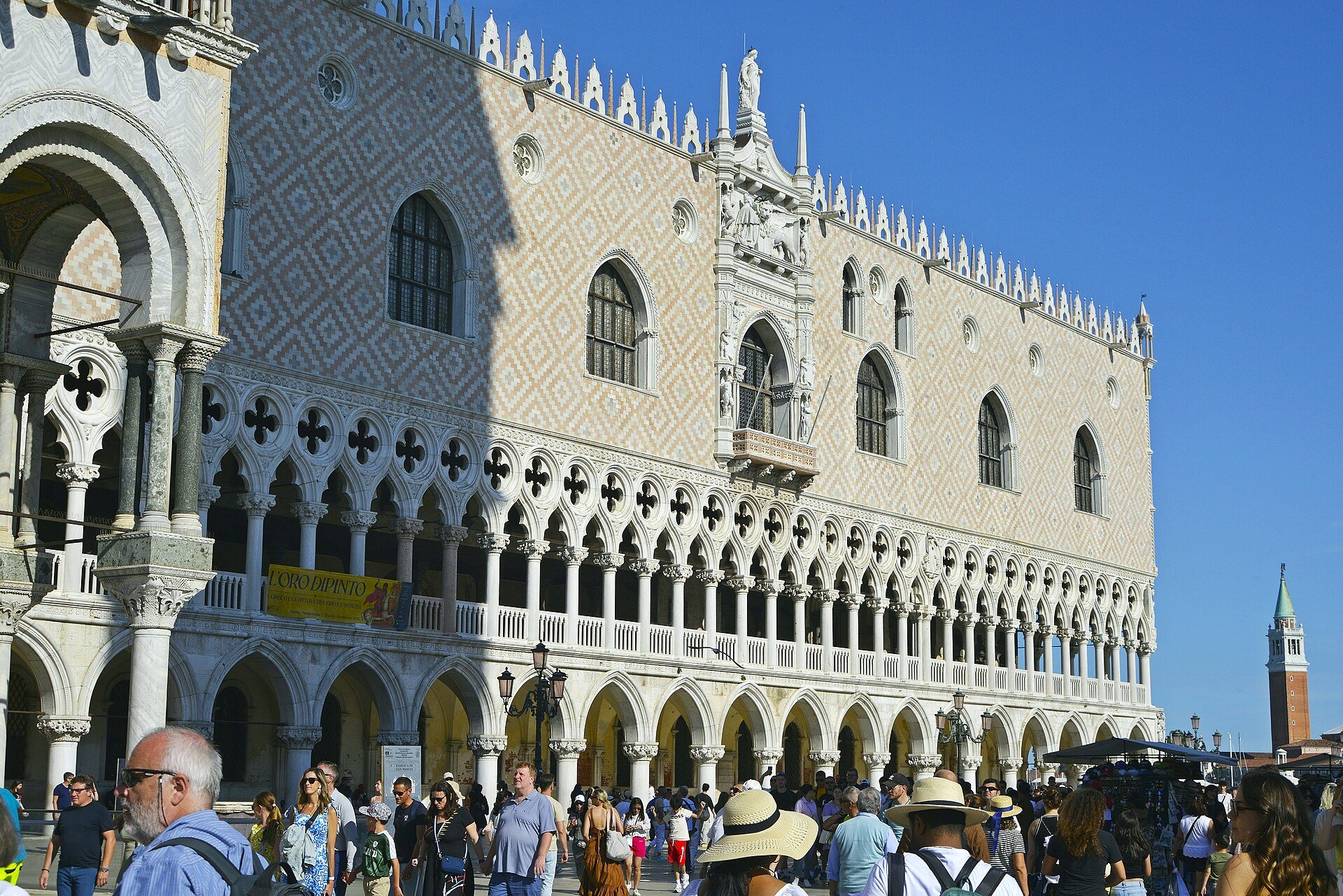
- 1The water frontA Gothic arcade and an open loggia below a tall upper wall, facing the basin.
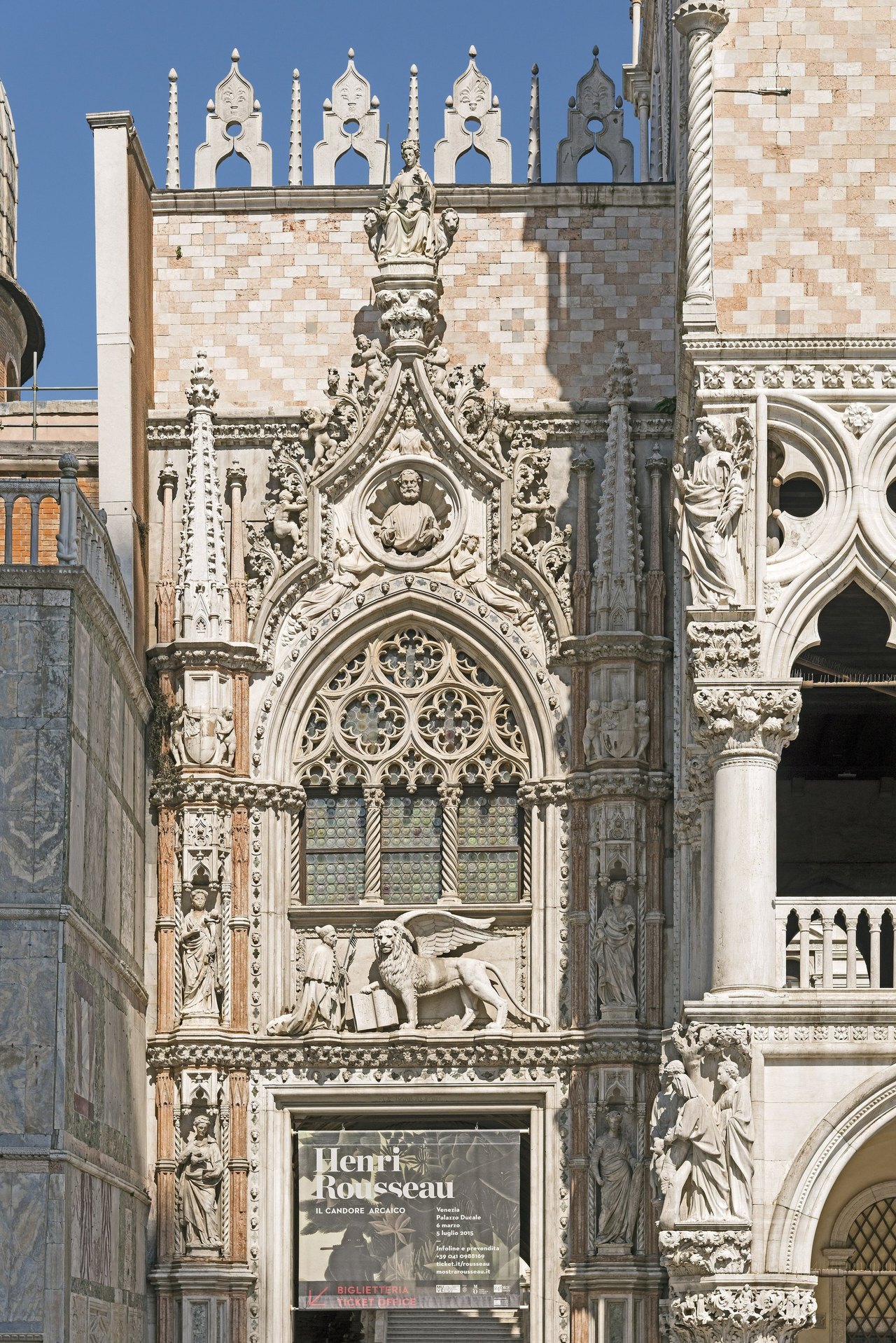
- 2The Porta della CartaThe ceremonial gateway of 1438 to 1442 by Giovanni and Bartolomeo Bon, beside the basilica.
- 3The Giants' StaircaseSansovino's colossal Mars and Neptune guarding the ceremonial stair in the courtyard since 1567.
- 4The Great Council ChamberFifty-three meters long, one of the largest rooms in Europe, under Tintoretto's Il Paradiso.
- 5The Bridge of SighsThe covered bridge of about 1600 to the New Prisons across the Rio di Palazzo.
- 6The Museo dell'OperaThe original capitals of the arcades, replaced by copies outside in the nineteenth century.
The sight in fullII
Reading the place
Why it matters
The Doge's Palace was the government of Venice in a single building. It held the residence of the doge, the elected head of the Republic; the chambers of the Great Council, the Senate and the Council of Ten; the courts; and the prisons. It stands between St Mark's Basilica and the water, with one front on the Piazzetta and one on the basin, and it did its work until the Republic fell to Napoleon in 1797.
Since 1923 it has been a museum, one of eleven run by the Fondazione Musei Civici di Venezia. It is the building to see if you want to understand how the Republic ruled itself: a council of every adult male patrician, councils within councils, and a doge whose power was deliberately hemmed in.
A palace rebuilt by fire
The first palace was begun in 810, when the seat of government moved from Malamocco to the Rialto islands, and nothing of it survives; it was partly burned in the tenth century by citizens rising against Doge Pietro IV Candiano. Doge Sebastiano Ziani rebuilt it in the twelfth century. When the Great Council grew in the thirteenth century, a larger building was needed, and the Gothic palace you see was begun around 1340 on the side facing the lagoon.
In 1424 Doge Francesco Foscari extended the rebuilding along the Piazzetta, finishing with the Porta della Carta. Fires then shaped the rest. A fire in 1483 destroyed the doge's apartments along the canal behind, and Antonio Rizzo rebuilt that wing in the new Renaissance manner. Another in 1574 damaged rooms on the second floor, and in 1577 a third burned the Great Council Chamber and the Scrutinio Room with paintings by Bellini, Carpaccio, Pordenone and Titian. Palladio proposed a new classical design; the Republic chose to rebuild in the original Gothic style.
What you see outside
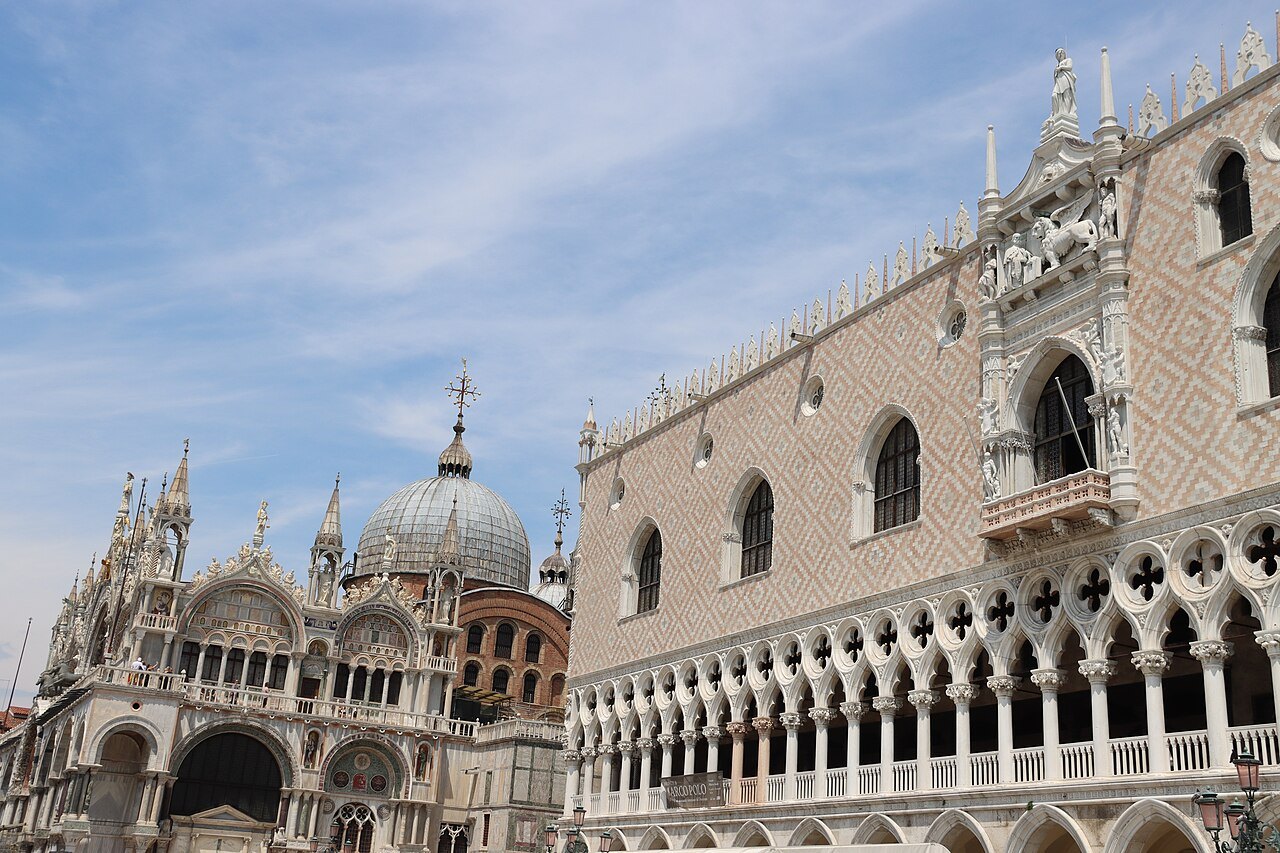
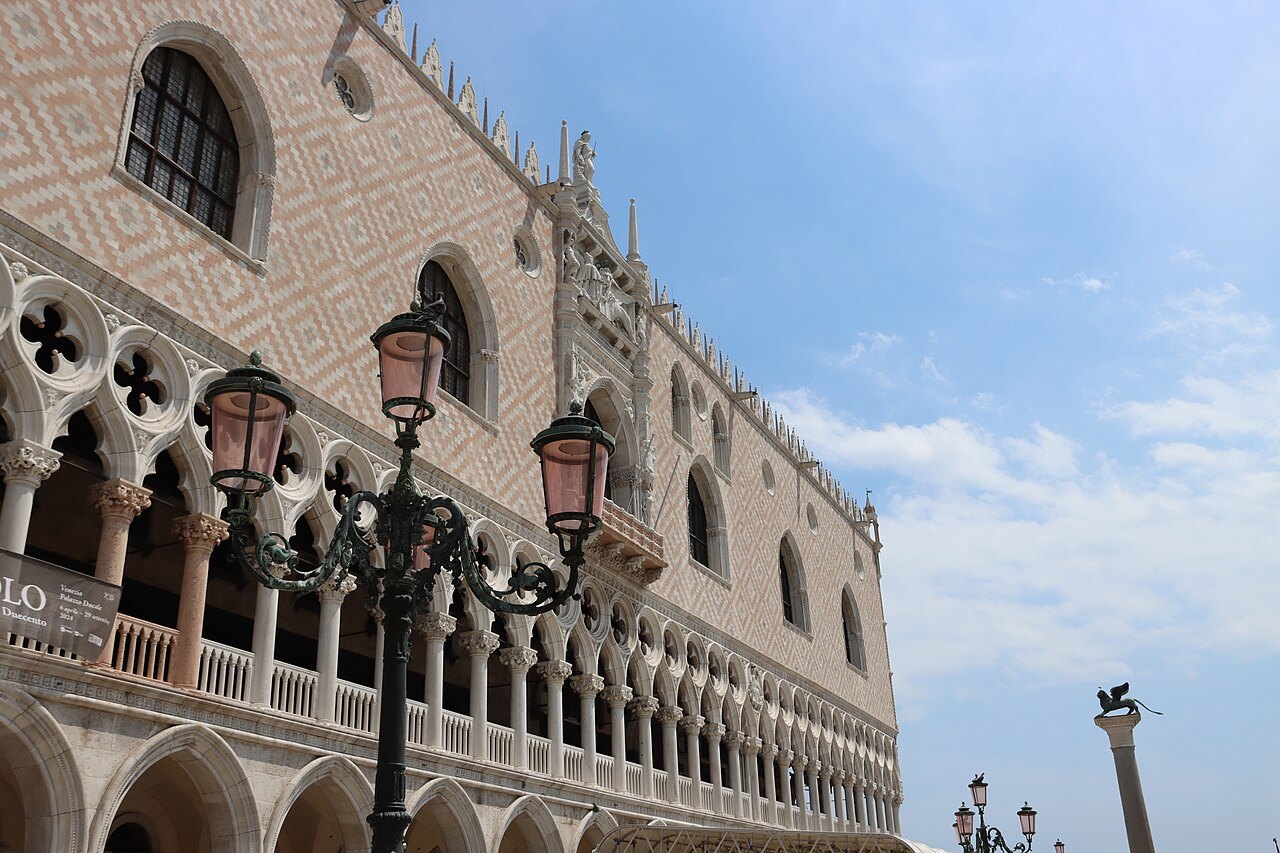
The front on the water is the oldest part: a ground-floor arcade, an open loggia above it, and above both a tall, almost solid upper wall. Its corners carry fourteenth-century sculpture, and the capitals of the arcades are carved with figures and foliage. Forty-two of them were in such poor condition by the 1870s that they were replaced with copies; the originals are in the Museo dell'Opera inside.
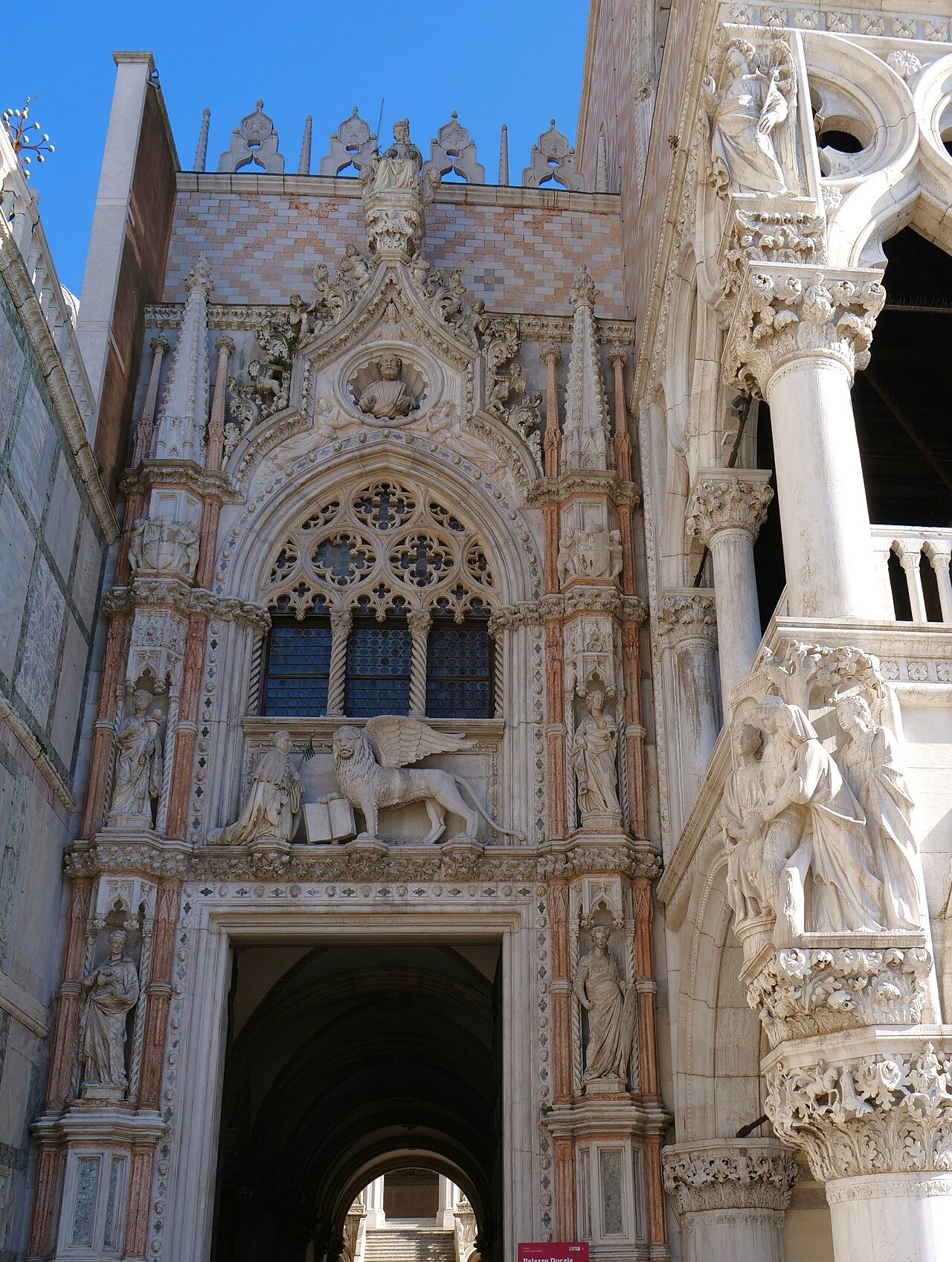
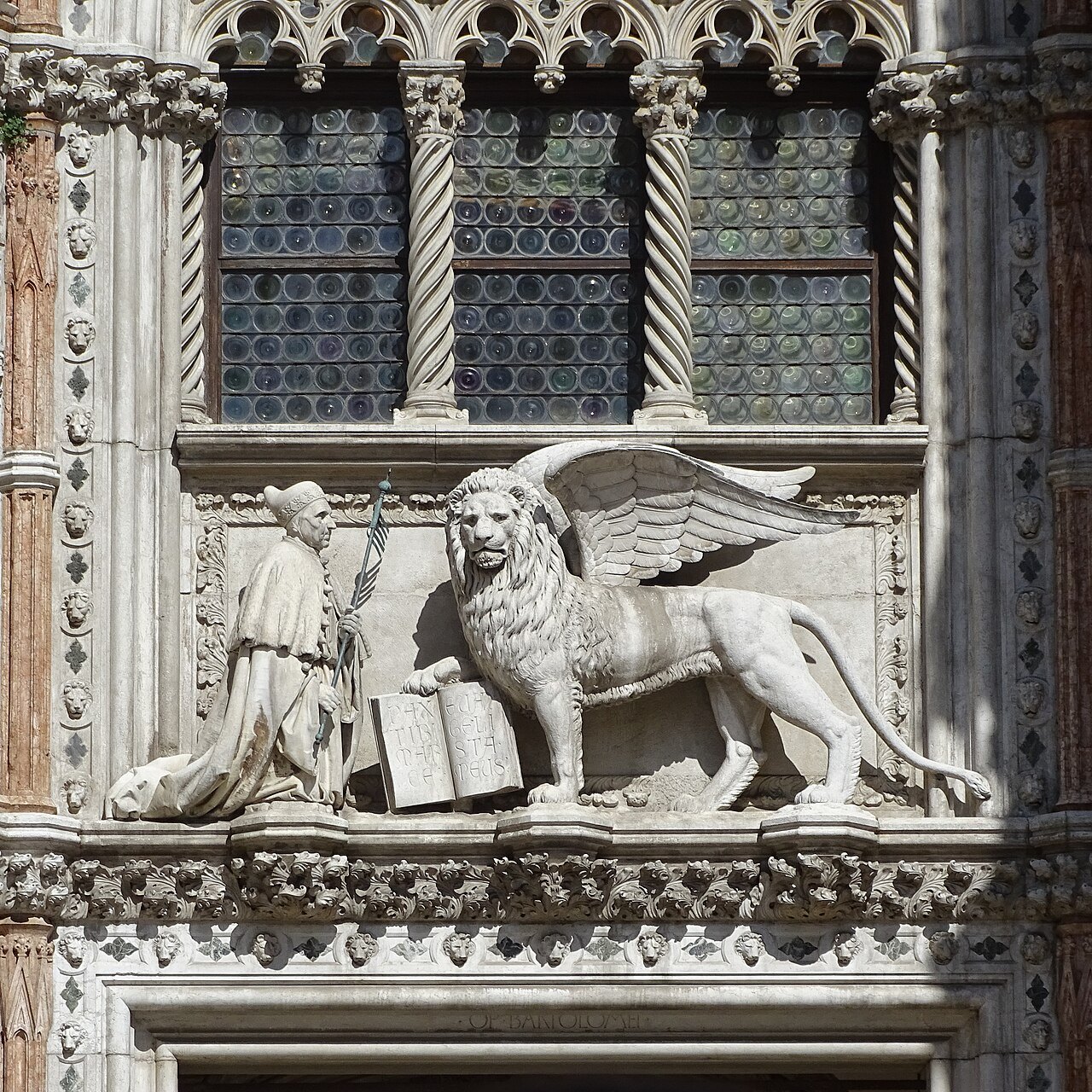
Walk along the Piazzetta side toward the basilica to the Porta della Carta, built and carved in 1438 to 1442 by Giovanni and Bartolomeo Bon, with Justice holding her sword and scales at the top. The kneeling Doge Foscari before the lion is a nineteenth-century replacement; the original was smashed on French orders in 1797.
From the Ponte della Paglia on the waterfront, look up the canal at the side of the palace to the Bridge of Sighs, the enclosed white bridge that joins the palace to the prisons across the water.
What you see inside
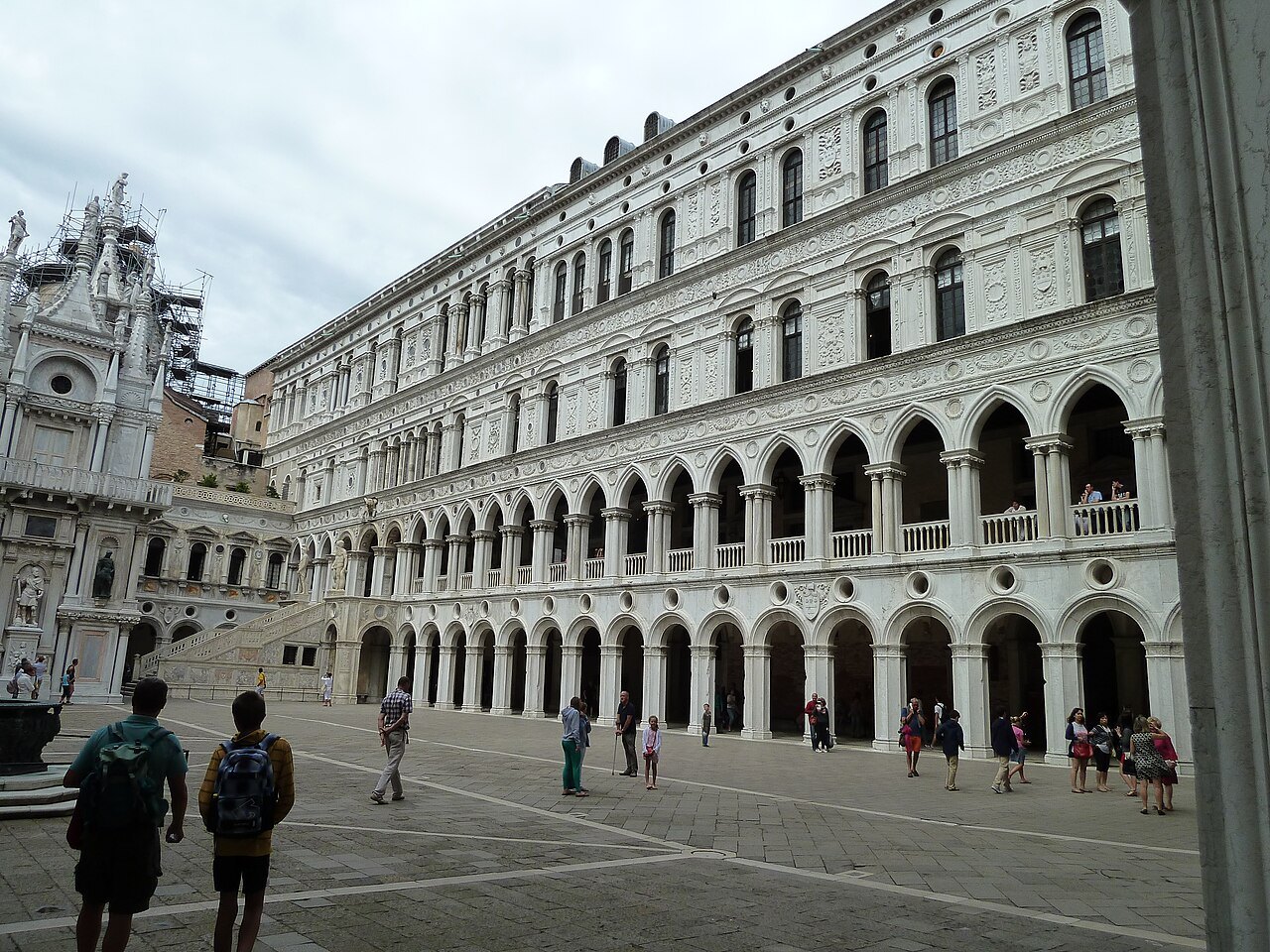
Visitors enter through the Porta del Frumento on the waterfront into the great courtyard, with two sixteenth-century wellheads and the north side closed against the basilica. The Giants' Staircase rises opposite, guarded since 1567 by Sansovino's colossal statues of Mars and Neptune, standing for Venice's power on land and sea.
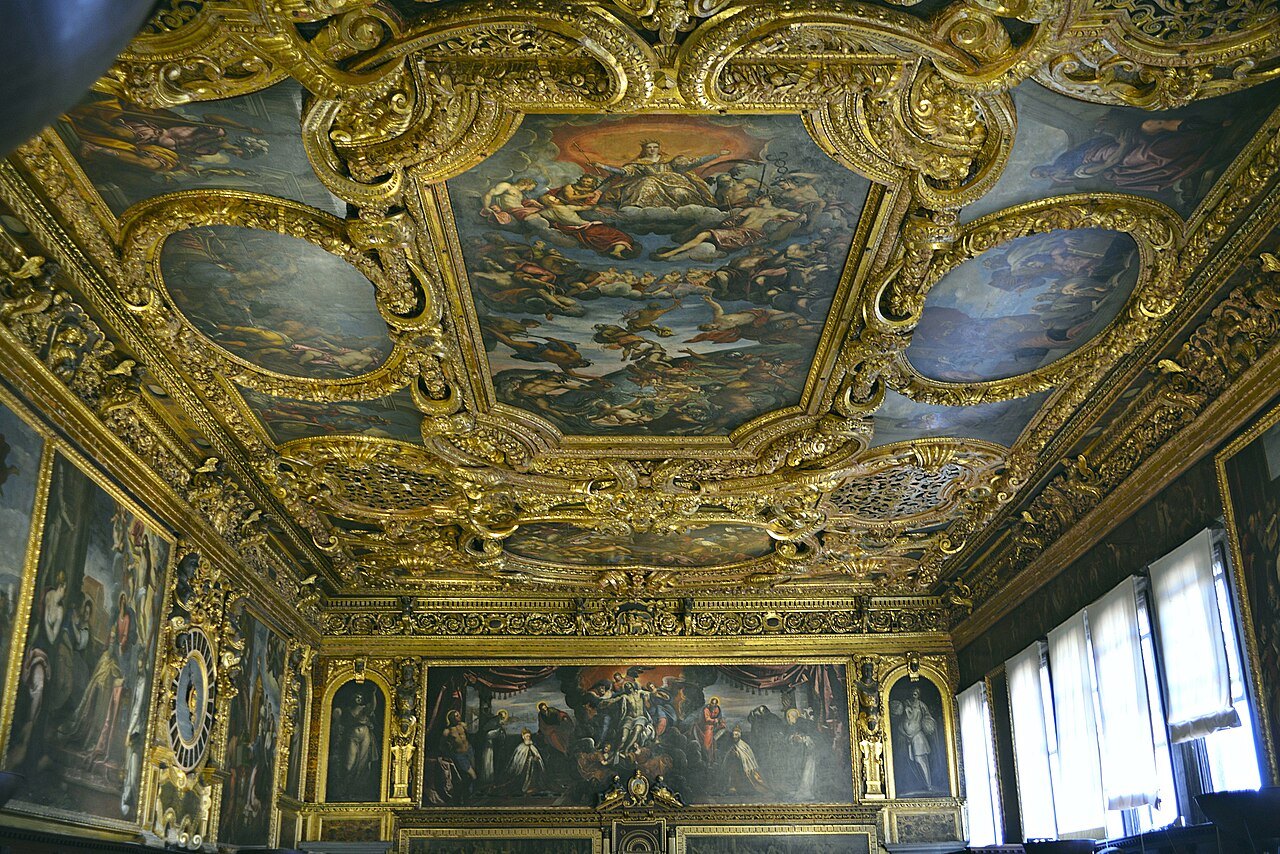
The route climbs the Golden Staircase to the doge's apartments, completed by 1510 after the fire, and then to the rooms of government, where the ceilings are carved, gilded and painted by Veronese, Tintoretto and their workshops. In the Chamber of the Council of Ten, the council set up after a conspiracy of 1310, the ceiling is by Ponchino with a young Veronese.
The climax is the Chamber of the Great Council, fifty-three meters long and twenty-five wide, one of the largest rooms in Europe. Every male patrician over twenty-five sat here. Tintoretto's Il Paradiso fills the wall above the doge's throne; Veronese's Apotheosis of Venice is on the ceiling; and a frieze of doges' portraits runs round below it, in which Marino Faliero, who attempted a coup in 1355, is shown only by a black cloth as a traitor to the Republic. The frieze continues in the Scrutinio Room next door, burned in the same fire of 1577 and restored within a few years with paintings by Veronese, the Tintorettos and Palma il Giovane.
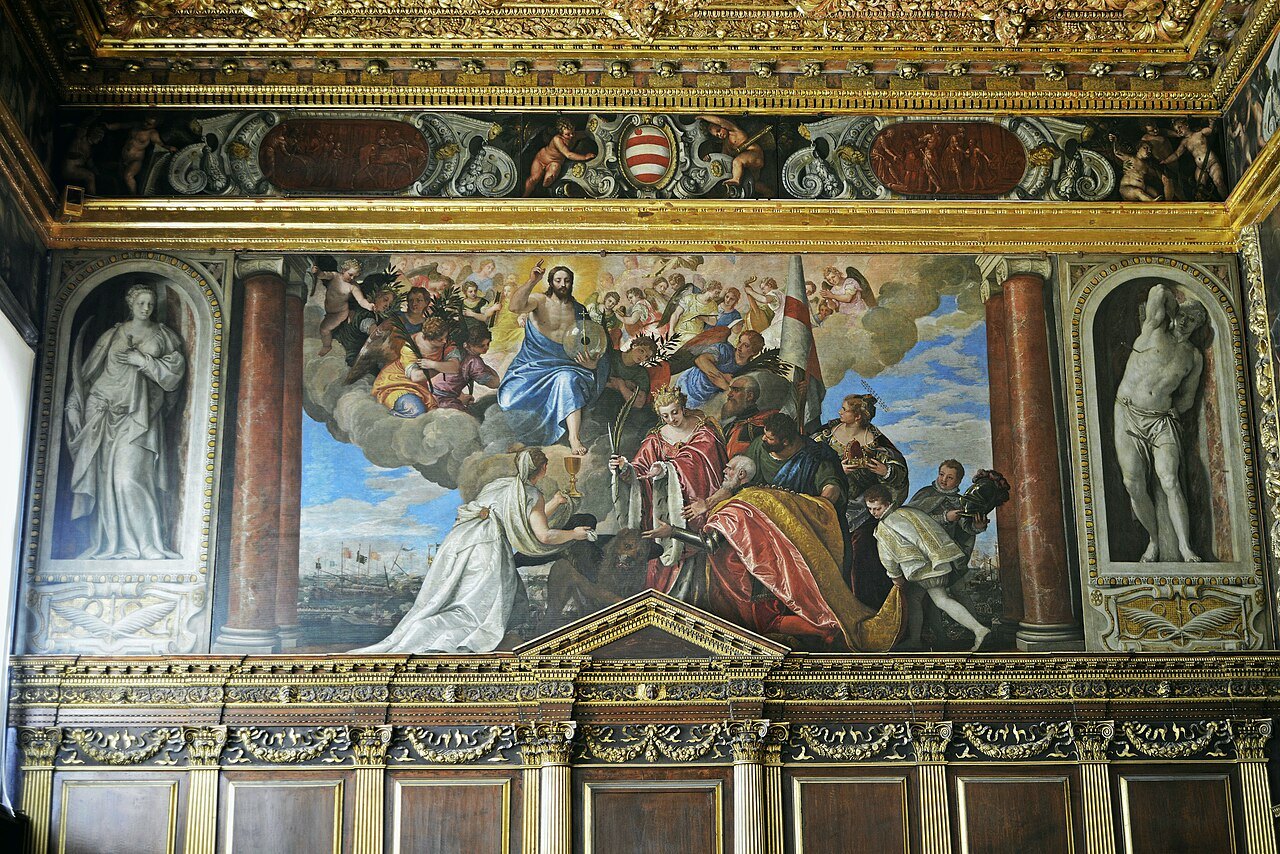
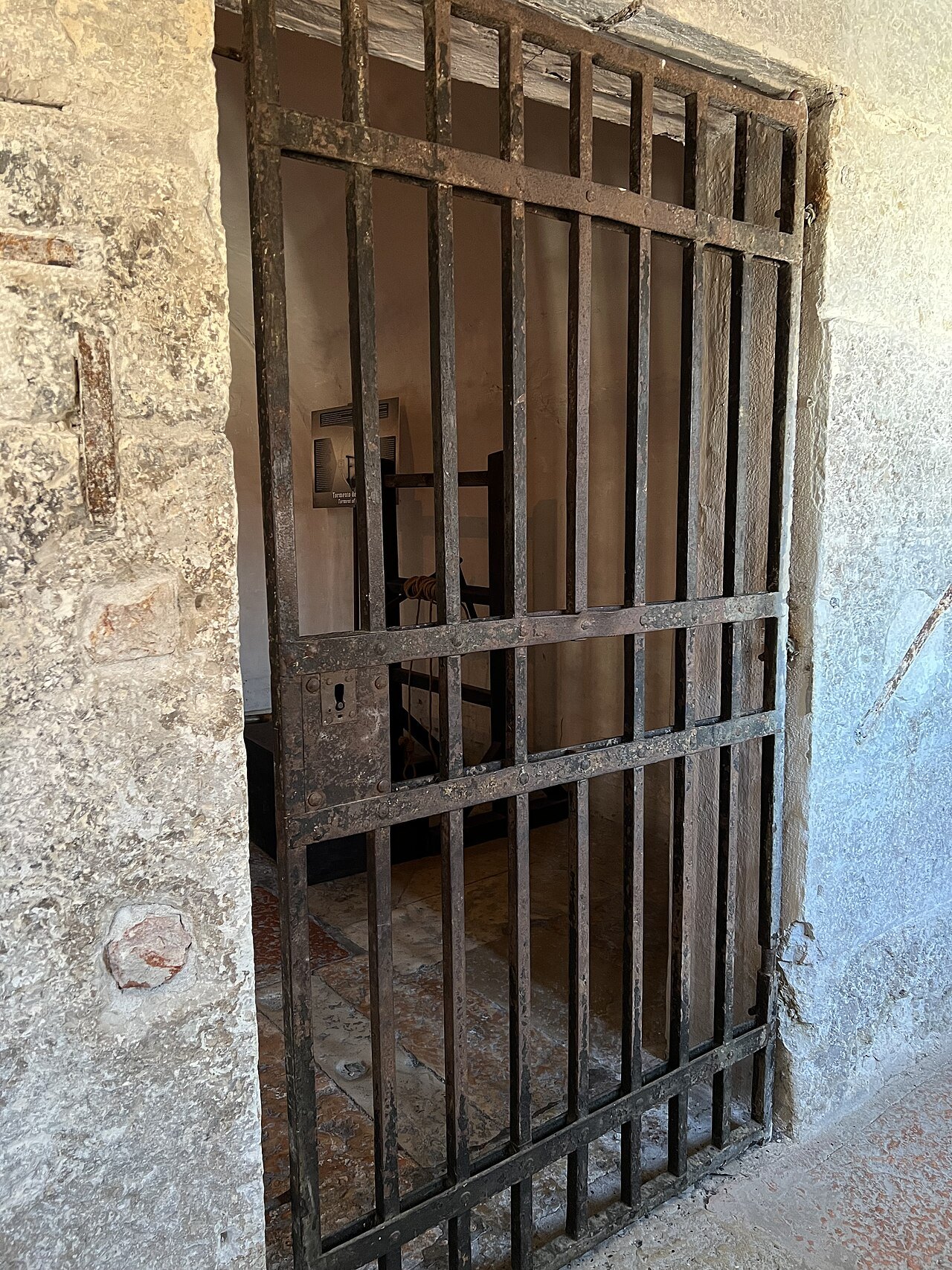
From the council rooms the route passes the Armoury and crosses the Bridge of Sighs to the New Prisons, then returns by the second corridor. Through its small windows you get the last glimpse of the lagoon and San Giorgio Maggiore.
How to visit
Allow two to three hours. The palace sells tickets on its official site; as well as the standard route it offers two special visits by reservation only, for a limited number of people, the Secret Itinerary and The Doge's Hidden Treasures. These are the parts most worth booking ahead (see booking ahead).
The palace provides a cloakroom, an elevator, an audioguide through the Musei Civici app and a café. The Museo Correr, across the Piazza in the Napoleonic Wing, belongs to the same network of civic museums; check the official site for tickets that cover both.
Myths and honest notes
The Bridge of Sighs is a Romantic name. The bridge was built shortly after 1600, and the story of prisoners sighing at their last sight of freedom belongs to the nineteenth century, not to the Republic. The prisoners it carried had been sentenced in the courts inside the palace.
Casanova really was held here, in the Piombi, the cells under the lead roof. In his memoirs he describes escaping through the roof, climbing back into the palace and walking out through the Porta della Carta.
Where to go nextIII
Nearby
- Nearby · San MarcoSt Mark's BasilicaThe doge's own chapel for seven centuries and the city's cathedral since 1807: a Byzantine church of five domes, clad in marble taken from Constantinople and lined inside with gold mosaic.Read the page →
- Nearby · San MarcoPiazza San MarcoThe square Venetians call simply la Piazza: a long arcaded room open to the sky, the basilica at one end, and the Piazzetta turning off it to the water between two granite columns.Read the page →
- Nearby · San MarcoThe CampanileThe tallest structure in Venice, 323 feet of brick with a gold angel on top: a watchtower and bell tower for a thousand years, which fell into the square in 1902 and was built again exactly as it had been.Read the page →