Home · Sights · Piazza San Marco
What you are looking atI
Piazza San Marco
San Marco
- 1The ProcuratieArcades on three sides, built for the Procurators of St Mark, high officers of the old Republic.
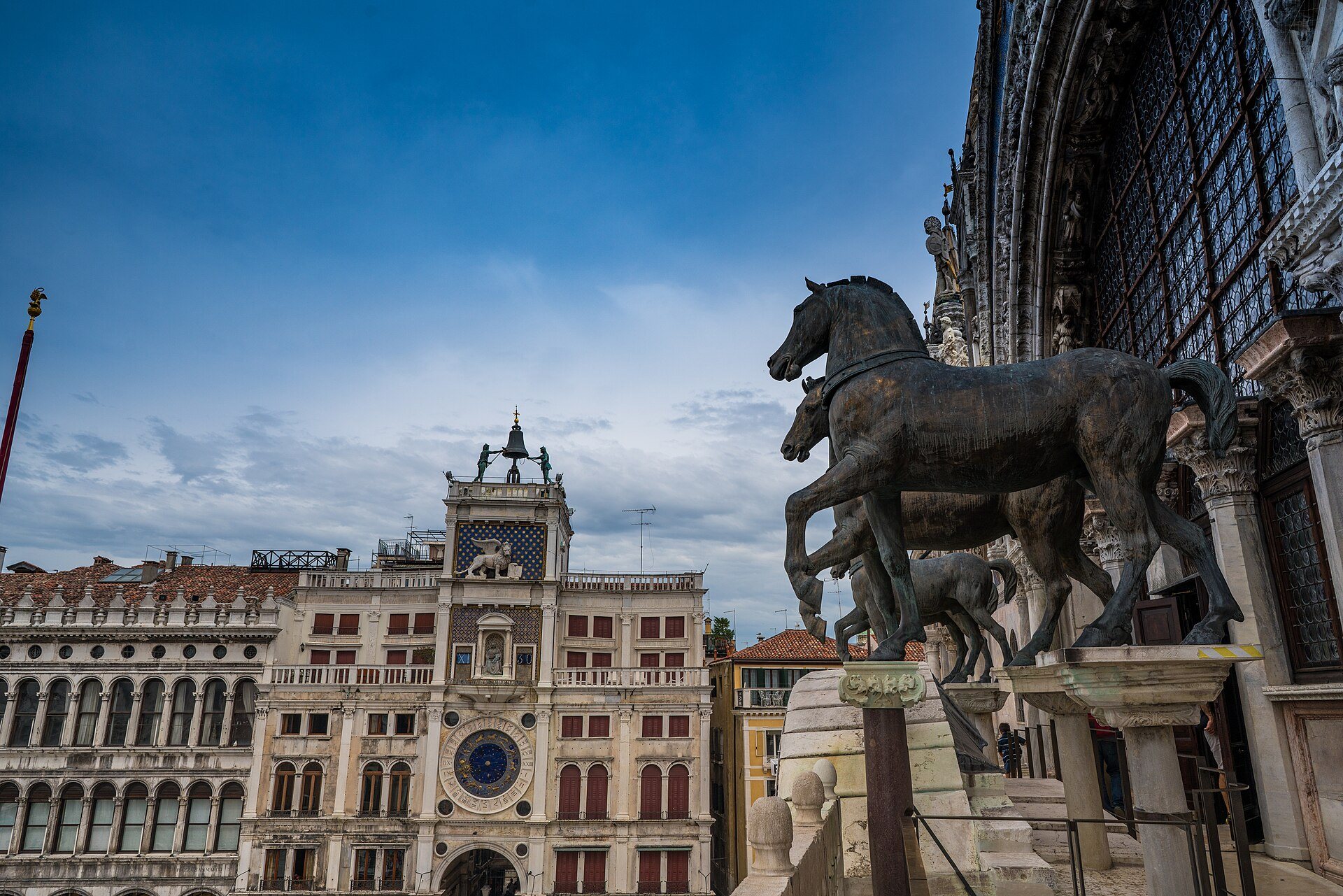
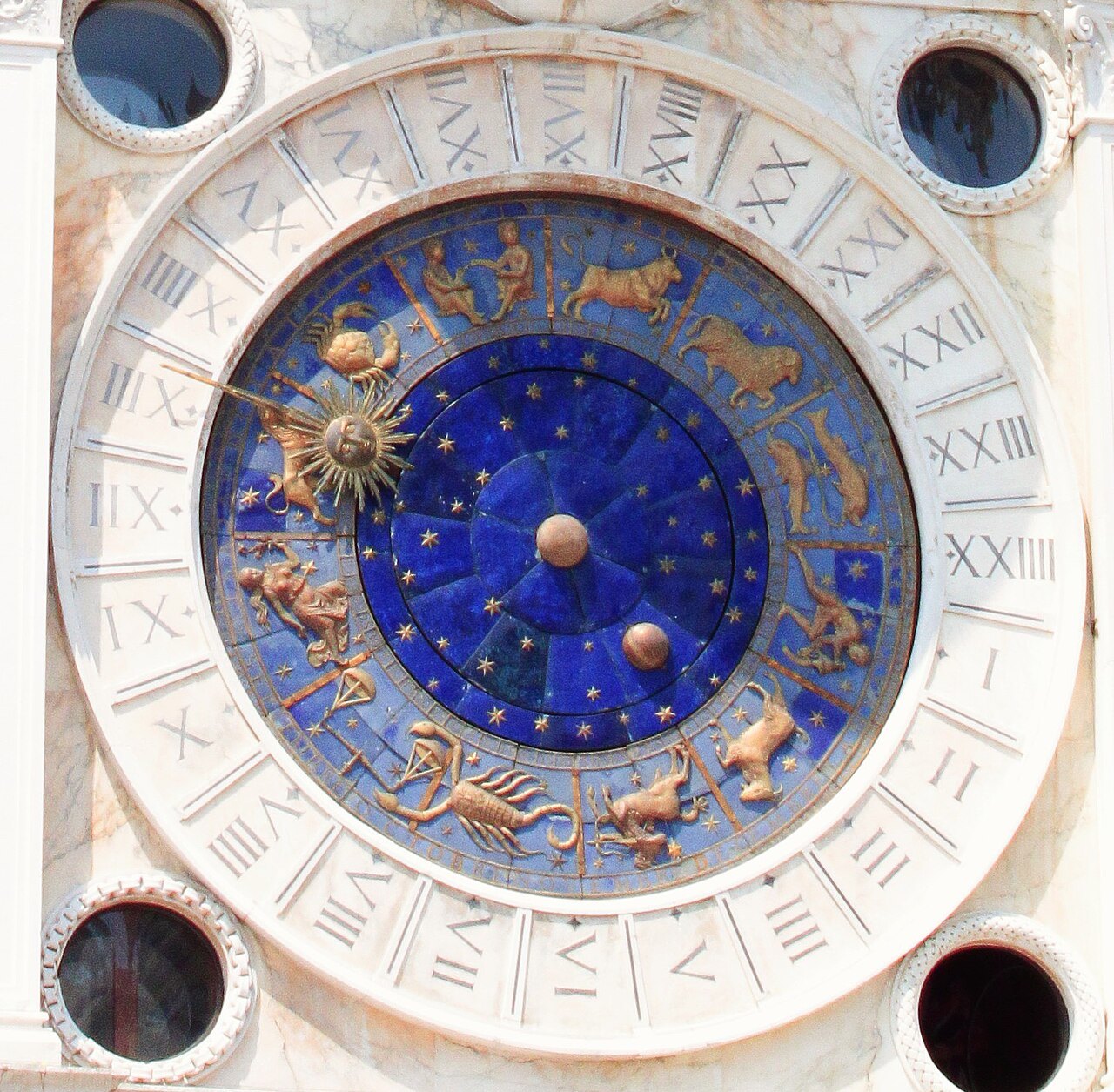
- 2The Torre dell'OrologioThe clock tower of 1499 over the archway where the Merceria leads off toward the Rialto.
- 3The PiazzettaThe open space from the Piazza to the lagoon, between the Doge's Palace and Sansovino's Library.
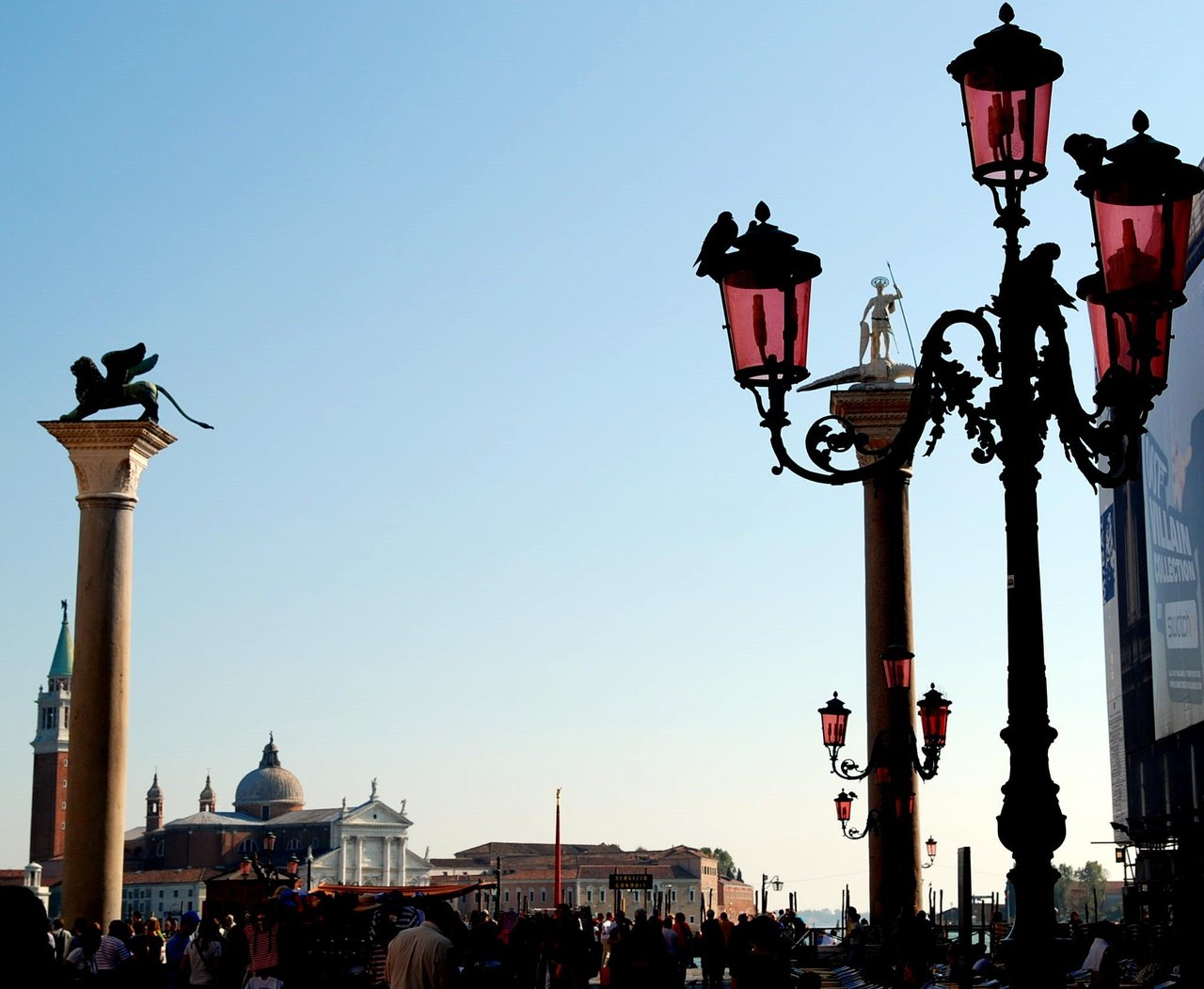
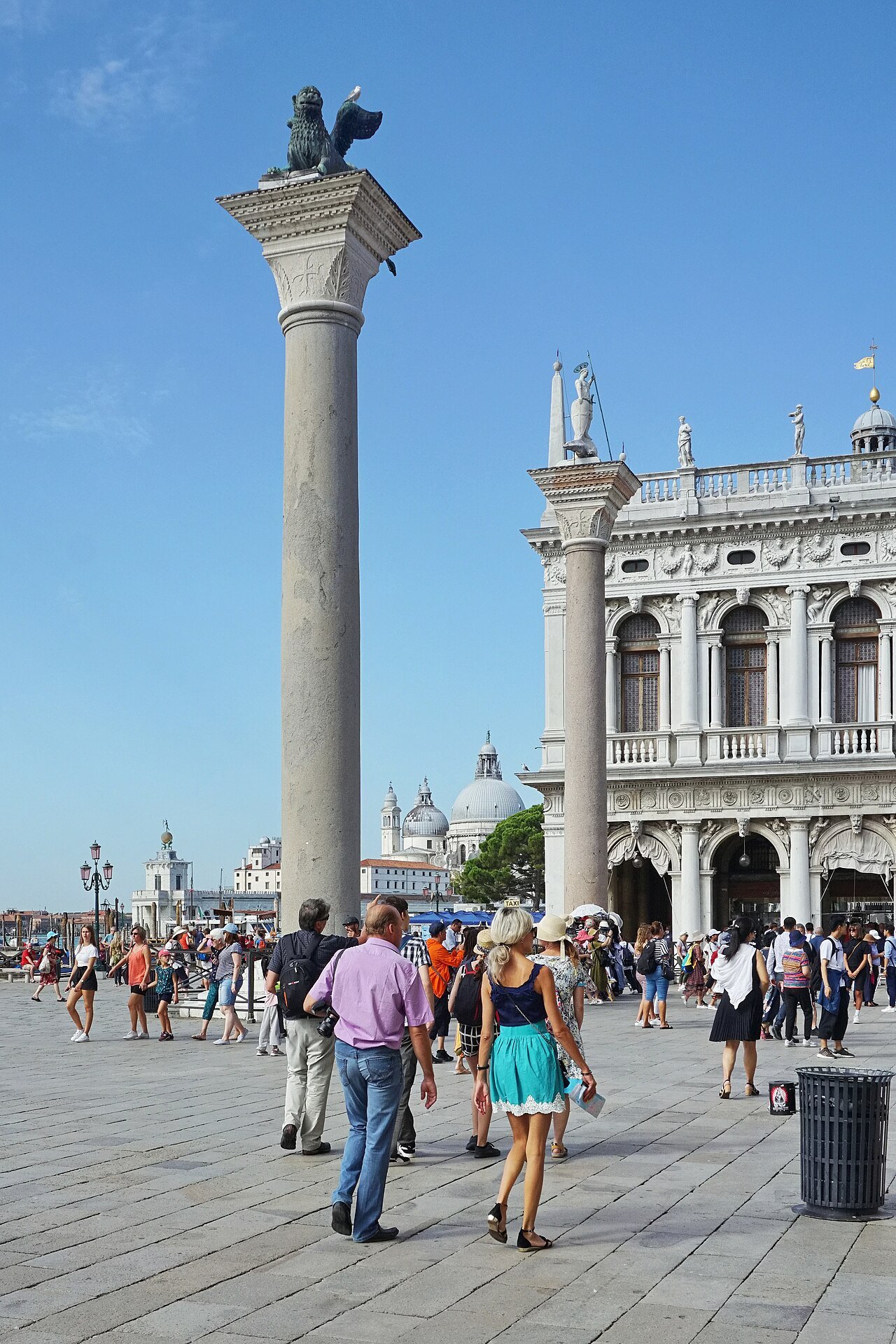
- 4The two columnsGranite columns carrying Saint Theodore and the winged lion, framing the old entry from the sea.
- 5The pavementGrey stone laid in white bands to a design of 1723, renewed in 1890.
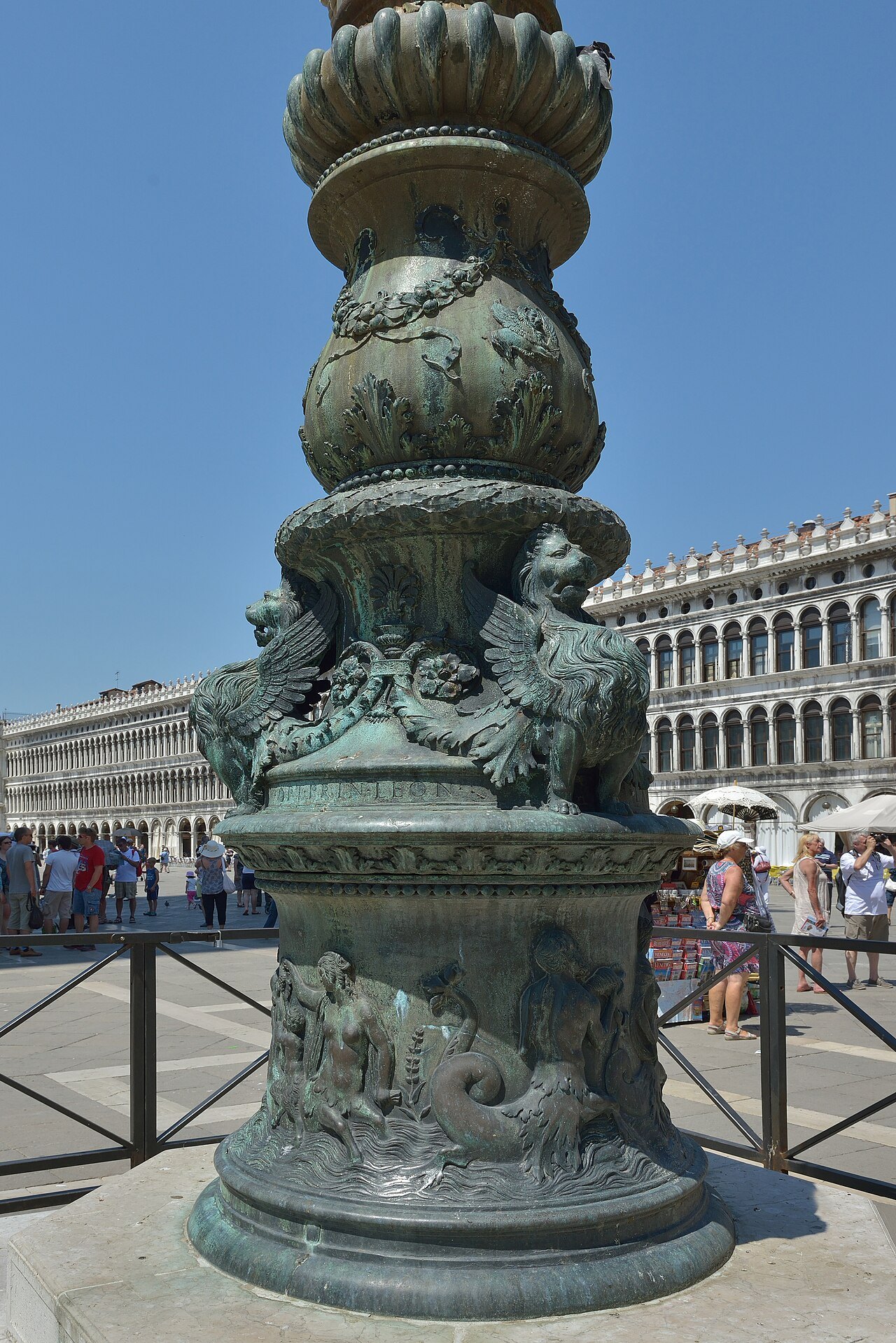
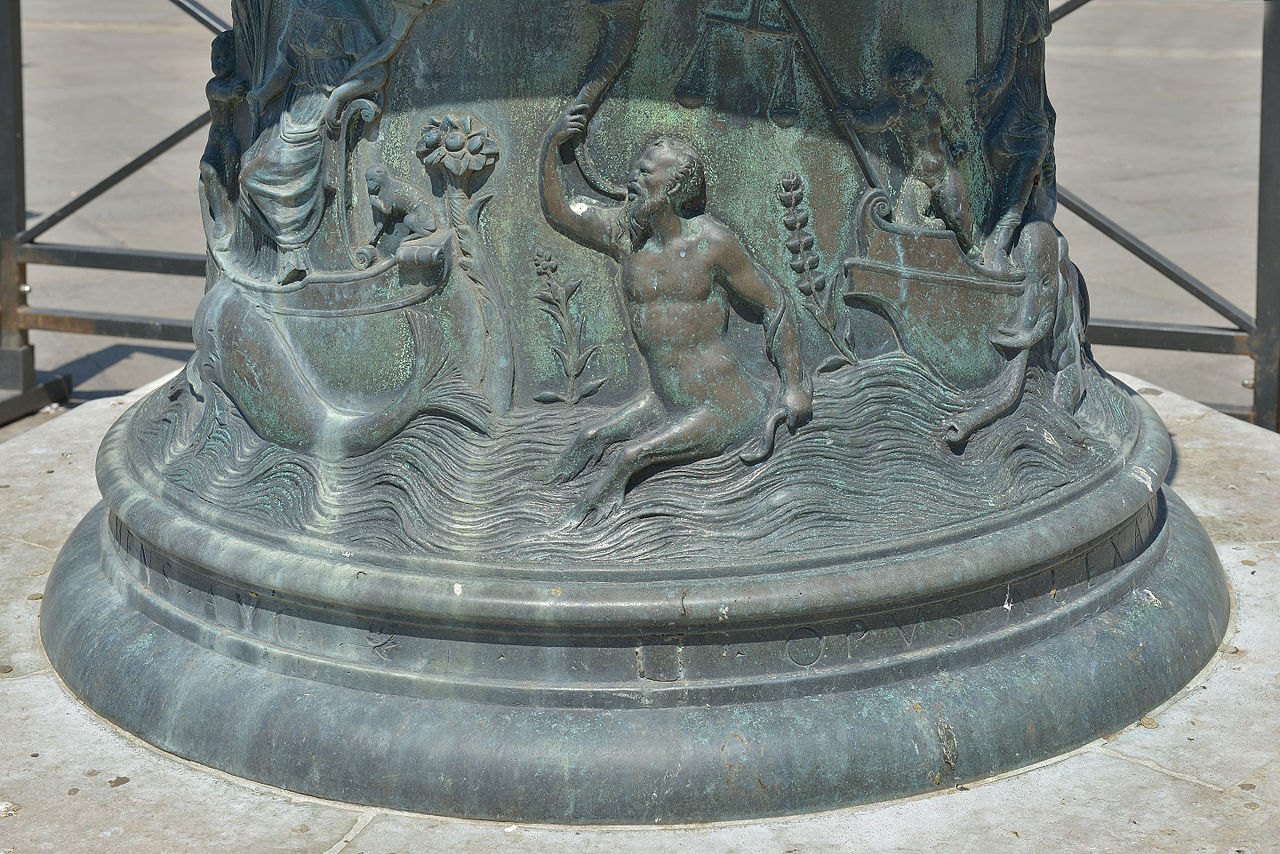
- 6The flagpolesThree mast-like poles before the basilica on bronze bases cast by Alessandro Leopardi in 1505.
The sight in fullII
Reading the place
Why it matters
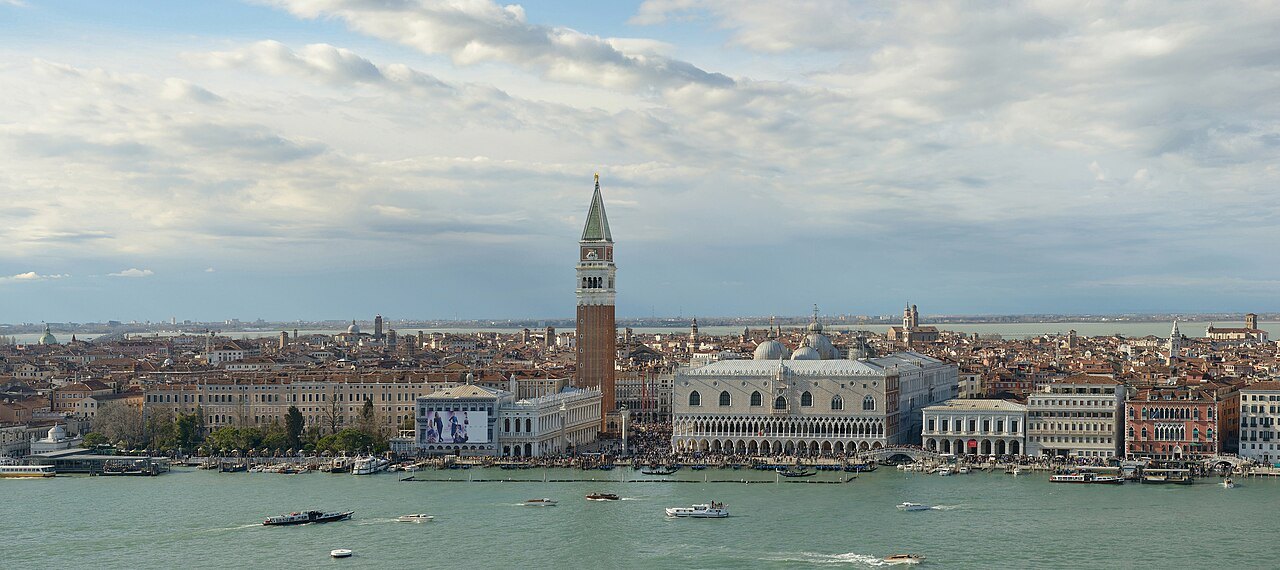
Piazza San Marco is the principal public square of Venice and the only one the city calls a piazza; Venetians know it simply as la Piazza. It is really two spaces. The Piazza proper runs west from St Mark's Basilica between long arcades, and the Piazzetta turns off it at the southeast corner and runs down to the water of the basin, between the Doge's Palace on one side and Sansovino's Library on the other.
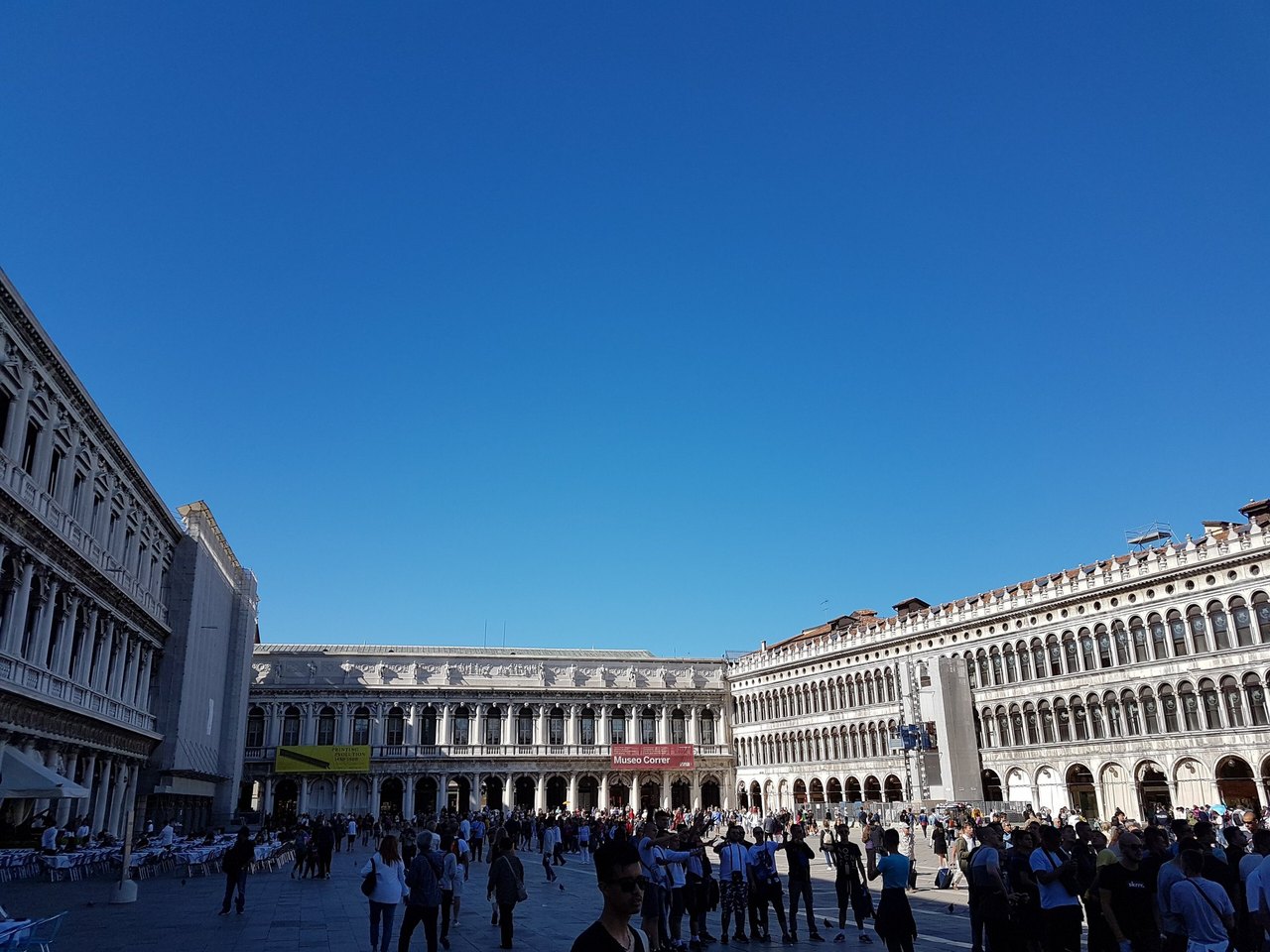
Together they were the social, religious and political center of the Republic of Venice: the doge's church, the doge's palace, the offices of the state's highest officers, the mint and the library, all within a few hundred feet. A remark usually attributed to Napoleon, without proof, called the square the drawing room of Europe.
How the square was made
In the ninth century there was little here but a grassy space in front of the first church of St Mark, cut through by a stream, the Rio Baratario, with a small church of San Geminiano on its far bank. The square as it is now began under Doge Sebastiano Ziani, who ruled from 1172 to 1178: the stream was filled in, San Geminiano was pulled down and rebuilt farther back at the west end, and an orchard was bought to make room.
The buildings around it went up over the next five centuries. The Torre dell'Orologio was completed in 1499. The Procuratie Vecchie on the north side, the old procuracies, were built in the early sixteenth century as homes and offices for the Procurators of St Mark. Jacopo Sansovino designed the Procuratie Nuove on the south side in the mid-sixteenth century; they were continued by Vincenzo Scamozzi and finished by Baldassarre Longhena about 1640.
Napoleon closed the west end. After Venice surrendered to him on 12 May 1797 his officials had the winged lions of the Republic defaced and the four bronze horses shipped to Paris, and around 1810 Sansovino's church of San Geminiano was demolished to make way for a new palace across the west end, the Ala Napoleonica, the Napoleonic Wing that now joins the two arcades and houses the entrance to the Museo Correr.
Walking round the Piazza
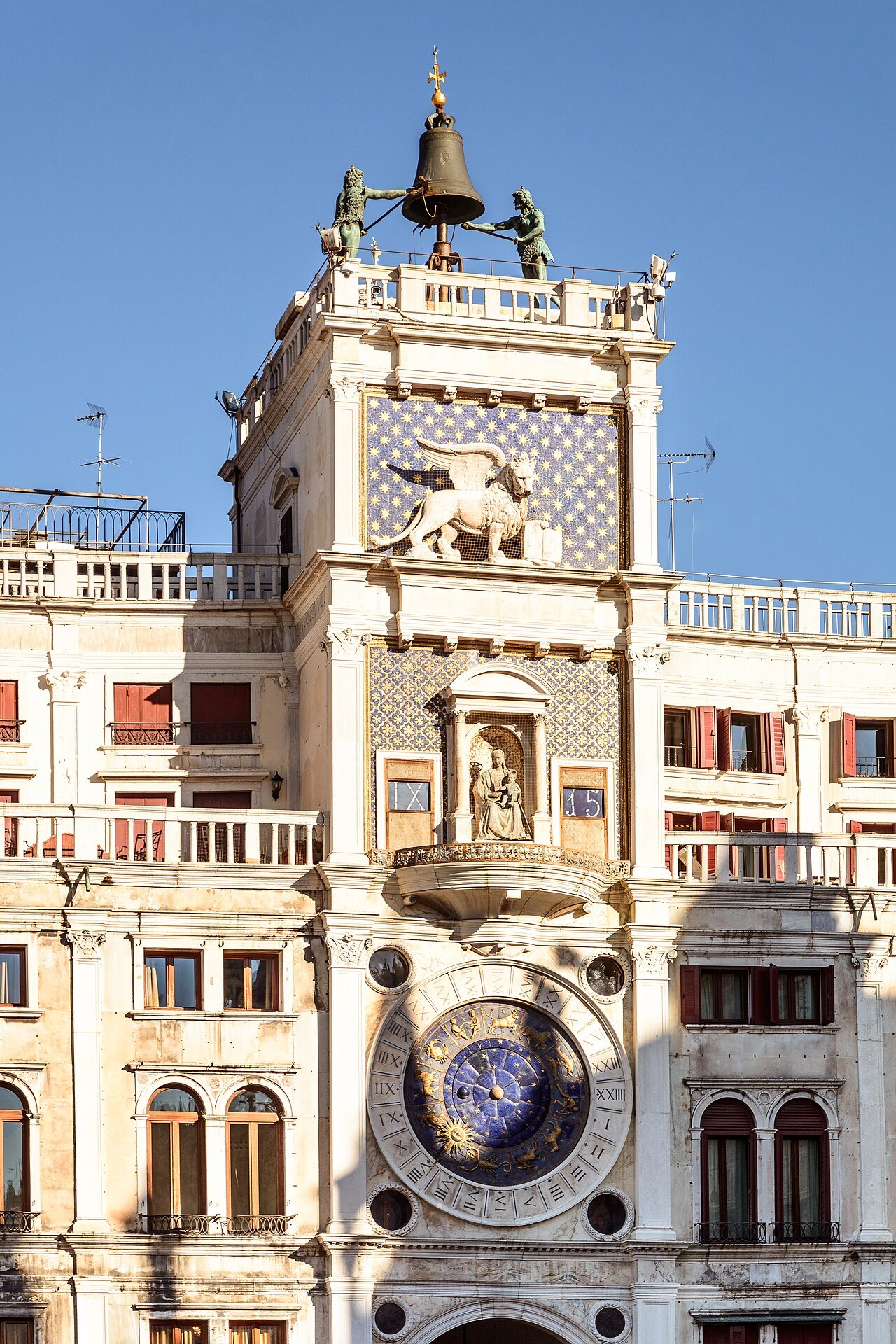
Start at the west front of the basilica and turn right. On the north side, beyond the Piazzetta dei Leoncini with its two marble lions presented in 1722, stands the Torre dell'Orologio above a tall archway. Through it runs the Merceria, the chain of shopping streets that leads to the Rialto, the old commercial heart of the city.
The long arcade of the Procuratie Vecchie runs west from the tower, with shops and cafés on the ground floor and offices above. The Caffè Quadri is here, the café the Austrians frequented when they ruled Venice in the nineteenth century. Across the square, under the Procuratie Nuove, is the Caffè Florian, opened in 1720 by Floriano Francesconi, which Venetians favored at the same time for the plain reason that the Austrians were at Quadri's.
Standing free in the square is the Campanile, rebuilt exactly as it was after the old tower fell in 1902, with Sansovino's little Loggetta at its foot, where patricians waited before meetings of the Great Council. In front of the basilica stand three tall flagpoles on bronze bases cast in relief by Alessandro Leopardi in 1505.
Look down, too. The pavement of grey stone laid in bands of white follows a design of 1723 by Andrea Tirali, which replaced a medieval herringbone of brick; the square was raised by about a meter at the same time. It was renewed in 1890 along the same lines.
The Piazzetta and the columns
The Piazzetta is strictly a separate space, linking the Piazza to the lagoon. On its west side stands the Library, begun by Sansovino in 1537 to hold the Biblioteca Marciana and finished by Scamozzi; Palladio called it the most magnificent and ornate building since ancient times. The Zecca, the old mint, stands beyond it on the quay.
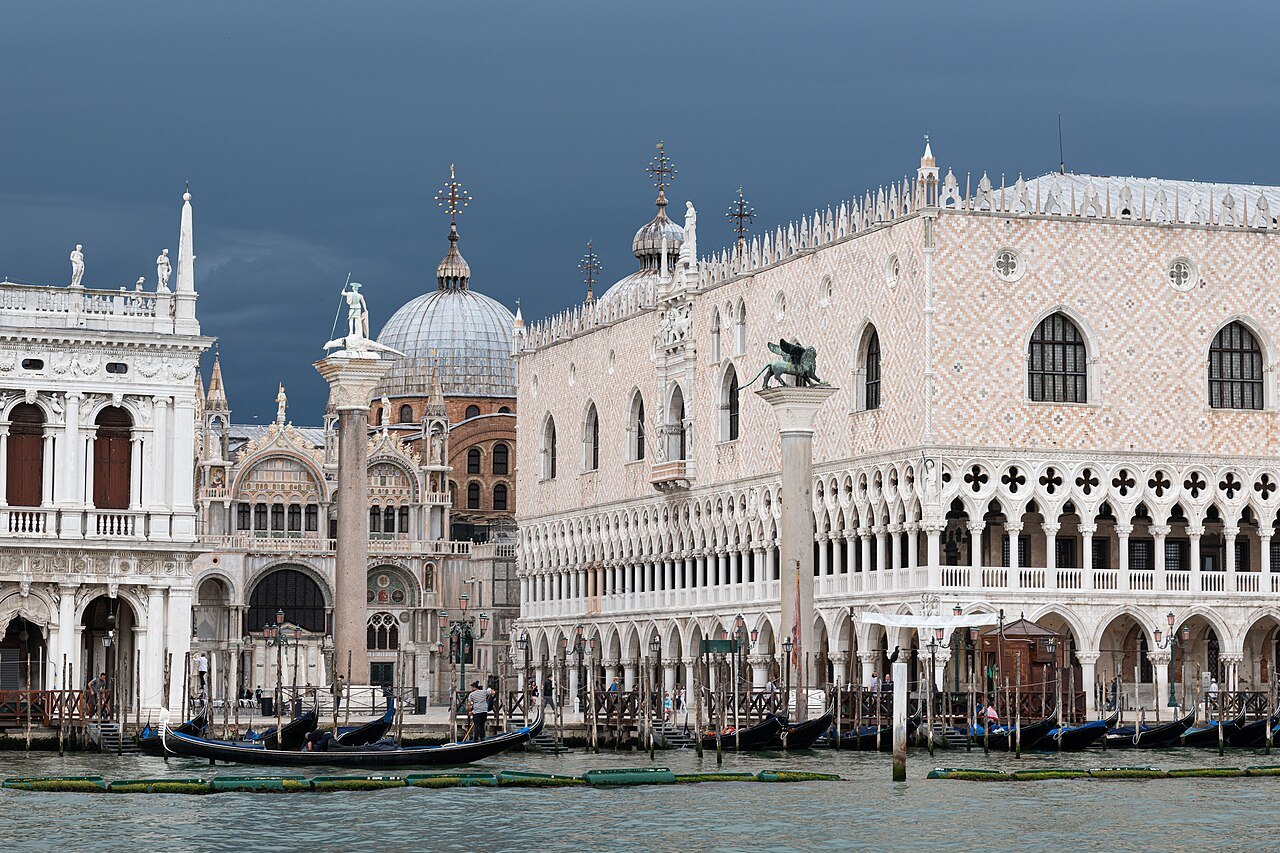
At the water's edge rise two great granite columns. One carries Saint Theodore, the city's first patron, with a crocodile standing in for the dragon he killed; the statue on the column is a copy, and the original is kept in the Doge's Palace. The other carries the winged lion of Saint Mark. The columns are now thought to have been raised about 1268, when the water came closer and they framed the entry to the city from the sea. Public executions were held between them.
Opposite the Library runs the side of the Doge's Palace, its lower arcade and upper loggia, with the Porta della Carta, the palace's ceremonial gateway of 1438 to 1443, at the corner by the basilica. Look out from the end of the Piazzetta across the basin and you see the white facade of Palladio's church on San Giorgio Maggiore.
How to visit
The square belongs to everyone at every hour, and it is at its best early in the morning and late in the evening, when it is emptiest. The arcades lead to paid visits: the Museo Correr in the Napoleonic Wing and the Procuratie, the Archaeological Museum and the Biblioteca Marciana in the Library, and the basilica, the Campanile and the palace around them. Sitting at the café tables costs money; walking and standing in the square costs nothing.
The Piazza is not far above sea level, and in acqua alta it is one of the first places to flood: water poured into its drains normally runs off to the Grand Canal, but when the sea is high it rises back up through them into the square. In the flood of November 1966 the water reached 194 centimeters.
Honest notes
The famous line about Europe's drawing room is attributed to Napoleon, but there is no proof he ever said it. And much of what gives the square its splendor was brought from elsewhere: the Tetrarchs and the so-called Pillars of Acre beside the basilica came from Constantinople after the Fourth Crusade, and the winged lion on its column has been traced back, in part, to an ancient monument in Tarsus.
Where to go nextIII
Nearby
- Nearby · San MarcoSt Mark's BasilicaThe doge's own chapel for seven centuries and the city's cathedral since 1807: a Byzantine church of five domes, clad in marble taken from Constantinople and lined inside with gold mosaic.Read the page →
- Nearby · San MarcoThe Doge's PalaceThe seat of the Republic for a thousand years: the doge's home, the council chambers, the courts and the prisons in one pink-and-white Gothic palace on the water, with the Bridge of Sighs at its back door.Read the page →
- Nearby · San MarcoThe CampanileThe tallest structure in Venice, 323 feet of brick with a gold angel on top: a watchtower and bell tower for a thousand years, which fell into the square in 1902 and was built again exactly as it had been.Read the page →