Home · Sights · Santi Giovanni e Paolo
What you are looking atI
Santi Giovanni e Paolo
Castello
- 1The doges' tombsMonuments by Pietro and Tullio Lombardo and others to doges of the fourteenth to the eighteenth centuries.
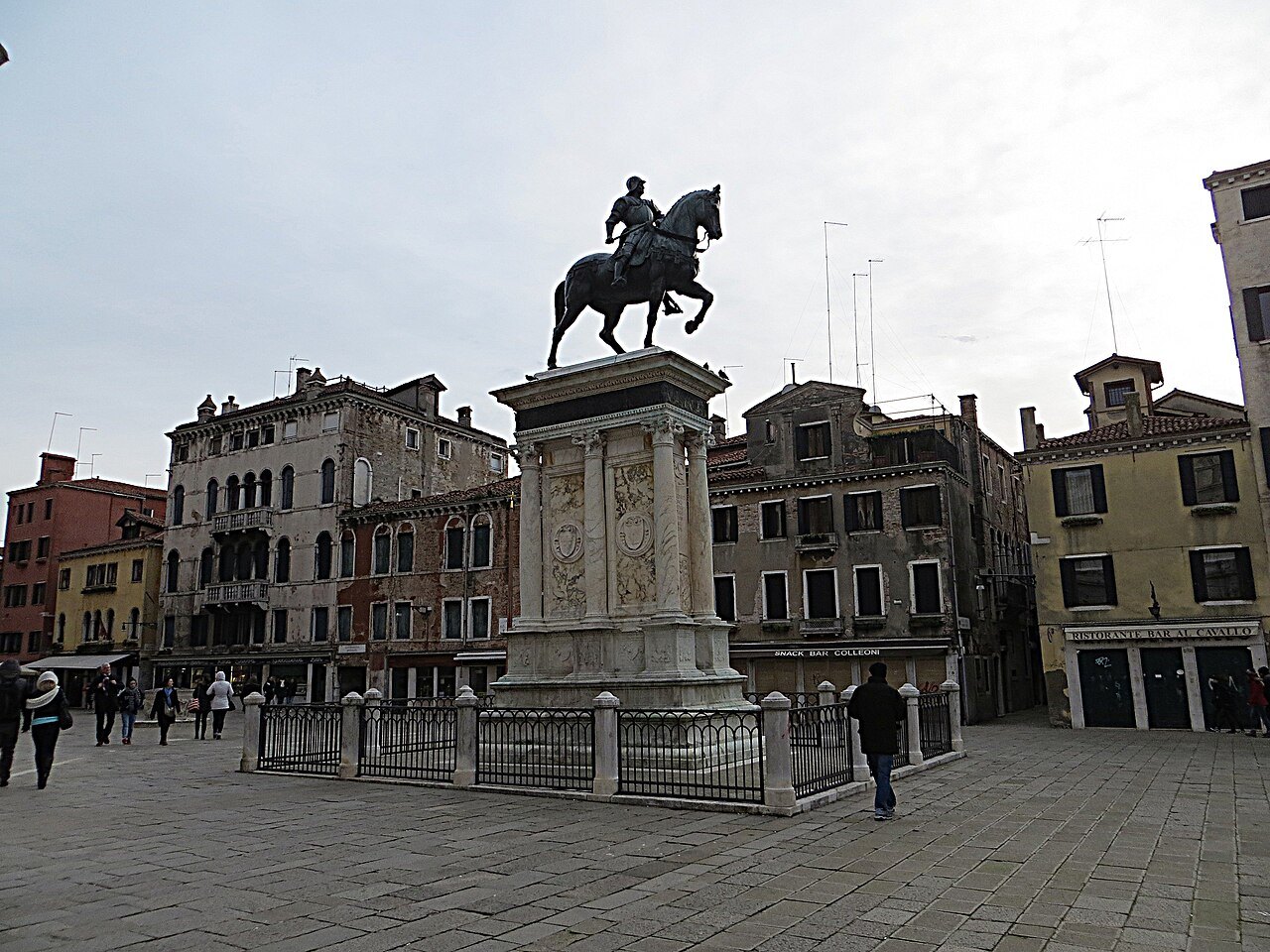
- 2The ColleoniVerrocchio's equestrian bronze of the condottiere Bartolomeo Colleoni, raised in the campo in 1496.
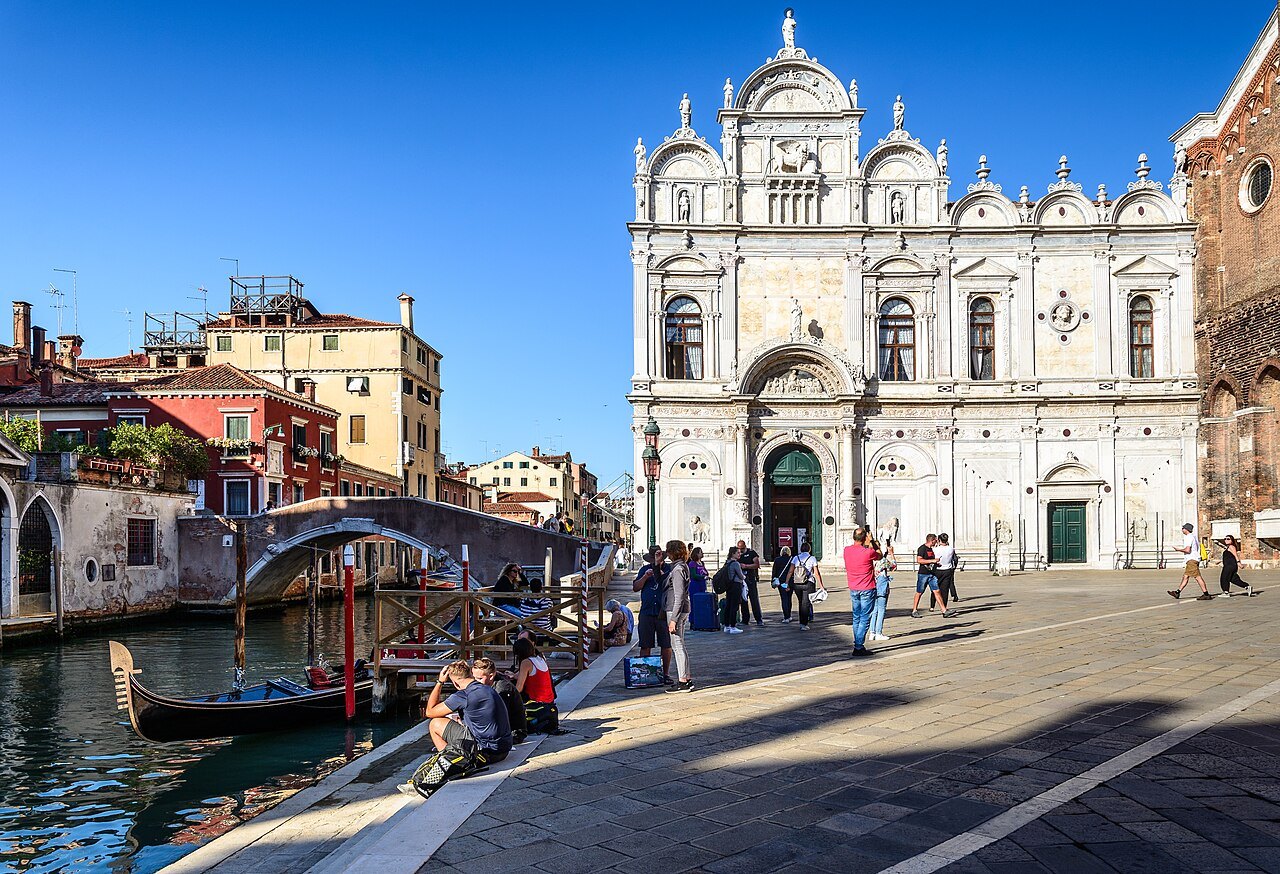
- 3The Scuola di San MarcoThe marble front beside the church, with its painted-in-stone arches, now the city's hospital.
- 4The Bellini altarpieceGiovanni Bellini's polyptych of Saint Vincent Ferrer in the south aisle.
- 5The Rosary chapelBuilt after Lepanto, burned in 1867, with Veronese's paintings in its ceiling today.
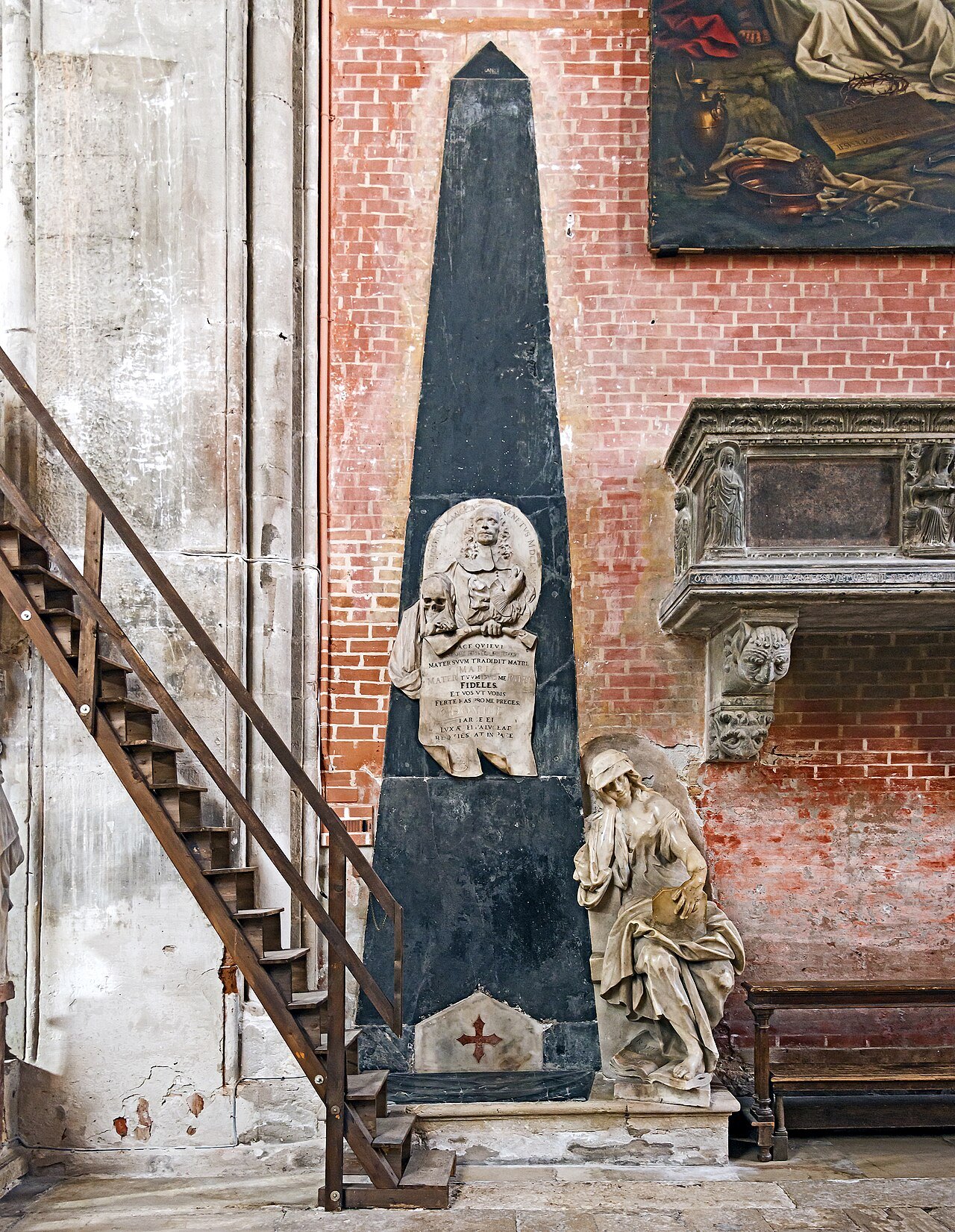
- 6The Bragadin monumentThe tomb holding only the skin of the general flayed alive at Famagusta in 1571.
The sight in fullII
Reading the place
Why it matters
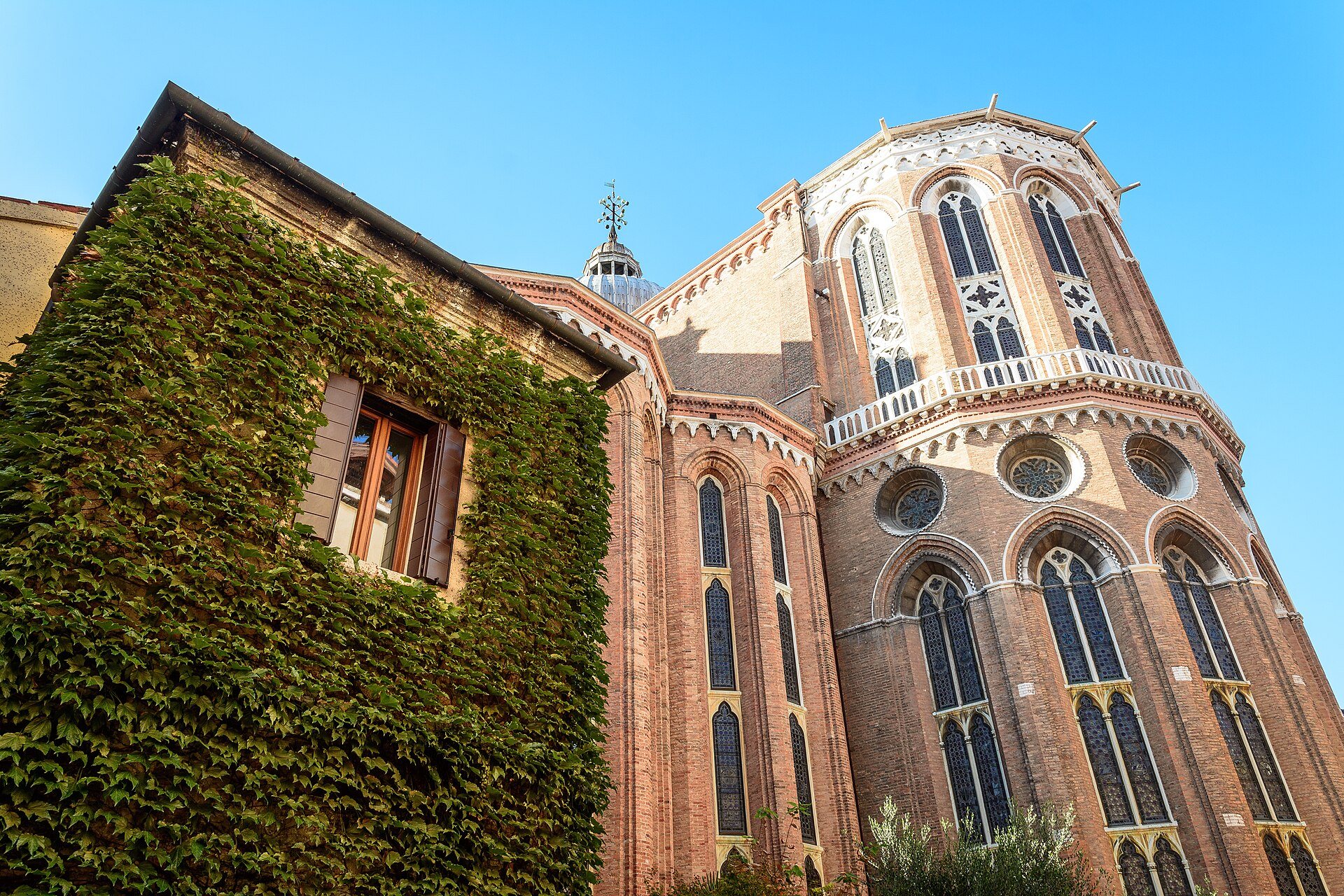
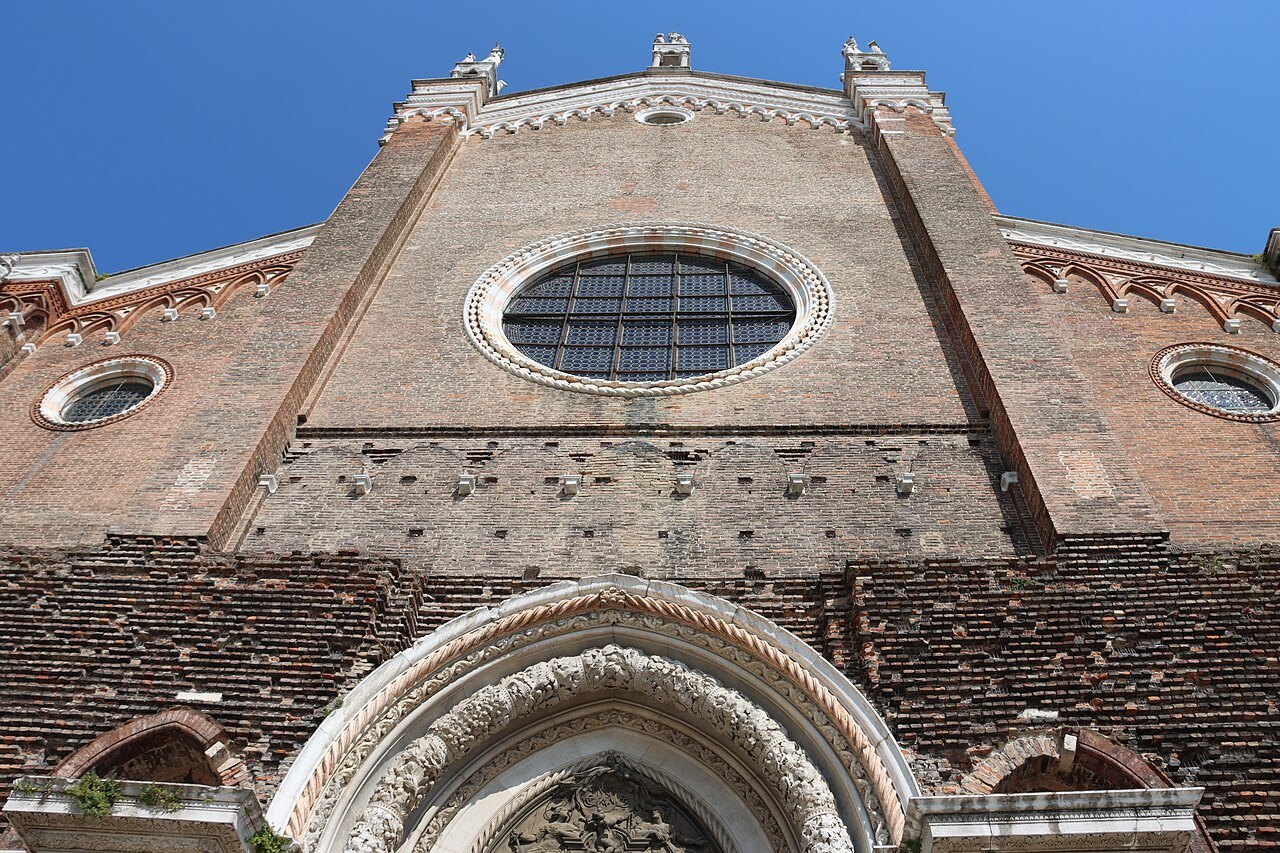
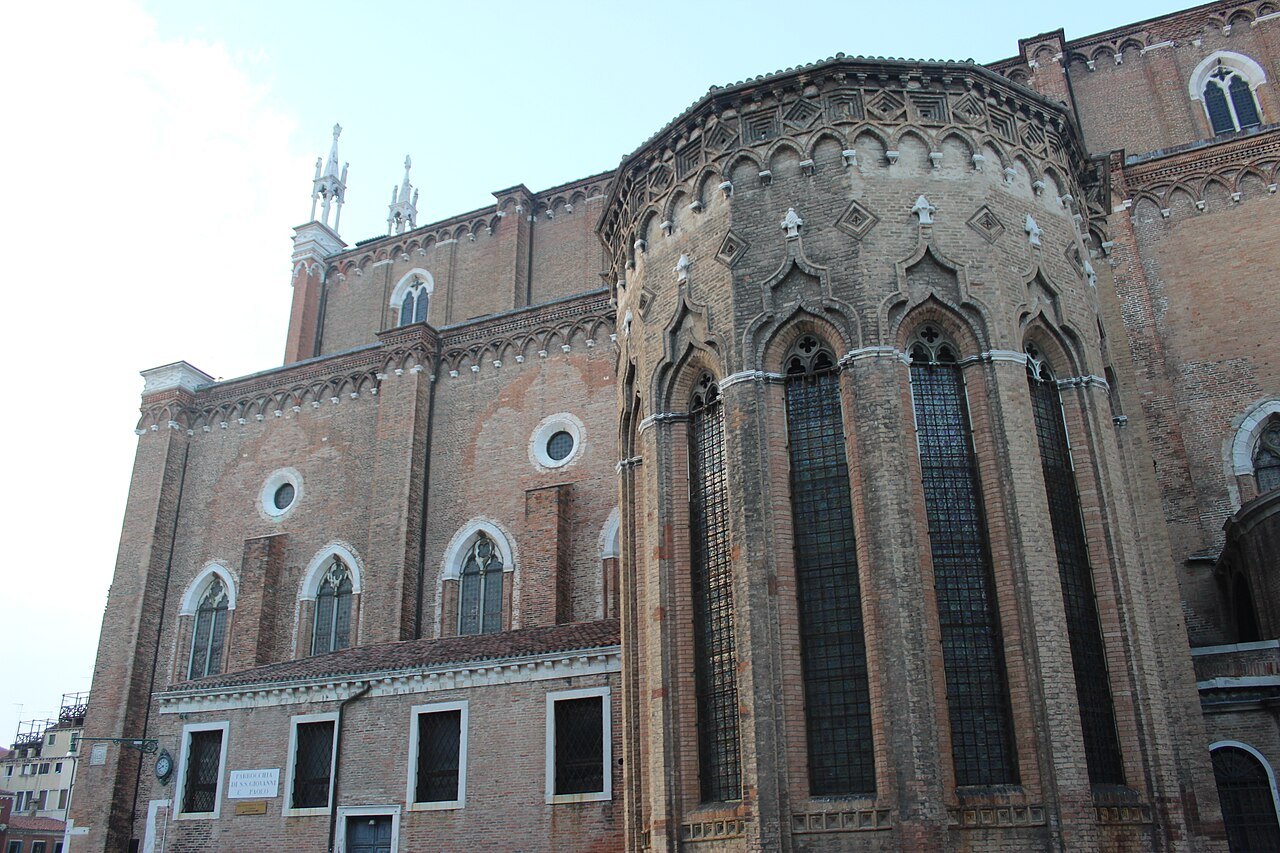
Santi Giovanni e Paolo, which Venetians run together as San Zanipolo, is one of the largest churches in the city and the principal Dominican church of Venice, a huge Italian Gothic hall of brick in the sestiere of Castello. After the fifteenth century the funerals of every doge were held here, and twenty-five doges lie in it, with admirals, generals, painters and the heroes of the Republic's wars. It is the city's pantheon.
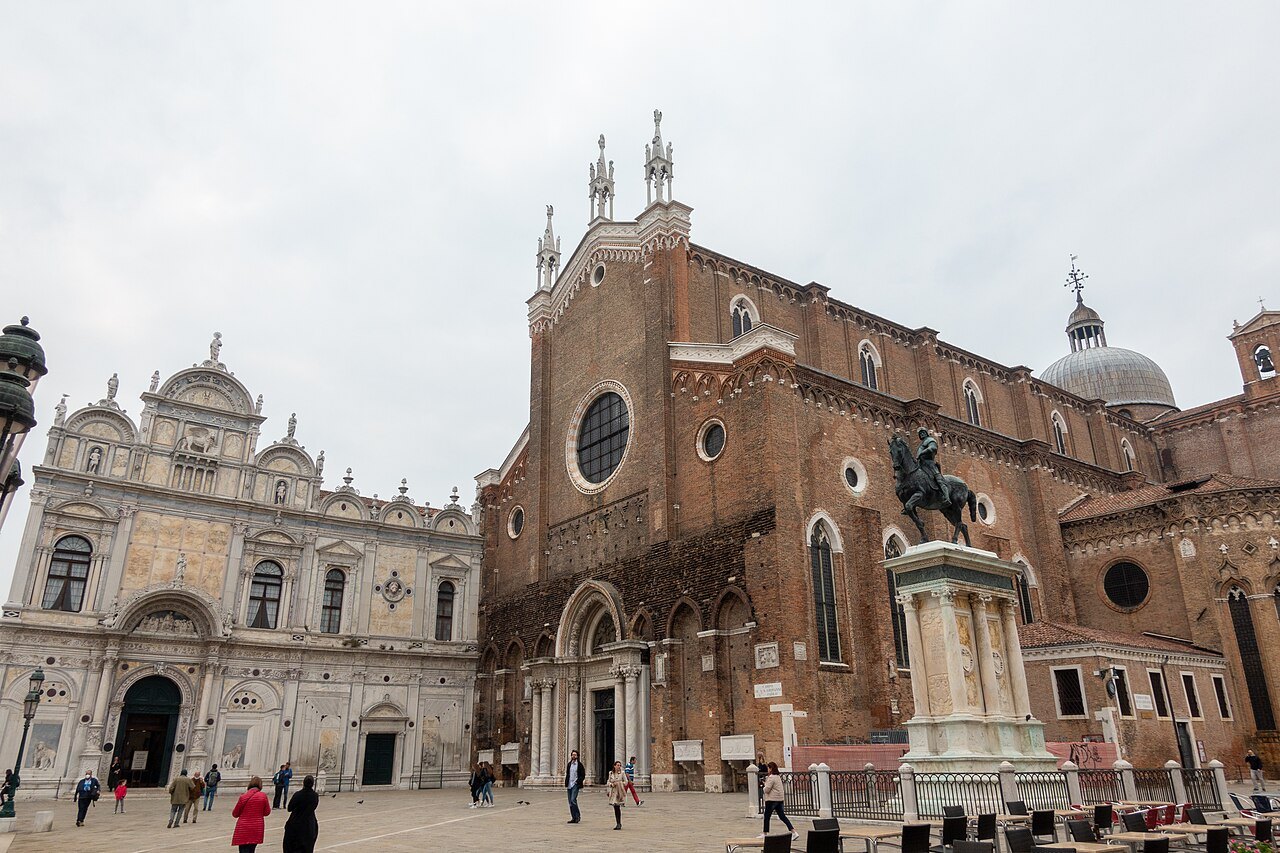
Outside, in one of the largest squares in Venice, stand two more masterpieces: Andrea del Verrocchio's bronze equestrian statue of Bartolomeo Colleoni and the marble facade of the Scuola Grande di San Marco. Few places in the city hold so much in so small a space, and it is far quieter than San Marco.
A church from a dream
According to tradition, in 1246 Doge Jacopo Tiepolo gave the Dominicans a piece of swampland here after dreaming of a flock of white doves flying over it. Their first church was pulled down in 1333, when the present one was begun, and it was not completed until 1430. It is dedicated not to the apostles John and Paul but to two little-known early Christian martyrs of Rome with the same names.
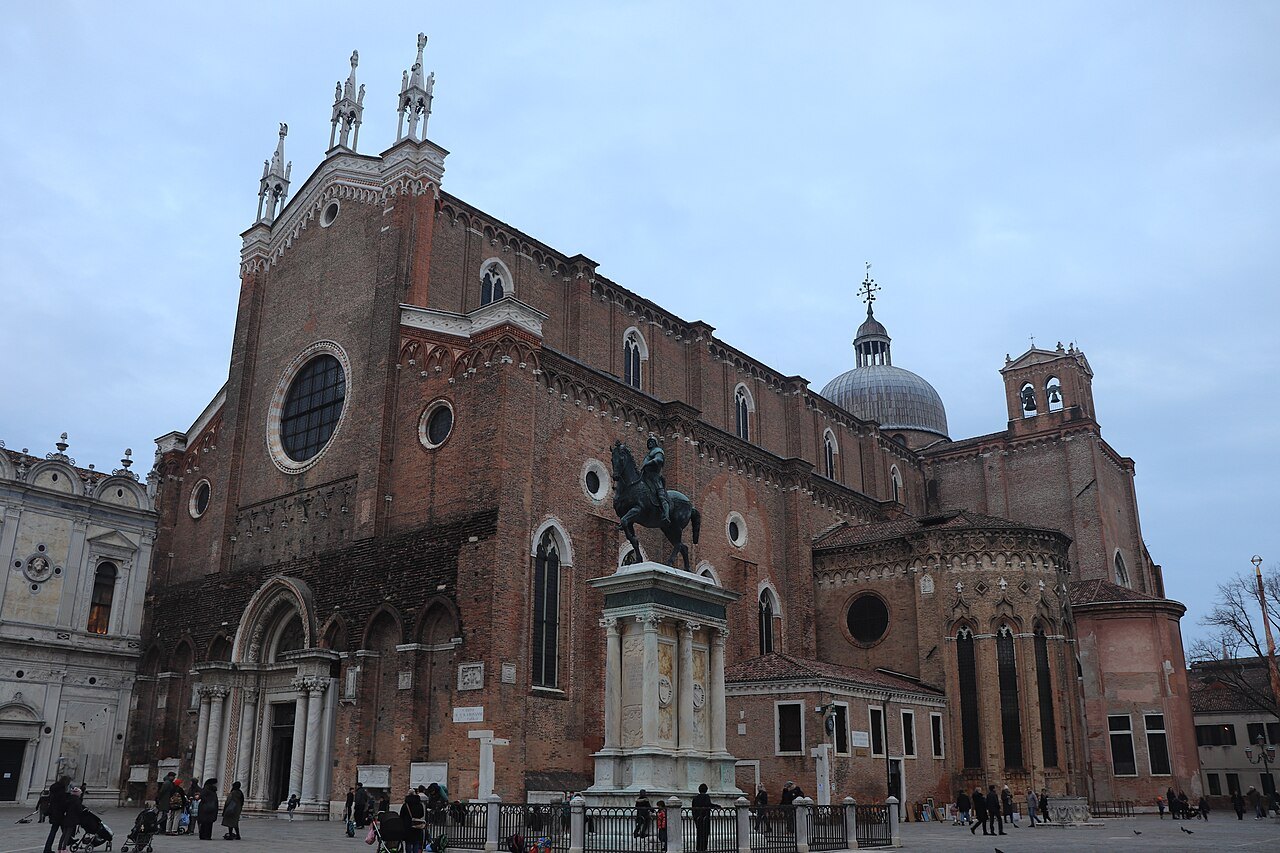
It was built for preaching to large congregations, which is why it is so big: a long nave and aisles in the Italian Gothic style, all in brick. The church's chief relic is a foot of Saint Catherine of Siena, and a Byzantine image of the Madonna della Pace, held to be miraculous, has its own chapel in the south aisle.
What you see inside
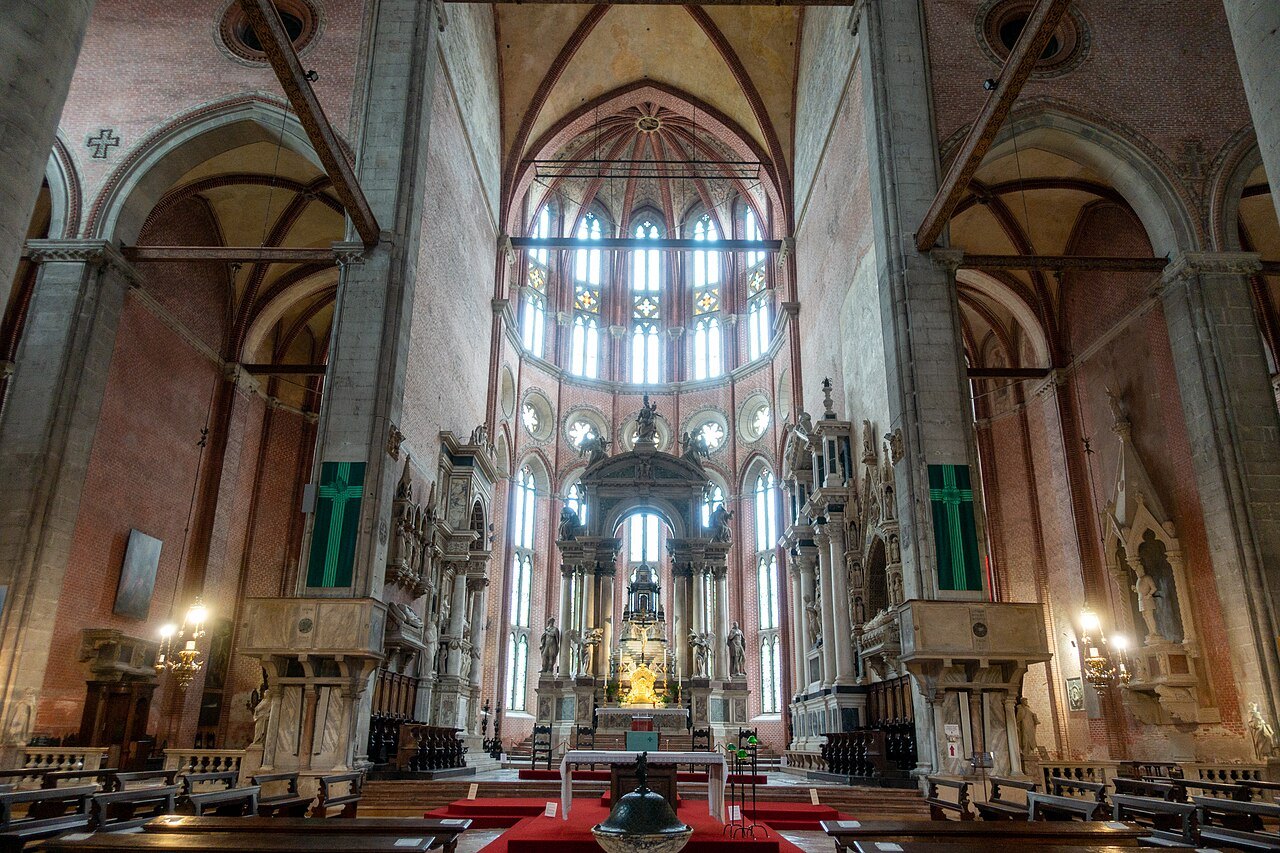
Walk the aisles and the walls become a history of the Republic. On the west wall, around the great door, is Pietro Lombardo's monument to Doge Pietro Mocenigo; in the north aisle, the tombs of Doge Tommaso Mocenigo and of Doges Pasquale Malipiero and Nicolò Marcello. On the north wall of the choir, the monument to Doge Andrea Vendramin by Tullio Lombardo closes the view down the nave.
Among the dead who were not doges are the painters Gentile and Giovanni Bellini and Palma il Giovane, the admiral Vettor Pisani, and Marco Antonio Bragadin, the commander of Famagusta in Cyprus, who was flayed alive by the Ottomans in 1571; his tomb contains only his skin. Marino Faliero, the doge beheaded for treason in 1355, is buried here too.
The paintings rival the tombs. In the south aisle is Giovanni Bellini's polyptych of Saint Vincent Ferrer; in the south transept, Lorenzo Lotto's Saint Antoninus Giving Alms and a Coronation of the Virgin attributed to Cima da Conegliano. In the chapel of San Domenico, Piazzetta's Saint Dominic in Glory fills the ceiling above five large bronze reliefs of the saint's miracles.
The Chapel of the Rosary, built in 1582 to celebrate the victory of Lepanto, once held paintings by Tintoretto, Titian and Bellini; they were destroyed in a fire in 1867. Today its ceiling carries Veronese's Assumption, Annunciation and Adoration of the Magi, and his Adoration of the Shepherds hangs in the chapel. Veronese's Feast in the House of Levi was painted for this convent's refectory and is now in the Accademia.
The Colleoni and the Scuola
Bartolomeo Colleoni, a mercenary captain who had served as the Republic's captain general, died in 1475 and left much of his fortune to Venice on condition that his statue be set up in Piazza San Marco. The Republic took the money but, since no statues were allowed in the Piazza, put the statue here instead, in front of the Scuola di San Marco. Verrocchio won the commission in a competition in 1483 and died in 1488 before it could be cast; Alessandro Leopardi finished it and made the pedestal, and it was raised in 1496. It is the second great equestrian statue of the Italian Renaissance, after Donatello's Gattamelata of 1453, and the first to stand the horse on three legs without support.
For the competition Verrocchio made his model of wood and black leather while his rivals worked in wax and terracotta. The rider is almost four meters tall without the pedestal, and he is not a portrait; Verrocchio is unlikely ever to have seen Colleoni, and made instead the image of a hard, ruthless commander.
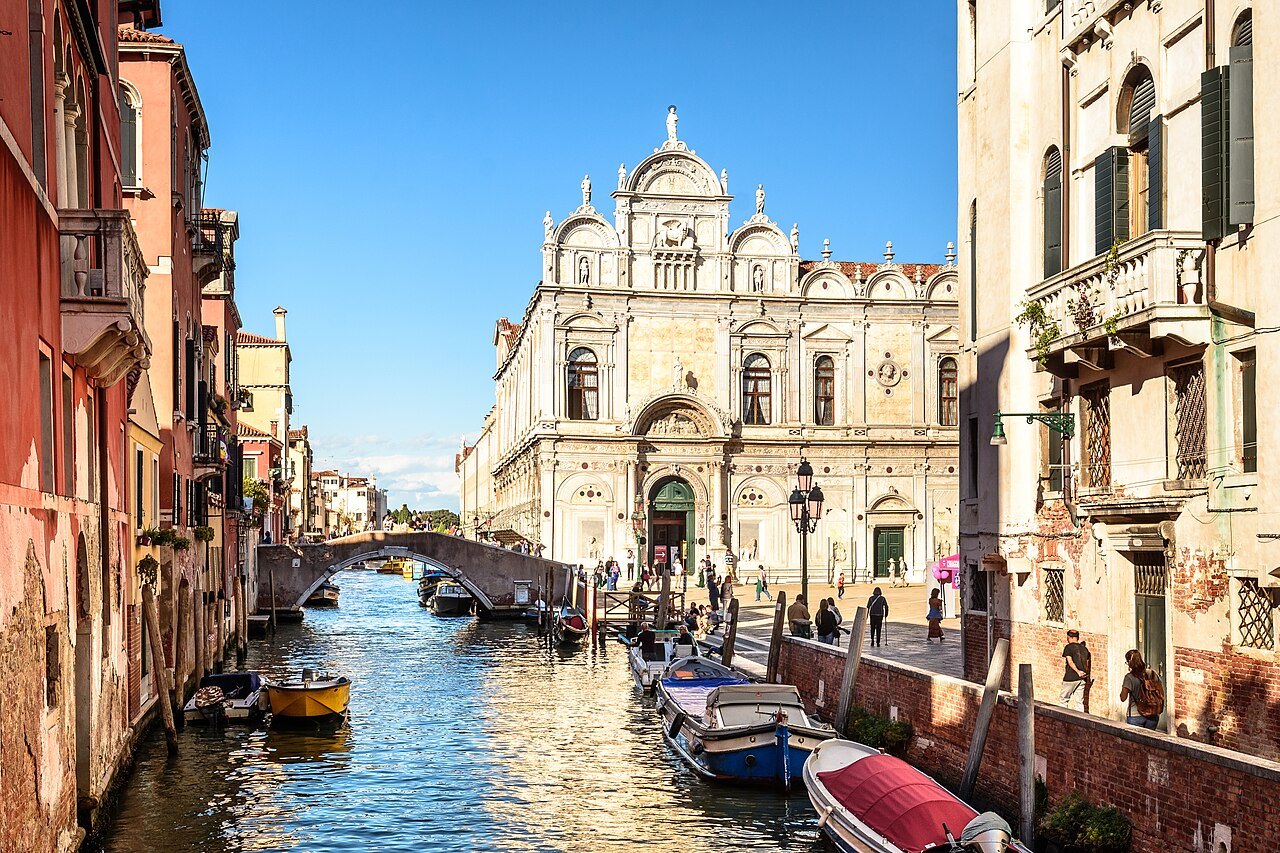
Beside the church, the Scuola Grande di San Marco, rebuilt after a fire in 1485 by Pietro Lombardo and finished by Mauro Codussi, has a facade of niches, pilasters and white and colored marble, its ground floor carved with arches and portals in trompe-l'oeil, painted in stone to look like deep spaces. The confraternity counted three of the great fifteenth-century travelers among its members, Ambrogio Contarini, Giosafat Barbaro and Alvise da Mosto, and Tintoretto painted his Miracle of the Slave for it, now in the Accademia. The building became an Austrian military hospital in 1819 and is still the city's hospital, with part of it open as a museum since 2013.
How to visit
The church closes to visitors for services, and its official site gives the visiting times. Allow an hour, and bring the patience to read the monuments, which are the point. The campo and the Colleoni are there for anyone who walks past.
The nearest water-bus landings are at Fondamente Nove on the north shore, a short walk away. The church fits well into a walk through Castello toward the Arsenale, or north through Cannaregio from the Rialto.
Where to go nextIII
Nearby
- Nearby · CastelloThe ArsenaleBehind two miles of brick wall in Castello, the state shipyard that built the fleets of the Republic: at its height the largest industrial complex in Europe, sixteen thousand workers and nearly a galley a day.Read the page →
- Nearby · San Marco · San PoloThe Rialto BridgeFor two and a half centuries the only way to walk across the Grand Canal: a single stone arch of 1591, carrying two ramps of shops to a portico at the top, at the heart of the city's oldest quarter.Read the page →
- Nearby · CannaregioThe Ca' d'OroThe House of Gold on the Grand Canal, the best-surviving Gothic palace in Venice, built for Marino Contarini between 1421 and 1437, gilded once, stripped by later owners, and saved by Baron Franchetti as a gallery.Read the page →