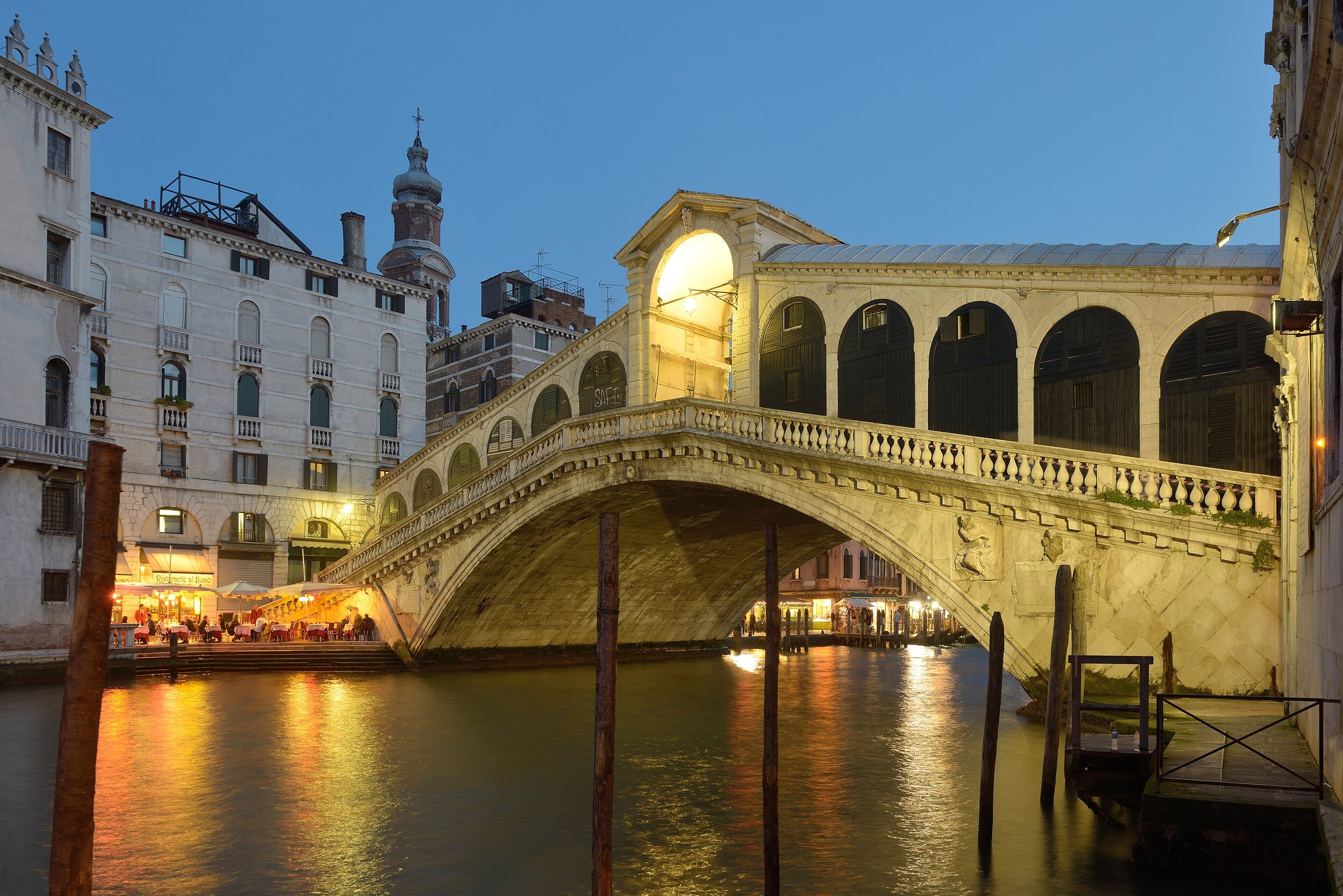

For three hundred years the only fixed crossing of the Grand Canal, and until 1854 the only one at all. The present bridge is 1591, a single stone arch of 28 metres carrying two rows of shops and three walkways, built after a competition that Michelangelo and Palladio both entered and lost.
Its predecessors kept collapsing, once under the weight of a crowd watching a wedding procession. The stone one has not moved since.
What it costs
Free to cross, at any hour.
The shops on it are jewellers and souvenir stands and price accordingly. The market at the far end is where the actual trade is.
When to go
Before eight or after ten at night, if you want to photograph it without a crowd on it. In the middle of the day the central walkway is a slow shuffle.
The market side wakes early and the San Marco side never sleeps, so the crowd on the bridge is lopsided all day: heaviest going south in the morning and north in the evening.

Getting there
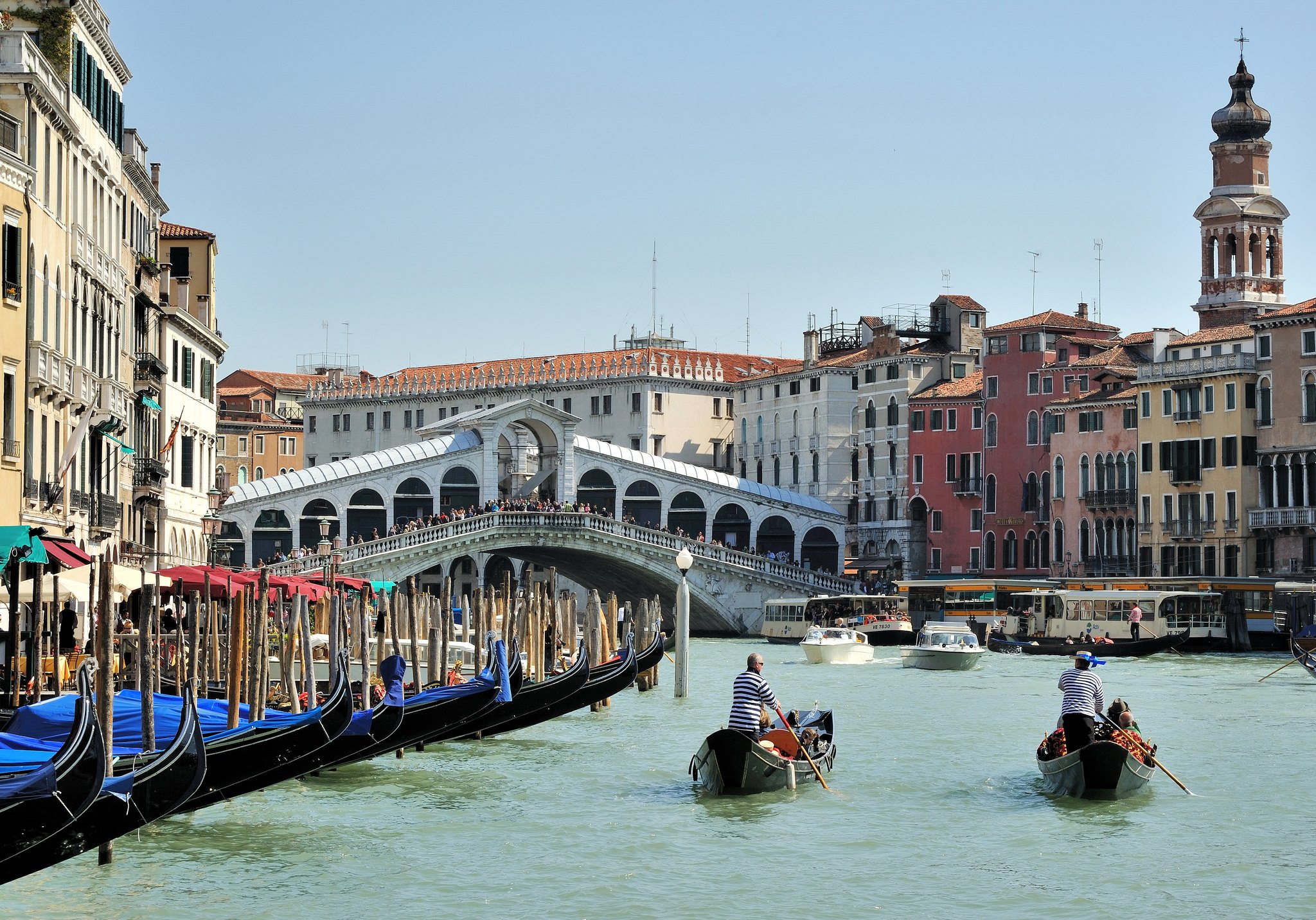
Vaporetto to Rialto or Rialto Mercato. On foot it is signposted from everywhere — the yellow signs saying Per Rialto are one of two destinations the city bothers to point at, the other being San Marco.

If you only have an hour
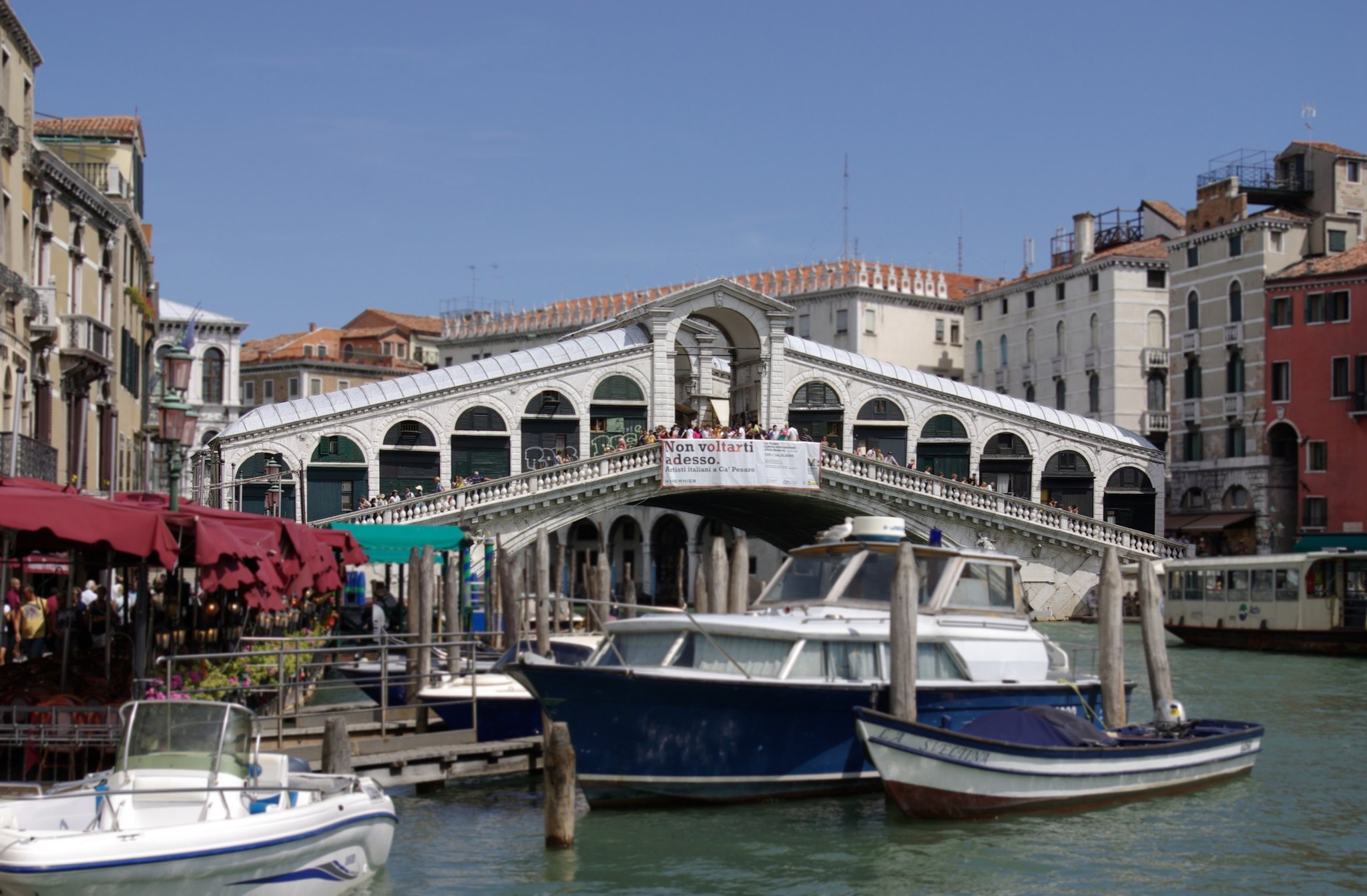
Do not stand on it. Walk over it, then go down to the water on the market side and look back — from the Riva del Vin you get the arch, the shops and the traffic, which is the photograph you actually wanted.
Then take the traghetto. There is a standing gondola ferry a few minutes’ walk away that crosses the canal for about two euros, and it is the cheapest gondola ride in Venice.
What people get wrong
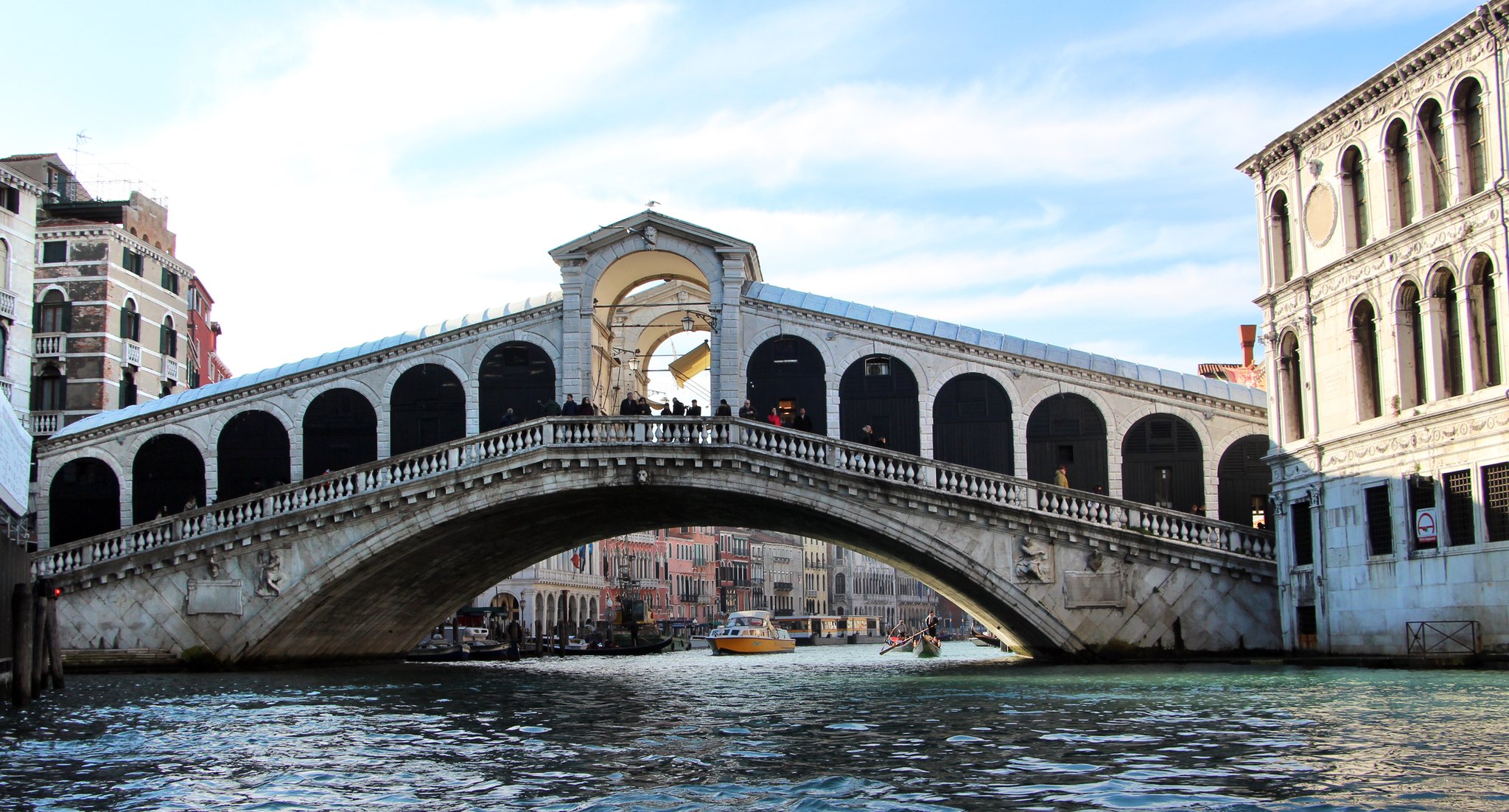
Queueing to cross it when there are two other bridges and four traghetti within ten minutes. The Rialto is not a route; it is a monument that happens to be walkable.

Nearby
Ticketing arrangements, closing days and boat timetables as published and checked on 5 September 2026. These change without much warning — confirm with the place itself before you travel. More sights, and how they fit together, in Landmarks & Sights.