What you are looking atI
The Ca' d'Oro
Cannaregio
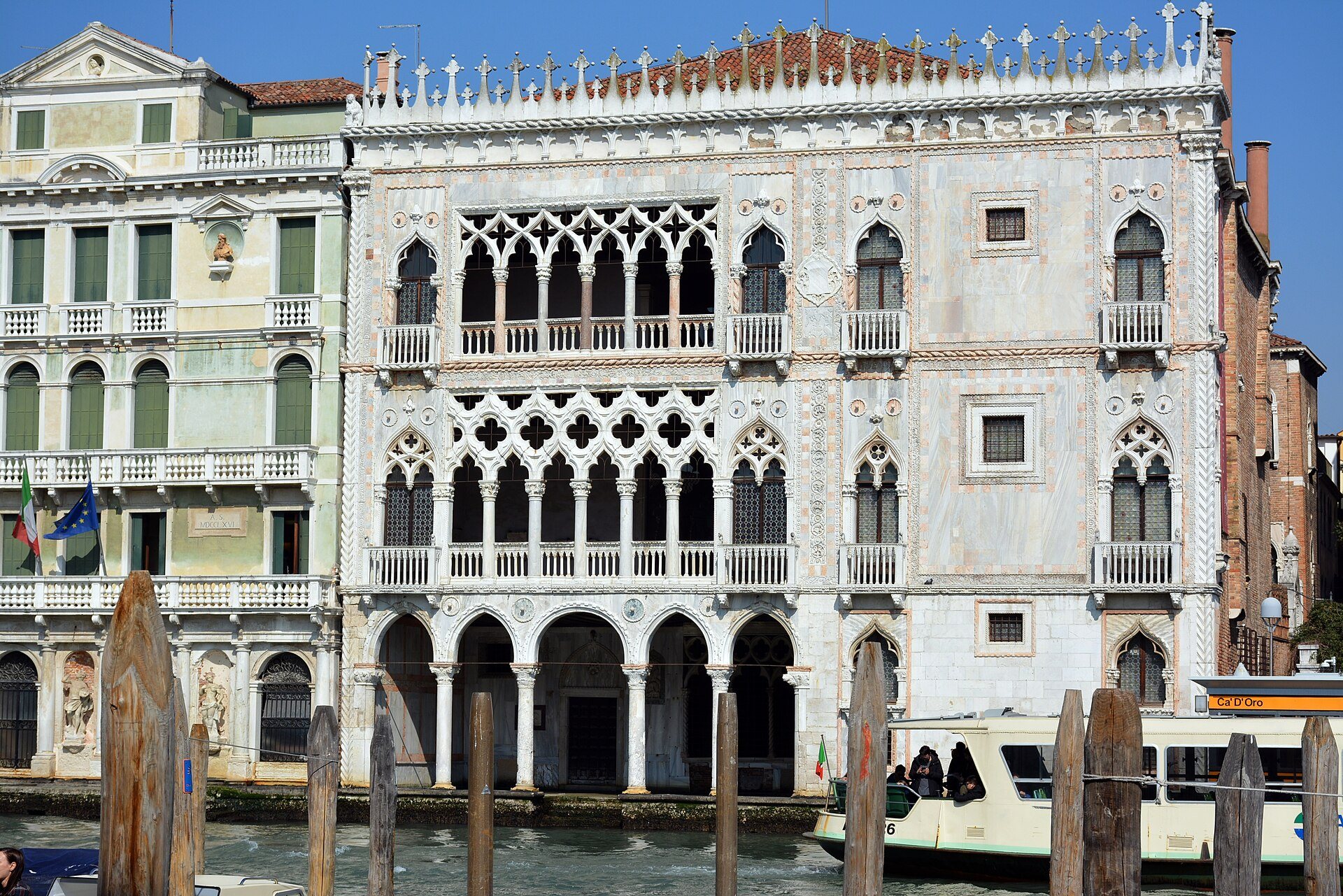
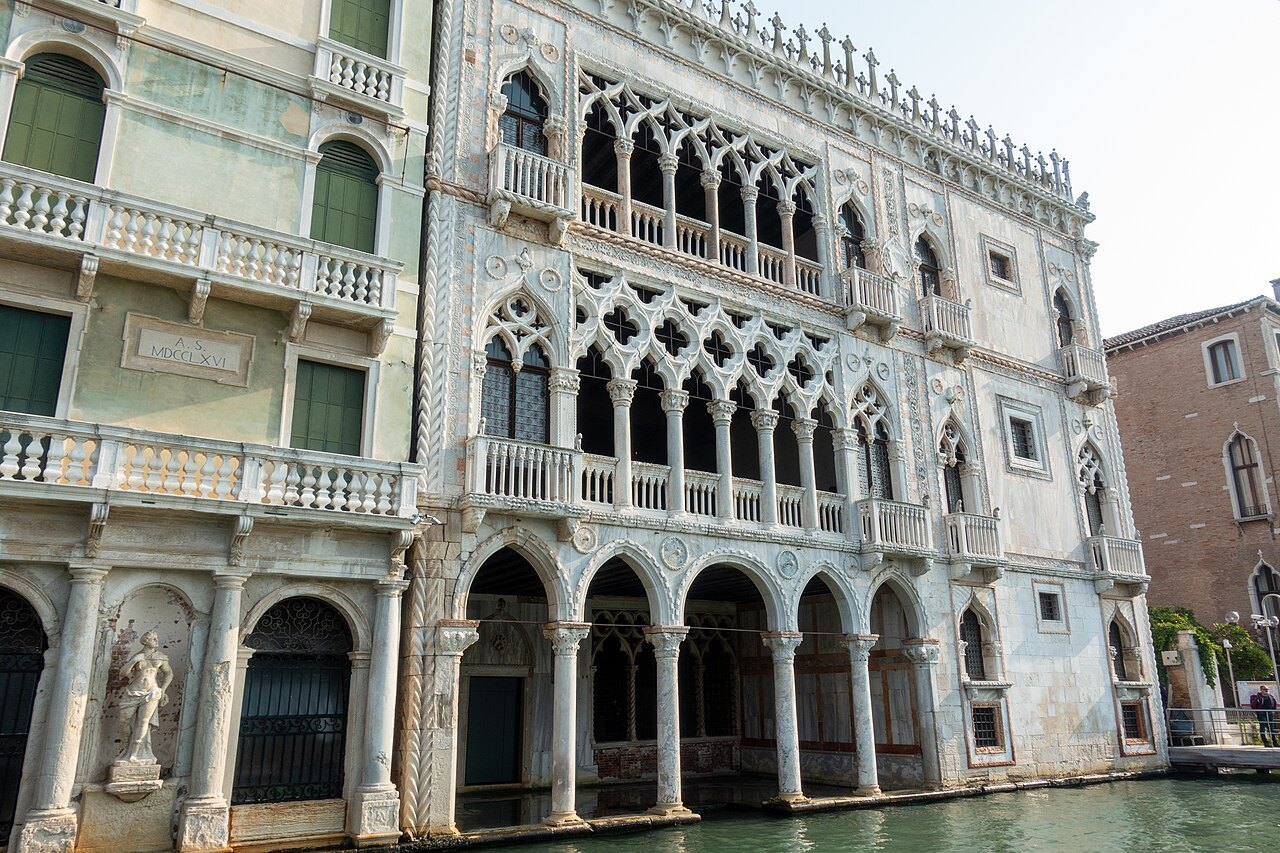
- 1The facadeAn asymmetrical front of three stories of Gothic arcades and quatrefoil tracery, rising to a crest of pinnacles.
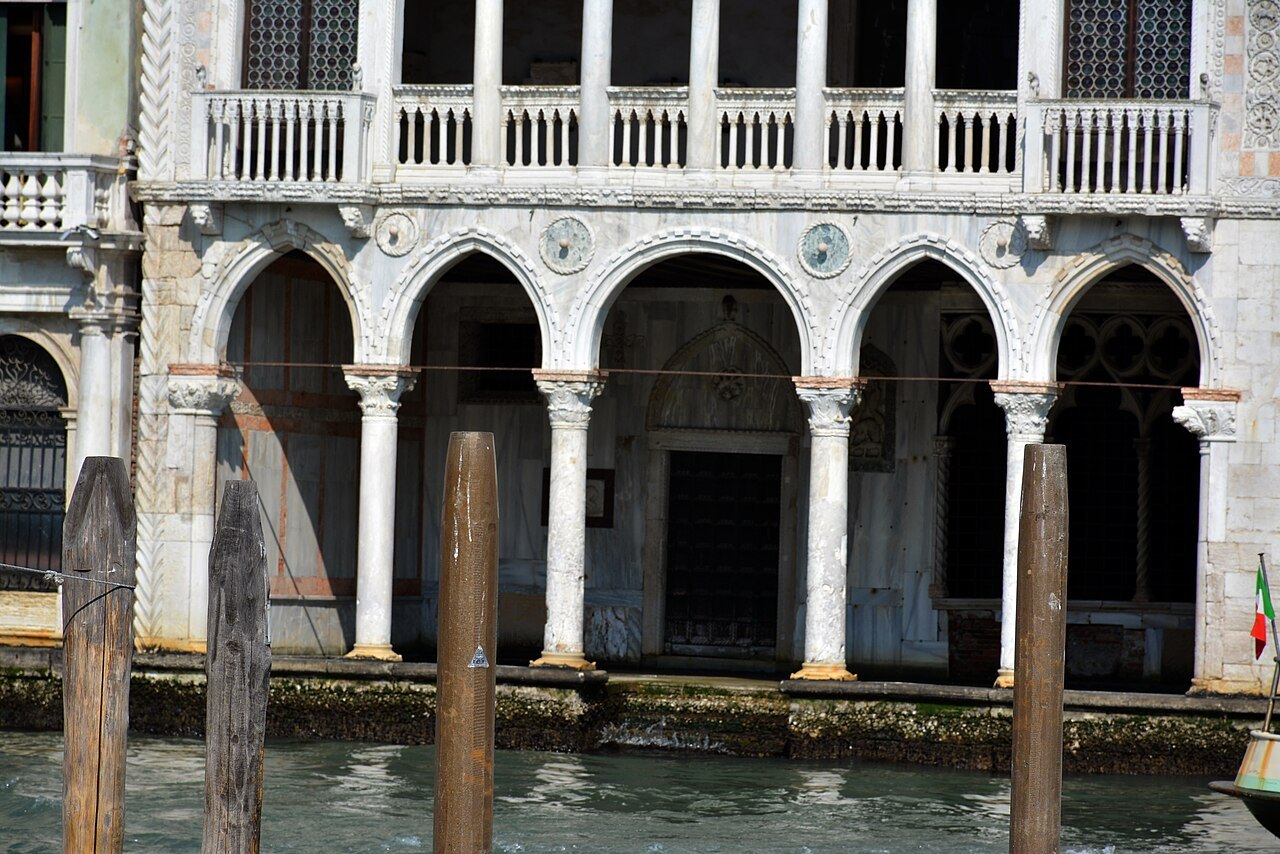
- 2The water loggiaA wide central arch and narrower arches opening on a gondola landing and the old trading hall.
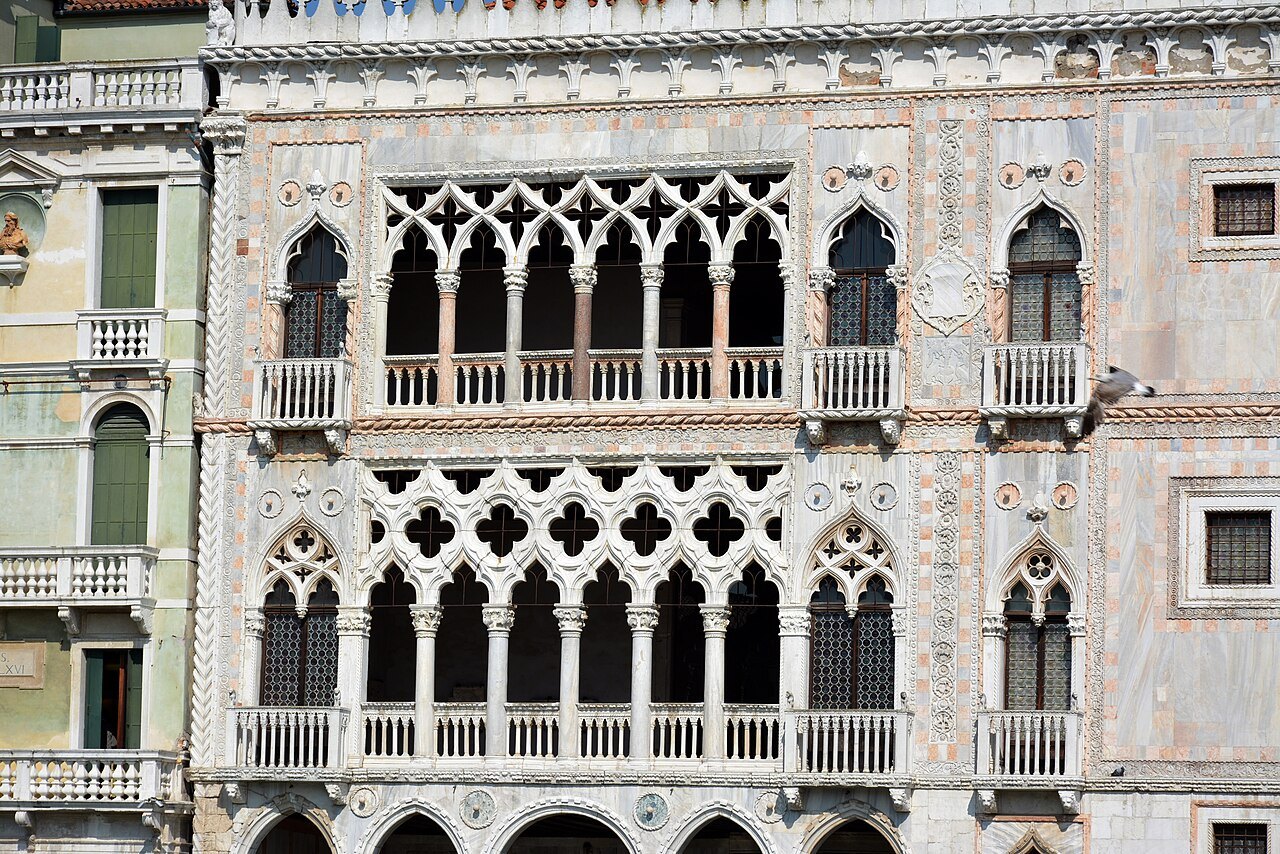
- 3The piano nobile loggiaThe richest of the three loggias, its quatrefoils attributed to Matteo Raverti of Milan.
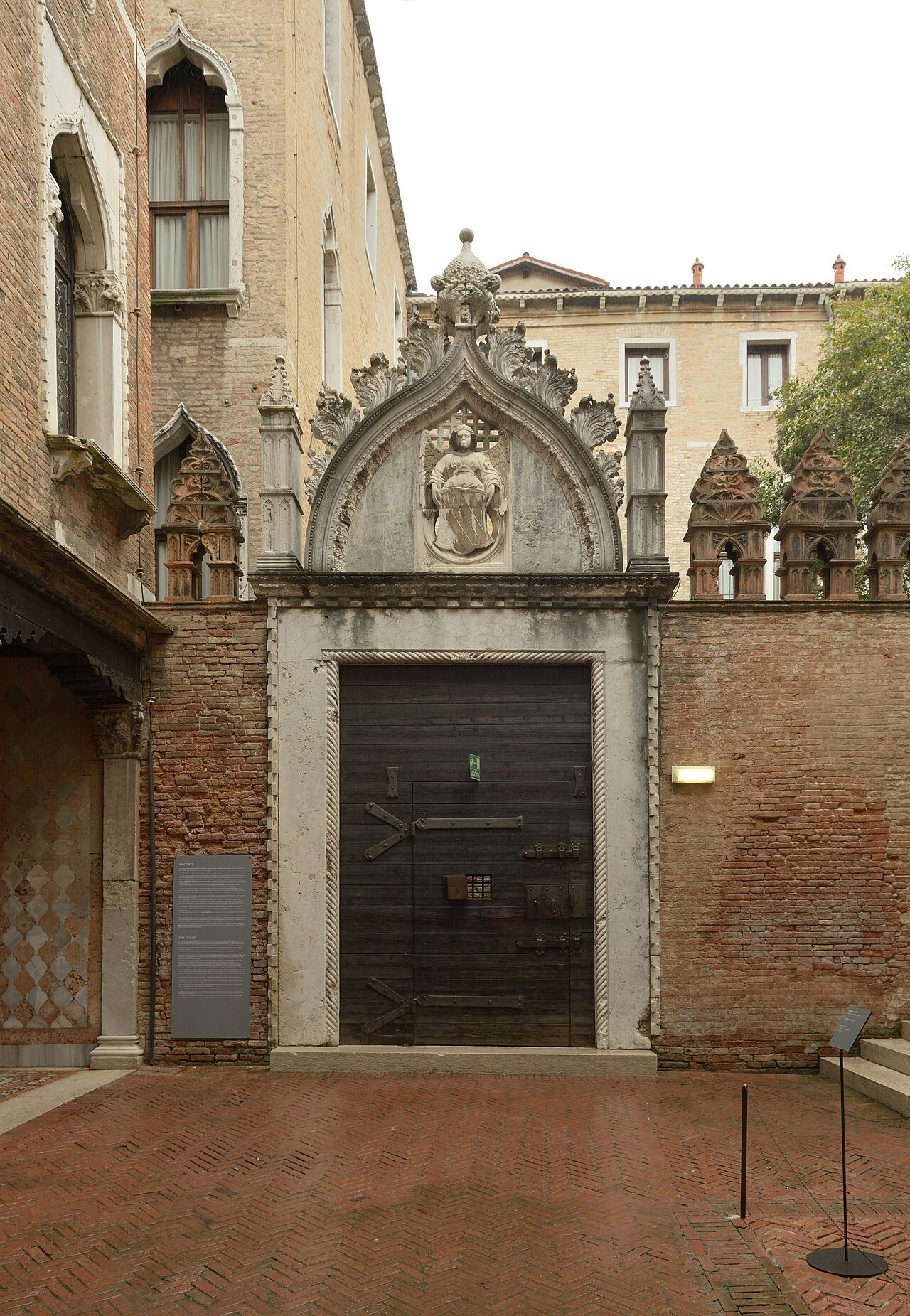
- 4The courtyardA small court with Bartolomeo Bon's red Verona marble wellhead, recovered by Franchetti.
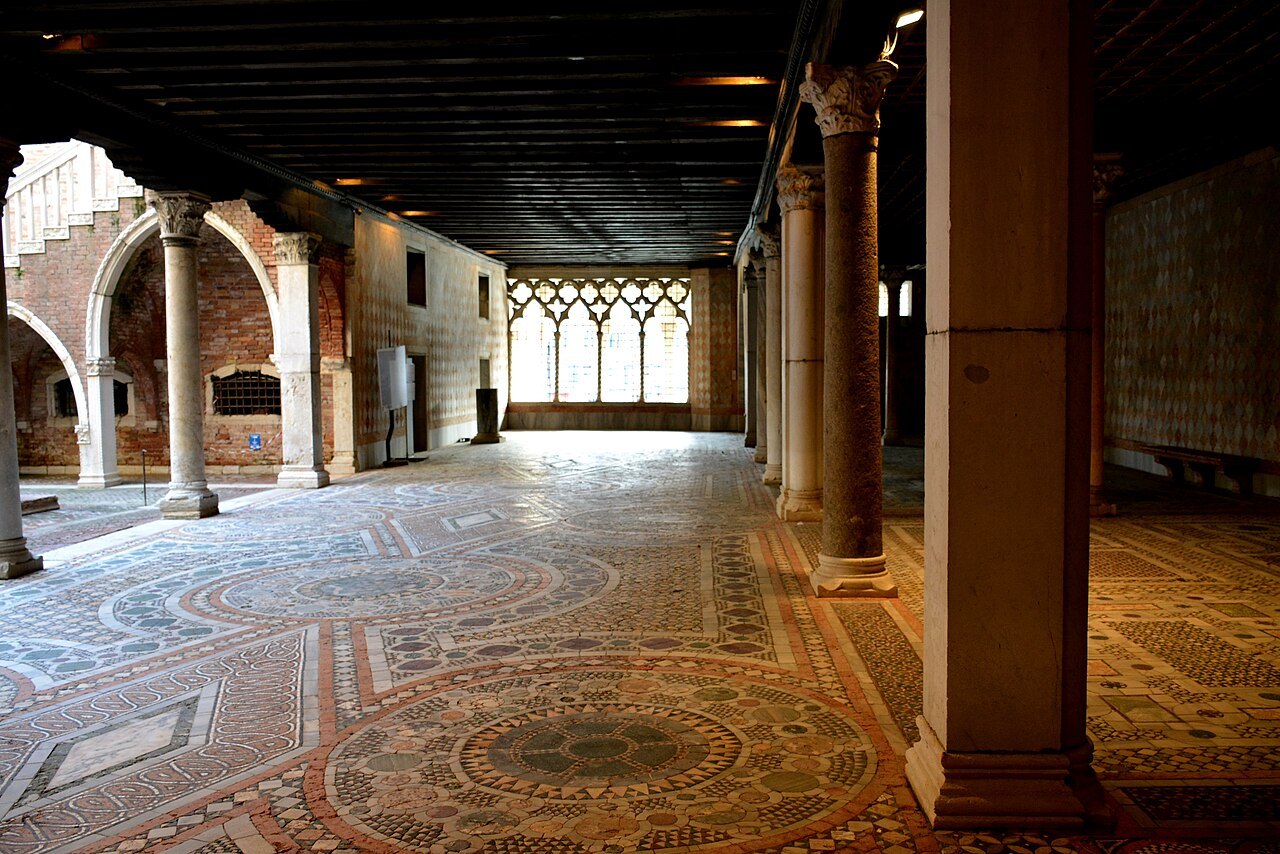
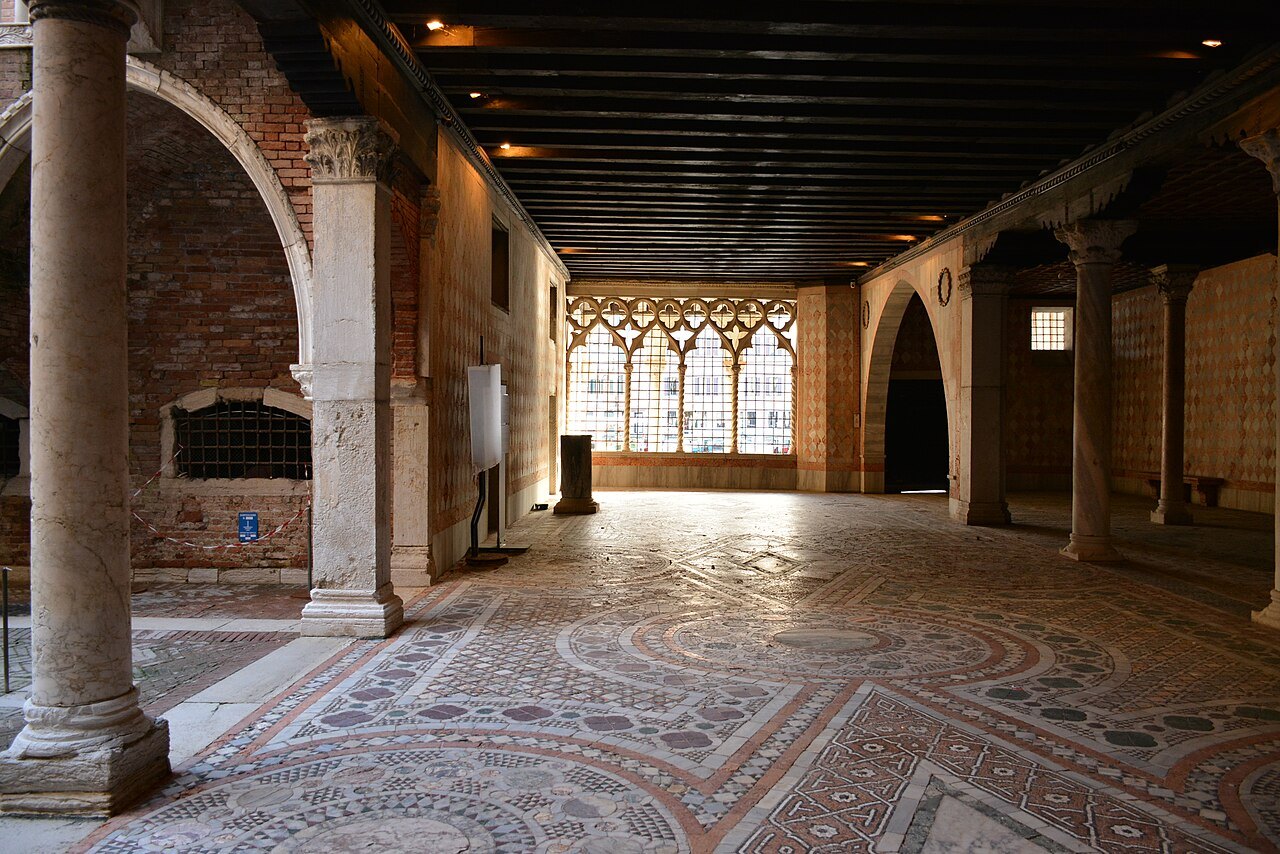
- 5The mosaic pavementFranchetti's own floor of Greek and Verona marble in the entrance hall.
- 6The MantegnaAndrea Mantegna's Saint Sebastian, the treasure of the Franchetti collection.
The sight in fullII
Reading the place
Why it matters
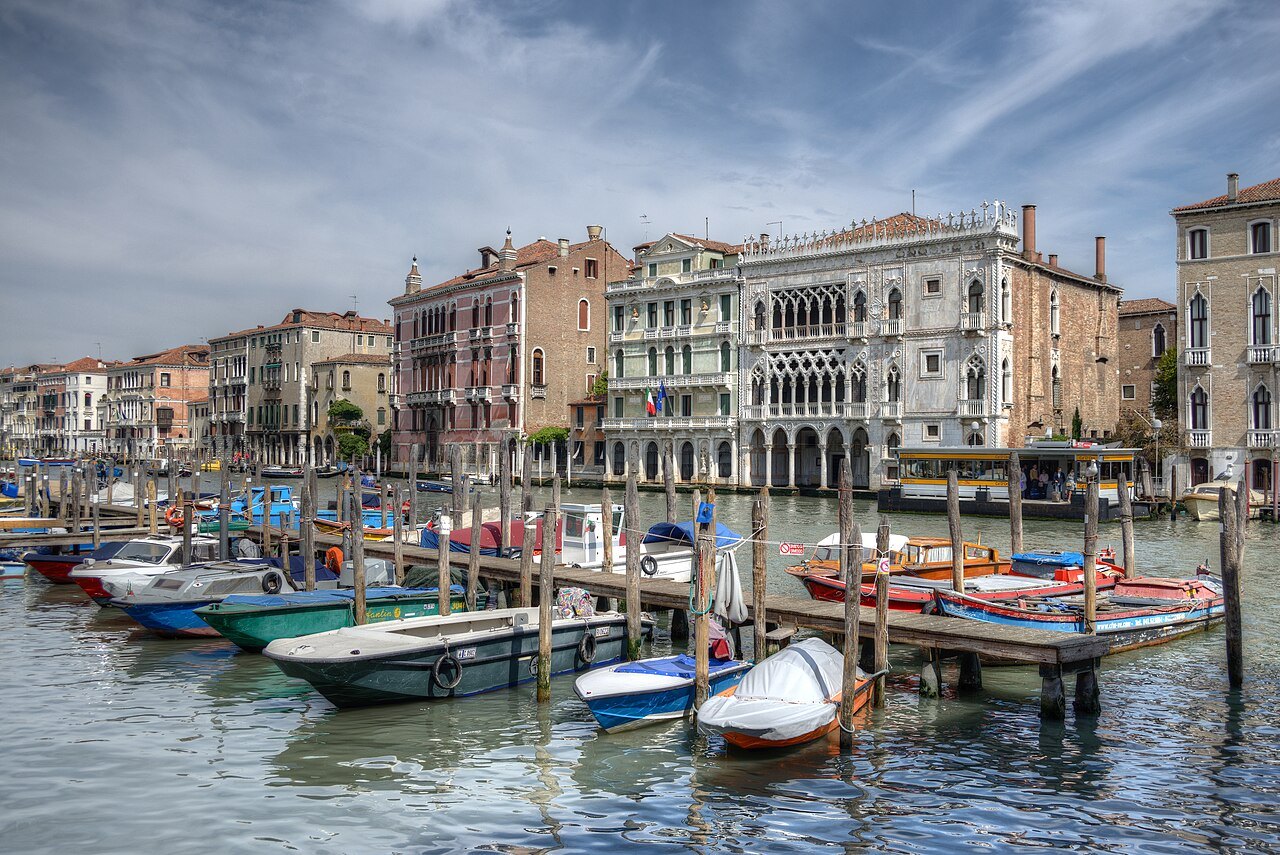
The Ca' d'Oro, officially Palazzo Santa Sofia, stands on the Cannaregio bank of the Grand Canal, a short way up from the Rialto Bridge. It has long been regarded as the best-surviving palace of Venetian Gothic, keeping nearly all its characteristic features despite some losses, and its canal front is the finest single example of the lace-like stone tracery that became the city's signature.
Its name means the House of Gold. When it was new, its white and pale red stone was picked out with gilding, and although the gold had worn away by 1600 the name stuck. Since 1927 it has been a museum, the Galleria Giorgio Franchetti alla Ca' d'Oro, so it is also one of the few great canal palaces a visitor can walk into.
A merchant's statement
The palace was built between 1421 and 1437 for Marino Contarini, a member of one of the leading families of the Republic, on the foundations of an older palace of the Zeno family that came to him through his marriage to Soradamore Zeno. Contarini was in effect his own chief designer. He oversaw the whole project, and his notes and accounts of it survive, giving scholars an unusually detailed record of how a Venetian palace was built.
He hired the Venetian architect and sculptor Giovanni Bon with his son Bartolomeo, the pair who also built the Porta della Carta of the Doge's Palace, and Matteo Raverti from Milan, who had worked on Milan Cathedral. Raverti is credited with the tracery of the main loggia and the arch over the land entrance. In 1431 Contarini's painter, Zoane di Franza, added the gold.
Reading the facade
Look at it from the water or from the far bank. The facade is deliberately asymmetrical, a layout that let light into rooms where side windows were impossible because neighbors stood too close. It has three stories, each more ornate than the one below, tied together by balustrades and crowned by a cornice of pinnacles.
At water level a loggia of pointed arches, one wide central arch between narrower ones, opens on a gondola landing. It led into the androne, the long hall where goods were unloaded, for this was the home of a family that lived by trade. Above it runs the most ornate loggia, fronting the great reception hall of the piano nobile, with columns, capitals and a row of quatrefoil openings. The loggia above repeats the pattern more lightly.
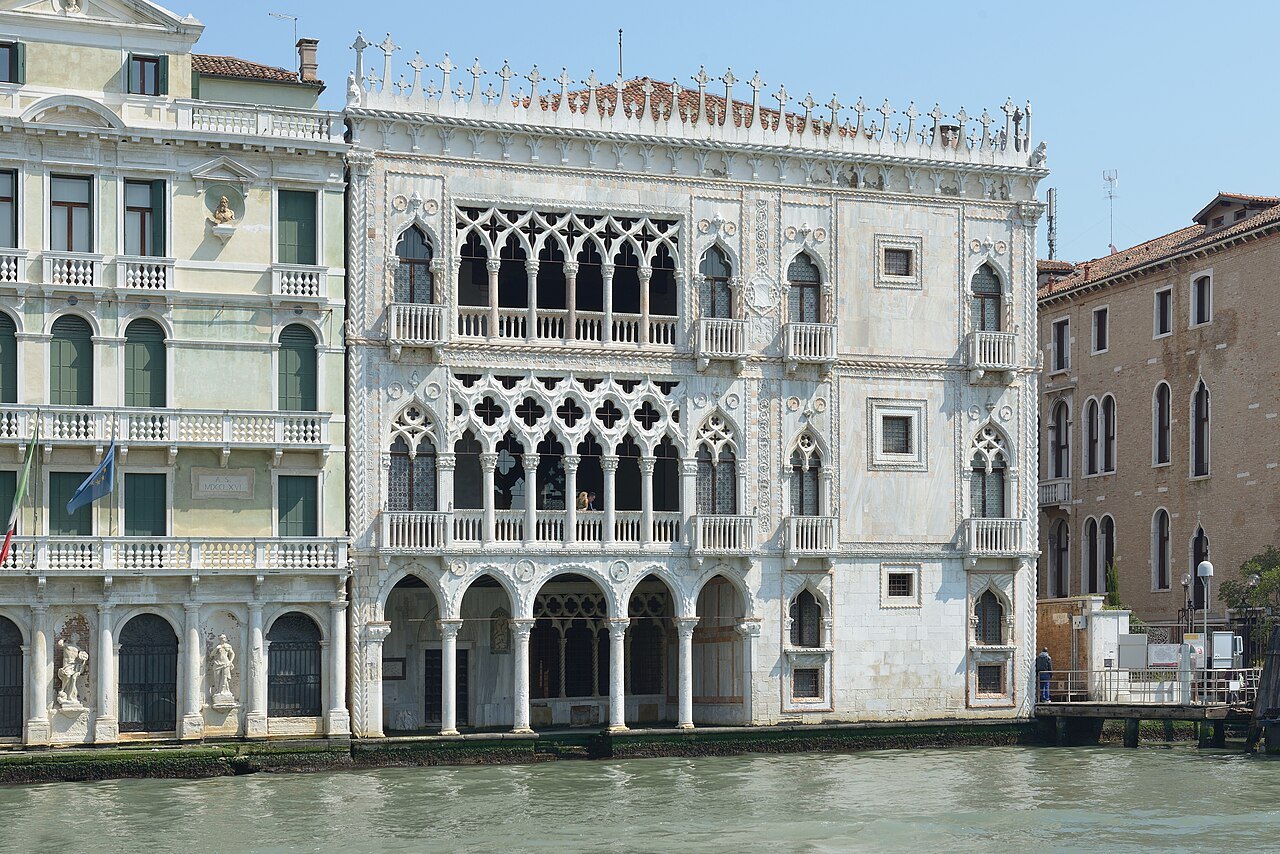
The stone was chosen for show. The facade was built of Istrian stone treated with white lead and oil to shine like marble, with red Verona marble oiled to deepen its color, and the parapet balls, finials, capitals and moldings were all gilded. The mix of Byzantine, Gothic and Islamic motifs is typical of a city that looked east rather than to ancient Rome. The same linear Gothic manner shaped Palazzo Barbaro and Palazzo Giustinian farther along the canal, and it held its ground in Venice until Renaissance architecture displaced it at the end of the fifteenth century or later.
Ruin and rescue
After the fall of the Republic in 1797 the palace changed hands several times and decayed. In 1846 Alessandro Trubetzkoi bought it and gave it to the ballerina Marie Taglioni, and under their ownership it was renovated so recklessly, with the courtyard staircase, the balconies and other Gothic features stripped out and sold, that it ended in imprisonment on charges of vandalism.
In 1894 the palace was bought by its last private owner, Baron Giorgio Franchetti, who spent the rest of his life restoring it. He tracked down and bought back pieces that had been sold, above all Bartolomeo Bon's wellhead of red Verona marble, rebuilt the staircase, and laid the mosaic pavement of Greek and Verona marble in the entrance hall himself. In 1916 he gave the palace and his collection to the Italian State; he died in 1923, and the architect Ferdinando Forlati, whom he had brought in, finished the restoration. The museum opened in 1927.
What you see inside
The visit starts at the water entrance, in the hall and the small courtyard with Bon's wellhead, the stair and a patch of garden. Upstairs, the galleries hold Franchetti's collection with works added from the state's own holdings: bronzes and sculpture, Venetian and Flemish paintings, and the palace's own architectural fragments.
The most valuable works are Andrea Mantegna's Saint Sebastian and Anthony van Dyck's portrait of Marcello Durazzo. The best moment, though, is stepping out onto the loggia of the piano nobile, behind the quatrefoils you saw from the water, with the Grand Canal and the Rialto market directly across it. Behind the galleries the museum also keeps laboratories for conservation and restoration, a reminder that the building itself was saved by restorers.
How to visit
The Ca' d'Oro has its own landing on Line 1 of the vaporetto, named for it, and from the Rialto market opposite, the Traghetto Santa Sofia crosses the canal to within a few steps of it.
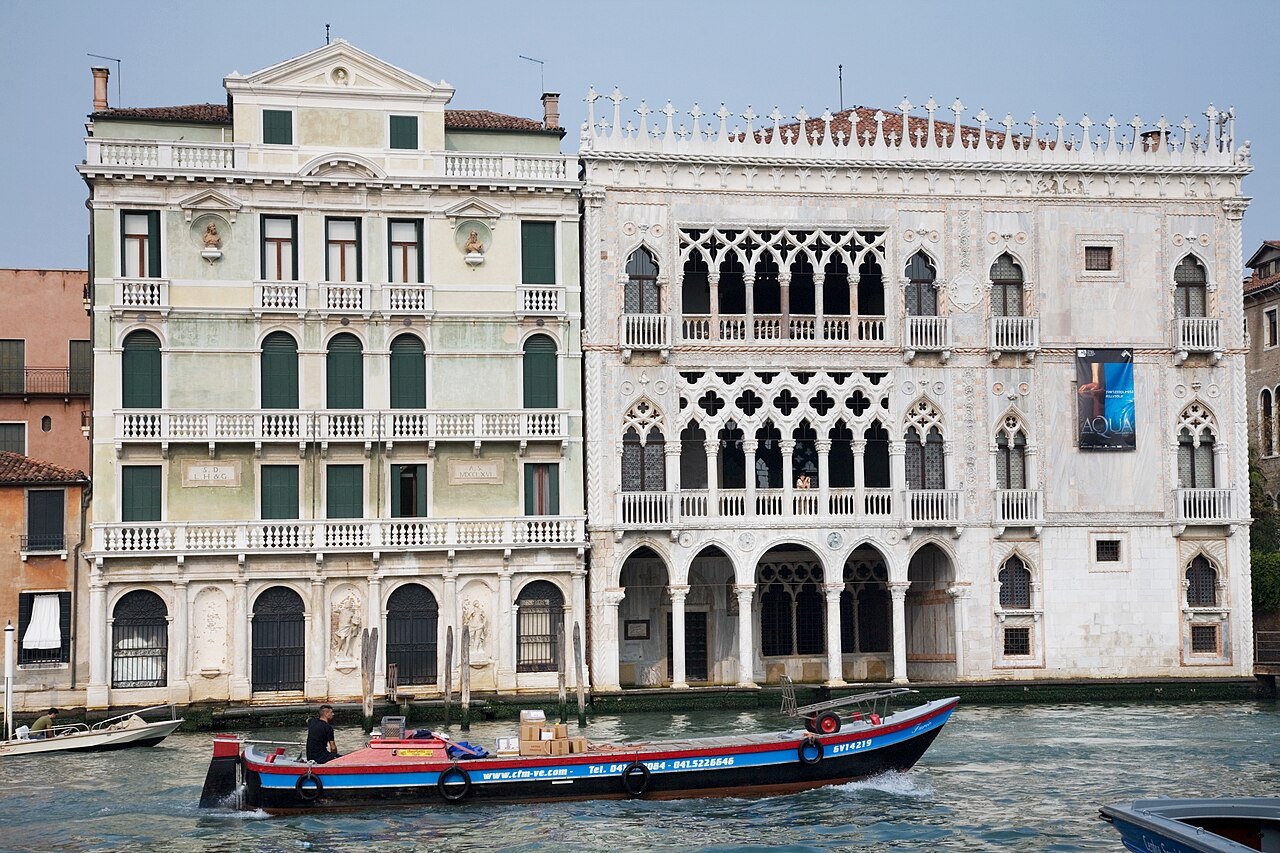
Allow an hour. The gallery is smaller and quieter than the great museums at San Marco and the Accademia, which is part of its pleasure; check hours and tickets on its official site. For the classic view of the facade, stand at the Pescaria across the canal or look back from a Line 1 boat as it leaves the landing.
Where to go nextIII
Nearby
- Nearby · San PoloThe Rialto MarketThe city's market has stood on this bank of the Grand Canal since 1097: fish under the arcades of the Pescaria, fruit and vegetables in the Erbaria beside it, in the oldest quarter of Venice.Read the page →
- Nearby · San Marco · San PoloThe Rialto BridgeFor two and a half centuries the only way to walk across the Grand Canal: a single stone arch of 1591, carrying two ramps of shops to a portico at the top, at the heart of the city's oldest quarter.Read the page →
- Nearby · San Marco · San Polo · DorsoduroThe Grand CanalThe city's main street is water: a reverse S nearly two and a half miles long through the middle of Venice, lined with more than 170 palaces, crossed by only four bridges and best seen from a boat.Read the page →