HIGH WATER · WHAT CAUSES IT, HOW THE CITY WARNS, WHAT TO DOI
Acqua Alta in Venice: the Tide, the Sirens and the Walkways
Between autumn and spring, exceptional tides flood the lowest parts of Venice. What causes the acqua alta, how the levels are measured, what the sirens mean, where the raised walkways go, what the MOSE barriers changed, and how to plan a day around a high tide.
The answer in fullII
Read on
The short answer
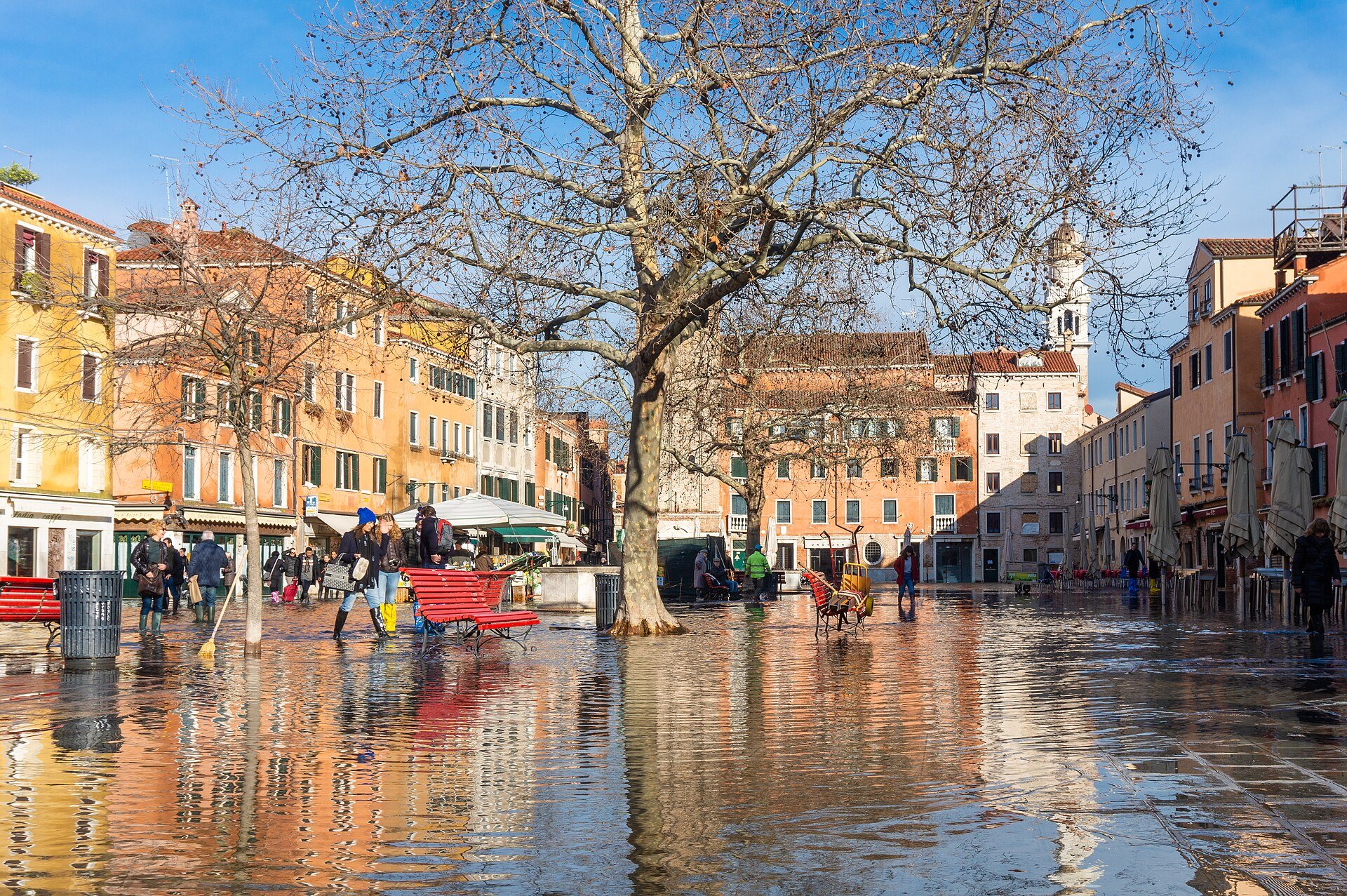
Acqua alta, high water, is an exceptional tide in the northern Adriatic that floods the lowest parts of Venice, and of Chioggia, for a few hours at a time. It happens mainly between autumn and spring. The city forecasts it, usually two days ahead, sounds sirens before the highest tides, and lays raised walkways on the main routes. Since 2020, the MOSE barriers at the inlets of the lagoon have been raised against the highest tides.
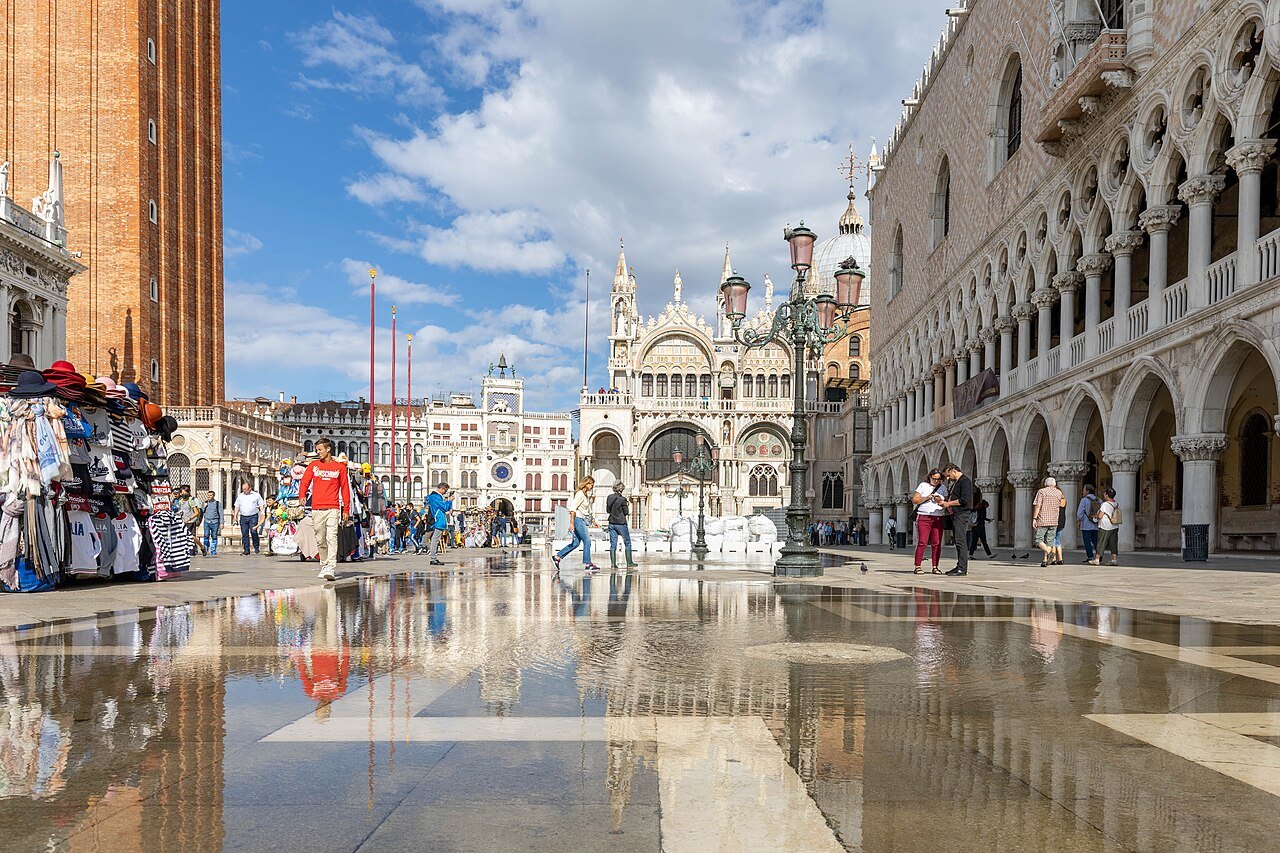
For a visitor, it is rarely a reason to cancel a trip. It is a reason to check the forecast each evening in the high-water months, to pack footwear you do not mind getting wet, and to plan the next morning around the tide.
What causes it
Three things combine. The first is the astronomical tide, driven by the moon and the sun, which can be predicted years ahead. The second is the shape of the Adriatic, a long, narrow sea in which the water sloshes back and forth in a slow oscillation, a seiche, that reinforces the ordinary tide; this is why the Adriatic has more extreme tides than the rest of the Mediterranean. Both are strongest around new and full moons.
The third, and the one that turns a high tide into a flood, is the weather. When the sirocco blows up the Adriatic from the southeast, or the bora blows toward the inlets of the lagoon, the water cannot flow back out to sea; the ebb is held back, and the next high tide arrives on top of the last. Low air pressure adds to it. The weather can only be forecast a short time ahead, which is why the worst floods can still catch the city by surprise.
The city itself has made the problem worse. It has sunk some twenty-three centimeters since 1897, partly through natural subsidence and rising seas and partly through the pumping of groundwater for industry, since stopped; and filled marshes, deep shipping channels and the bridges to the mainland have all changed how water moves in the lagoon.
How the levels are measured
Every figure you will see is measured at the tide gauge near the Salute, at the mouth of the Grand Canal, in centimeters above a reference level set by averaging the sea in 1897. It is a height above that datum, not a depth of water in the street. A tide is classed as intense between eighty and one hundred and nine centimeters, very intense between one hundred and ten and one hundred and thirty-nine, and exceptional at one hundred and forty and above.
Venice is not flat, so the same tide floods some places and not others. The lowest point, around St Mark's Basilica, floods first. According to a study commissioned by the city, a tide of up to ninety centimeters leaves Venice virtually unaffected, while fifty centimeters more floods over half of it. How much water reaches a given campo depends on its height, its distance from a canal, and the drains, which connect directly to the lagoon and let the water rise up through the paving.
The forecast and the sirens
The city's Tide Monitoring and Forecast Centre reads a network of gauges in the lagoon and on a research platform out in the Adriatic, and publishes forecasts, usually for the next forty-eight hours, on its website, on electronic displays in the city and at some water-bus landings.
For very intense tides, sirens sound across the city. Since 2008 Venice has used a system that signals how high the tide is expected to be: a first tone to catch attention, then a sequence of tones whose number rises with the expected level, according to a published table. Count the tones after the first, and the more there are, the higher the water. The rest of the lagoon still uses an older, simpler signal.
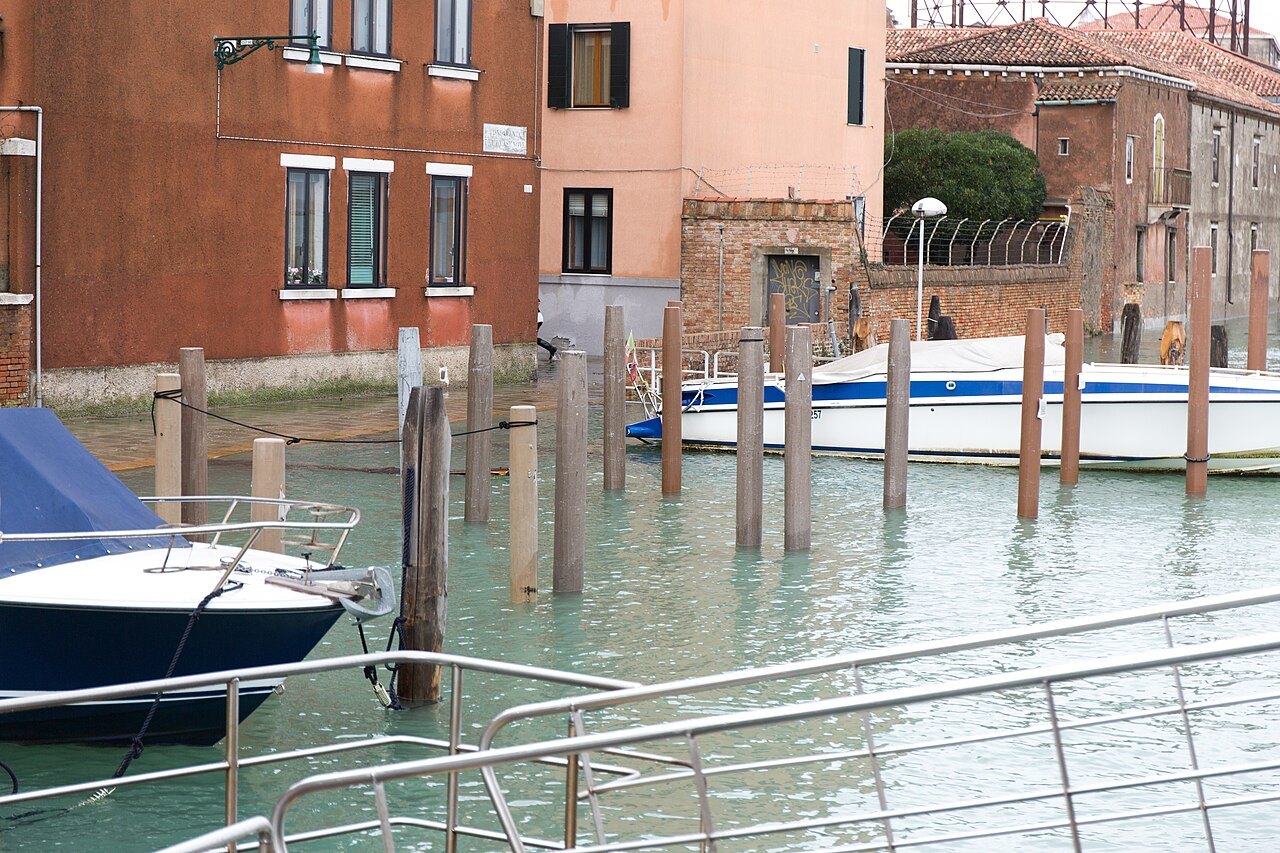
The siren tells you the forecast, not the outcome, and it gives a few hours' notice. If you are in Venice in the high-water months, check the forecast the evening before, and again in the morning.
The walkways
To keep people moving, the city lays out gangways, wide wooden planks on iron trestles, along the main walking routes through the center. They are generally set at one hundred and twenty centimeters above the reference level, so they stay dry through most floods, though they can go under in the highest tides.
The walkways are narrow and fill quickly, so keep to one side, keep moving, and let people pass. Away from them, a flooded campo may be only a few centimeters deep, while a lane or a passage under a building can be deeper than it looks. Follow the walkways, or wait: the water rises and falls with the tide, and within a few hours of the peak most streets are dry again.
What MOSE changed
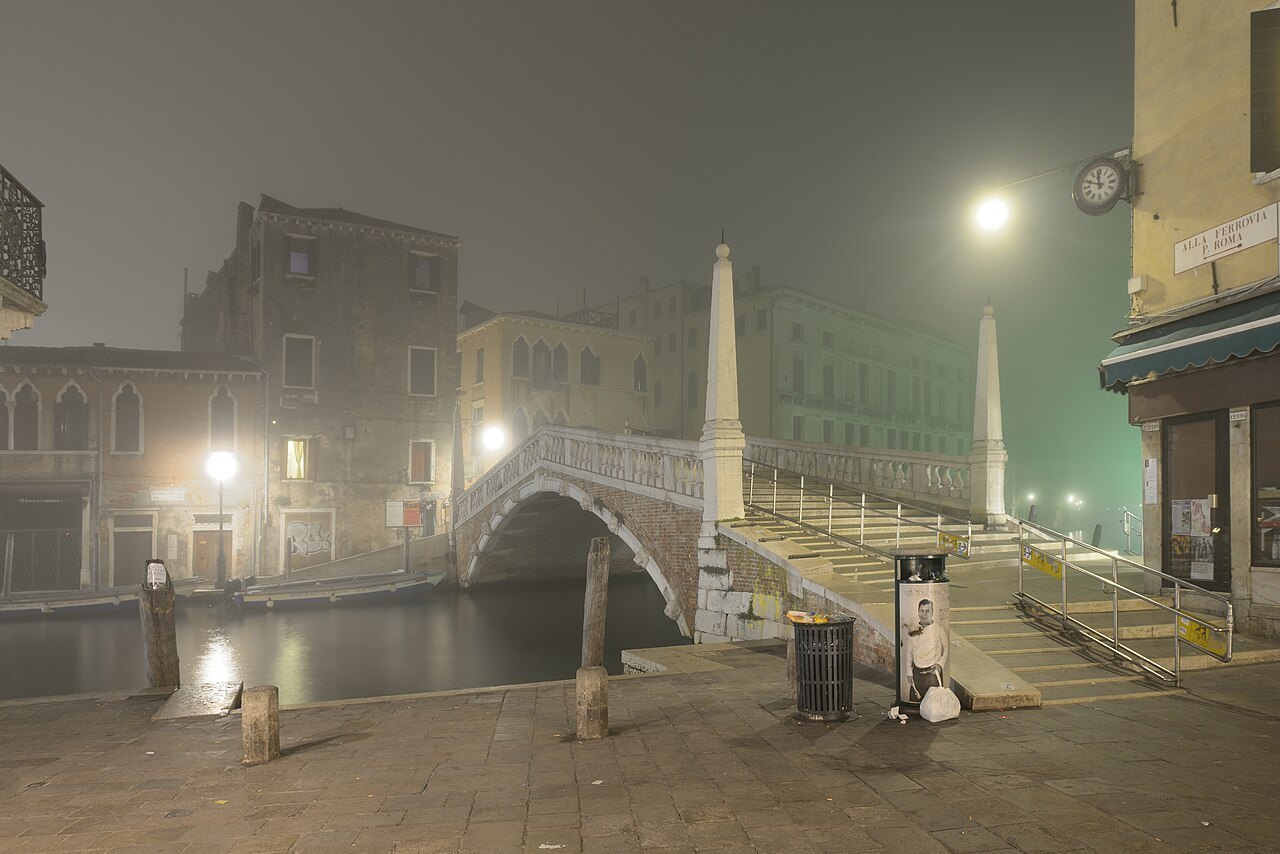
MOSE is a system of hinged steel gates lying on the seabed at the three inlets of the lagoon, at the Lido, Malamocco and Chioggia. Normally they lie flat and invisible; ahead of a very high tide they are filled with air and rise to close the lagoon off from the sea. The project began in 2003, was dogged by delays, cost overruns and corruption scandals, and was first raised against a real tide on 3 October 2020, keeping the water out of Piazza San Marco.
The gates are raised only for the highest forecasts, which have been set at around one hundred and thirty centimeters, so smaller floods still happen, and the lowest parts of the city, around the Piazza, can still take water on days when the barriers stay down. But the great city-wide floods, like that of 4 November 1966, when the water reached a record one hundred and ninety-four centimeters, or of 13 November 2019, when more than eighty percent of Venice was under water, are far less likely than they were (see when to come).
Planning around a high tide
In the high-water months, from autumn to spring, plan the mornings loosely. If a high tide is forecast, spend the peak somewhere dry and higher up, inside a museum or a church away from the Piazza, and walk once it has passed. The water buses keep running through most floods, though some landings can be affected; check the transport company's notices on days of high water (see the vaporetto).
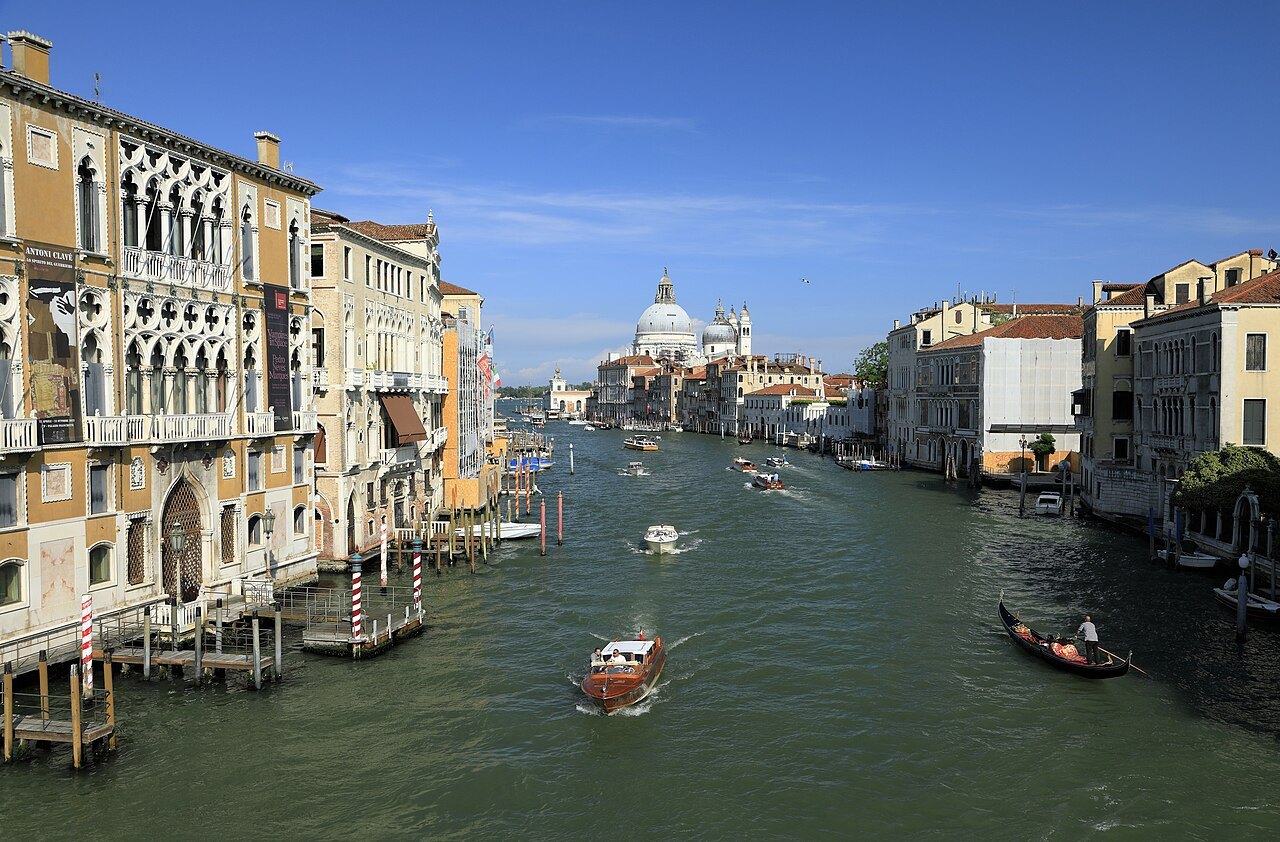
Pack boots or waterproof shoes that cover the ankle; plastic overshoes are sold around the city when the water is up. Do not wade through deep water in unfamiliar lanes, where canal edges and steps are hidden. And if you are caught out, remember that it will pass: acqua alta is part of how Venice has always lived with its lagoon, not an emergency every time it comes.
Read nextIII
More from the journal
- Getting AroundOnly Four Bridges Cross the Grand Canal: Planning RoutesThe Grand Canal cuts Venice in two, and only four bridges cross it in nearly four kilometers. Where they are, why a map misleads, and how to plan walks, water-bus rides and traghetto crossings so the canal works for you rather than against you.Read the piece →
- Getting AroundHow the Vaporetto Works: Tickets, Passes and LinesThe vaporetto is Venice's bus: numbered lines run by ACTV along the Grand Canal, around the city and out to the islands. How single tickets and time-based travel cards work, how to decide between them, how to validate, and which lines a visitor actually uses.Read the piece →
- The Doge's PalaceCan you walk across the Bridge of Sighs?Yes: the Bridge of Sighs is part of the visit to the Doge's Palace, which crosses it to the New Prisons and comes back the other way. What the bridge was really for, where the romantic name came from, how the palace route reaches it, and where to stand for the classic view from outside.Read the piece →