INSIDE THE DOGE'S PALACE, THROUGH THE PRISONS AND BACKI
Can you walk across the Bridge of Sighs?
Yes: the Bridge of Sighs is part of the visit to the Doge's Palace, which crosses it to the New Prisons and comes back the other way. What the bridge was really for, where the romantic name came from, how the palace route reaches it, and where to stand for the classic view from outside.
The answer in fullII
Read on
The short answer
Yes, but only from inside. The Bridge of Sighs is an enclosed stone bridge over the Rio di Palazzo, the narrow canal behind the Doge's Palace, and it joins the palace to the New Prisons on the other side. There is no public way onto it from the street. You cross it as part of the standard visit to the palace, whose route passes through the bridge to the prisons and returns by the second corridor inside it.
From outside, you can see it from the Ponte della Paglia, the bridge on the waterfront where the Rio di Palazzo meets the basin, and from the water. That is where the famous photographs are taken.
What the bridge was for
By the late sixteenth century the old cells inside the palace, the dark, damp pozzi, were too small, and the Republic built a new prison across the canal. In 1580 the architect Gianantonio Rusconi was commissioned to design it; after his death Antonio da Ponte, who also won the competition to rebuild the Rialto Bridge, took over the final wing. Its south front on the waterfront, the only decorated wall of an otherwise bare building, borrowed its fortress-like look from Sansovino's Mint across the Piazzetta. Inside the palace, both corridors of the bridge connect with a service staircase that ran from the pozzi at ground level all the way up to the cells under the roof.
To take prisoners securely between the courts and interrogation rooms in the palace and the cells across the water, da Ponte's nephew and pupil Antonio Contin designed an enclosed bridge over the Rio di Palazzo, built soon after 1600. Inside it runs two separate passages divided by a wall, so that convicted prisoners on their way to the cells would never meet those being brought to court.
Where the name came from
The name is not Venetian and not old. The Ponte dei Sospiri, the Bridge of Sighs, is a Romantic invention of the nineteenth century, when writers imagined prisoners sighing at their last glimpse of the lagoon through its small windows before the cells closed on them. Nothing about the bridge's real use was romantic.
The name stuck anyway, and spread around the world: Offenbach wrote an operetta called Le pont des soupirs in 1861, and it turns up in rock songs and album titles to this day. Venice's own bridge, of white Istrian stone, is small, eleven meters wide, with a single arch, a row of carved heads along its underside, and the coat of arms of Doge Marino Grimani between its two stone-screened windows.
Crossing it on the palace route
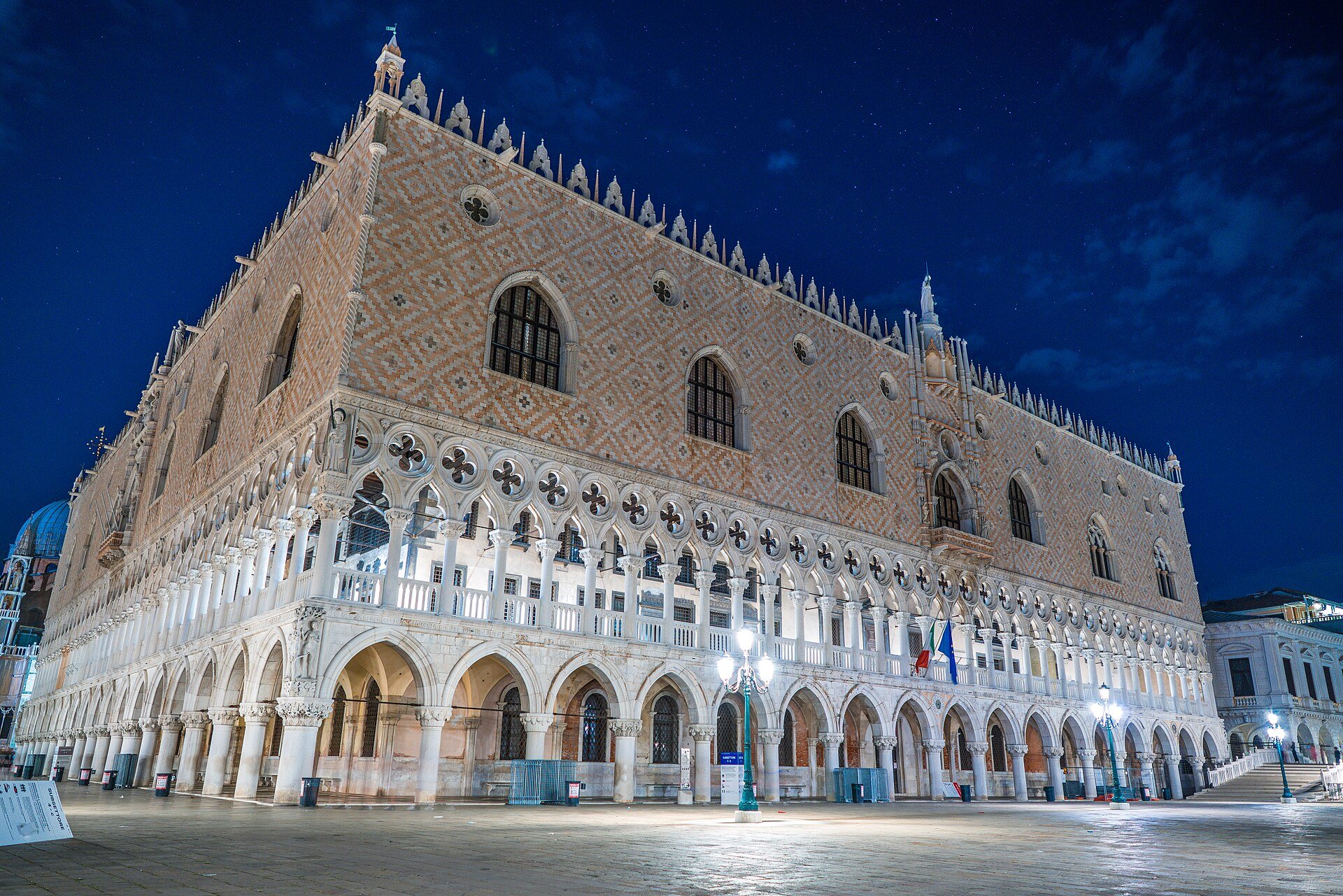
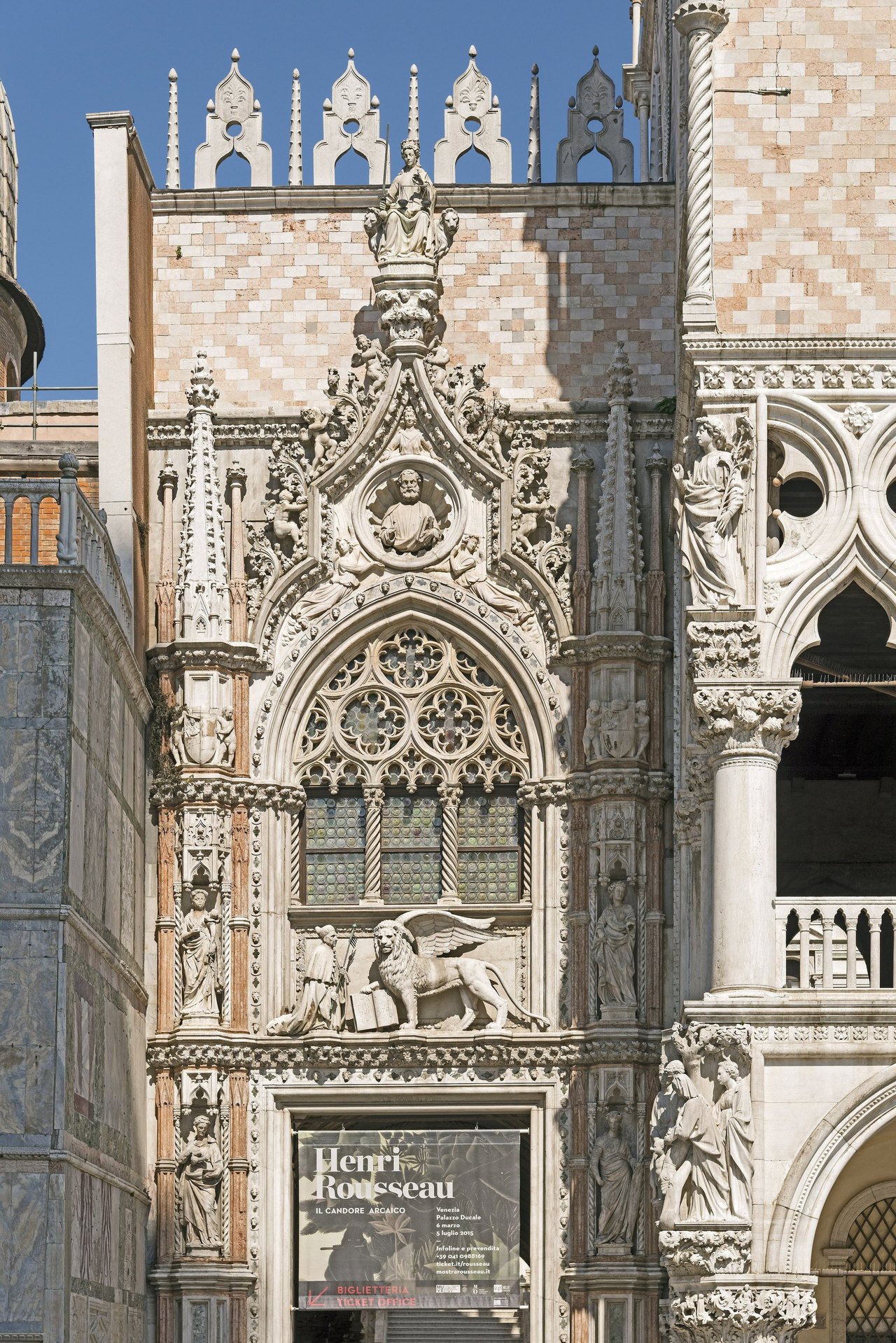
The standard visit to the Doge's Palace starts in the great courtyard, climbs the Golden Staircase to the doge's apartments and then to the rooms of government, their ceilings painted by Veronese, Tintoretto and their workshops. It reaches its climax in the Chamber of the Great Council, one of the largest rooms in Europe, with Tintoretto's Il Paradiso above the throne.
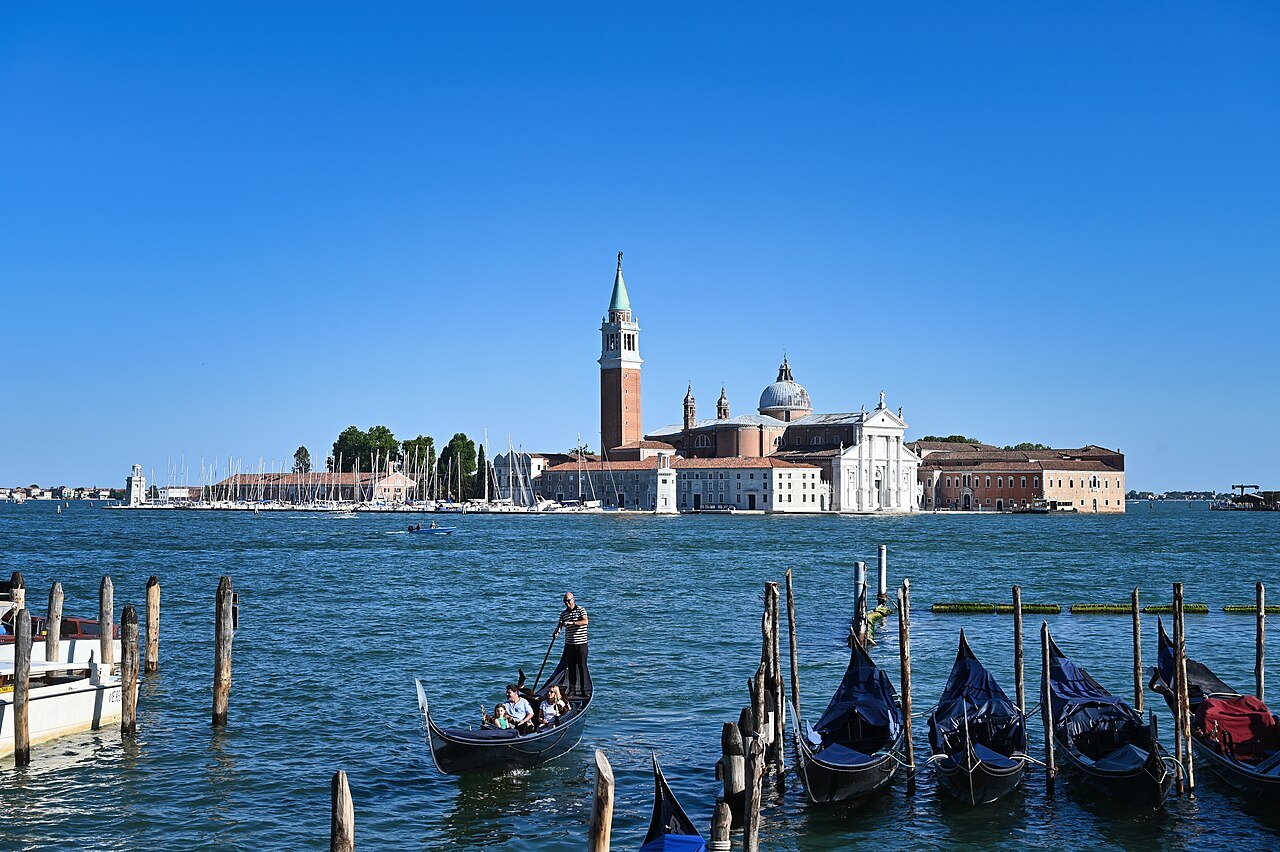
From there the route passes through the Armoury and down to the bridge. You walk through one of its corridors to the New Prisons, go through the cells and passages there, and come back across the bridge by the other corridor. Look through the stone screens of the windows as you go: the view out to the lagoon and to San Giorgio Maggiore is the one the nineteenth century imagined as the prisoners' last.
Before the bridge, the route also passes the rooms where the Republic's justice was done: the Chamber of the Council of Ten, the body set up after a conspiracy of 1310 to guard the state, with a ceiling painted by Ponchino and a young Veronese, and the frieze of doges' portraits in the Great Council, where Marino Faliero, who attempted a coup in 1355, is shown only by a black cloth. The prisoners who crossed the bridge had been sentenced in courts like these, which gives the short walk across its weight.
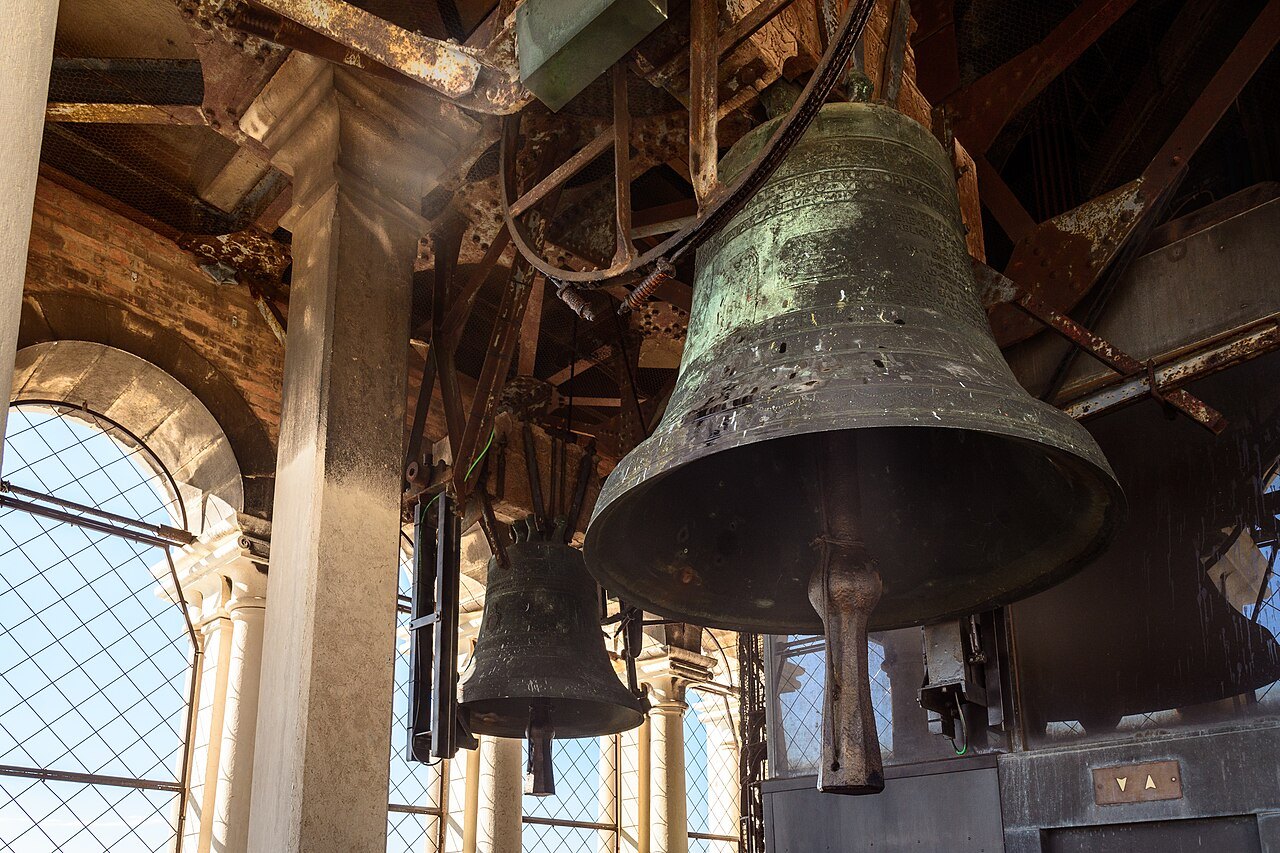
The crossing takes a minute, and on a busy day the narrow passages slow to a shuffle. It is not a place to linger, but it is worth noticing: you are walking where the Republic's justice actually moved.
The prisons and the famous escape
The New Prisons were not the palace's only cells. The oldest, the pozzi, the wells, were in the palace itself, and there were also cells under the lead roof, the Piombi. Giacomo Casanova was held in the Piombi, and in his memoirs he describes how he escaped through the roof, climbed back into the palace and walked out through the Porta della Carta to freedom.
Parts of the building that the standard route does not reach can be seen only on the palace's special guided visits, the Secret Itinerary and The Doge's Hidden Treasures, which run by reservation for small groups. Book those well ahead (see booking ahead).
The view from outside
For the classic view of the bridge, walk along the waterfront from the Piazzetta toward the Riva degli Schiavoni and stop on the Ponte della Paglia, the first bridge you come to. Look up the Rio di Palazzo: the Doge's Palace on the left, the New Prisons on the right, and the white bridge between them. The Ponte della Paglia is one of the most crowded places in Venice, so come early or late.
The other view is from below, from a gondola. Gondolas pass under the bridge on their way through the canals behind San Marco, and a ride that takes in the Rio di Palazzo gives you the bridge overhead, as the Romantics saw it.
Planning the visit
Allow two to three hours for the palace. Buy tickets on its official site, and go early; the palace fills from the moment it opens, and it pairs naturally with St Mark's Basilica next door. The palace belongs to the same network of civic museums as the Museo Correr across the Piazza, so check whether a combined ticket suits you.
The palace has a cloakroom and an elevator, and an audioguide is available through the civic museums' app. The route through the prisons includes stairs and narrow passages; if you have limited mobility, check with the palace before you go.
Read nextIII
More from the journal
- St Mark's BasilicaHow do you visit St Mark's Basilica?St Mark's is a working church with four separate visits, a line that crosses the Piazza on busy days, and a golden interior that rewards knowing where to look. How the visit is divided, how to book, when to go, and a route through the church, the Pala d'Oro and the loggia of the horses.Read the piece →
- Getting AroundOnly Four Bridges Cross the Grand Canal: Planning RoutesThe Grand Canal cuts Venice in two, and only four bridges cross it in nearly four kilometers. Where they are, why a map misleads, and how to plan walks, water-bus rides and traghetto crossings so the canal works for you rather than against you.Read the piece →
- When to ComeAcqua Alta in Venice: the Tide, the Sirens and the WalkwaysBetween autumn and spring, exceptional tides flood the lowest parts of Venice. What causes the acqua alta, how the levels are measured, what the sirens mean, where the raised walkways go, what the MOSE barriers changed, and how to plan a day around a high tide.Read the piece →