THE WATER BUS · SINGLE TICKETS, TRAVEL CARDS AND THE LINES THAT MATTERI
How the Vaporetto Works: Tickets, Passes and Lines
The vaporetto is Venice's bus: numbered lines run by ACTV along the Grand Canal, around the city and out to the islands. How single tickets and time-based travel cards work, how to decide between them, how to validate, and which lines a visitor actually uses.
The answer in fullII
Read on
The short answer
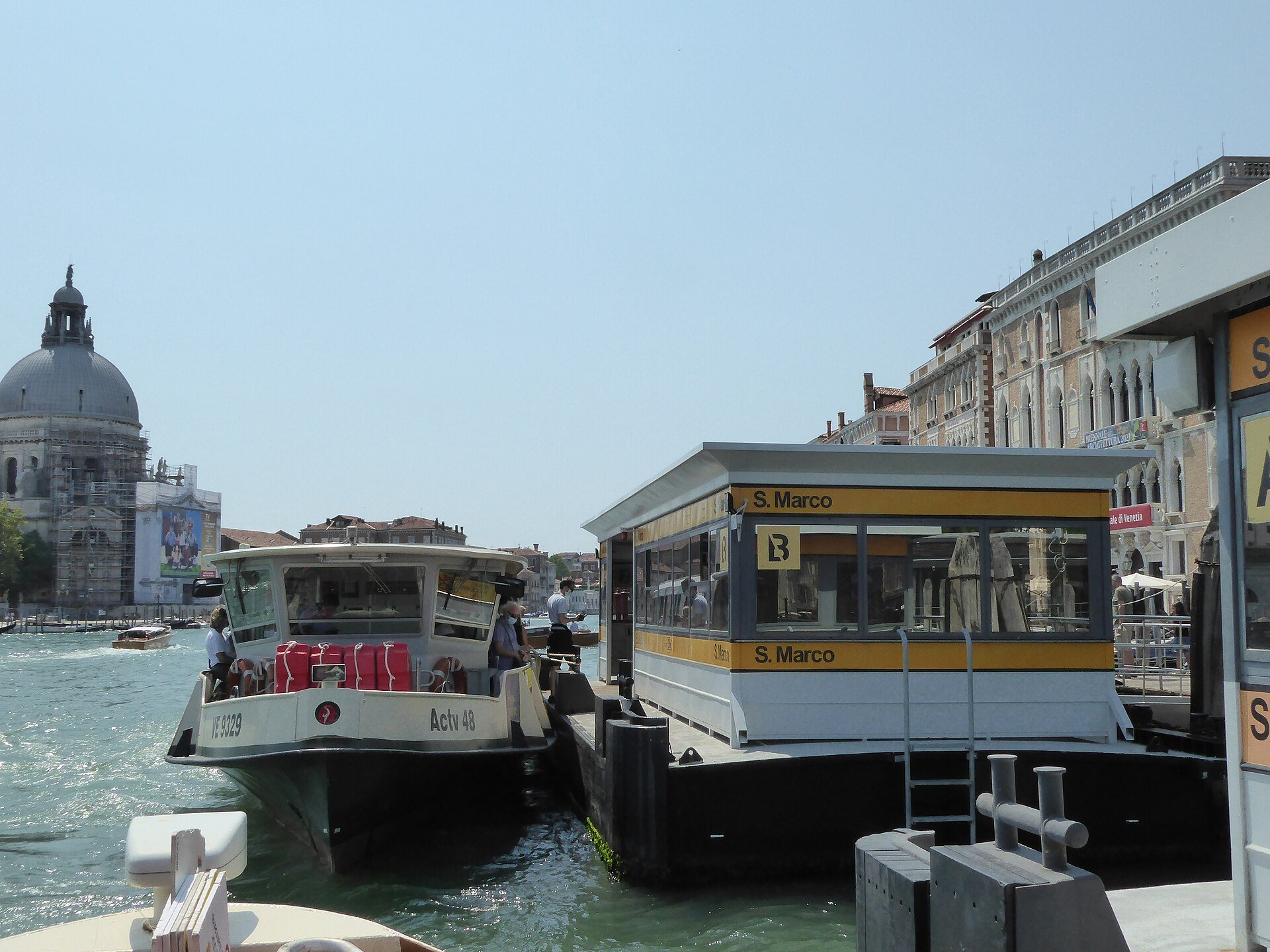
The vaporetto is the public water bus of Venice, run by the city transport company ACTV. In a city with no cars, buses or bicycles beyond Piazzale Roma, it does the job a bus or a metro does elsewhere: numbered lines with fixed landings along the Grand Canal, around the edge of the city and out across the lagoon to the islands.
You can pay ride by ride with a single ticket, or buy a travel card valid for a fixed number of hours. Which is better depends on how many times you will board, and for most visitors who use the boats more than a couple of times a day, a travel card is the simpler choice. Either way, you tap your ticket on the reader at the landing every time you board.
Some links on this page are affiliate links. If you book through one we may earn a commission, at no extra cost to you. It does not affect what is recommended here, and no sight page on this site carries one.
Somewhere to leave a suitcase between check-out and a late train.
What the boats are
Strictly, a vaporetto, a little steamer, is one of the large, wide boats on the slow lines of the Grand Canal, carrying a couple of hundred passengers; smaller motoscafi and much larger motonavi work other routes. Venetians call any of them a batèlo or a vaporino. Everyone else calls them all vaporetti.
The first one appeared on the Grand Canal in 1881, to the alarm of the gondoliers, and the debate that followed helped settle the vaporetto's role as the Venetian bus. Most of the boats have disability access, and the network runs around the clock, with fewer boats at night. Several lines run only in the summer season, from April to October.
Single tickets and travel cards
A single ticket covers one journey, for a limited time from validation. It is priced for visitors rather than residents, and it is not cheap, which is why the time-based travel cards exist. ACTV sells them for twenty-four hours and for two, three and seven days, and each runs for that number of hours from the moment you first validate it, not by calendar day. A two-day card first used in the late afternoon lasts until the same time two days later.
The cards cover ACTV's water buses throughout the lagoon and its land buses on the Lido and the mainland. They do not cover everything that floats: the Alilaguna boats and the ATVO buses from the airport are run by other companies, and neither the traghetto across the Grand Canal nor a water taxi is included. There is also a discounted three-day card for young visitors; check the age limits and conditions on the official site.
The current prices and conditions are published by ACTV and on Venezia Unica, the city's official site for transport and museum tickets. This article gives none, because they change.
How to decide
The decision is arithmetic. Divide the price of the travel card by the price of a single ticket, round up, and that is the number of rides at which the card starts to save money. Then count the rides you will really take.
Count honestly, and include the rides you do not think of as sightseeing. Arriving from the station or Piazzale Roma to a landing near your lodging is a ride, and leaving again is another. A trip down the Grand Canal and back is two, and a day in the northern lagoon, to Murano, Burano and Torcello and back, can be four or more. Many visitors reach the break-even point on their first full day.
Match the card to the hours you need, not the days on the calendar. Someone arriving on a Friday afternoon and leaving on a Sunday morning needs well under forty-eight hours of travel, and a longer card would leave time paid for and unused. If you mean to walk most of the time, and walking is the best way to see Venice, single tickets for the long stretches may cost less.
Buying and validating
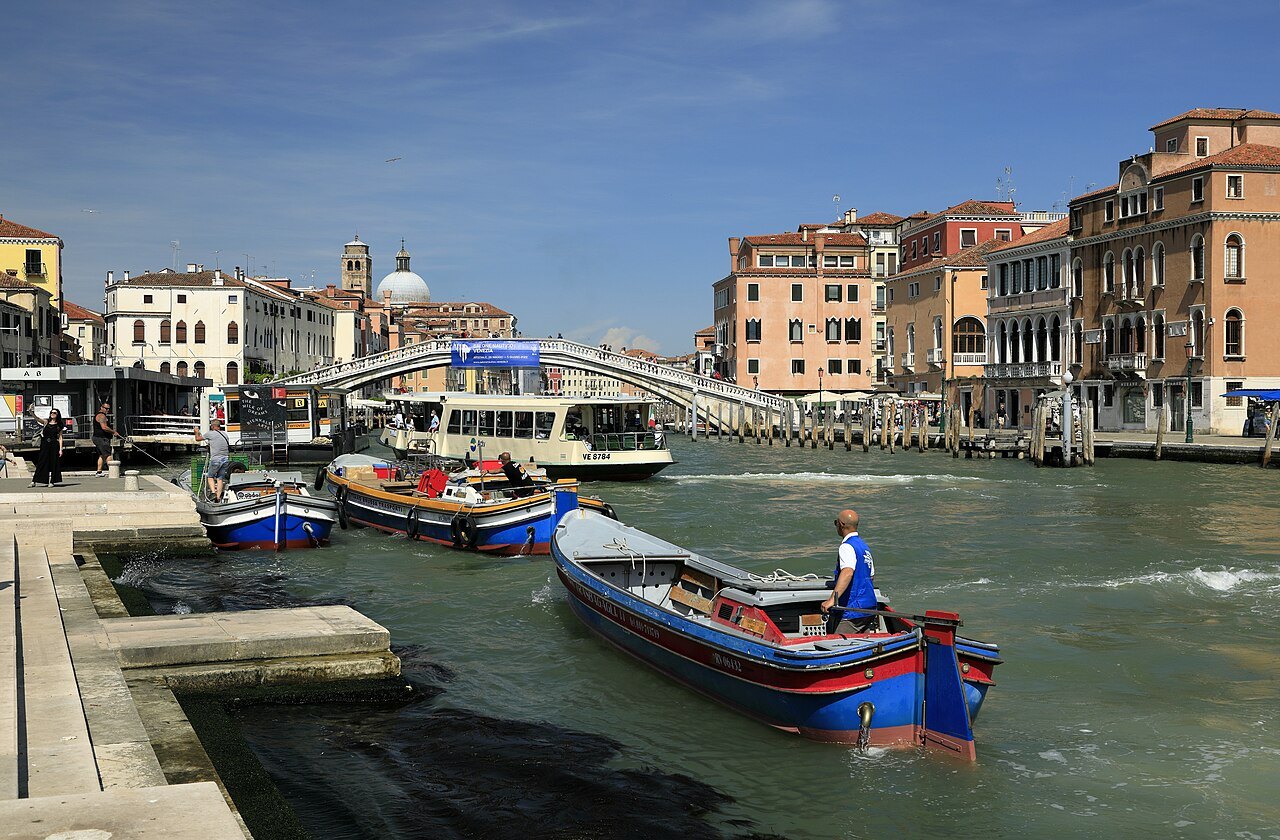
Tickets and cards are sold at the ACTV ticket offices and machines at the main landings, including those at the station and Piazzale Roma, at authorized shops and newsstands around the city, and online through Venezia Unica. Buying ahead saves a queue on arrival, when the offices at the station are busiest.
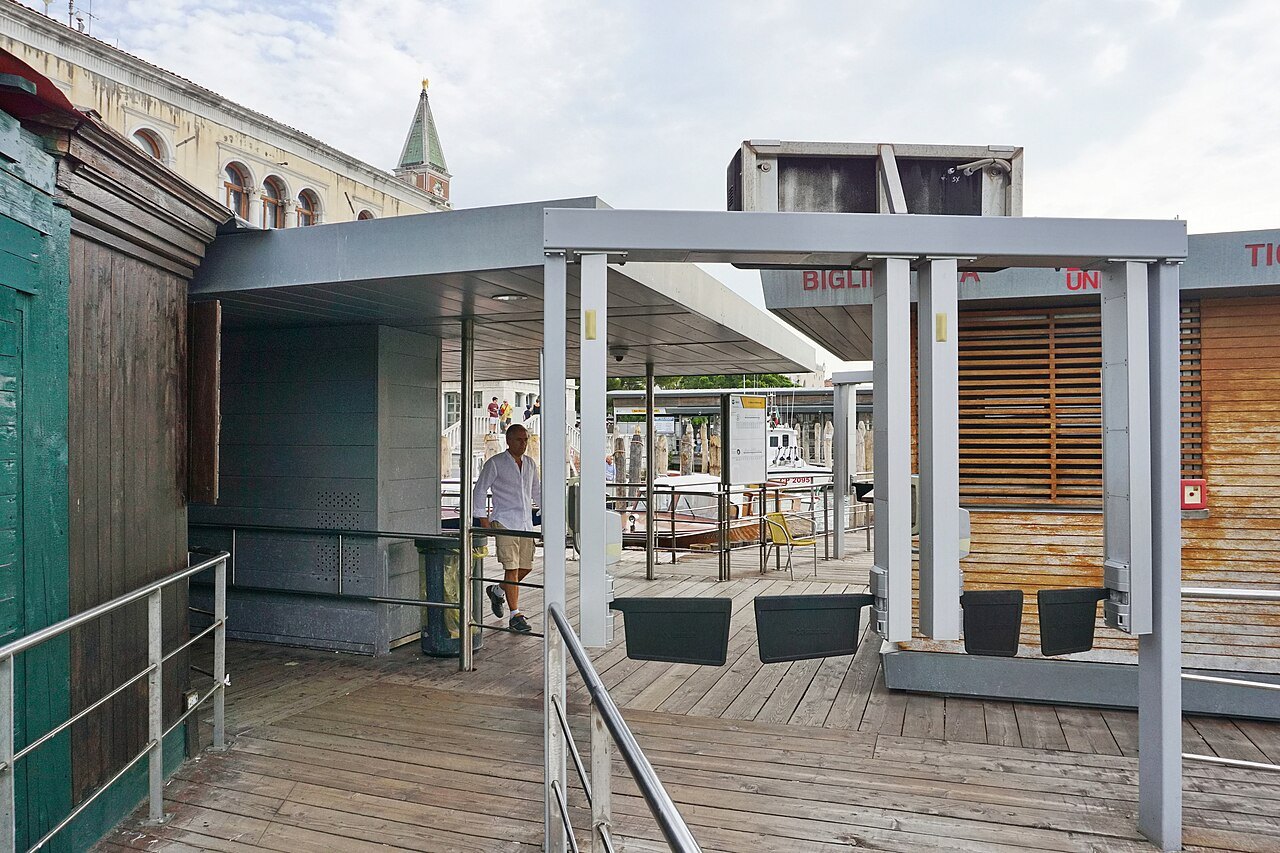
Before every boarding, including with a travel card, hold your ticket to the electronic reader at the landing. The reader is what shows the ticket is valid for this ride; a ticket or card that has not been tapped is treated as no ticket at all. Contactless bank cards can also be used to pay at the readers.
The lines a visitor uses
Line 1 is the slow boat of the Grand Canal. It starts at Piazzale Roma, calls at almost every landing along the canal, and continues past San Marco to the Lido. From the station to San Marco it can take up to forty-five minutes, which makes it the best tour of the canal there is and the worst way to get anywhere in a hurry (see the Grand Canal).
Line 2 is faster, with fewer stops on the Grand Canal, and some of its boats go round the other way by the Giudecca Canal, calling at San Giorgio Maggiore, which Line 1 does not, and at the Giudecca. Other lines circle the outer edge of the city, and those to the northern lagoon leave from Fondamente Nove on the north shore: to Murano, and on to Burano, with a shuttle from there to Torcello. Another line links Fondamente Nove with Murano, Vignole and Sant'Erasmo.
Line numbers and routes are revised from season to season, and some lines run only in summer. Check the current map and timetable on the ACTV site before you plan around a line, and on the islands, always check the time of the last boat back before you set out (see the lagoon).
Using the boats well
Each landing is a floating pontoon with its name and the lines that call there; the same name can have separate pontoons for each direction, so check the direction before the boat pulls in. Let people off before you board, keep bags and backpacks off your back in a crowded cabin, and move inside rather than blocking the gangway.
In the busiest months the Grand Canal boats fill up, above all Line 1 between the station and the Rialto. Walk the short distances, and keep the boats for the long ones, the islands and the evenings. And when you only need to cross the Grand Canal away from a bridge, look for a traghetto instead (see the traghetto).
Read nextIII
More from the journal
- Getting AroundOnly Four Bridges Cross the Grand Canal: Planning RoutesThe Grand Canal cuts Venice in two, and only four bridges cross it in nearly four kilometers. Where they are, why a map misleads, and how to plan walks, water-bus rides and traghetto crossings so the canal works for you rather than against you.Read the piece →
- Getting AroundThe Traghetto: Venice's Cheapest Gondola CrossingOnly four bridges cross the Grand Canal. Between them, a traghetto, a plain gondola rowed by two oarsmen, ferries foot passengers straight across. What it is, where the crossings are, how to ride one, and why it is worth knowing about.Read the piece →
- The LagoonMurano, Burano and Torcello in One Day: Order and TimingsThe three islands of the northern lagoon make one of the best days out of Venice, if you get the boats right. Which order to see them in, which boats to take, how long to allow on each, and why the last boat back decides the whole day.Read the piece →