THE CHURCH, THE PALA D'ORO, THE HORSES AND THE LOGGIAI
How do you visit St Mark's Basilica?
St Mark's is a working church with four separate visits, a line that crosses the Piazza on busy days, and a golden interior that rewards knowing where to look. How the visit is divided, how to book, when to go, and a route through the church, the Pala d'Oro and the loggia of the horses.
The answer in fullII
Read on
The short answer
Book an entry on the basilica's official site, go as early in the day as you can, and allow two hours if you want to see everything. The visit is divided into parts: the church itself, the Pala d'Oro behind the high altar, the museum with the loggia of the bronze horses, and the Campanile across the square, each with its own entry.
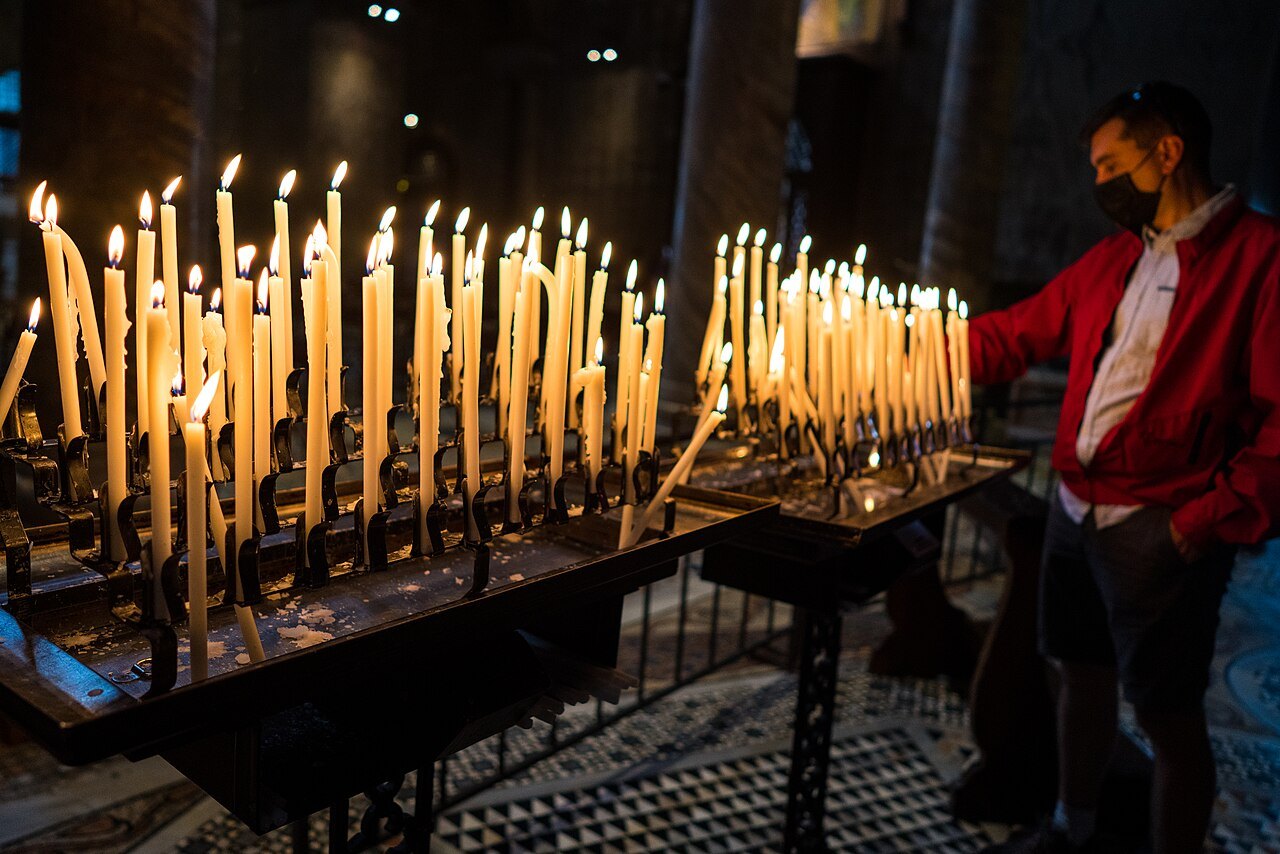
It is a working church, the cathedral of Venice, so services close parts of it and visitors are expected to dress and behave as they would in any church. The basilica's own site is the only reliable place for the hours on the day you go.
Why the line forms
St Mark's stands at the end of the busiest square in the city, and nearly every visitor to Venice wants to see it. On busy days the line for the church stretches across the Piazza, and it moves slowly.
An advance entry takes you past most of that. The basilica sells them on its official site, alongside tickets for the other parts of the visit and for evening visits, which open the church after the day's crowds have gone. Buy directly from the official site rather than through resellers.
Before you go in
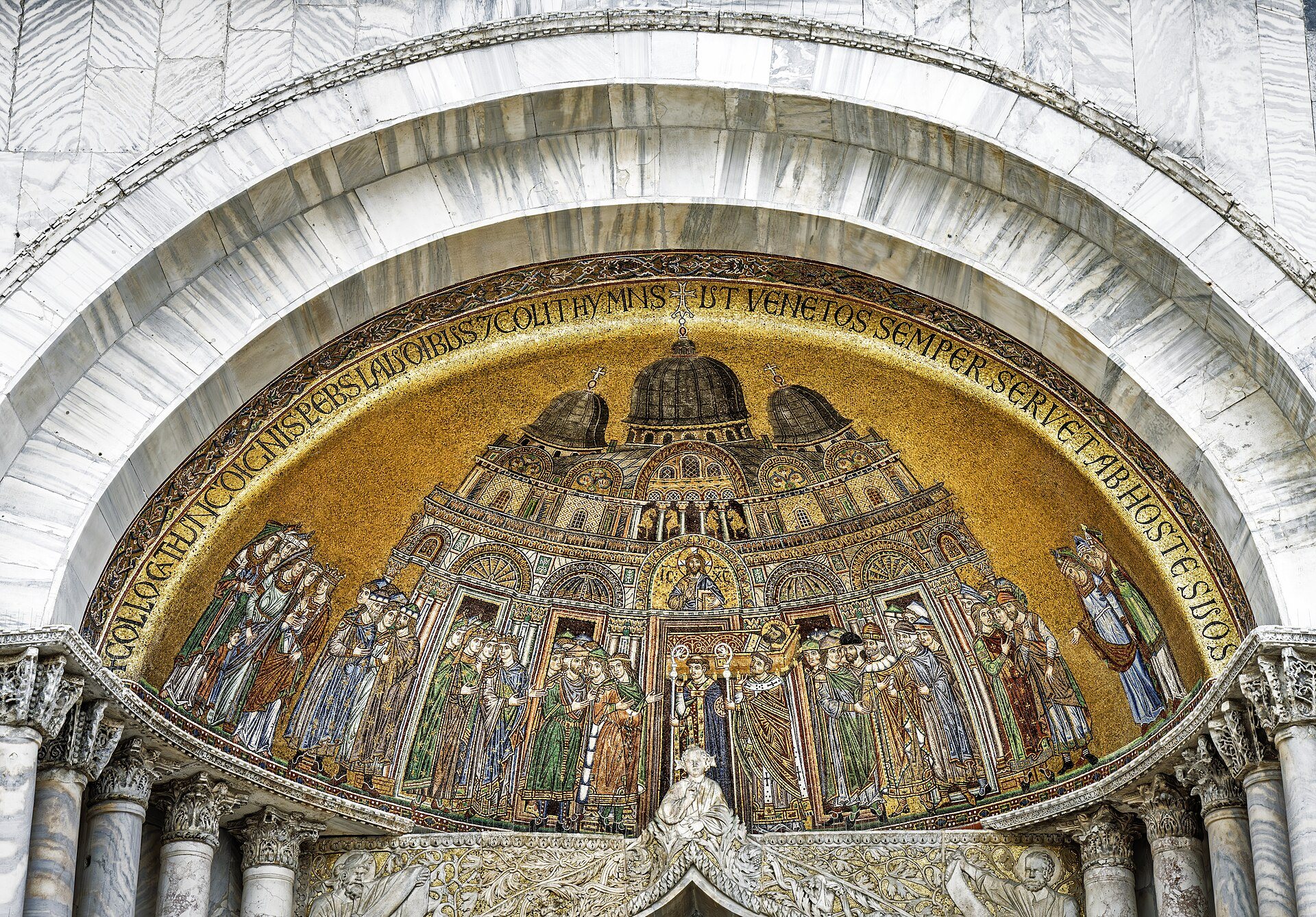
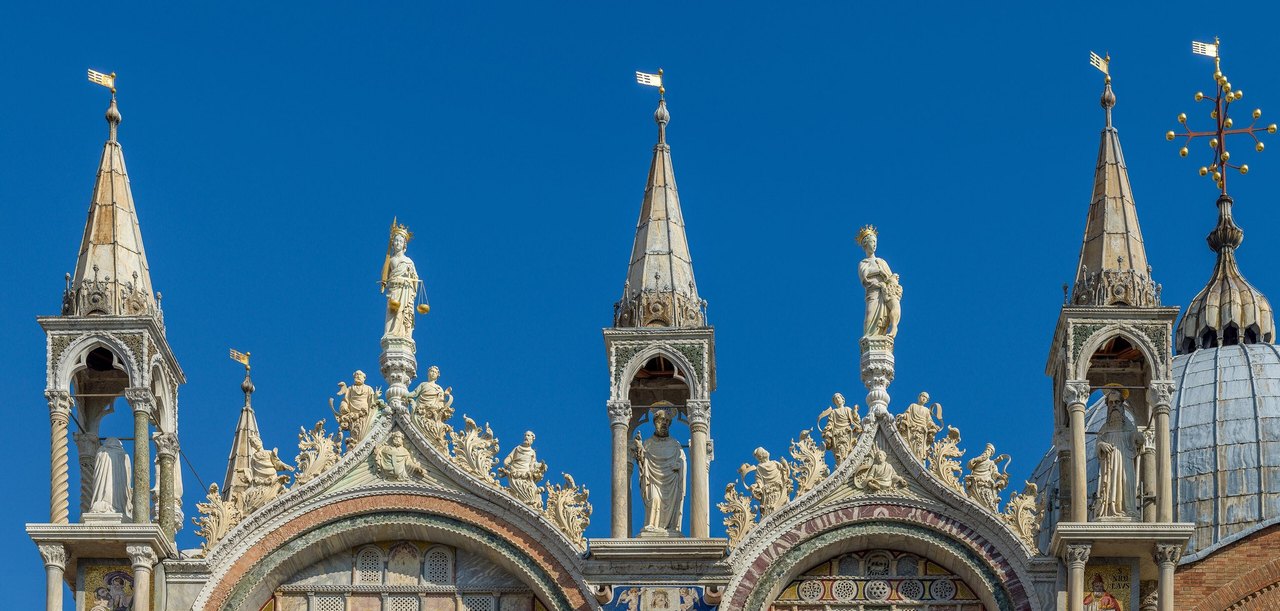
Look at the outside first, because it is half the building. The west front faces the whole length of the Piazza: five deep portals below, their piers covered with columns taken from Constantinople after 1204; mosaics in the arches above the doors telling how Saint Mark's body was brought from Alexandria, of which only the one on the far left survives from the thirteenth century; and a crown of Gothic pinnacles above, with the four bronze horses over the central door.
Then walk round to the south side, facing the Doge's Palace. It is the most richly encrusted of the facades, and set into its corner is the porphyry group of the Tetrarchs, four late Roman emperors embracing, another trophy of Constantinople.
Dress for a church, travel light, since the interior is crowded, and check the basilica's own rules on bags and photography before you go; follow the signs and the staff.
Inside: where to look
You enter through the narthex, the vaulted porch that runs across the front of the church. Stop here and look up: its mosaics tell the stories of Genesis and Exodus, from the Creation of the world to Moses, and they are among the finest in the building and the easiest to see up close.
Then the church opens up. Its plan is a Greek cross with five domes, modeled on the Church of the Holy Apostles in Constantinople, and its domes, vaults and upper walls are covered in mosaic on a gold ground, saints, prophets and the stories of the Bible, made and remade over some eight hundred years. The light is dim, because many windows were filled in to make room for mosaic, and the gold glows when the lamps are lit. Give your eyes a minute to adjust.
Ahead, a Gothic marble screen of 1394, with statues of the Virgin, Saint Mark and the Twelve Apostles, closes off the chancel. Behind it the high altar holds the relics of Saint Mark.
The Pala d'Oro
Behind the high altar stands the Pala d'Oro, the golden altarpiece, a screen of Byzantine enamels on gilded silver. It was ordered from Constantinople in 1102 and installed on the high altar in 1105, originally designed to hang in front of the altar rather than behind it. It has its own entry and its own short queue, and you see it from behind the altar, close enough to study the enamels one by one.
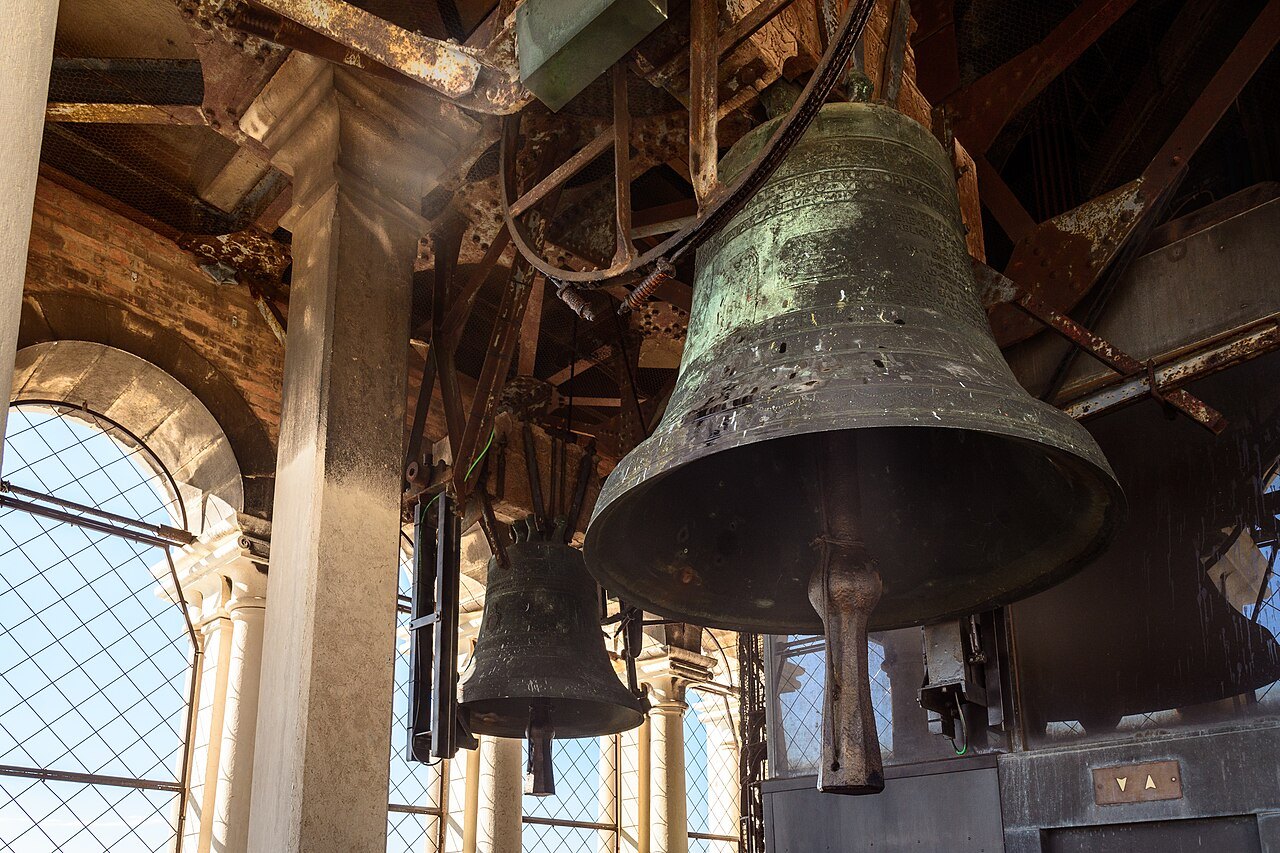
It is worth the extra ticket if you have any interest in Byzantine art; nothing else in Venice shows so clearly where the city's early taste came from.
The museum and the loggia
Upstairs are the museum and the Loggia dei Cavalli, the balcony over the central portal. The museum keeps the four original bronze horses, the only team of horses to survive from classical antiquity. They came from the Hippodrome of Constantinople after 1204, were carried off to Paris by Napoleon in 1797 and brought back in 1815, and since 1974 they have been kept indoors, with copies outside.
Then step out onto the loggia. You stand beside the copies, above the portal, with the whole Piazza below you, the Procuratie on either side and the Campanile ahead. From up here you also see the mosaics of the upper church and its galleries at close range. For many visitors it is the best view in the building.
The saint and the loot
Two stories are worth knowing as you walk round. The first is the body. Venetian chronicles tell how two merchants smuggled the relics of Saint Mark out of Alexandria in 828 or 829, and the church was built to hold them; the mosaics over the doors tell the tale. In 1968 a portion of the relics was returned to the Coptic Church of Alexandria as a gesture of goodwill.
The second is the splendor. Much of what you see, the horses, the Tetrarchs, many of the columns and panels and part of the treasury, came from the sack of Constantinople in the Fourth Crusade of 1204, and the Venetians displayed it as a trophy of their power. The church is a monument to faith and to plunder at once.
When to go, and what to pair it with
Go early. The first hour of the day is the quietest, and an early entry leaves the rest of the morning for the Doge's Palace next door. Together, the basilica, the palace and the Piazza were the religious and political heart of the Republic, and they take most of a morning.
In the high-water months, remember that the area around the basilica is the lowest in the city and the first to flood; on a day of high water, check the forecast and the basilica's notices before you set out (see acqua alta). And if you want to see the church as a church, go to a service. The basilica publishes the times of its liturgical services on its own site.
Read nextIII
More from the journal
- Getting HereHow do you get from Marco Polo Airport to Venice?Marco Polo Airport is on the mainland, across the lagoon from the island city. The three ways in, bus to Piazzale Roma, Alilaguna water bus across the lagoon, or water taxi, and how to choose between them by where you are staying and what you are carrying.Read the piece →
- When to ComeAcqua Alta in Venice: the Tide, the Sirens and the WalkwaysBetween autumn and spring, exceptional tides flood the lowest parts of Venice. What causes the acqua alta, how the levels are measured, what the sirens mean, where the raised walkways go, what the MOSE barriers changed, and how to plan a day around a high tide.Read the piece →
- Getting AroundOnly Four Bridges Cross the Grand Canal: Planning RoutesThe Grand Canal cuts Venice in two, and only four bridges cross it in nearly four kilometers. Where they are, why a map misleads, and how to plan walks, water-bus rides and traghetto crossings so the canal works for you rather than against you.Read the piece →