A GONDOLA FERRY ACROSS THE GRAND CANALI
The Traghetto: Venice's Cheapest Gondola Crossing
Only four bridges cross the Grand Canal. Between them, a traghetto, a plain gondola rowed by two oarsmen, ferries foot passengers straight across. What it is, where the crossings are, how to ride one, and why it is worth knowing about.
The answer in fullII
Read on
The short answer
A traghetto, Italian for a ferry, is a gondola that carries foot passengers straight across the Grand Canal at a fixed point where there is no bridge nearby. It is rowed by two oarsmen, the crossing takes a couple of minutes, and the fare is paid to the oarsman on the spot. It is the only kind of gondola still in everyday use by Venetians themselves, and much the cheapest way to ride in one.
It is also unpredictable. Only a handful of crossings survive, and their hours vary with the season, the day and the number of gondoliers available. Treat a traghetto as a welcome shortcut when it is running, not as a crossing to plan a day around.
Some links on this page are affiliate links. If you book through one we may earn a commission, at no extra cost to you. It does not affect what is recommended here, and no sight page on this site carries one.
Somewhere to leave a suitcase between check-out and a late train.
Why the city needs it
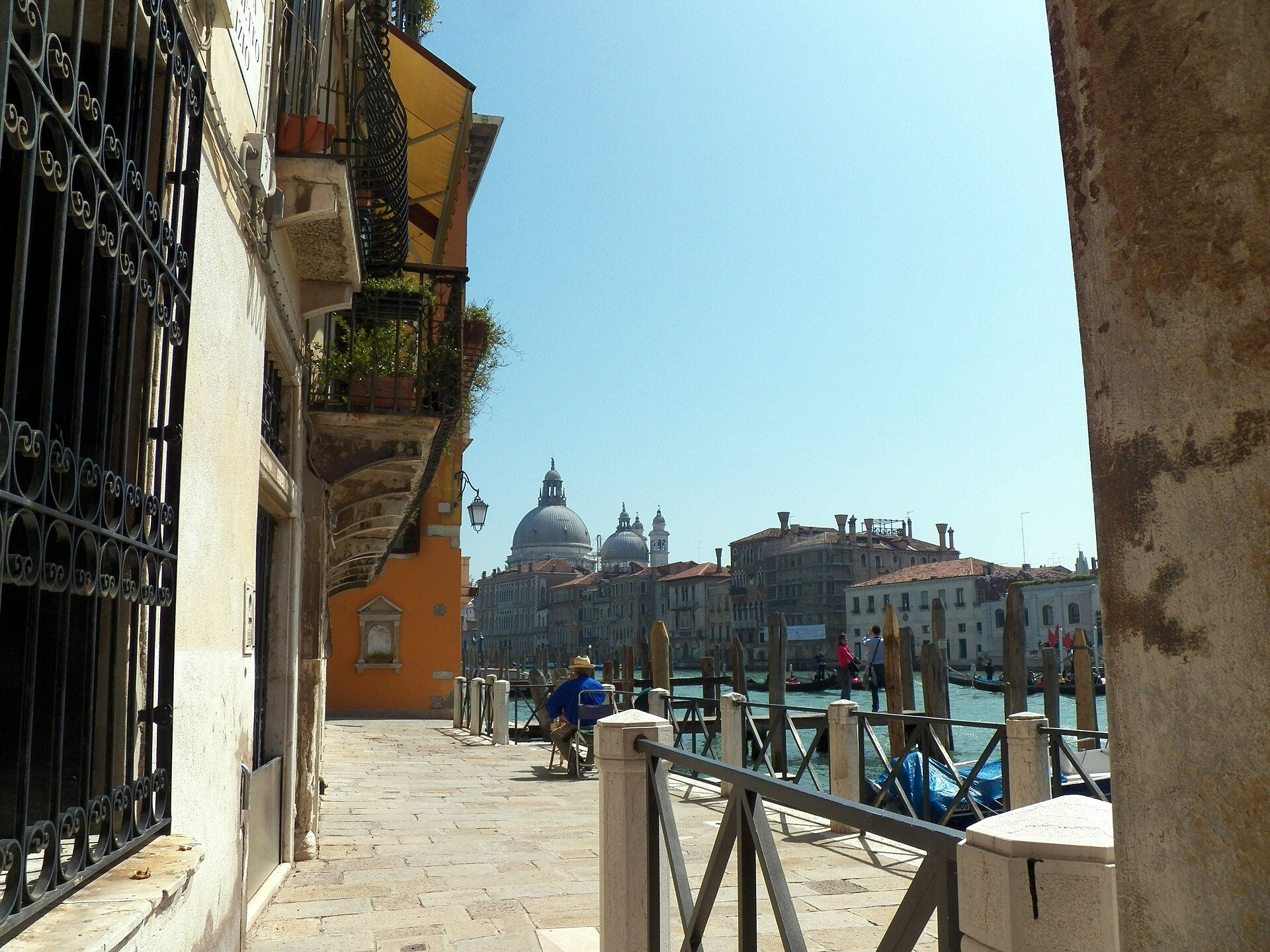
The Grand Canal runs through the middle of Venice in a reverse S nearly four kilometers long, and only four bridges cross it: the Ponte della Costituzione by the station, the Ponte degli Scalzi, the Rialto and the Accademia. Between them lie long stretches of canal with no crossing at all, so that two points facing each other across the water can be a long walk apart.
For centuries the gondola filled that gap. The traghetti are the survivors of a system of ferry points once spread all along the canal: as recently as the 1950s there were some thirty routes, and today there are just over half a dozen official ones (see planning routes across the canal).
The boat and the oarsmen
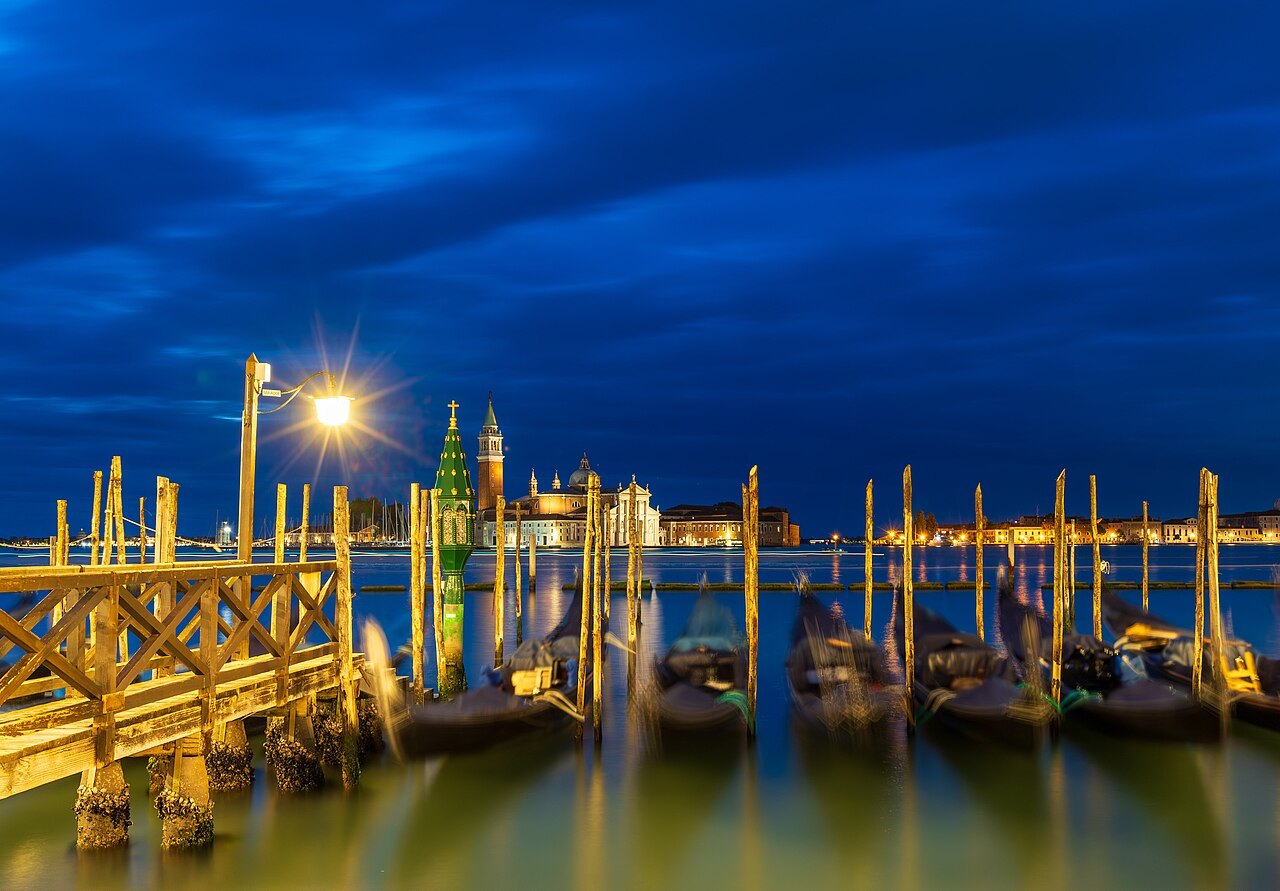
A traghetto is a working gondola, plainer than the ones that carry visitors on rides, with none of their velvet and brass. Two oarsmen row it, one standing at the stern like any gondolier and the other nearer the bow, and they row it back and forth across the canal through the day while the station is working.
The gondoliers belong to the same profession that rows the tourist gondolas. There are about four hundred licensed gondoliers in the city, trained and examined by their guild on Venetian history and landmarks, languages and the handling of the boat, and a traghetto crossing, with a crowded boat nosing through the traffic of the Grand Canal, shows that skill as well as any ride.
The boat itself
Every gondola, traghetto or not, is built for the lagoon: flat-bottomed, up to eleven meters long and deliberately asymmetrical along its length, so that a single oar worked from one side drives it straight. The oar is never fastened to the hull. It rests in the fórcola, a carved wooden oarlock whose curves let the gondolier row forward, turn, slow down, stop and go backward. Contrary to a popular belief, a gondola is never poled like a punt; the water of the canals is too deep.
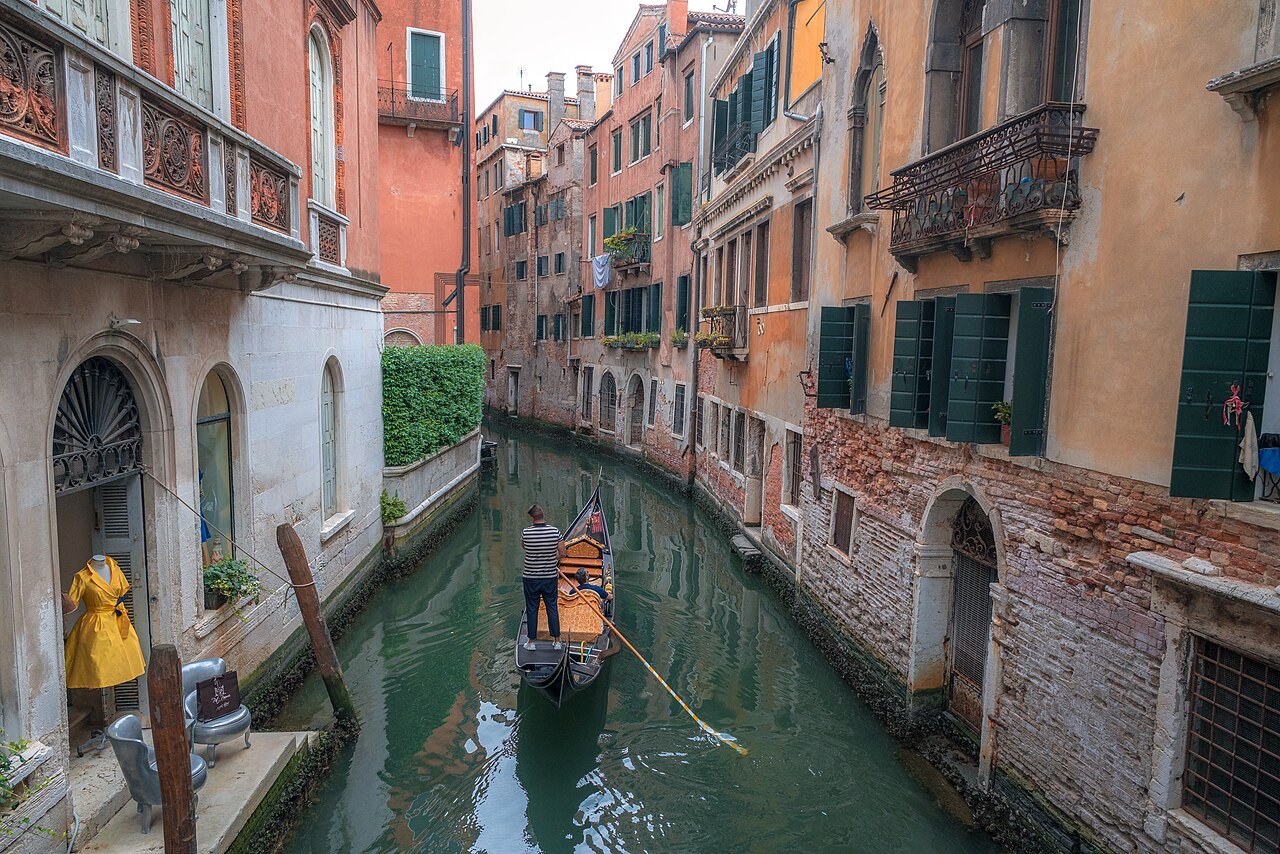
Watch the oarsmen on a crossing and you see all of that at work in a few strokes, as they angle the boat across the current and the wakes of the water buses and bring it neatly alongside the far landing.
Where the crossings are
The crossings most often running link Santa Sofia, by the Ca' d'Oro in Cannaregio, with the Rialto market on the other bank; San Tomà in San Polo, near the Frari, with the San Marco side; Santa Maria del Giglio, near the western end of San Marco, with the Salute side of Dorsoduro; and the Riva del Carbon, near the Rialto, with the opposite bank. There is also a crossing at the Dogana, at the mouth of the canal.
Which of them is working on a given day is another matter. Stations close when demand is low, in winter and on quiet days, or when there are not enough gondoliers, and they can reopen later. Look for the word traghetto on a sign at the water's edge. If the boat is not there and no one is waiting, it may not be running.
How to ride one
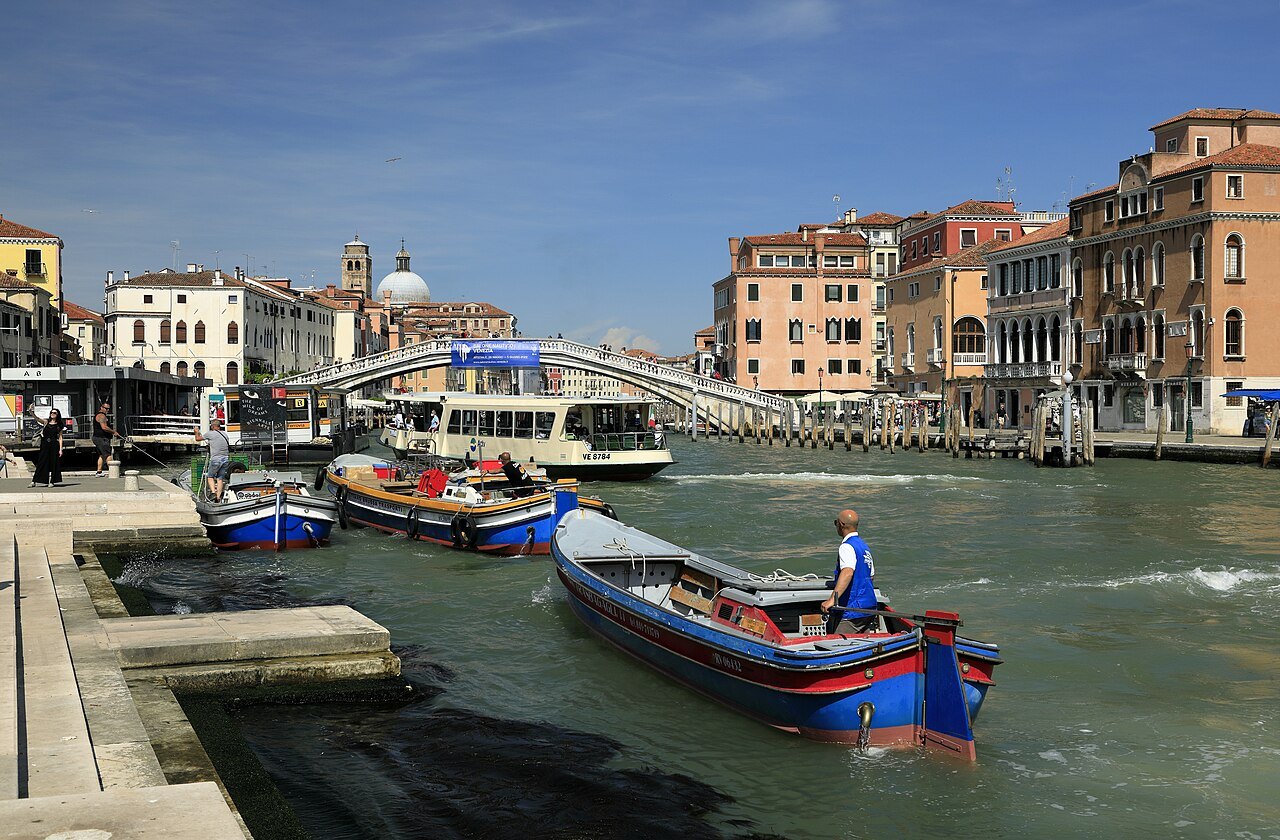
Walk down to the landing and wait for the boat to come across. When the oarsman signals, step aboard carefully; the gondola moves under your feet. Venetians traditionally stand for the crossing, riding the boat's motion with their knees; visitors usually sit on a seat or perch on the side, and nobody minds. Hold on to children and bags, and keep your weight low if you are not sure of your balance.
Pay the oarsman in cash as you board or as you step off. The fare is set, not negotiated, and far lower than a gondola ride; the city's travel cards for the water bus do not cover it. There is no ticket, no machine and no queue beyond the people on the landing.
When the traghetti run, they generally do so from early morning into the evening, somewhat later in summer, but hours are unpredictable. On a day of high water or rough conditions the crossing may not run at all.
Using it well
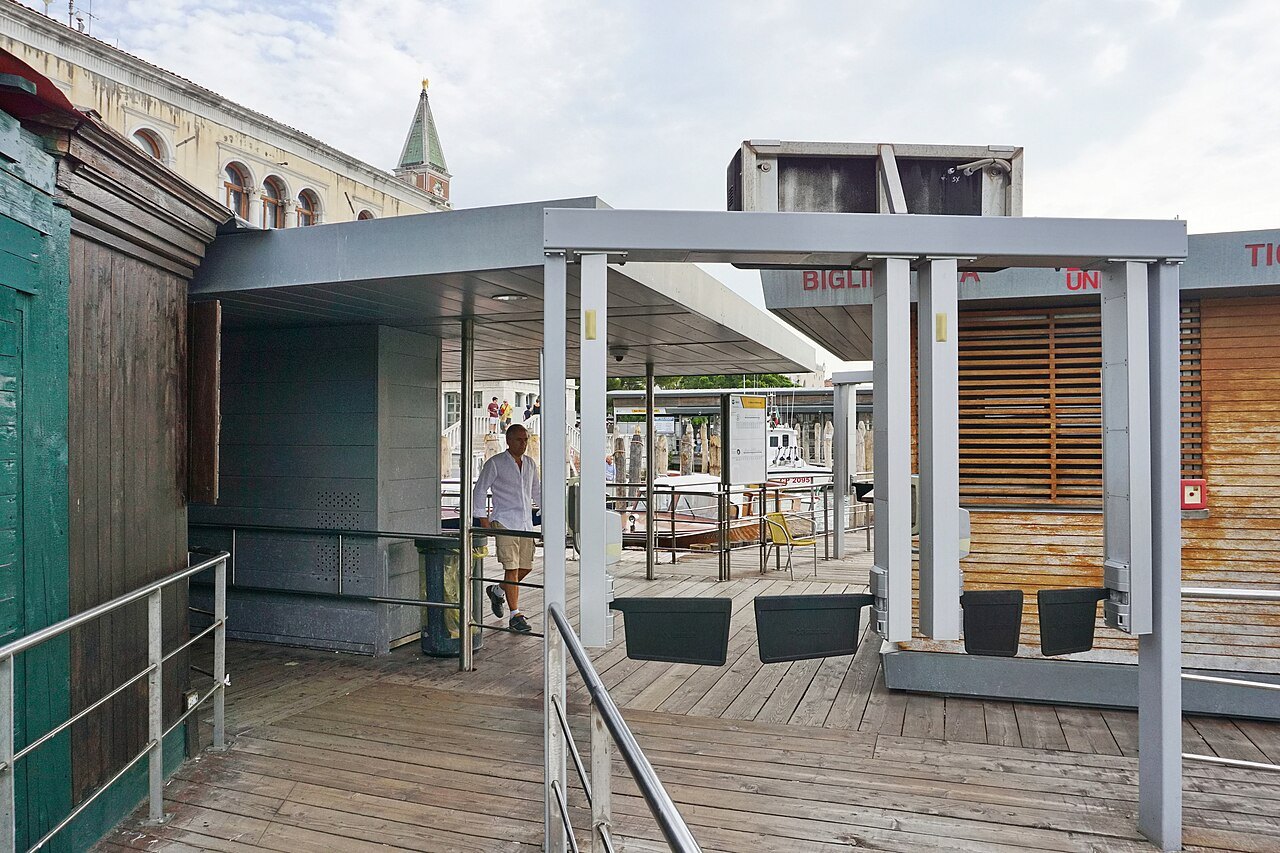
The traghetto is most useful where the bridges are farthest apart. Santa Sofia takes you from the Strada Nuova in Cannaregio straight to the Rialto market, with the Ca' d'Oro a few steps from the landing; San Tomà links the Frari and San Rocco with the San Marco side; Santa Maria del Giglio puts the Salute a short crossing from the hotels of western San Marco.
It is also, quietly, one of the best views in Venice: the Grand Canal seen from its own surface, at the height of the water, with the palaces rising on either side. For a couple of minutes you are in a gondola doing what gondolas were built for.
Traghetto, gondola, water bus
Do not confuse the three. A gondola ride is a private hire at a rate agreed before you step in, for a trip through the canals at the pace they were built for. The water bus is the public transport network, with numbered lines, landings and travel cards (see getting around). The traghetto is neither: a public crossing in a gondola, paid ride by ride, doing one short job.
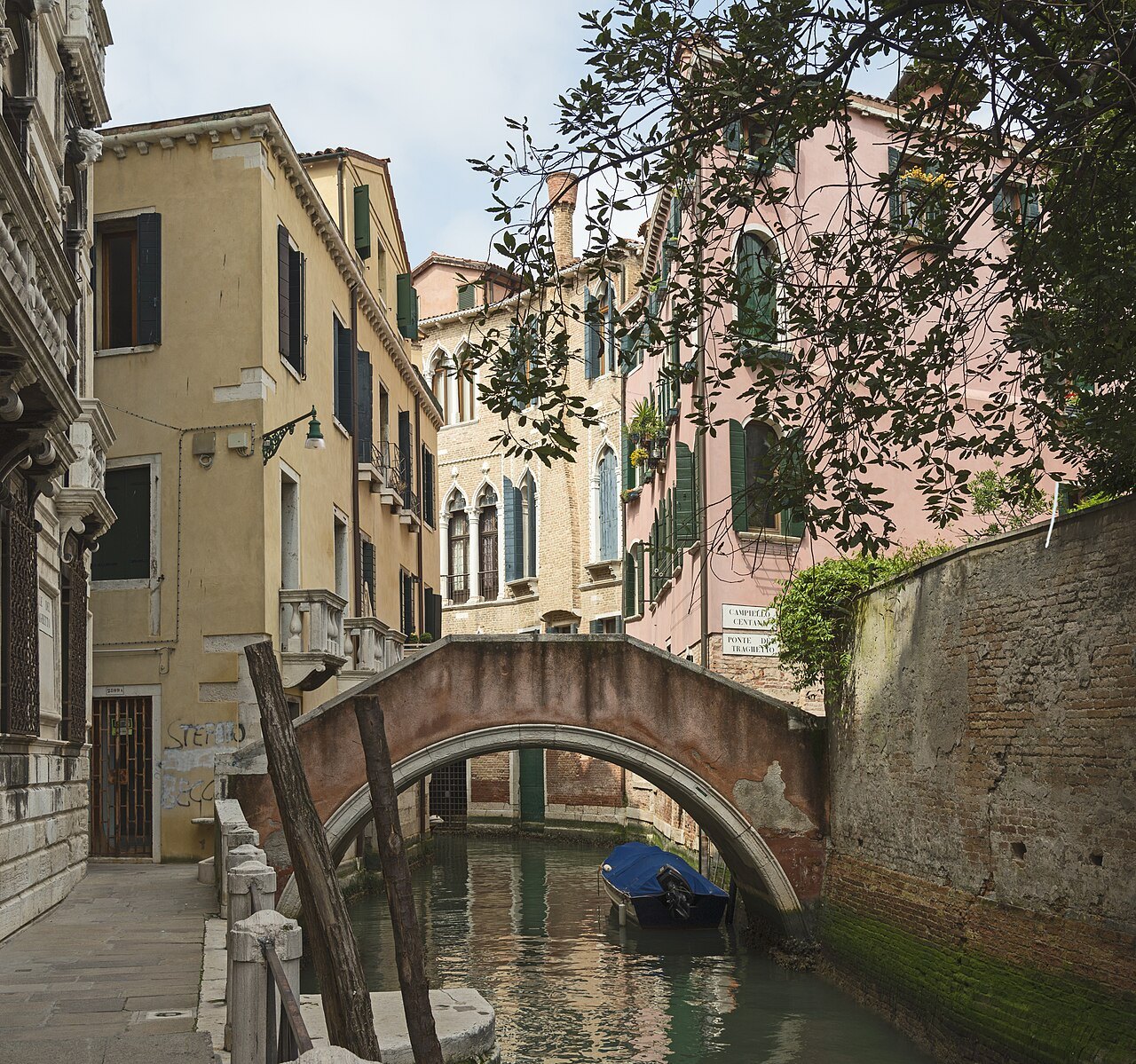
None of them has anything to do with the day-visitor access fee, which is a separate charge for entering the historic center on its busiest days.
Read nextIII
More from the journal
- Getting AroundOnly Four Bridges Cross the Grand Canal: Planning RoutesThe Grand Canal cuts Venice in two, and only four bridges cross it in nearly four kilometers. Where they are, why a map misleads, and how to plan walks, water-bus rides and traghetto crossings so the canal works for you rather than against you.Read the piece →
- Getting AroundHow the Vaporetto Works: Tickets, Passes and LinesThe vaporetto is Venice's bus: numbered lines run by ACTV along the Grand Canal, around the city and out to the islands. How single tickets and time-based travel cards work, how to decide between them, how to validate, and which lines a visitor actually uses.Read the piece →
- When to ComeAcqua Alta in Venice: the Tide, the Sirens and the WalkwaysBetween autumn and spring, exceptional tides flood the lowest parts of Venice. What causes the acqua alta, how the levels are measured, what the sirens mean, where the raised walkways go, what the MOSE barriers changed, and how to plan a day around a high tide.Read the piece →