What you are looking atI
Burano
The lagoon
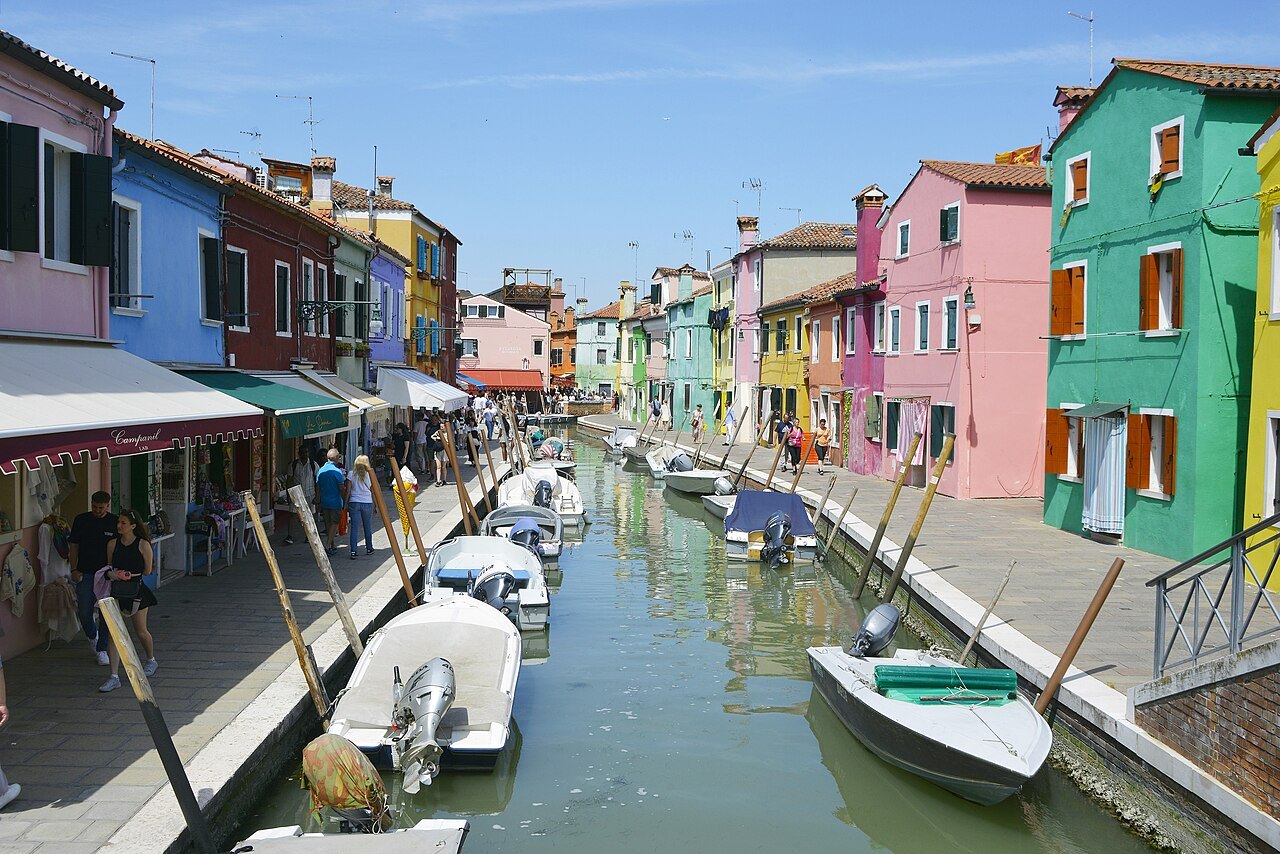
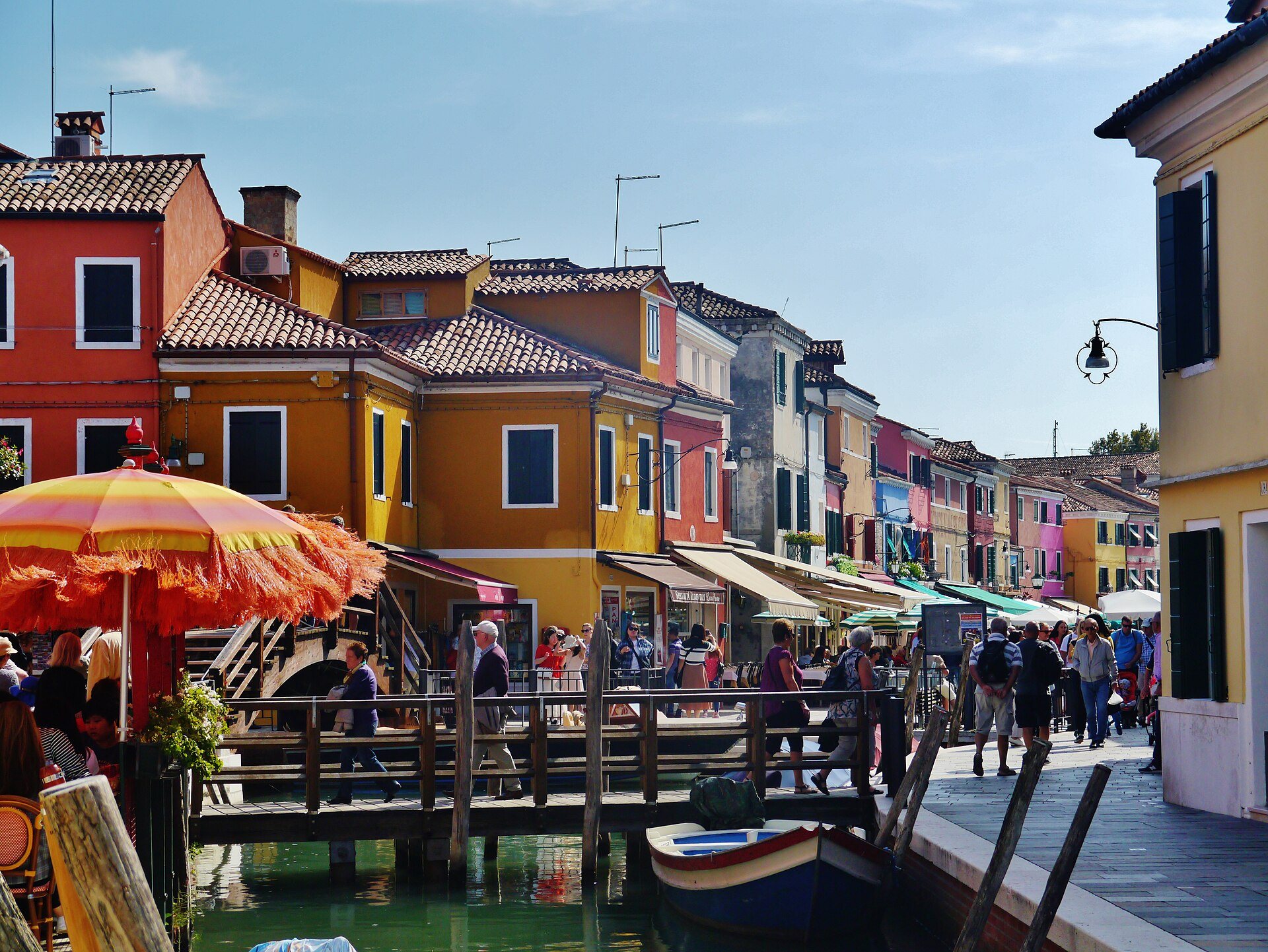
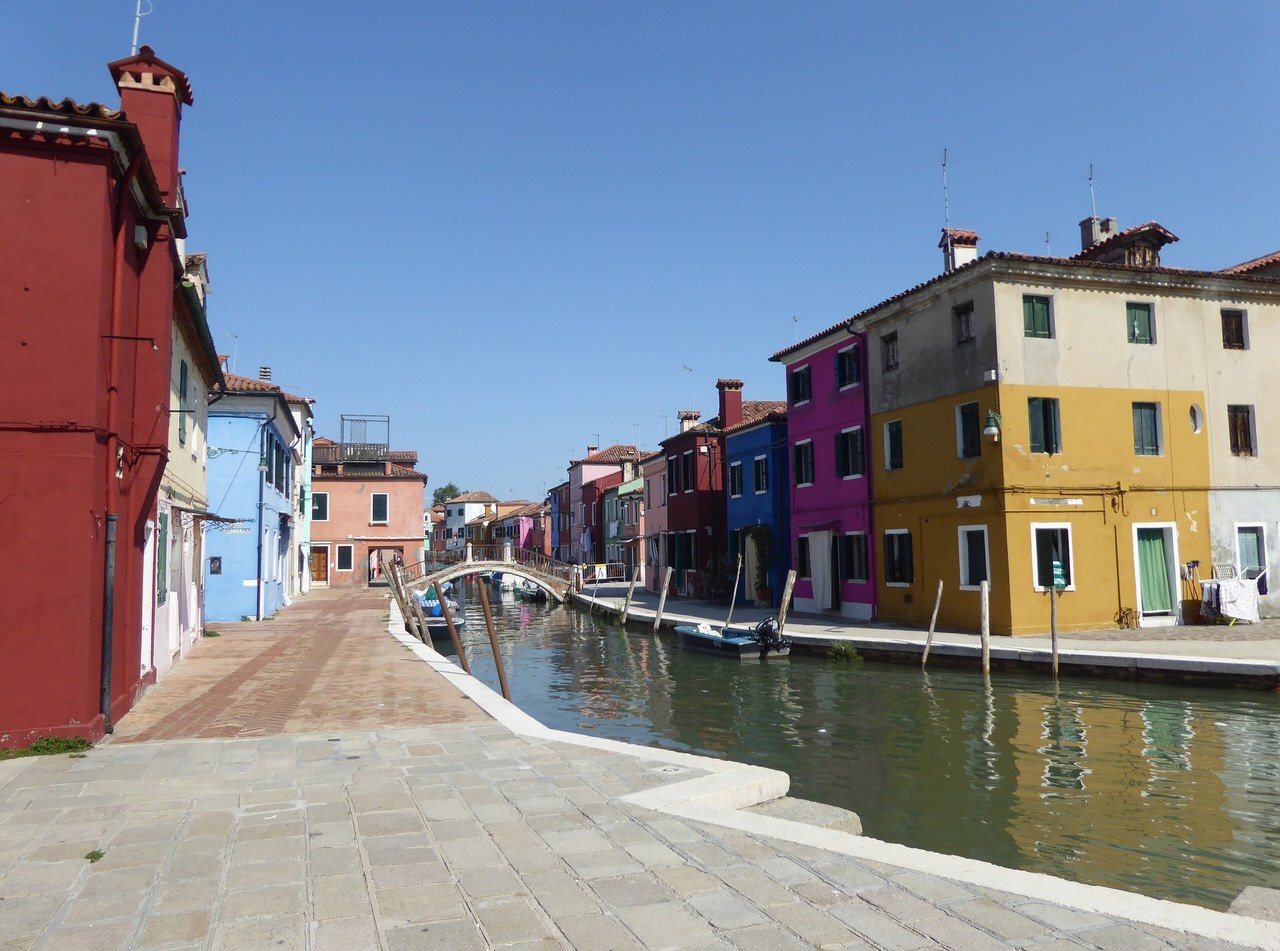
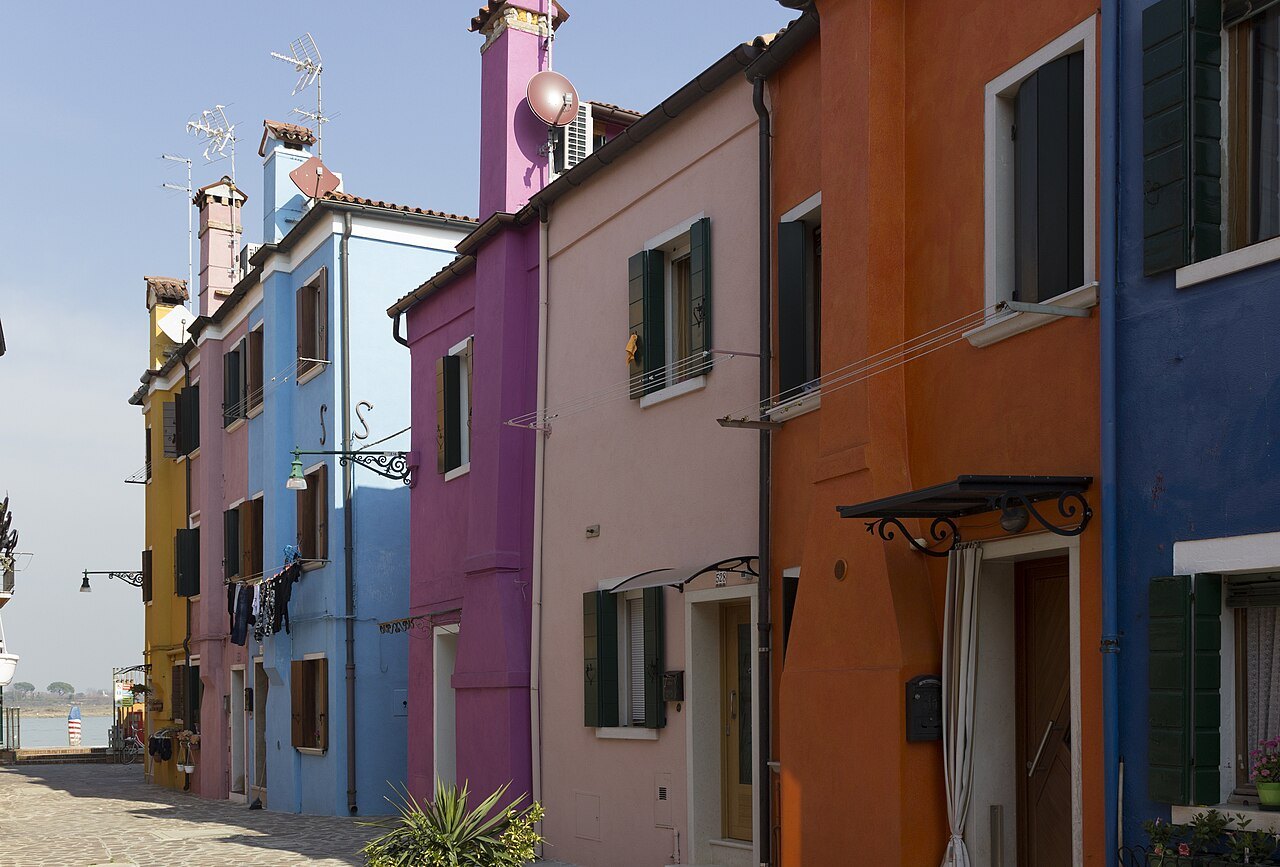
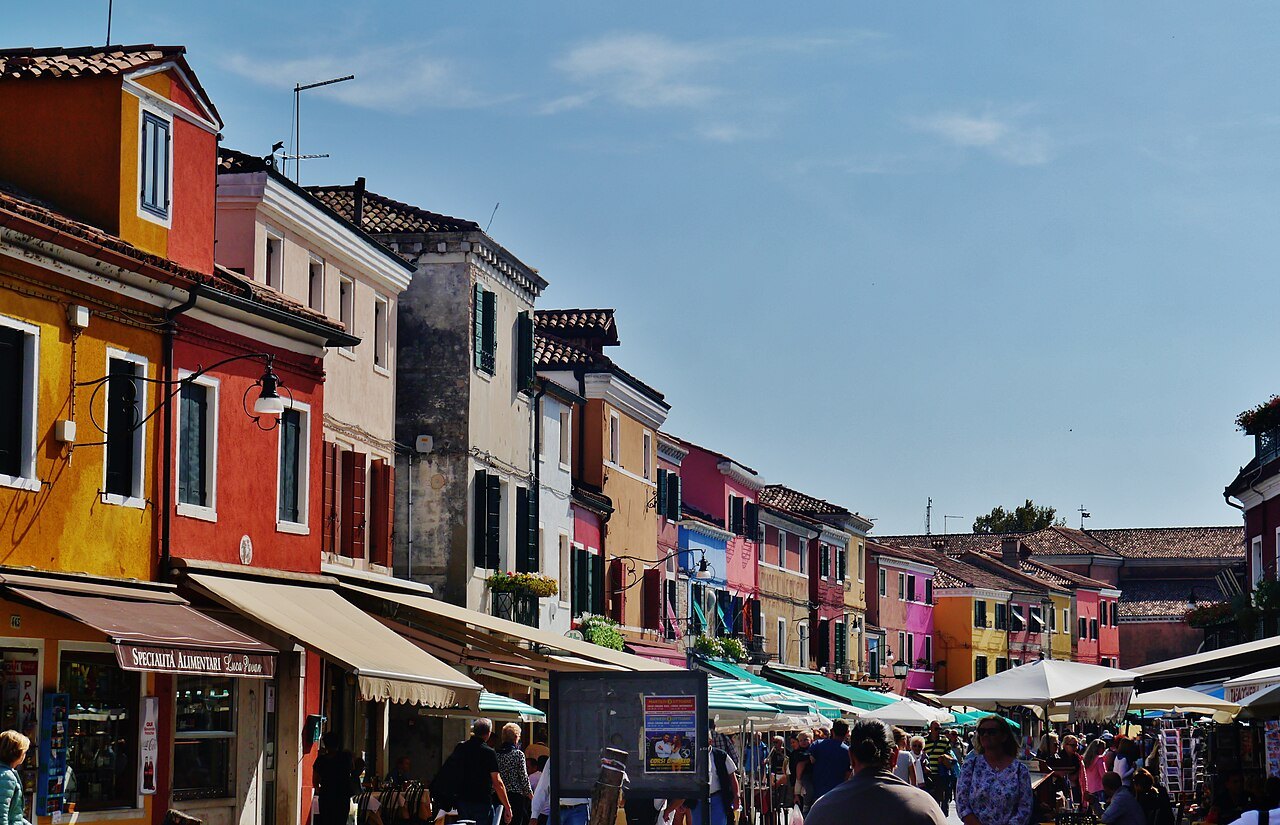
- 1The painted housesSmall houses in strong reds, blues, greens and yellows, painted to a system of permitted colors.
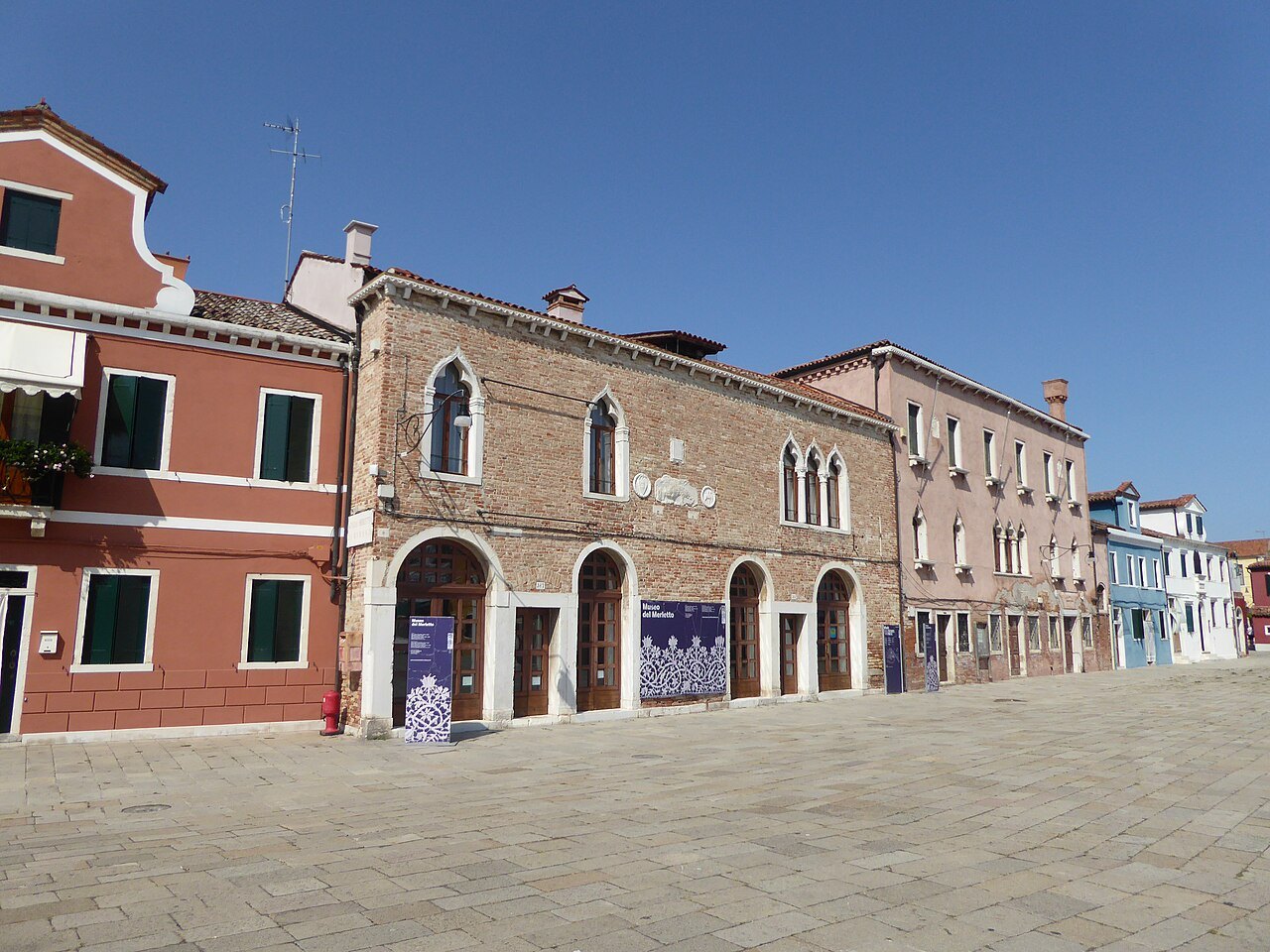
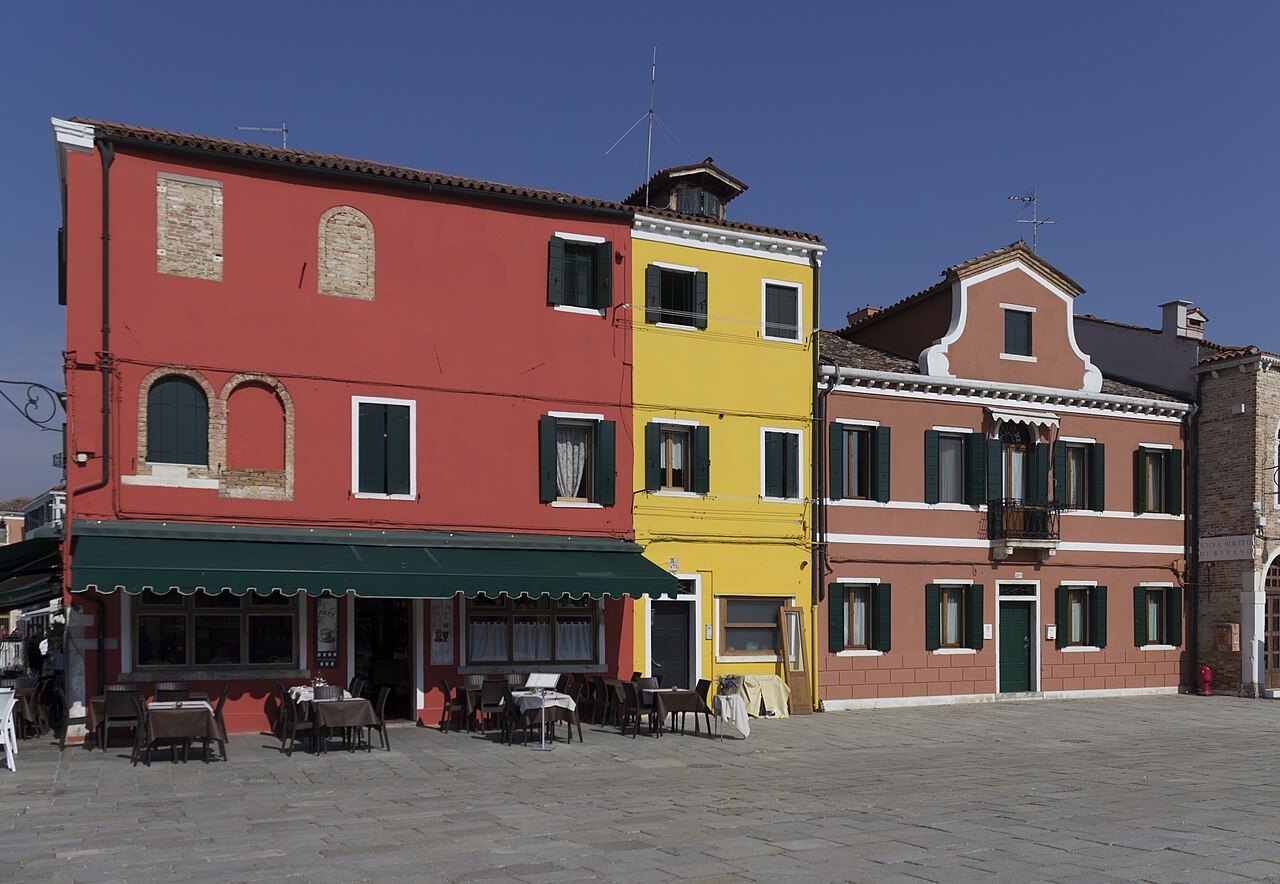
- 2Piazza GaluppiThe only square on the island, with the town hall, the Lace Museum and a wellhead of Istrian stone.
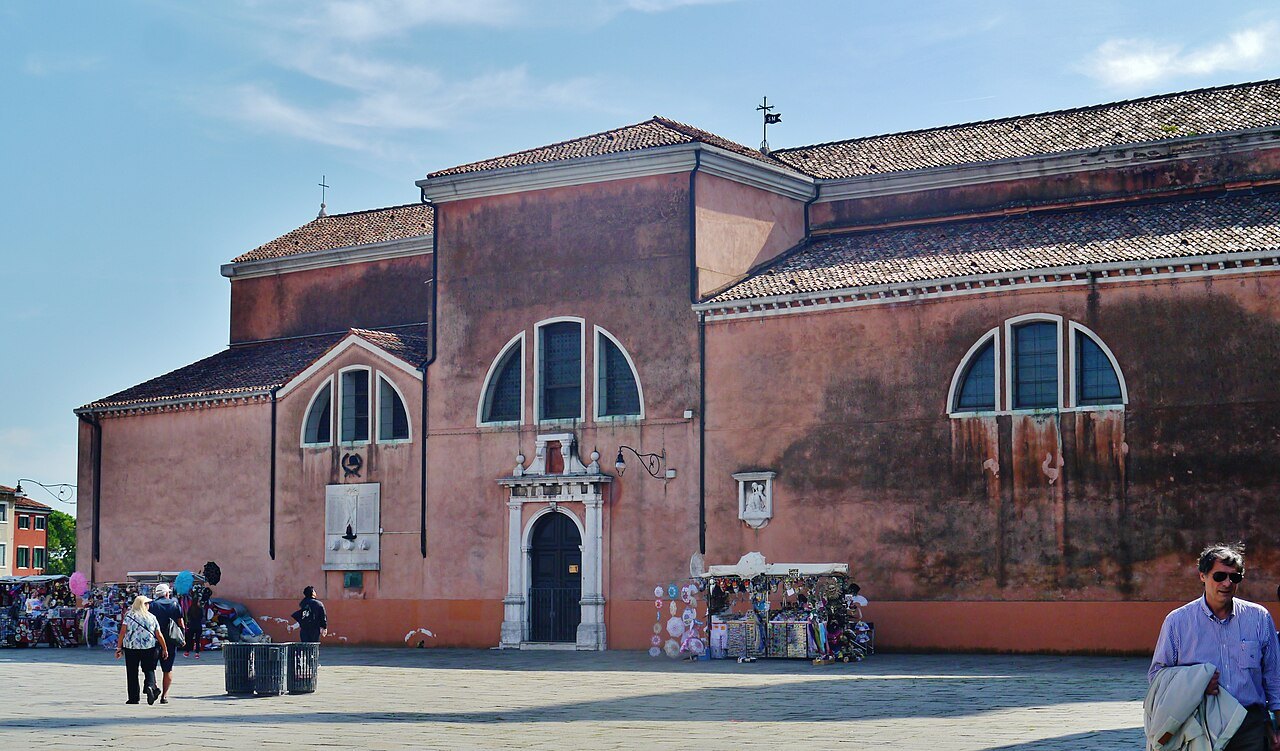
- 3San MartinoThe parish church with a leaning bell tower and a Crucifixion by Giambattista Tiepolo.
- 4The Lace MuseumThe museum and old school of lacemaking on the square, founded when the craft was revived.
- 5The canalsNarrow canals lined with moored boats and quays, the fondamente where life goes on outside.
- 6MazzorboThe quiet neighboring island joined to Burano by a footbridge.
The sight in fullII
Reading the place
Why it matters
Burano lies near Torcello at the northern end of the Venetian Lagoon, about seven kilometers, four miles, from Venice. It was once five small islands, and one of the canals between them was filled in to make the island's main street and square; a footbridge joins it to its neighbor Mazzorbo, which counted as its sixth district. Around 2,800 people live here, packed more densely than almost anywhere in the lagoon, in a village almost entirely covered by houses.
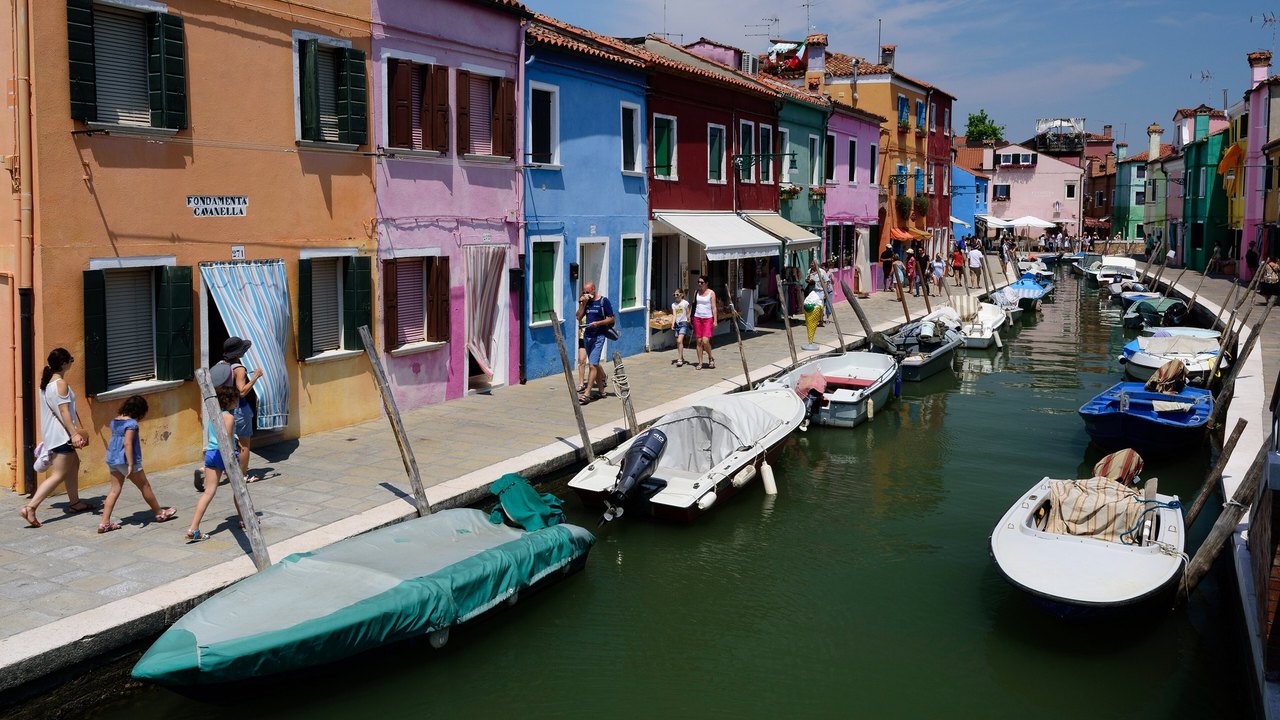
It is known for two things, its lace and its colors. The small houses along its canals are painted in strong, clear colors, and the island has been called one of the most colorful places in the world. For a visitor it is the easiest escape from the crowds and stone of San Marco: a fishing village on the water, with washing hung across the lanes and boats moored at every door.
A village of fishermen and lacemakers
Burano grew into a thriving settlement early, but it was governed from Torcello and never had the privileges of Torcello or of Murano. It rose in importance only in the sixteenth century, when its women began making lace with the needle, a craft that seems to have reached the island through Cyprus, then ruled by Venice. Cyprus had its own lace tradition in the village of Lefkara, where Leonardo da Vinci is said to have bought a cloth for the high altar of Milan Cathedral in 1481.
Burano lace was soon exported all over Europe. The trade declined in the eighteenth century and nearly died, until a school of lacemaking was opened in 1872 and the craft revived. Few people now make lace in the traditional way, because true needle lace takes so long to make that it is very expensive.
The island's best-known son is the composer Baldassare Galuppi, born here in 1706, whose name the main square now carries. The sculptor Remigio Barbaro, born in 1911, made the statue of him that stands in it. The singer-songwriter Pino Donaggio, born in 1941, is another Buranello.
Why the houses are painted
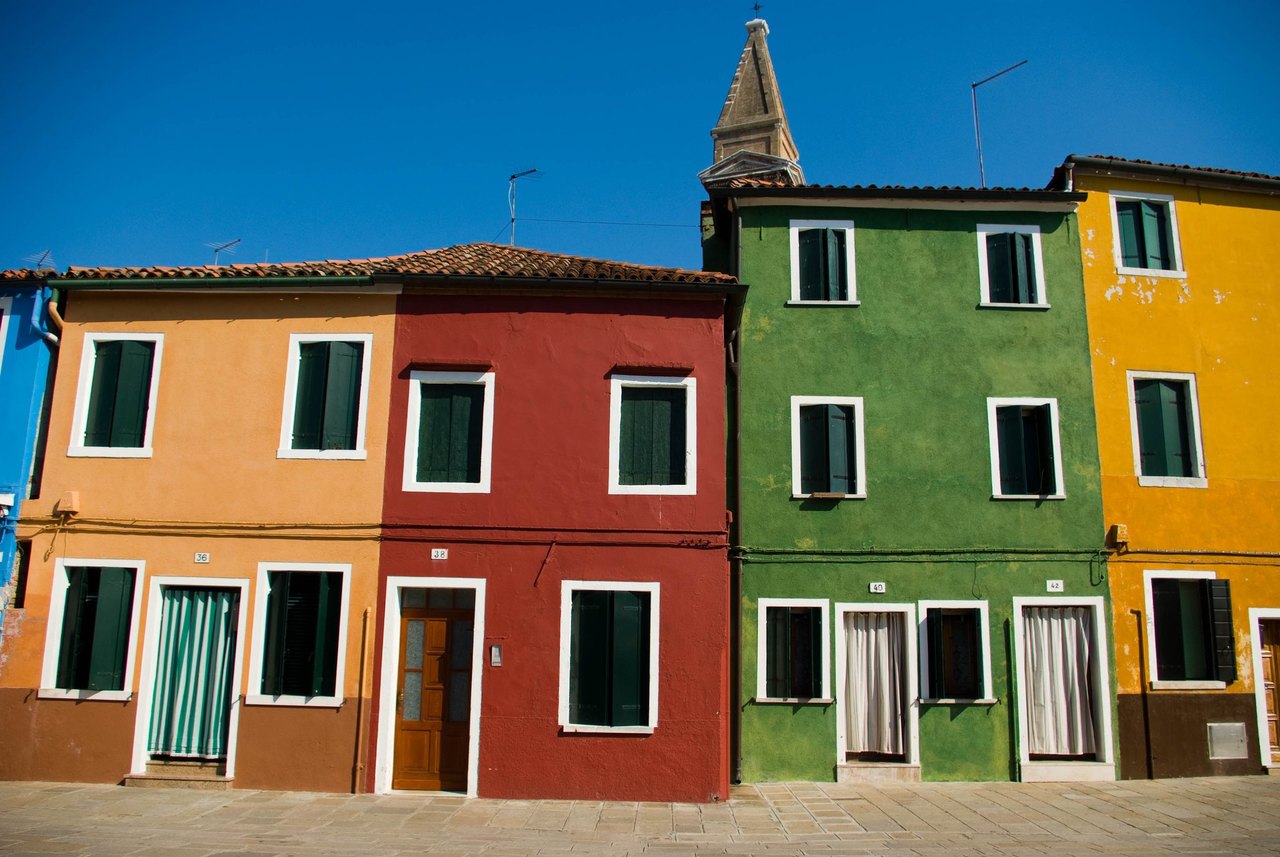
The colors are not a free-for-all. They follow a system that goes back to the island's golden age, and a resident who wants to repaint a house must ask the local government, which replies with the colors permitted for that particular lot. The result is a village where every house differs from its neighbors and the whole still hangs together.
Walk the fondamenta along the canals and the side lanes behind them. The houses are small and plain in shape, and the canals are narrow enough that a painted house is reflected whole in the water.
The island in its lagoon
Burano is one of the smallest inhabited islands of the lagoon, a fifth of a square kilometer, and its bigger neighbors are almost empty by comparison: Mazzorbo, across the footbridge, is more than twice its size with a fraction of its people. Burano packs in more than 13,000 people to the square kilometer, over twenty times the density of Mazzorbo, and like Venice it is divided into sestieri of its own, five of them, one for each of the islands it was built on.
Around it lies the northern lagoon, the least built-up part of the whole bay. The Venetian Lagoon covers about 550 square kilometers, and only about eight percent of it is land; most of the rest is mud flats, tidal shallows and salt marshes, the barene, crossed by dredged channels marked with posts. The ride out to Burano crosses exactly that landscape, and it is part of the reason to come (see the lagoon).
What you see
From the landing, follow the canal to the Piazza Baldassare Galuppi, the only square on the island, laid over the filled canal. Around it stand the town hall, a well made entirely of Istrian stone, Barbaro's statue of Galuppi and the Lace Museum, which occupies the old school of lacemaking and shows the island's lace and how it was made.
At the end of the square rises the church of San Martino, with its bell tower leaning visibly out of true, visible from all over the island and far out across the lagoon. Inside hangs a Crucifixion painted by Giambattista Tiepolo in 1727. Nearby is the little Oratorio di Santa Barbara.
Cross the footbridge to Mazzorbo, which is much quieter, for a view back over Burano's colored houses from across the water.
How to visit
Burano is part of the city's water-bus network. The most direct line runs from Fondamente Nove on the north shore of Venice by way of Murano; another comes from San Zaccaria by San Marco by way of the Lido; and a shuttle runs across to Torcello. A night service also operates. The trip takes about three quarters of an hour from San Marco.
Allow at least two hours on the island, or combine it with Murano and Torcello for a full day in the northern lagoon (see itineraries). Check the times of the last boats back before you set out.
The island is a lived-in village, not a museum. The washing on the lines is someone's, the doors open onto people's homes, and the fondamenta are their front steps; photograph the colors without walking into anyone's doorway.
Burano's own dish is risotto di gò, made with the broth of the goby fish of the lagoon, and it is the thing to order here (see eating and drinking).
Where to go nextIII
Nearby
- Nearby · The lagoonTorcelloThe island from which Venice was peopled: first settled in 452, a cathedral town before St Mark's was built, and now a handful of residents, a green island of salt marsh and orchards, and a basilica with one of the great Byzantine mosaics of the Last Judgement.Read the page →
- Nearby · The lagoonMuranoSeven small islands linked by bridges about a mile north of Venice, where the Republic sent its glassmakers in 1291: furnaces still working along the canals, a glass museum in a Gothic palace, and a Byzantine basilica with a floor of twelfth-century mosaic.Read the page →
- Nearby · CannaregioThe GhettoInstituted on 29 March 1516, the enclosed quarter where the Republic made the Jews of Venice live, and the place that gave the world the word ghetto: tall houses round a wide campo, five historic synagogues and a living community.Read the page →