A COLLECTOR AND HER PALACEI
How did Peggy Guggenheim build her collection of modern art?
How Peggy Guggenheim assembled her modern art collection and brought it to live with her in Venice.
The answer in fullII
Read on
The collector
Peggy Guggenheim was a niece of the mining magnate Solomon R. Guggenheim, founder of the Guggenheim museum, and for a time she was married to the painter Max Ernst. Her family name tied her to great wealth, but the collection that bears her own name was built through her own eye and her own money, piece by piece across two continents.
She bought most of her collection between 1938 and 1946, first in Europe in rapid succession as the Second World War began, and then in the United States, where she championed young American painters and helped launch Jackson Pollock, assembling in less than a decade the body of work that still forms the heart of the museum today.
She did not buy pictures to invest or to hide them away. The paintings and sculptures she acquired hung in the rooms where she actually lived, and visitors to the museum today still walk through a private home rather than a conventional gallery, with the same domestic scale she knew.
Settling in Venice
In 1949 she bought the Palazzo Venier dei Leoni in Dorsoduro and moved to Venice, bringing with her the paintings and sculptures she had spent a decade assembling. From 1951 she opened her home, its garden and the collection to the public during the summer months, while individual works continued to travel to exhibitions elsewhere in Europe and in America.
In 1976 she gave the palace, with some three hundred works, to the Solomon R. Guggenheim Foundation. She died in 1979, and the foundation reopened the collection as a museum in April 1980; since 1985 it has welcomed visitors throughout the year rather than only in the summer months as before.
Philip Rylands ran the museum for thirty-seven years after her death. In 2017 her granddaughter Karole Vail, until then a curator at the foundation's flagship museum, succeeded him as director, continuing a personal connection between the family name and the rooms where the art still hangs.
Visitor numbers have grown steadily; by 2007 they had reached three hundred and fifty thousand a year, making the collection, by most counts, the most visited art museum in Venice and, after the Doge's Palace, the most visited site in the city. Plan ahead, as described in Booking Ahead, especially before a visit at a busy time of year.
An unfinished palace
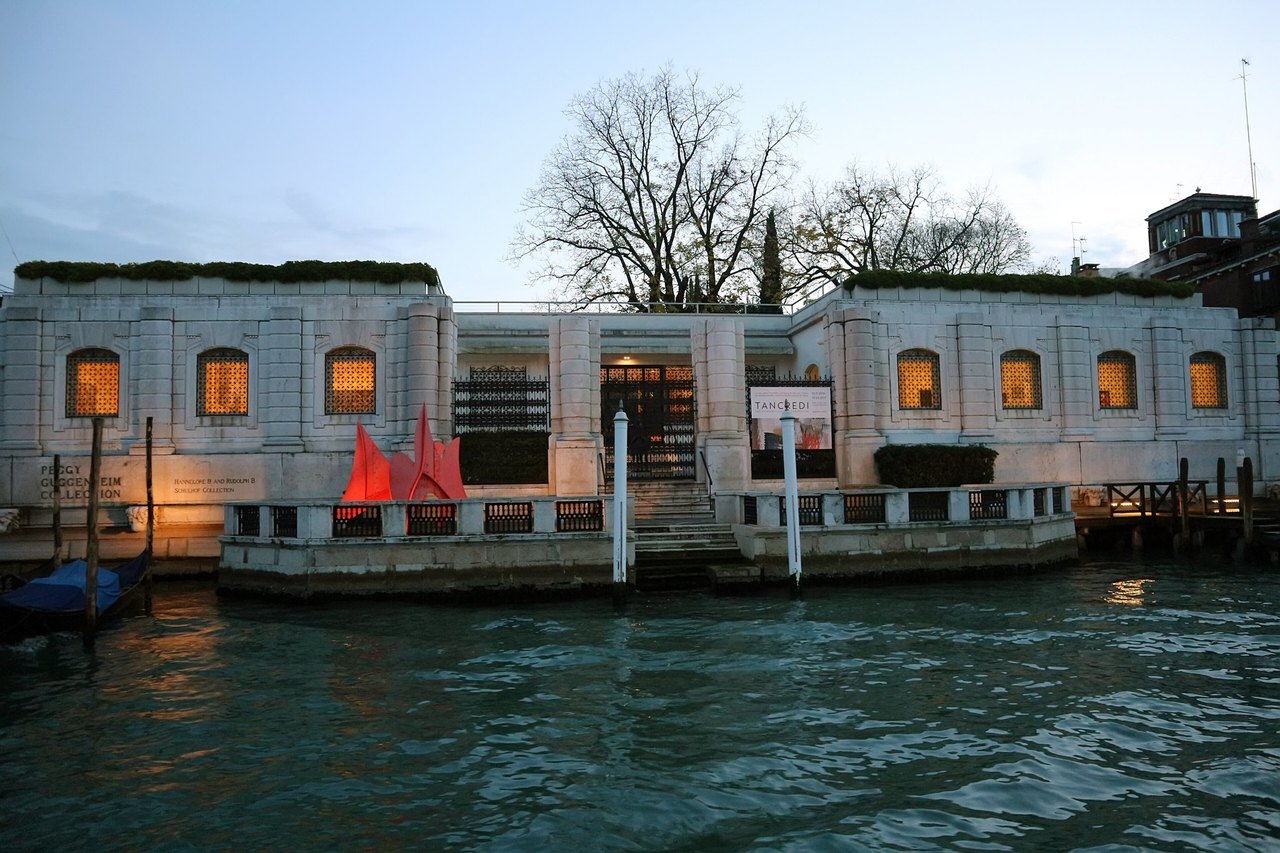
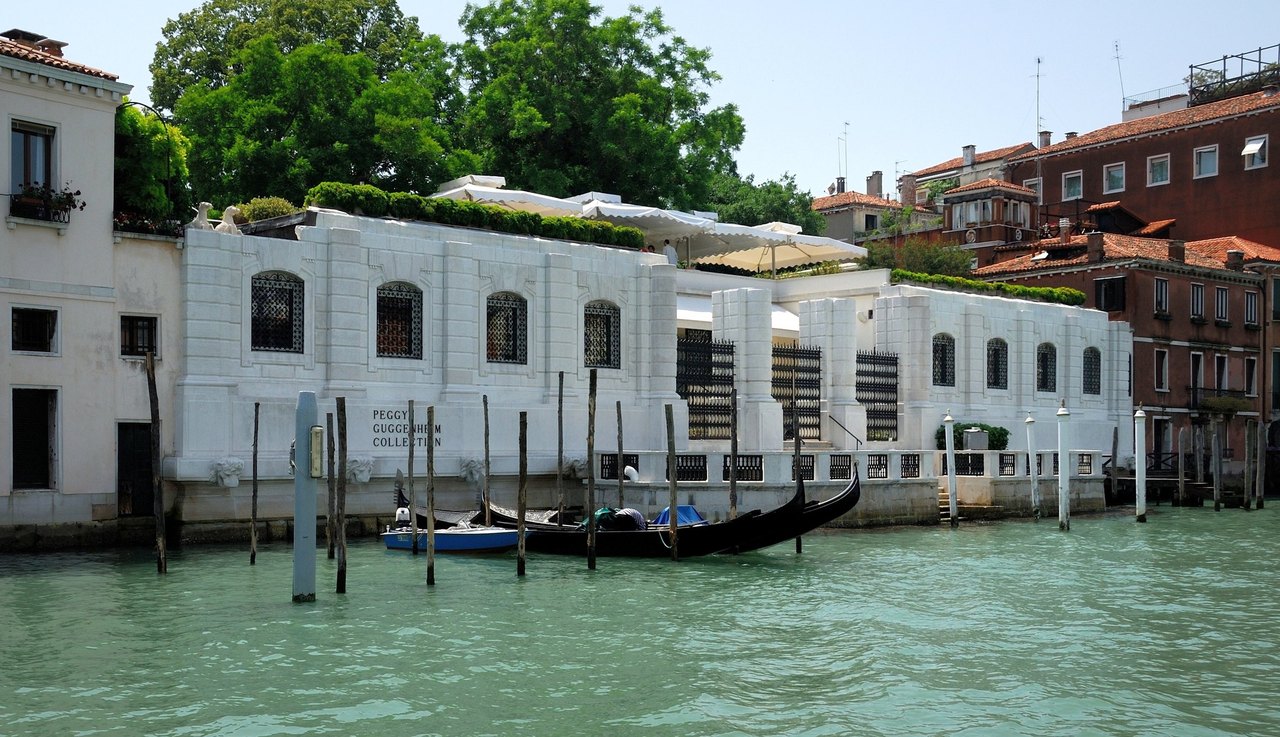
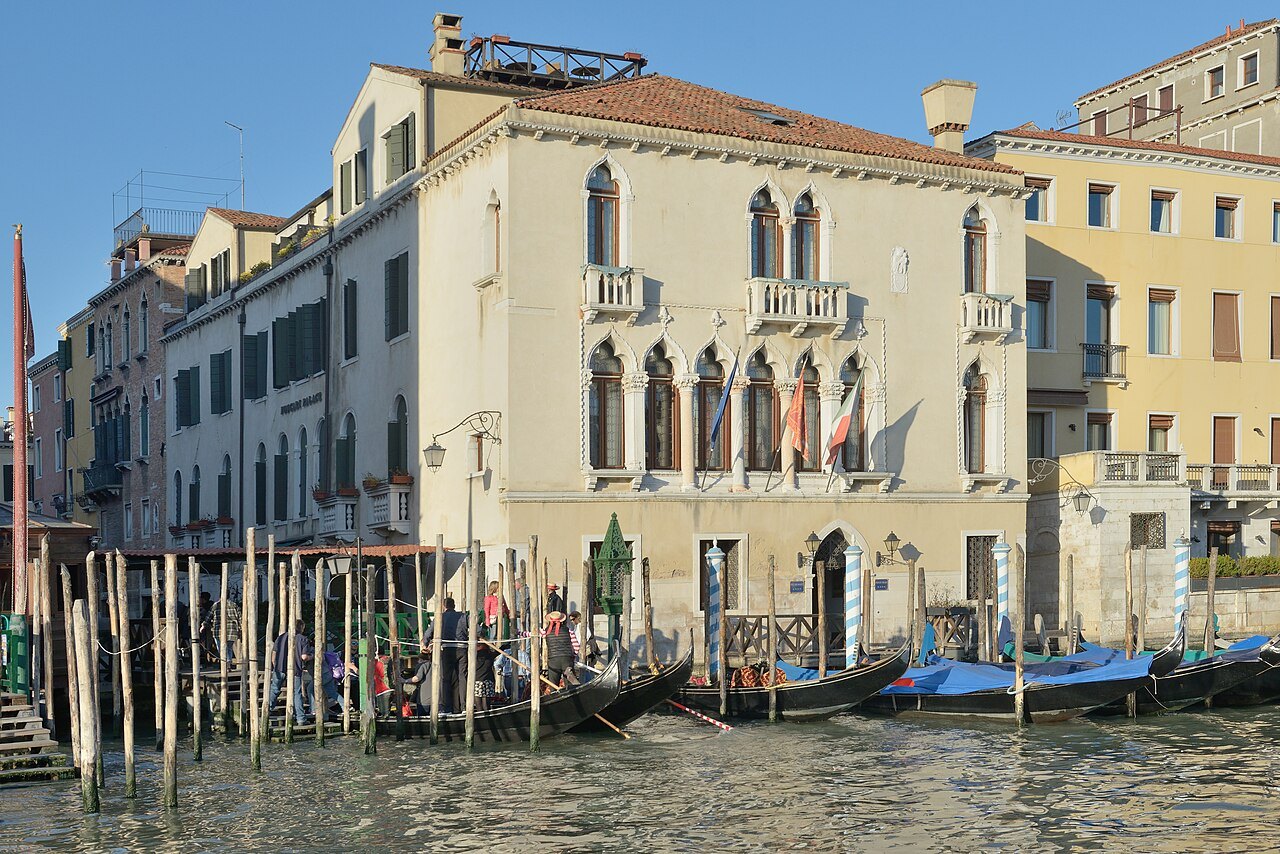
The palace itself surprises many visitors, who take it for a modern building. It is in fact an eighteenth-century palace designed by the Venetian architect Lorenzo Boschetti and never finished, which is why it stands so unusually low among the taller palaces along the Grand Canal.
The museum describes its long, low facade of Istrian stone, set off by the trees of the garden behind, as a pause in the stately line of palaces between the Accademia and the Salute. After 1979 the foundation turned the main floor into galleries, restored the white facade and the canal terrace, and rebuilt a projecting arcaded wing known as the barchessa.
The museum has grown since then. Neighboring apartments became a garden annex, a shop and further exhibition rooms in 1993; a sculpture garden and a café followed in 1995; a new entrance opened in 2003. With two neighboring properties bought in 1999 and 2000, the museum has roughly doubled in size, from about two thousand square meters of space to about four thousand.
What you see
The permanent collection runs from Cubism through Surrealism to Abstract Expressionism. From Italy there are Giorgio de Chirico's Red Tower and Nostalgia of the Poet; from France, Braque's Clarinet, Duchamp's Sad Young Man on a Train, Léger and Picabia; from Spain, Picasso's The Poet and On the Beach, Miró and Dalí's Birth of Liquid Desires.
Among the other Europeans are Magritte's Empire of Light, Paul Klee's Magic Garden, Kandinsky, two compositions by Mondrian, Max Ernst's Attirement of the Bride, Giacometti and a Bird in Space by Brâncuși. The Americans include Alexander Calder's Arc of Petals and Jackson Pollock's The Moon Woman and Alchemy. One room is given to paintings by Peggy's daughter, Pegeen Vail Guggenheim.
Two further collections share the building. Twenty-six works on long-term loan from the Gianni Mattioli Collection form the heart of Italian Futurism, including Boccioni's Dynamism of a Cyclist, Carrà's Interventionist Demonstration and works by Balla, Severini and Russolo. In 2012 the museum received eighty-three works from the collection of Rudolph and Hannelore Schulhof, shown in a gallery of their own.
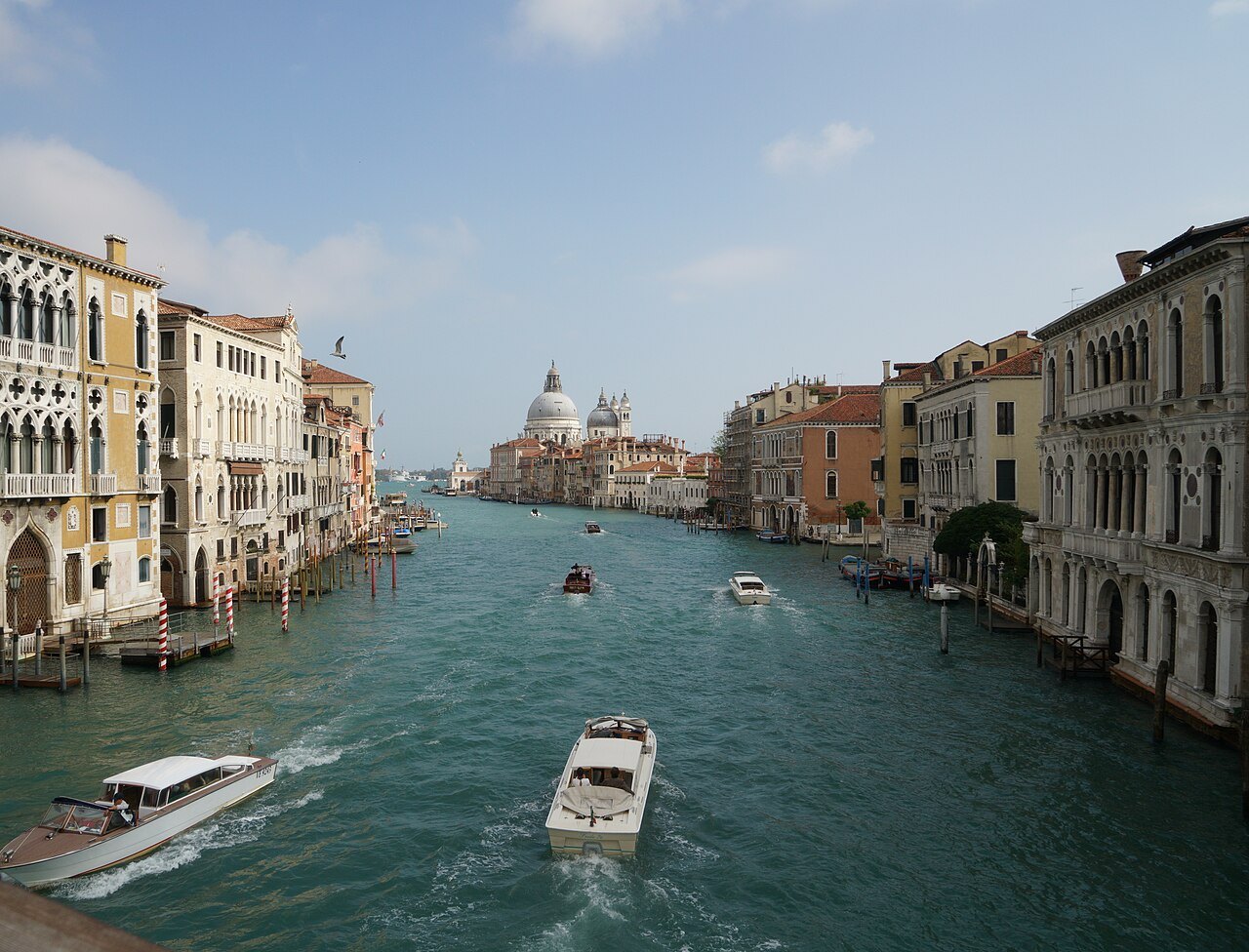
Save time for the garden, with its sculpture set among the trees, and for the terrace on the canal, where the view runs across the water to the palaces of the San Marco bank, a different way of seeing the The Grand Canal than from a boat.
How to visit
Buy timed tickets online through the museum's own site, choosing an entry slot until the allocation for that day sells out; tickets are also sold at the door, subject to availability. The museum closes one day a week and on Christmas Day; check its official site for current hours and the closing day.
Large bags, backpacks and suitcases are not allowed inside, and food and drink cannot be consumed anywhere in the building or the garden. Visitors are asked to dress suitably, which rules out swimwear and bare feet. Allow about an hour and a half for a visit, more if the garden and terrace are lingered over.
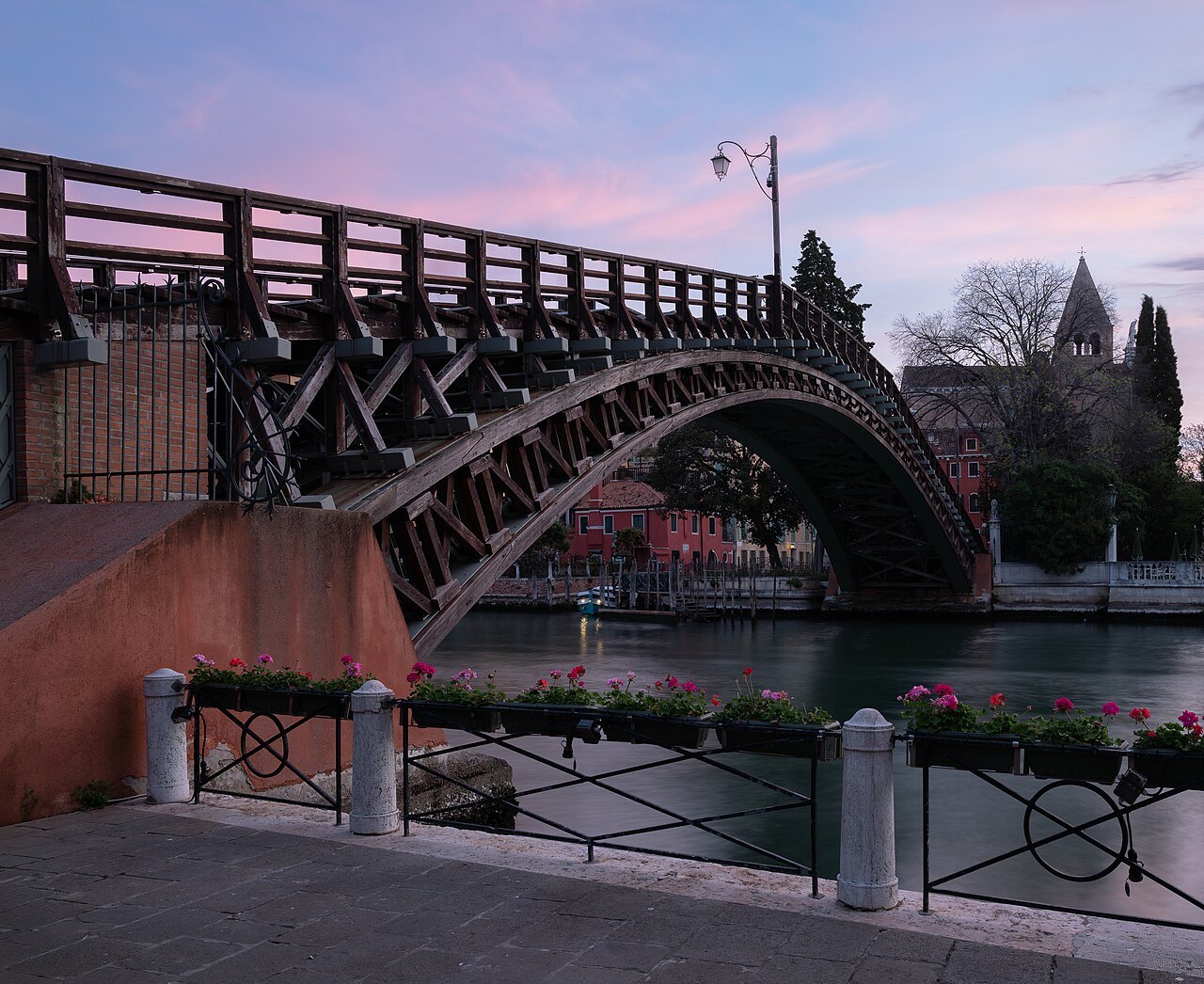
Guided tours in several languages can be booked in advance by writing to the museum directly by email. The nearest water-bus landings are Accademia and Salute; on foot the palace is a few minutes east of the Accademia bridge through the lanes of Dorsoduro.
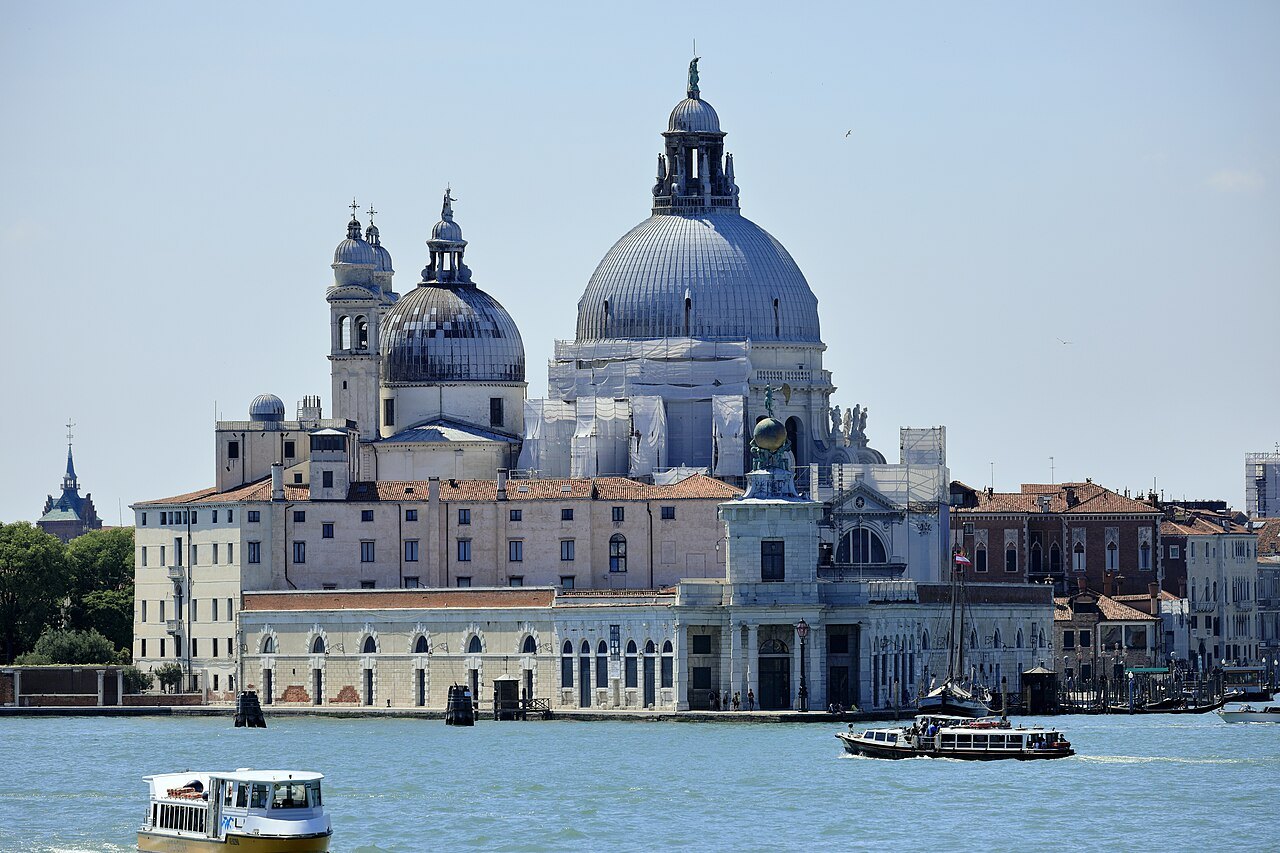
Pair a visit with the Accademia, described at The Accademia, for five centuries of painting in a single day, or walk on afterward to the Salute and the point of the Dogana, where the Grand Canal opens toward the lagoon, a short walk along the water from the museum's own terrace.
Honest notes
Some of the best-known sculptures on the terrace and in the garden are twentieth-century works still in copyright, which is why no photograph of them appears on this site; the palace and the canal are shown instead, a reminder that even well-known public art can carry legal restrictions on reproduction.
Peggy Guggenheim's ashes are buried in the garden, a quiet detail many visitors notice only once they are standing among the sculpture and the trees. Her descendants have gone to court more than once over how the collection is displayed; French courts dismissed their claims in 1994, 2014 and 2015.
None of this affects a visit beyond the small practical points already noted: book tickets ahead, keep bags small, and leave food and drink for afterward, since nothing may be eaten or drunk inside the museum or its garden at any time of day.
Read nextIII
More from the journal
- The AccademiaWhich paintings should you not miss at the Gallerie dell'Accademia?A visitor's guide to the paintings not to miss at the Gallerie dell'Accademia, from gold-ground altarpieces to Giorgione and Veronese.Read the piece →
- The Grand CanalHow are the palaces of the Grand Canal kept standing on wooden piles?How wooden piles, Istrian stone, and brick keep the Grand Canal's palaces standing above the lagoon mud.Read the piece →
- When to ComeAcqua Alta in Venice: the Tide, the Sirens and the WalkwaysBetween autumn and spring, exceptional tides flood the lowest parts of Venice. What causes the acqua alta, how the levels are measured, what the sirens mean, where the raised walkways go, what the MOSE barriers changed, and how to plan a day around a high tide.Read the piece →