THE BOAT, THE GONDOLIER AND WHAT TO AGREE BEFORE YOU STEP INI
How does a gondola ride in Venice work?
A gondola ride is a private hire at rates set by the city, rowed by one of about four hundred licensed gondoliers. How the boat and the gondoliers work, where to find one, what to agree before you board, which route to ask for, and how it differs from the traghetto and the water bus.
The answer in fullII
Read on
The short answer
A gondola ride is a private hire: you and your companions take the whole boat, and a licensed gondolier rows you through the canals for an agreed length of time, at rates fixed by the city. You find gondolas waiting for hire along the canals near the main sights, or your lodging can help you arrange one.
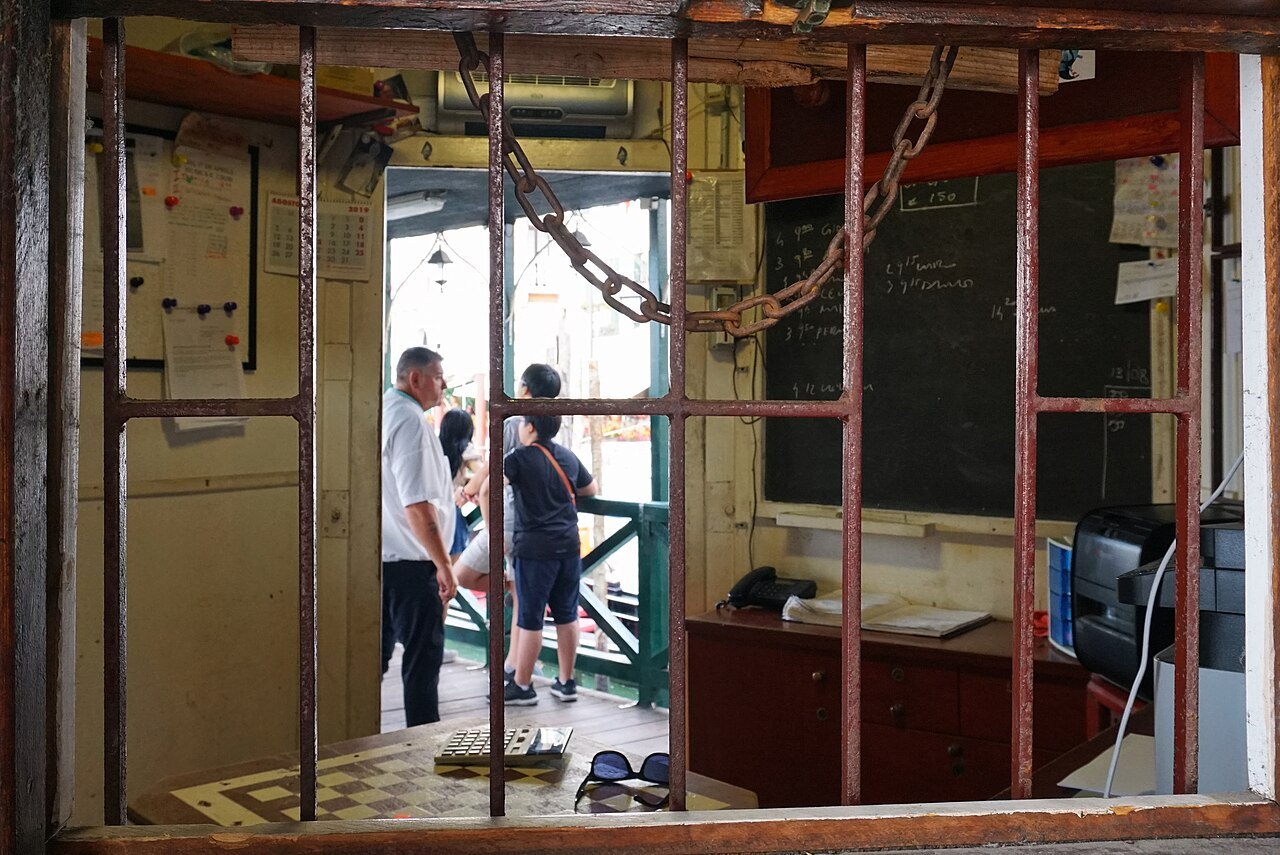
Agree the length of the ride, the route and the price before you step in. Ask to be taken through the small canals rather than only along the Grand Canal, and choose your time of day: the early morning and the evening are the quietest and the most beautiful.
Some links on this page are affiliate links. If you book through one we may earn a commission, at no extra cost to you. It does not affect what is recommended here, and no sight page on this site carries one.
Somewhere to leave a suitcase between check-out and a late train.
The boat
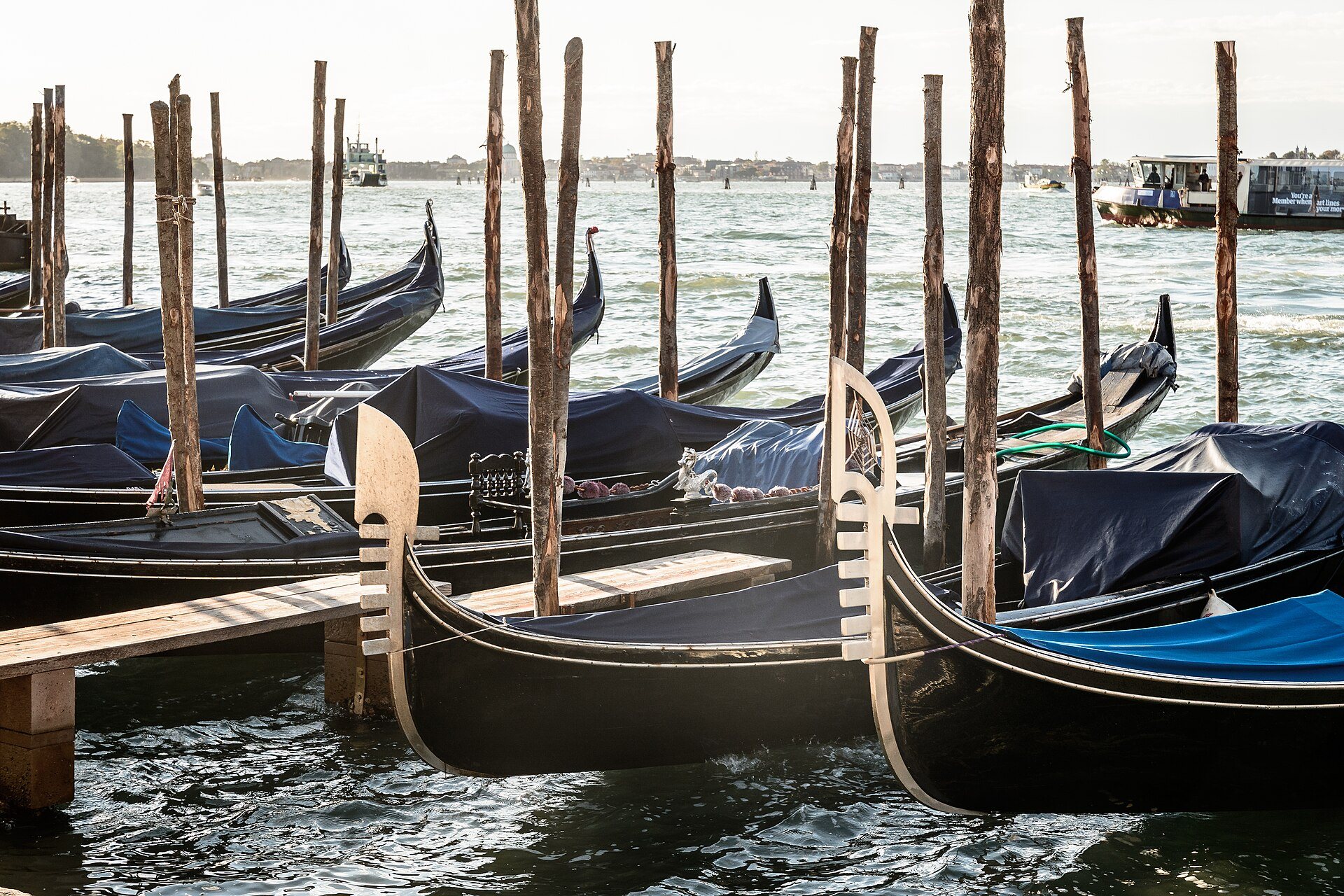
The gondola has been rowed in Venice since at least the eleventh century; it is first mentioned by name in 1094. It is a flat-bottomed boat, well suited to the shallow lagoon, up to eleven meters long and one and a half wide, and it is deliberately asymmetrical along its length, so that a single oar, worked from one side, drives it straight. Each one is built by hand from some 280 pieces of eight kinds of wood, and building one takes about two months.
The oar rests in the fórcola, a carved wooden oarlock whose curves let the gondolier row gently or hard, turn, slow down, go backward and stop. The metal ornament on the prow, the fèro, balances the weight of the gondolier at the stern. A popular story says every detail of it stands for something, the six teeth for the six sestieri among them, but the story has no factual basis: old paintings and photographs show prows with four or five teeth.
The boats are black because a law of the Republic required it, and the long, curved shape you see today is a nineteenth-century development; Canaletto's gondolas were lower at the prow and usually had two rowers.
Until the twentieth century many gondolas carried a felze, a small closed cabin that kept passengers warm, dry and unseen; it was eventually dropped, perhaps because visitors complained that it blocked the view, and a light summer awning, the tendalin, survived into the 1950s, when it can still be seen in the film Summertime. Mark Twain, who came in 1867, devoted much of a chapter of The Innocents Abroad to the gondolas and their gondoliers.
The gondoliers
There were some ten thousand gondolas of all kinds in the sixteenth century. Now there are about four hundred in service, and about four hundred licensed gondoliers, nearly all of them working for visitors. The profession is controlled by a guild, which issues a limited number of licenses after training, an apprenticeship and a demanding exam on Venetian history and landmarks, foreign languages and the handling of the boat in the city's tight canals.
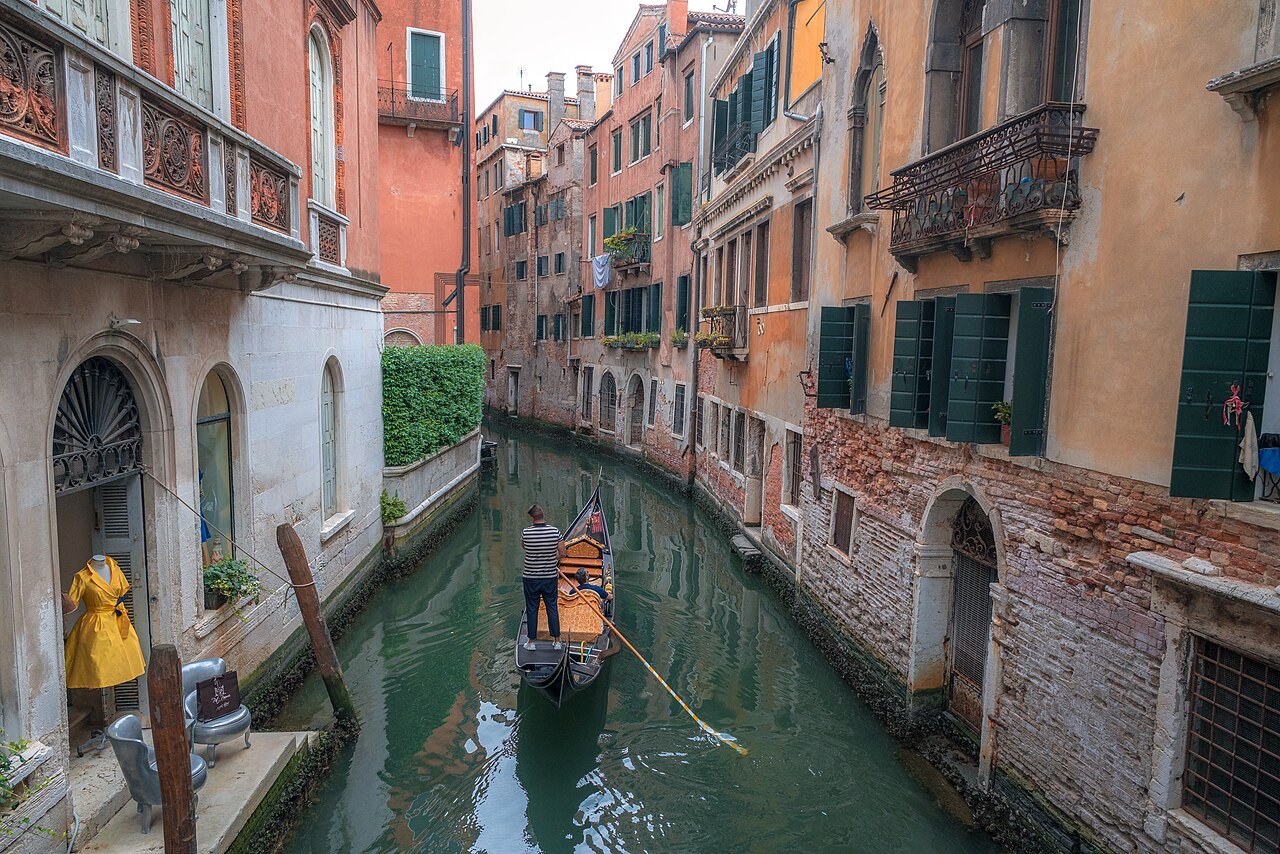
Gondoliers wear a striped top, blue or red, a red neckerchief and a wide-brimmed straw hat. The first fully licensed woman gondolier qualified in 2010. The gondolier stands at the stern, facing the bow, and rows with a forward stroke and a compensating return; contrary to popular belief, a gondola is never poled like a punt, because the canals are too deep.
The trade has changed shape over the centuries. When the gondola was the city's public transport, teams of four often shared one boat: three oarsmen and a fourth man ashore who took the bookings. As the gondola became a boat for visitors, all but one of those cooperatives closed, and the profession is now protected by an institution in the historic center dedicated to the gondola and its gondoliers. A few gondolas remain in private hands, hired out to Venetians for weddings or kept for racing in the regattas rowed in the Venetian style.
Before you step in
Gondola rides are hired by time, at fixed rates set by the city, and the hire is for the boat, not per person, so a full boat of passengers shares it. Confirm the price, the length of the ride and the route with the gondolier before you board. Do not assume a song comes with it.
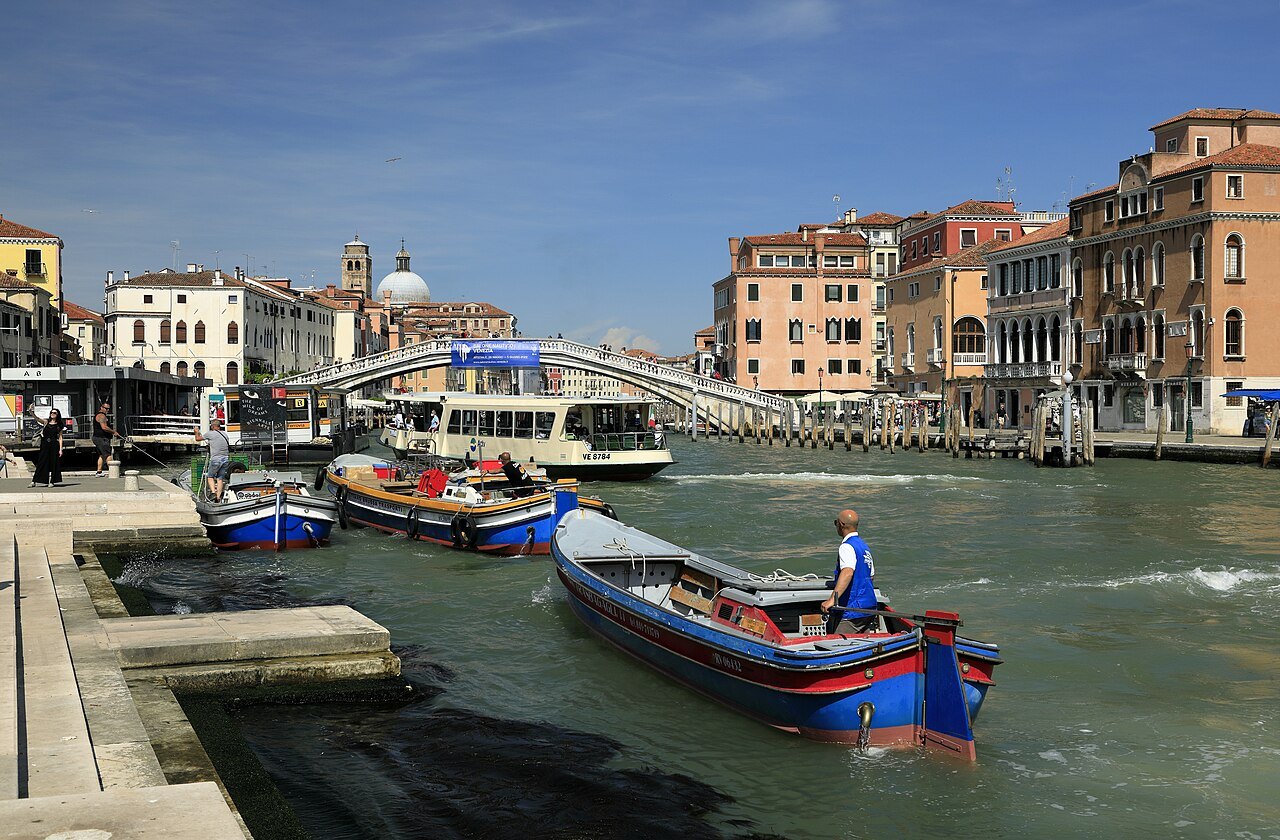
Step in carefully, where the gondolier tells you to, and sit where you are placed, since the boat is balanced for its load. Keep hands inside as you pass other boats and walls, and hold small children.
Which route to ask for
The Grand Canal is grand, but it is also the city's busiest waterway, crowded with water buses, barges and taxis, and the best way to see it is from a water bus or from the banks. The gondola comes into its own in the small canals, the rii, where no motorboat can go fast and the city is quiet enough to hear the oar. Ask for a route that spends most of its time there, with a short stretch on the Grand Canal if you like.
Near San Marco, rides through the canals behind the Piazza can pass under the Bridge of Sighs. In quieter districts, Cannaregio, Castello or Dorsoduro, the canals are emptier and the ride calmer.
When to go
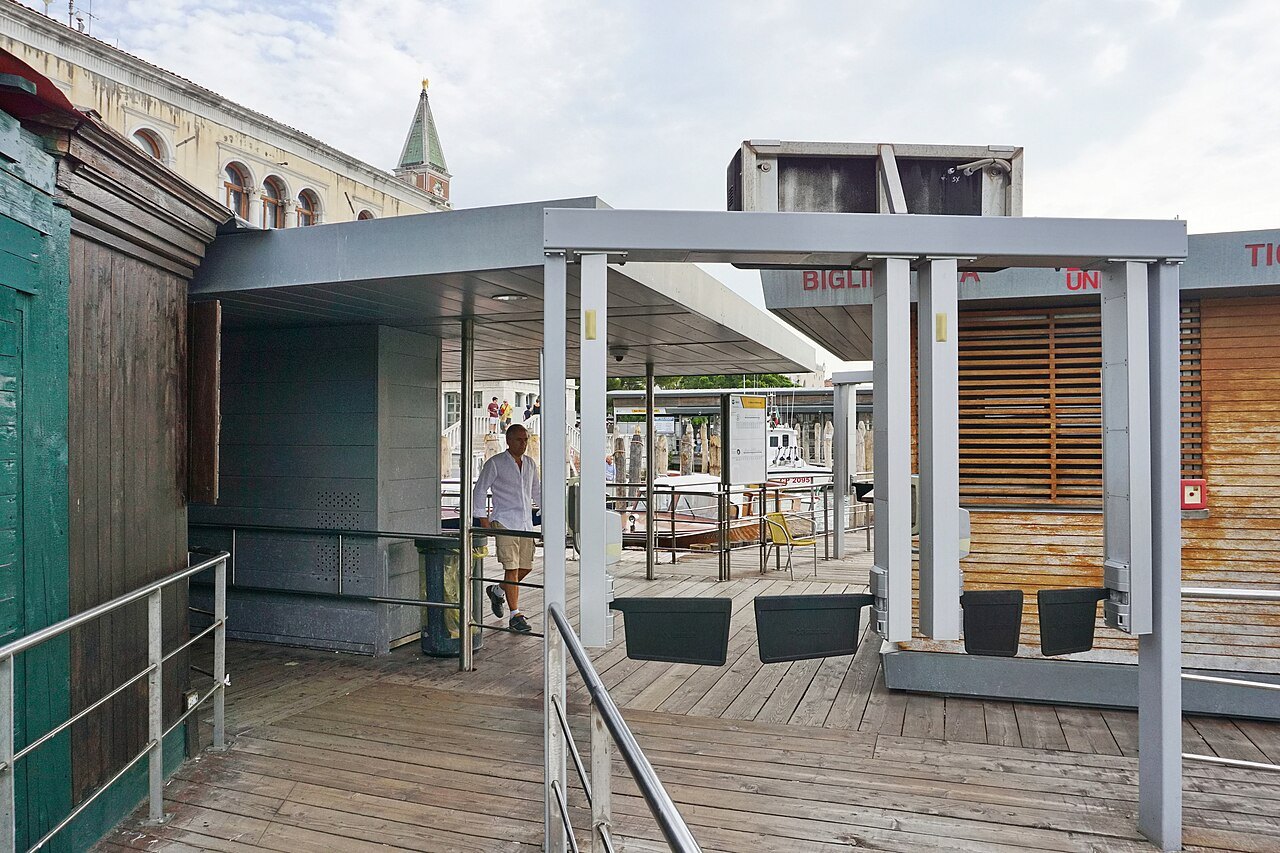
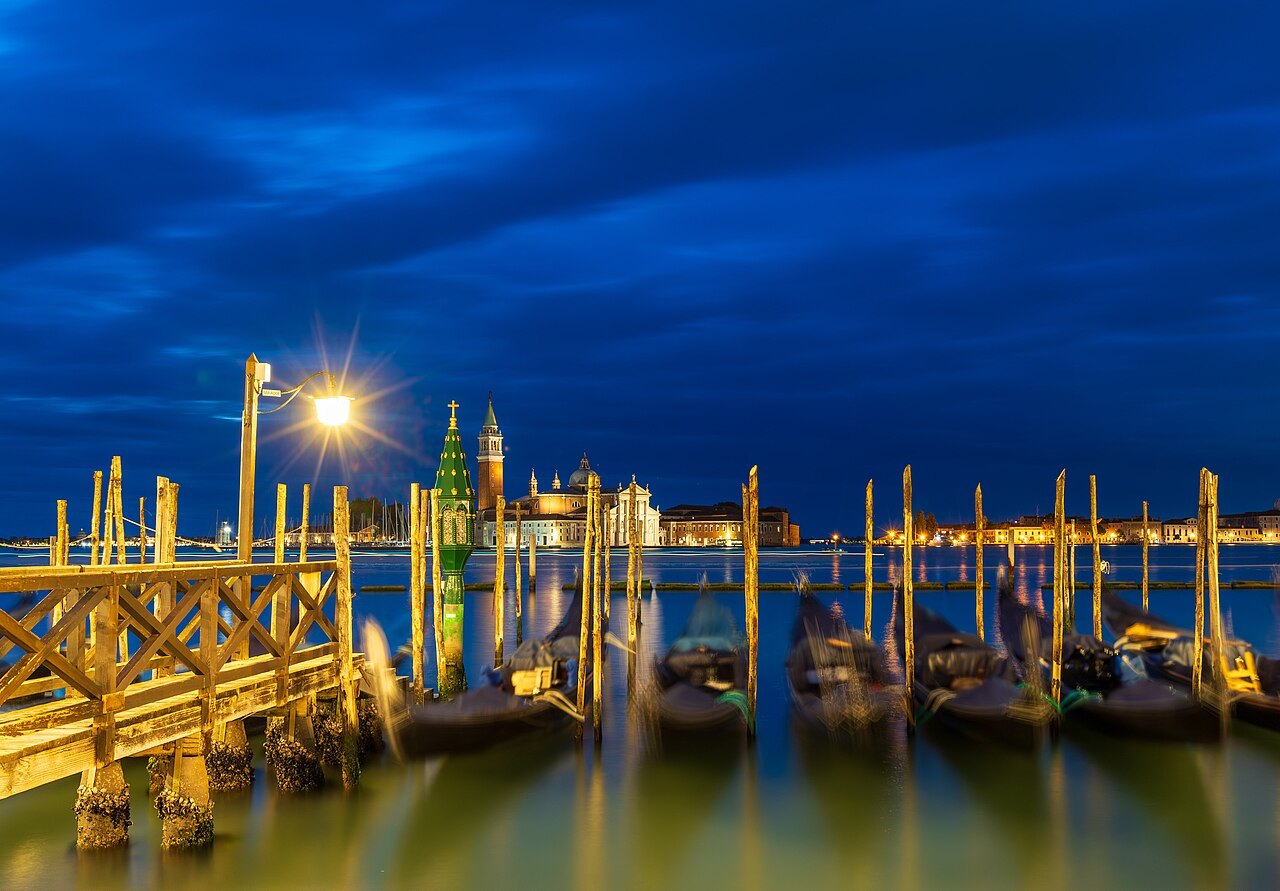
Light and traffic make the ride. In the middle of a summer day the canals near San Marco are busy, and gondolas wait for one another at the narrow corners. Early in the morning, and in the hour before sunset, the water is calm, the light is low, and the ride is the one people imagine. A ride after dark shows the palaces lit from within.
In winter, dress warmly for a ride in the open air. In the high-water months, check the tide forecast before you plan a ride (see acqua alta).
Gondola, traghetto or water bus
If a private ride is not for you, there are two other ways onto the water. A traghetto is a gondola ferry rowed by two oarsmen straight across the Grand Canal at a few fixed points, a public crossing of a couple of minutes, paid for on the spot (see the traghetto). And the water bus, Line 1, runs the whole length of the Grand Canal, calling at almost every landing (see getting around).
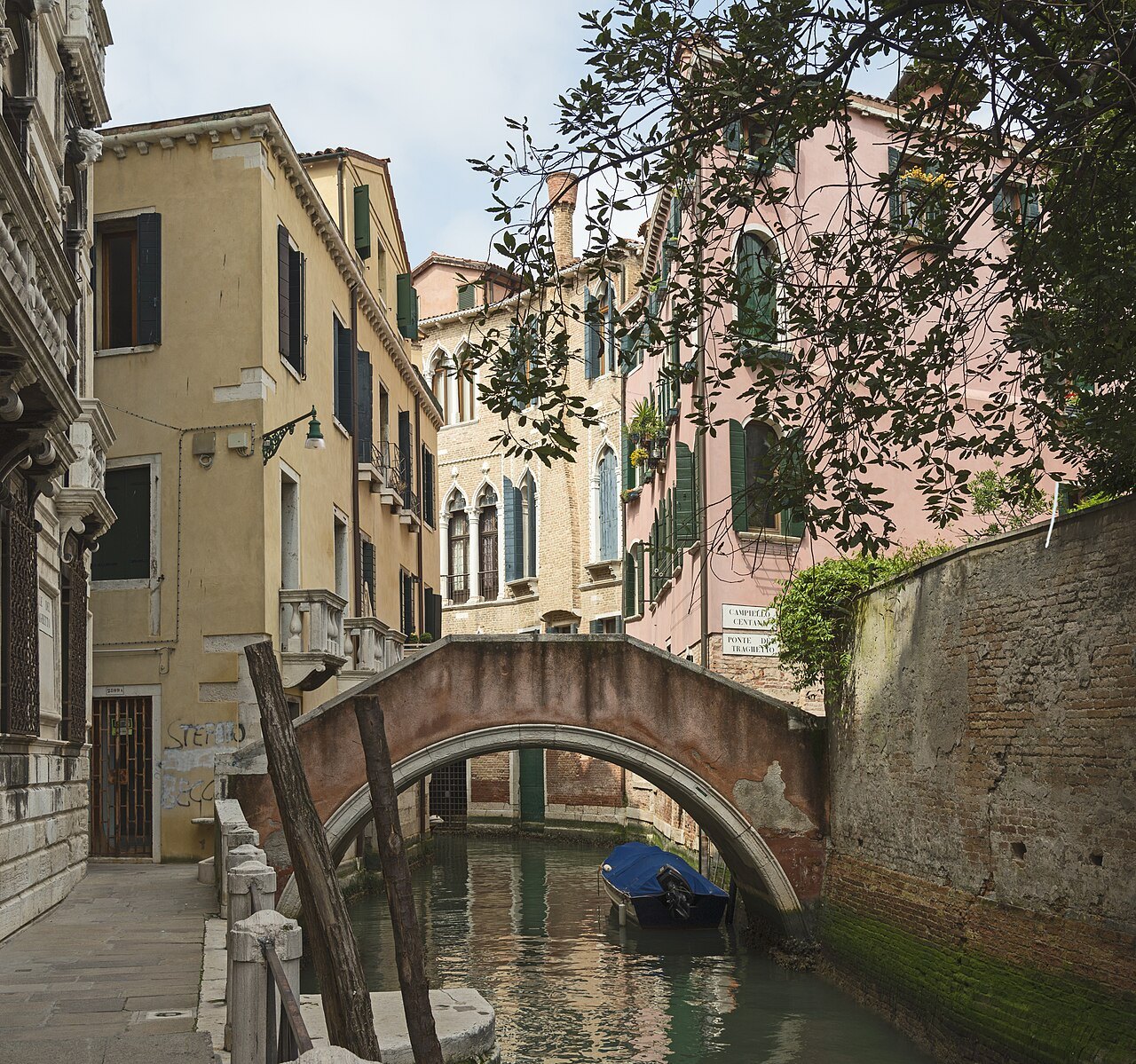
Neither replaces a gondola ride through the small canals at dusk. But for a first look at the city from the water, and for the length of the Grand Canal, they may be all you need.
Read nextIII
More from the journal
- Getting AroundThe Traghetto: Venice's Cheapest Gondola CrossingOnly four bridges cross the Grand Canal. Between them, a traghetto, a plain gondola rowed by two oarsmen, ferries foot passengers straight across. What it is, where the crossings are, how to ride one, and why it is worth knowing about.Read the piece →
- The Doge's PalaceCan you walk across the Bridge of Sighs?Yes: the Bridge of Sighs is part of the visit to the Doge's Palace, which crosses it to the New Prisons and comes back the other way. What the bridge was really for, where the romantic name came from, how the palace route reaches it, and where to stand for the classic view from outside.Read the piece →
- Getting AroundOnly Four Bridges Cross the Grand Canal: Planning RoutesThe Grand Canal cuts Venice in two, and only four bridges cross it in nearly four kilometers. Where they are, why a map misleads, and how to plan walks, water-bus rides and traghetto crossings so the canal works for you rather than against you.Read the piece →