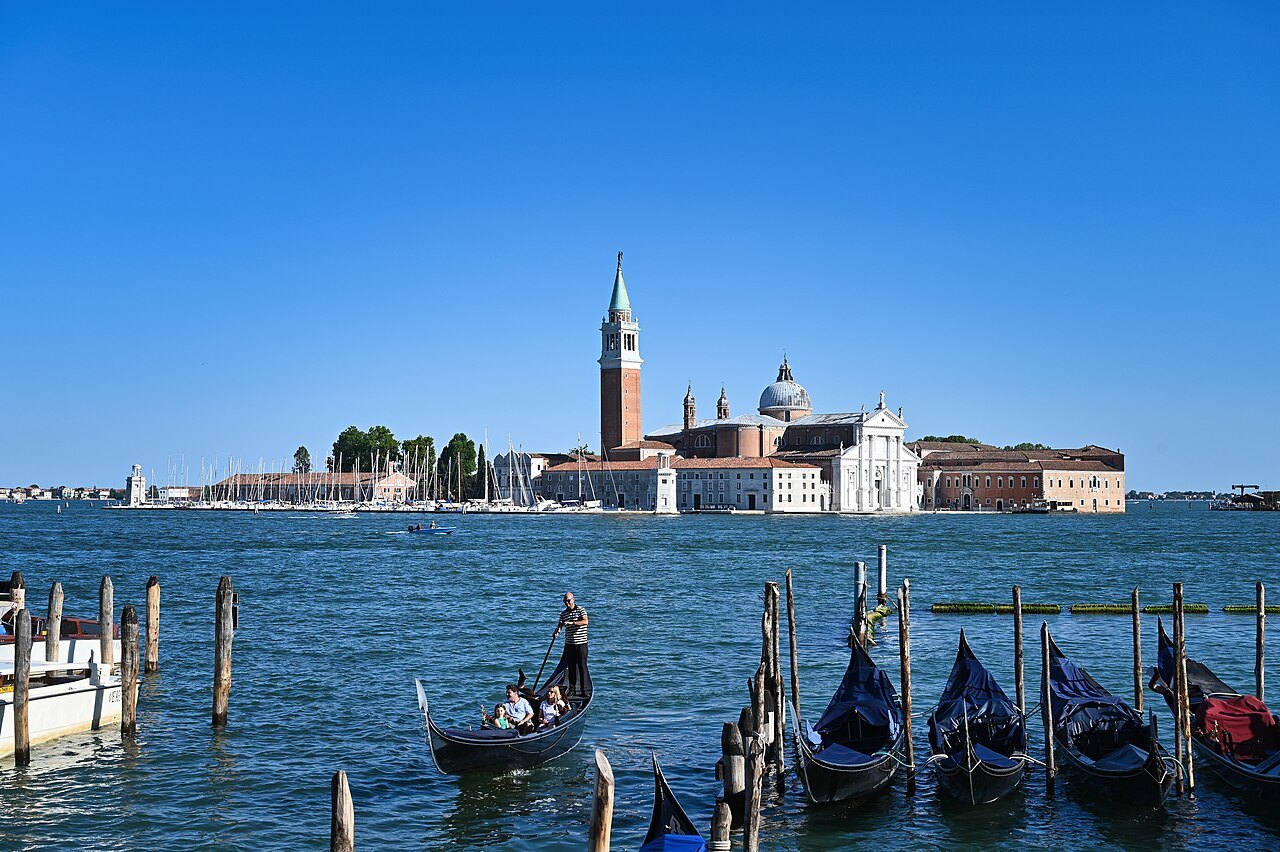
TWO BELL TOWERS, TWO VIEWSI
Is the view from San Giorgio Maggiore better than from the Campanile?
Comparing the panorama from San Giorgio Maggiore's bell tower with the view from the Campanile in Piazza San Marco.
The answer in fullII
Read on
Two Vantage Points Over the Water
Venice offers two obvious high points: the Campanile in Piazza San Marco, and the bell tower of the church on the island of San Giorgio Maggiore, a short ride across the basin. Both rise well above the surrounding rooftops, and both let visitors look out across the city and the lagoon. The difference lies not in height but in position: one stands inside the city, the other apart from it.
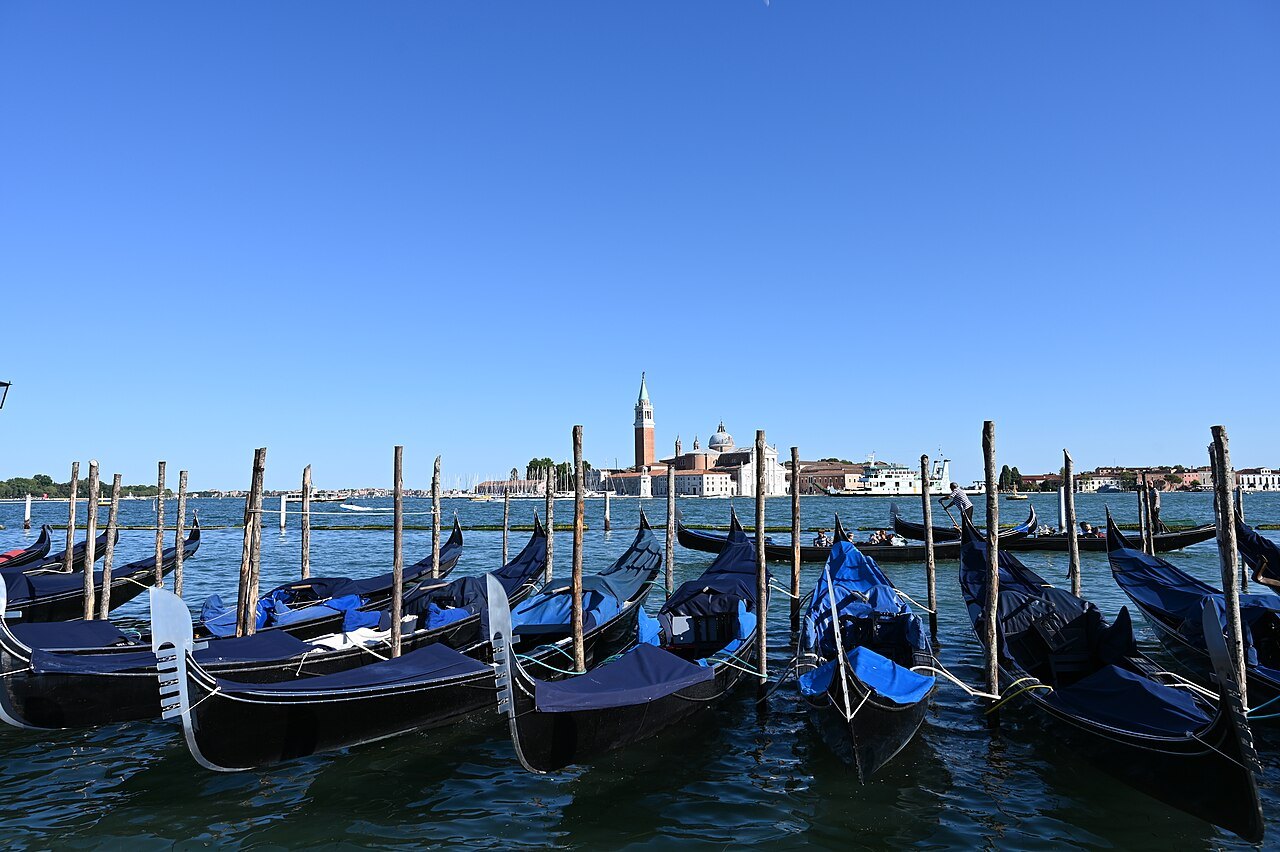
From the Campanile, the view looks down onto the crowded square, the domes of the basilica beside it, and across the water to the islands beyond. From San Giorgio, the view looks back, taking in the Doge's Palace, the Campanile itself, the basilica's domes and the dome of the Salute lined up along the waterfront, with the open lagoon stretching away behind.
Which is "better" depends on what a visitor wants: a close look down onto the center of the city, or a wide view that places Venice in its setting of water and distant islands. Check current access arrangements for both towers with the relevant offices before planning a visit, since the two are run separately and times differ.
The Campanile's View
Piazza San Marco's bell tower stands at the heart of the city, beside the basilica and across from the Doge's Palace. Visitors who go up look straight down onto the square itself, with its arcades and the crowds crossing it, and out over the roofs of the sestieri toward the mainland. See the Campanile page for details on reaching the top.
From this height the basilica's domes are seen from above rather than from across water, and the Piazzetta's two columns and the waterfront of the Riva degli Schiavoni run out toward the basin. The Giudecca and San Giorgio Maggiore appear as a low green and white line across the water, rather than as the close, large presence they are when seen from the water itself.
The Campanile view suits anyone who wants to understand how the city's center is laid out, square by square and rooftop by rooftop, with the pattern of campi and canals visible from directly above. It is a view of Venice as a plan; the view from San Giorgio is closer to a view of Venice as a picture.
San Giorgio's Bell Tower
The bell tower on San Giorgio Maggiore was first built in 1467. It fell in 1774 and was rebuilt in neoclassical style by 1791, the form standing today. It was once climbed by a series of easy ramps; a lift now carries visitors to the top, a different experience from the stairs of most Venetian towers.
From the top the basin lies directly below, with San Marco straight ahead across the water. The Giudecca and the church of the Redentore lie to the west, the Lido and the open lagoon stretch away to the south and east, and the roofs of the whole city spread out beyond the basin, with the lagoon's islands visible in the distance.
Because the tower stands apart from the city, on an island reached only by boat, the view takes in Venice as a whole shape in the water rather than a close pattern of streets. It is a view of the city's silhouette, not of its detail, and for that reason many visitors find it the more memorable of the two.
The View Even Without Climbing
San Giorgio Maggiore offers a view before any climbing is involved. From the steps of Palladio's church itself, the Doge's Palace, the Campanile, the domes of St Mark's and the dome of the Salute line up across the water, the same composition that has drawn painters and writers for centuries.
Monet painted a series of views of San Giorgio across the water at dusk, and in A Passage to India E. M. Forster has his hero, landing on the Piazzetta, reflect that the island could hardly have risen from the waves without the church. The steps make that composition available to any visitor without a ticket or a climb.
The classic view of the church itself, seen from the city rather than from the tower, is best had from the Riva degli Schiavoni or the end of the Piazzetta, looking back across the basin at the white marble facade that closes so many views of Venice from the water.
Getting to San Giorgio
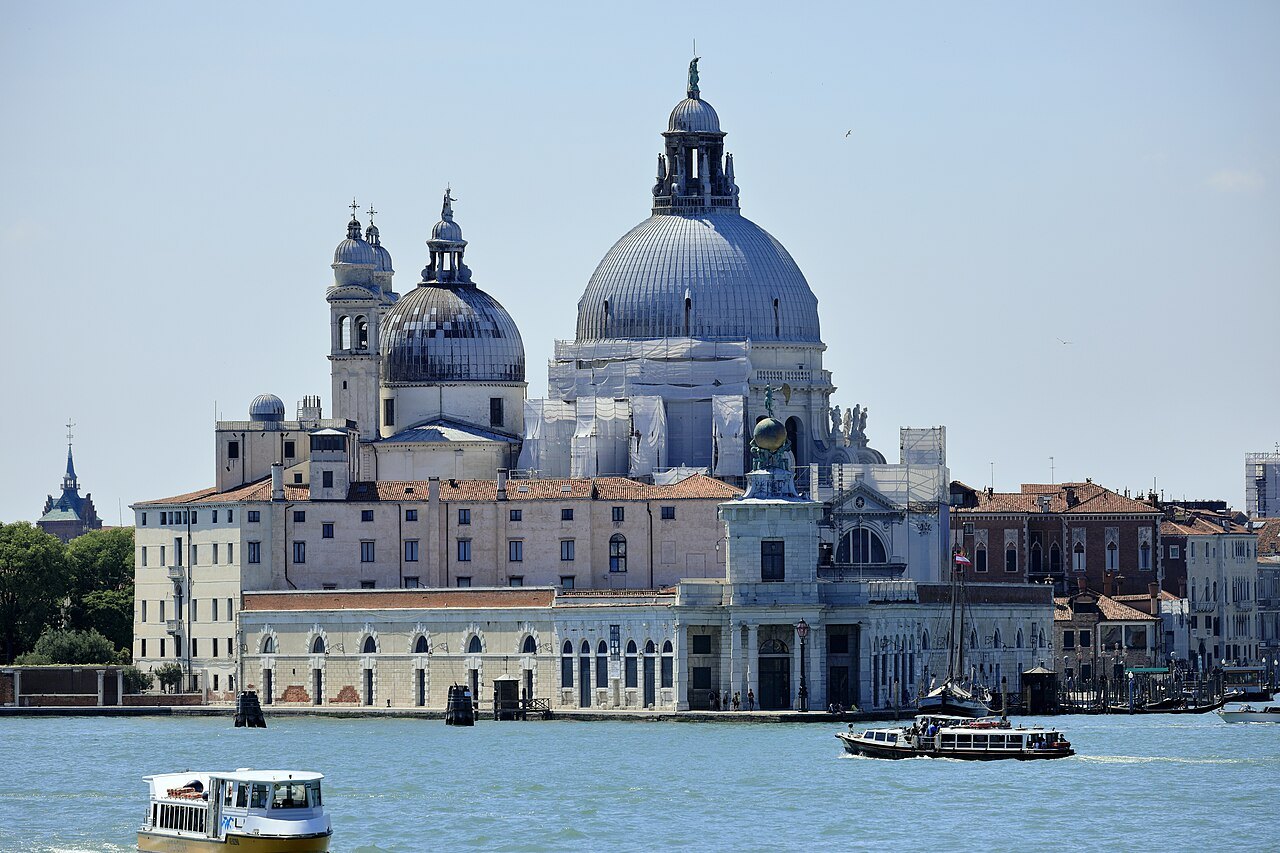
San Giorgio Maggiore is reached by water bus. Line 2, which runs along the Giudecca Canal, stops at the island; Line 1 does not call there. Check routes and schedules with ACTV or the city's transport information before setting out, since a visit to San Giorgio requires planning a crossing rather than a short walk.
The bell tower is visited separately from the church, and the two have their own arrangements. Services in the church close it to visitors at times, so check both the tower's and the church's current times before making the trip, particularly if the main aim is the view rather than the interior.
Allow roughly an hour in total for the church, the tower and the view from the steps outside, plus the time for the crossing itself. Visitors combining San Giorgio with the Piazza San Marco area in the same day should budget for the boat trip both ways, not just the time on the island.
Access and What to Expect
San Giorgio's bell tower was once climbed by a series of easy ramps; a lift now carries visitors to the top instead, a point worth knowing for anyone comparing the two climbs. Check with the island's office for the current method of reaching the top before planning a visit.
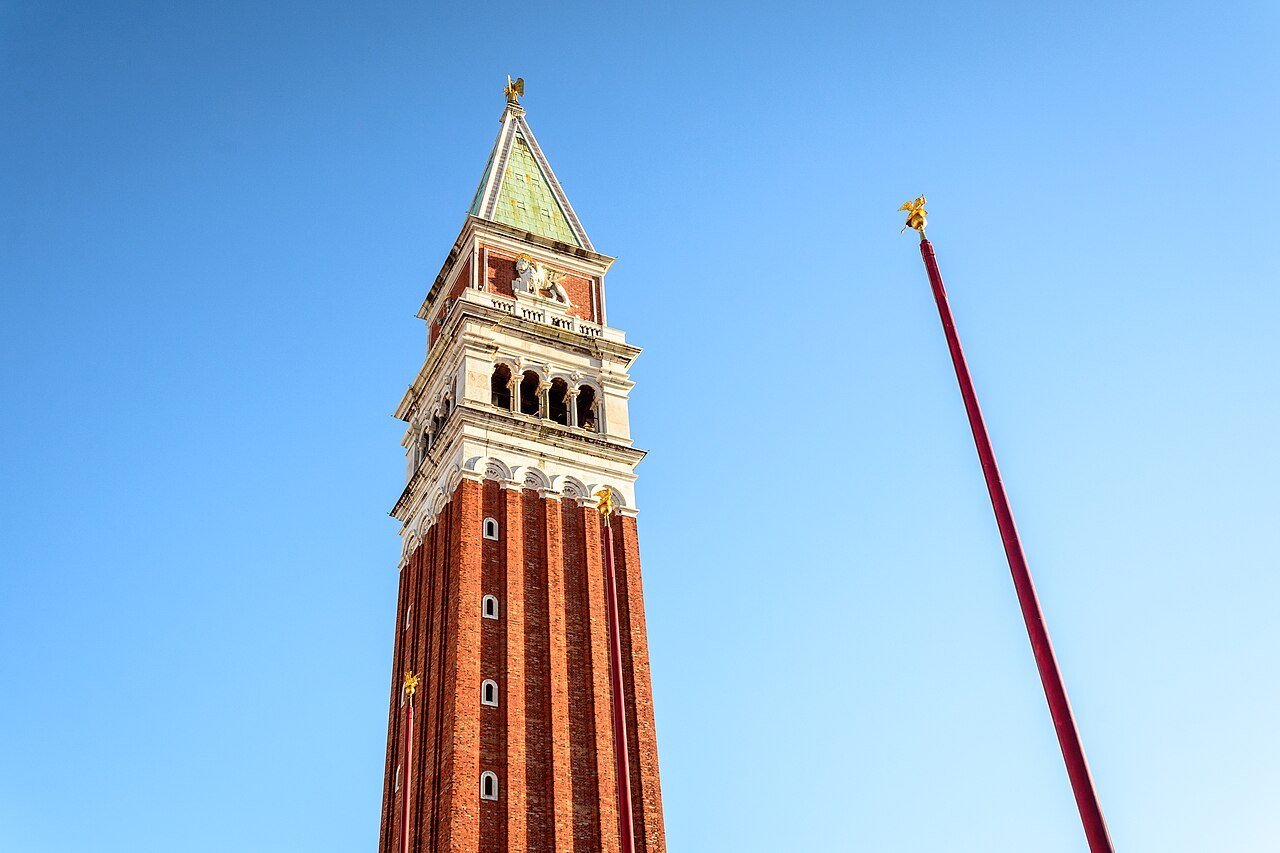
Details for the Campanile itself are best checked directly with its operators in Piazza San Marco, since arrangements for reaching the top, and any restrictions, are set by the body that manages the tower rather than described here. Visitors should confirm access details before including it in an itinerary.
Both towers involve height and a degree of climbing or lift use; anyone with concerns about mobility, enclosed spaces or crowding should check directly with each operator what the climb involves before deciding which view to pursue, or whether to settle for the view from ground level instead.
Choosing Between Them
Visitors short on time and staying close to Piazza San Marco may find the Campanile the easier choice, since it requires no boat crossing and sits beside the basilica and the Doge's Palace. It suits anyone who wants to see the historic center from above without adding a lagoon crossing to the day.
Visitors willing to add a short boat trip gain a view that includes the city's waterfront composition, the open lagoon, and the Giudecca and Redentore to the west, along with the approach to Palladio's church itself, one of the set pieces of Venice described elsewhere on this site.
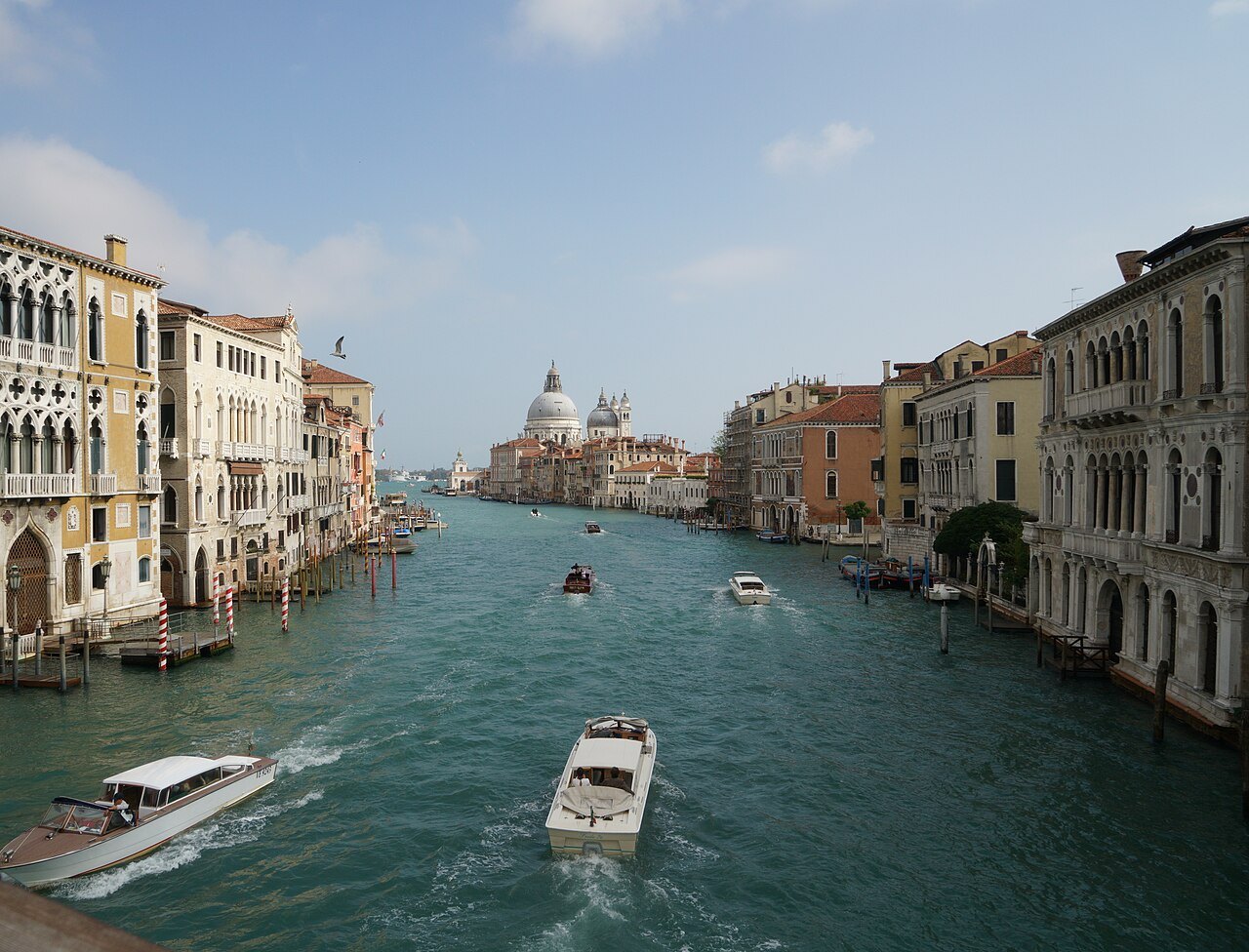
Neither view replaces the other; they show the same city from two directions. Visitors with time for both can see the city from inside, standing above the square, and then from outside, standing across the water looking back at the palaces and domes that make up the skyline most associated with Venice.
Read nextIII
More from the journal
- The CampanileWhy did the Campanile of San Marco collapse in 1902?How the medieval Campanile collapsed in 1902 and was rebuilt exactly as it was, where it was.Read the piece →
- Getting AroundHow the Vaporetto Works: Tickets, Passes and LinesThe vaporetto is Venice's bus: numbered lines run by ACTV along the Grand Canal, around the city and out to the islands. How single tickets and time-based travel cards work, how to decide between them, how to validate, and which lines a visitor actually uses.Read the piece →
- When to ComeAcqua Alta in Venice: the Tide, the Sirens and the WalkwaysBetween autumn and spring, exceptional tides flood the lowest parts of Venice. What causes the acqua alta, how the levels are measured, what the sirens mean, where the raised walkways go, what the MOSE barriers changed, and how to plan a day around a high tide.Read the piece →