THE TOWER THAT FELL AND ROSE AGAINI
Why did the Campanile of San Marco collapse in 1902?
How the medieval Campanile collapsed in 1902 and was rebuilt exactly as it was, where it was.
The answer in fullII
Read on
A Watchtower for the Lagoon
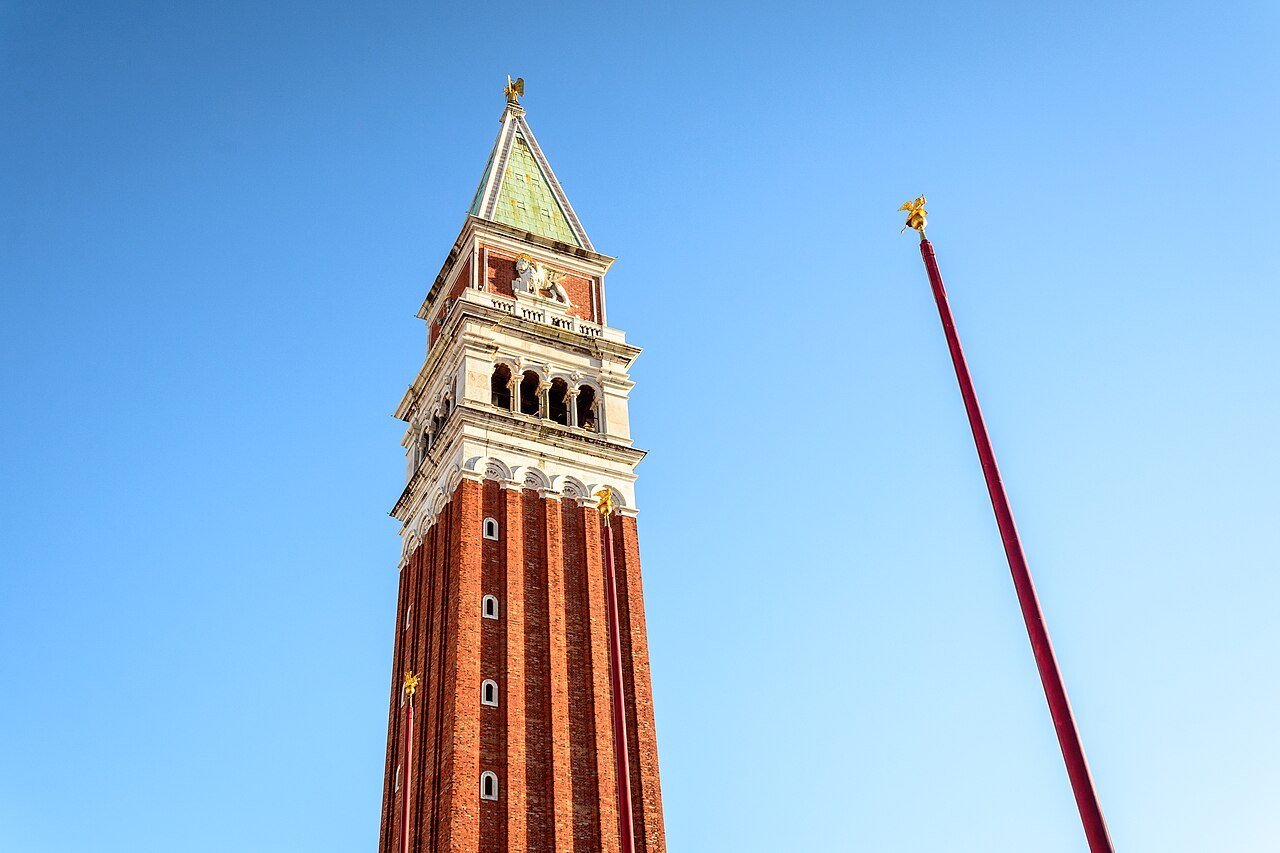
The Campanile stands alone in Piazza San Marco, near the front of St Mark's Basilica, and at 323 feet it is the tallest structure in the city. Venetians call it el paròn de casa, the master of the house. It is one of the first things a ship sees coming in from the sea, which was the point: the tower began as a watchtower, built to sight approaching vessels and guide Venetian ships safely into harbor.
The first tower was probably begun around the start of the tenth century, after Magyar raiders had plundered the mainland in 898 and 899 and Venice built defenses against attack from the sea. Work went on sporadically for generations as the tower was slowly raised, long before it took on the shape visitors see today.
Piazza San Marco grew up around the tower long after it was first raised, and the two are best understood together: the square as the civic heart of the Republic, the tower as its lookout toward the water. For the layout of the piazza and the buildings framing it, see Piazza San Marco.
From Watchtower to Bell Tower
A belfry and spire were added in the twelfth century, and in the fourteenth century the spire was gilded so it could be seen by ships far out in the Adriatic. The tower reached its full height in 1514, when the belfry and spire were rebuilt to a Renaissance design by Giorgio Spavento and the spire was gilded again.
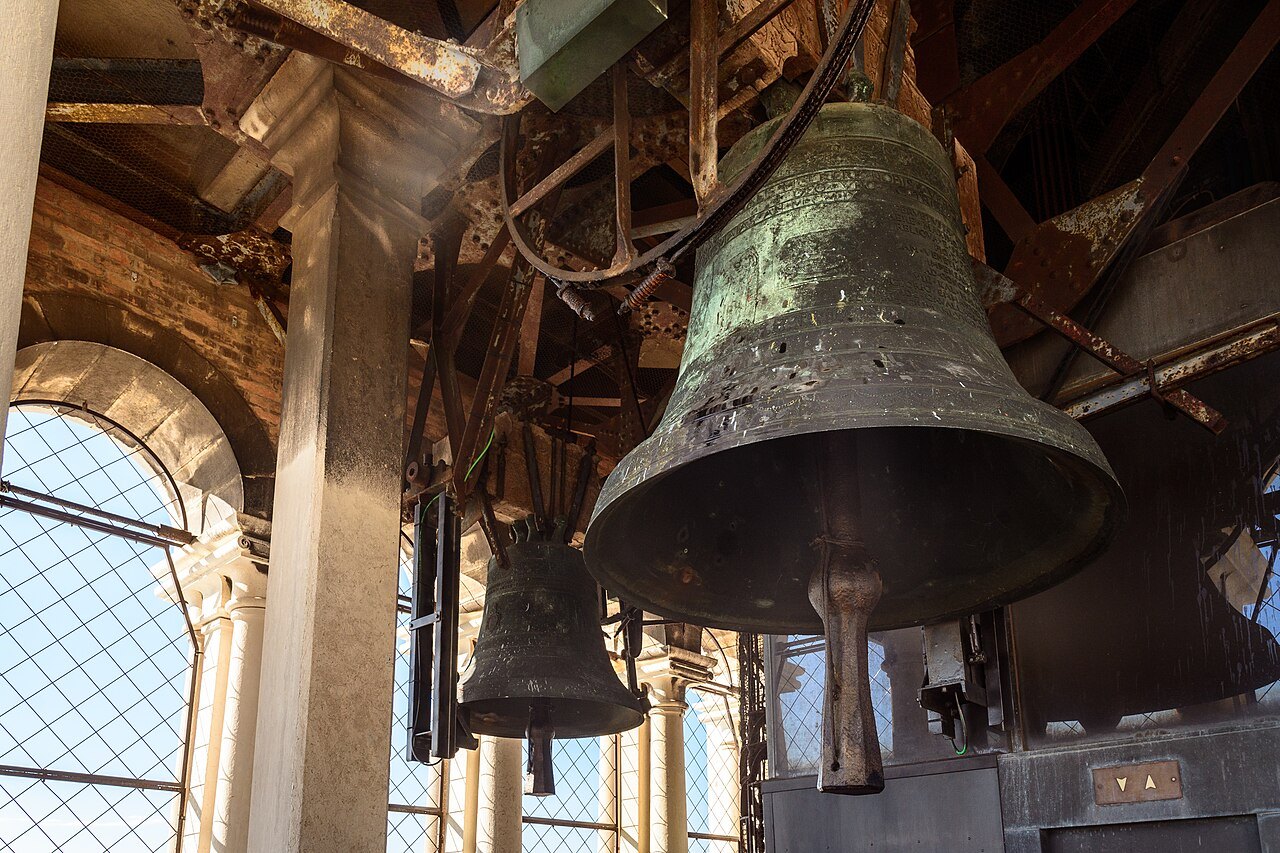
Its bells ran the life of the Republic, marking the start, the breaks, and the end of the working day, calling the government's councils to session, and announcing executions, each bell with its own name and task. The Marangona, the largest, rang at sunrise to open the workday and summoned the Great Council.
On 21 August 1609 Galileo Galilei climbed to the belfry to demonstrate his telescope to the procurator Antonio Priuli and other nobles; three days later he presented it to the doge. The view those nobles saw from the top, in outline, is still the view a visitor gets today, though the tower beneath their feet has since been entirely rebuilt.
The Morning It Fell
In the days before the collapse, cracks were found spreading through the tower and were watched closely by those responsible for its upkeep. The warning signs were there, but no one could say how fast the damage was advancing, or how much time was left before the structure gave way entirely.
On the morning of Monday 14 July 1902 the square was evacuated, stones began to fall, and a few minutes later the whole tower came down. It fell straight down, in place, rather than toppling outward across the piazza, which is why the destruction around it stayed as contained as it did.
Investigations afterward found the cause: the access ramps between the inner and outer shafts had given way one on top of the other, and without them the outer shaft caved in. Because the tower fell straight down and stood apart from other buildings, the damage around it was limited; the worst loss was Sansovino's Loggetta at its foot, which was crushed.
Rebuilding, As It Was, Where It Was
The city decided to rebuild the tower exactly as it had been, on the same spot, under the rule that became its motto: com'era, dov'era, as it was, where it was. The foundations were enlarged to spread the load, reinforced concrete was used inside the new shaft, and the shaft itself was finished in 1908.
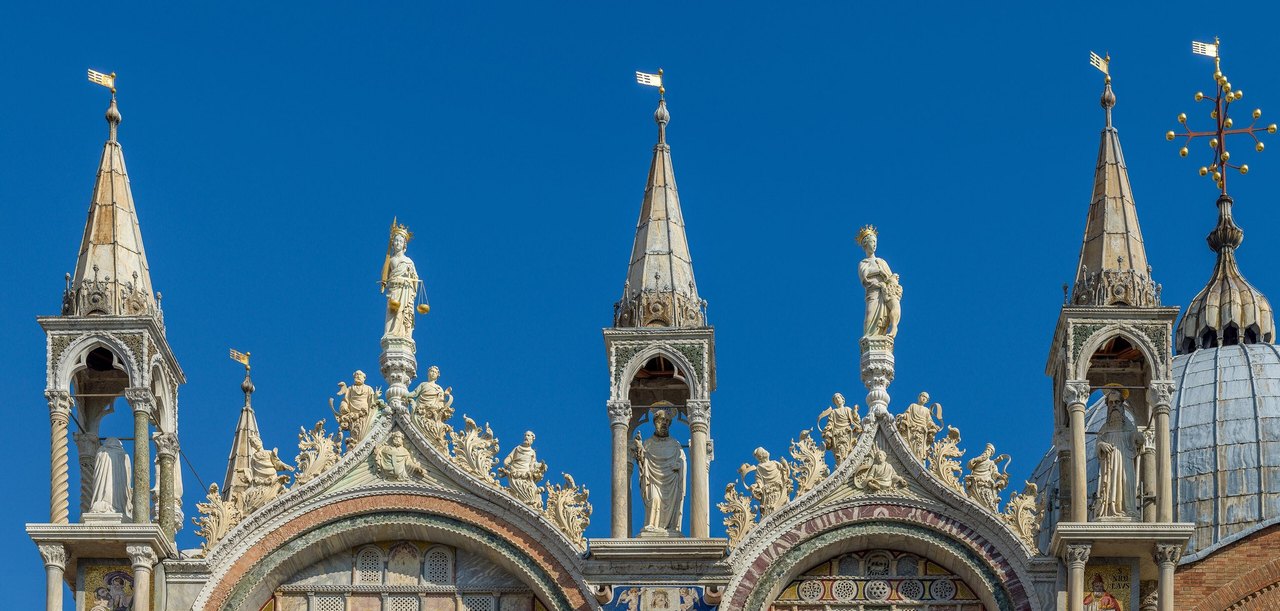
The belfry, the attic, and the spire followed, with the figures of Venice as Justice reassembled from fragments found in the rubble. On 5 March 1912 the restored angel was hoisted to the top of the spire, the last piece to go back into place before the tower was shown to the public again.
The new tower was inaugurated on 25 April 1912, the feast of Saint Mark, exactly ten years after the collapse. Of the five bells that had hung in the old tower, only the Marangona survived; Pope Pius X, who had been Patriarch of Venice when the tower fell, paid for the other four to be recast as a gift to the city.
What You Actually See
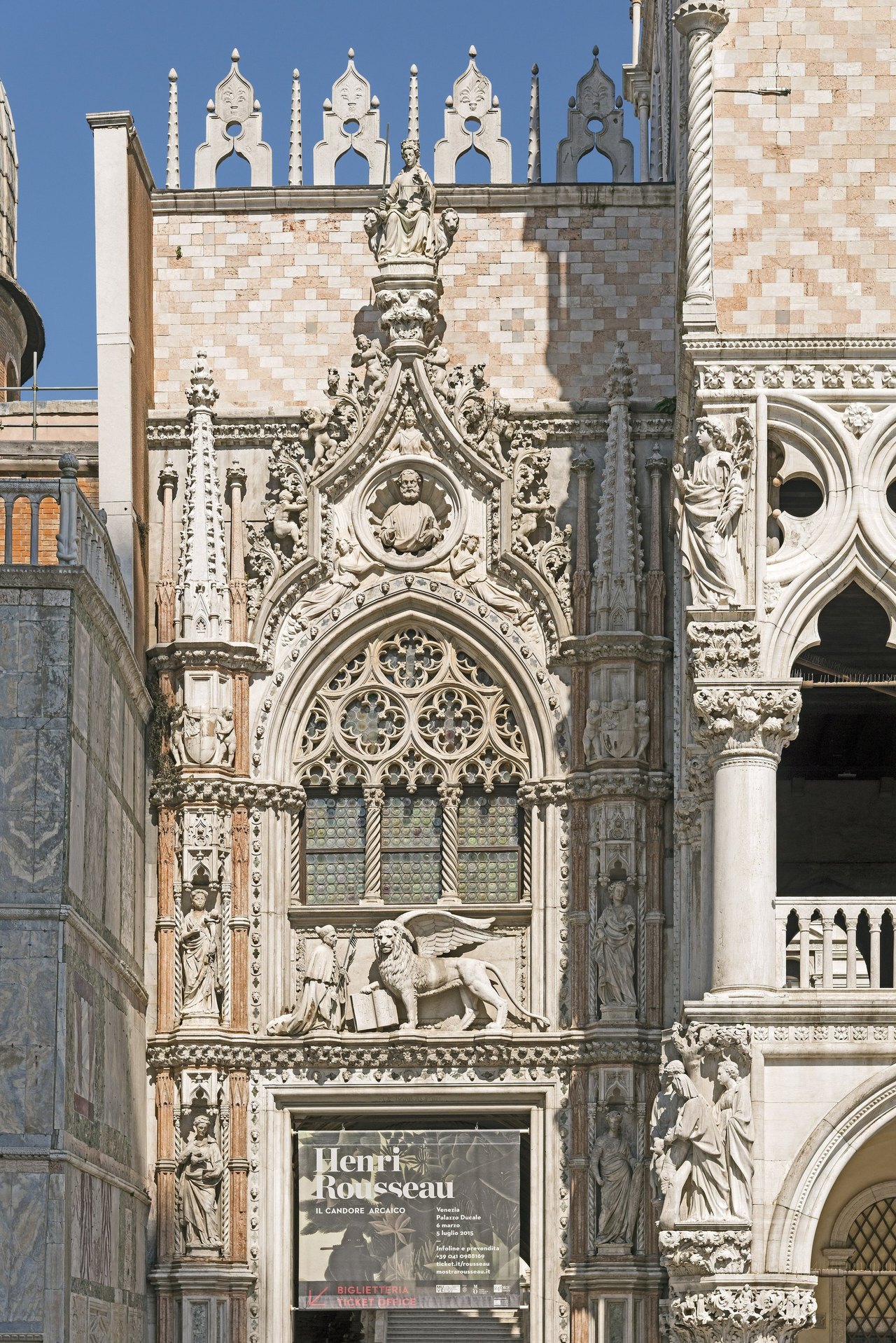
From the Piazza, look at the plain brick shaft, about 50 meters of it, square in plan and lined with shallow pilasters. Above it sits the belfry with its open arches and bells, then the attic with the winged lion of Saint Mark and the figures of Venice as Justice.
On top is a pyramidal spire with the golden archangel Gabriel as its weather vane, the same figure that once guided ships from far out at sea. At the foot, facing the basilica, is the Loggetta, a small marble building by Jacopo Sansovino built between 1537 and 1546, with statues set in its niches.
Patricians waited here before meetings of the Great Council, and the Loggetta was pieced back together after 1902 from whatever fragments could be recovered from the rubble. It stands close enough to the tower's base that its loss was the single worst casualty of the collapse, a reminder of how close the destruction came to spreading further.
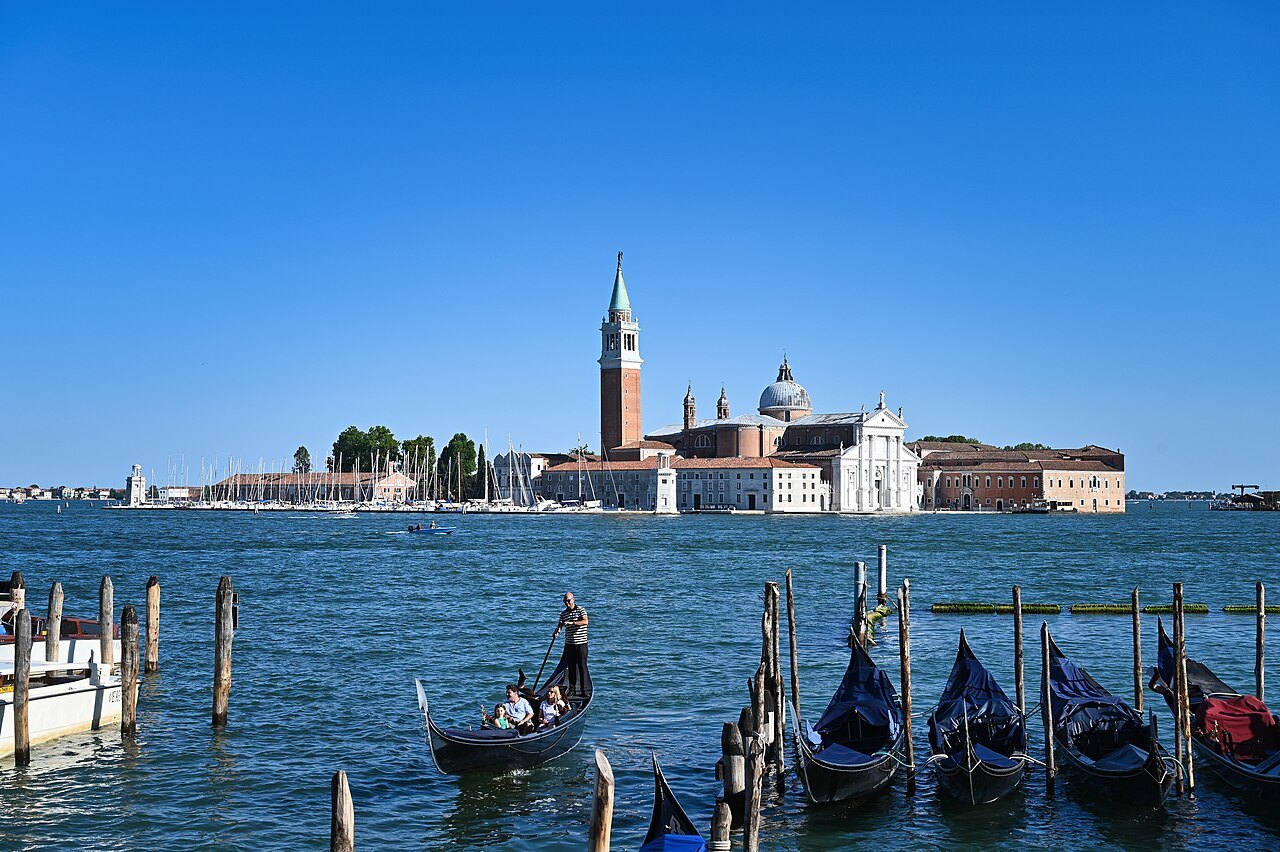
From the belfry you look straight down on the basilica's domes and the Doge's Palace, along the Riva to the east, across the basin to San Giorgio Maggiore and the Giudecca, and over the roofs of the whole city to the lagoon beyond. It is the one place in the center high enough to show how the city actually sits on its lagoon, islands and channels laid out below like a map.
Planning the Visit
The Campanile is visited with a ticket sold through the basilica's official site, which lists the tower among its visits alongside the church, the Pala d'Oro, and the museum. Check that site directly for how tickets are issued and combined with other visits inside the basilica, described at St Mark's Basilica.
Lines at the foot of the tower can be long on busy days, so book ahead in season; for general strategy on timing tickets and visits across the city, see booking ahead. Arriving early in the day or later in the afternoon tends to mean shorter waits at the base of the tower.
The ascent is by elevator: a permanent lift was installed in 1962 inside the inner shaft, and it takes about half a minute to reach the belfry. The visit itself is short, the elevator up, the four sides of the belfry to walk round, and the elevator down; half an hour is plenty unless the view is worth lingering over.
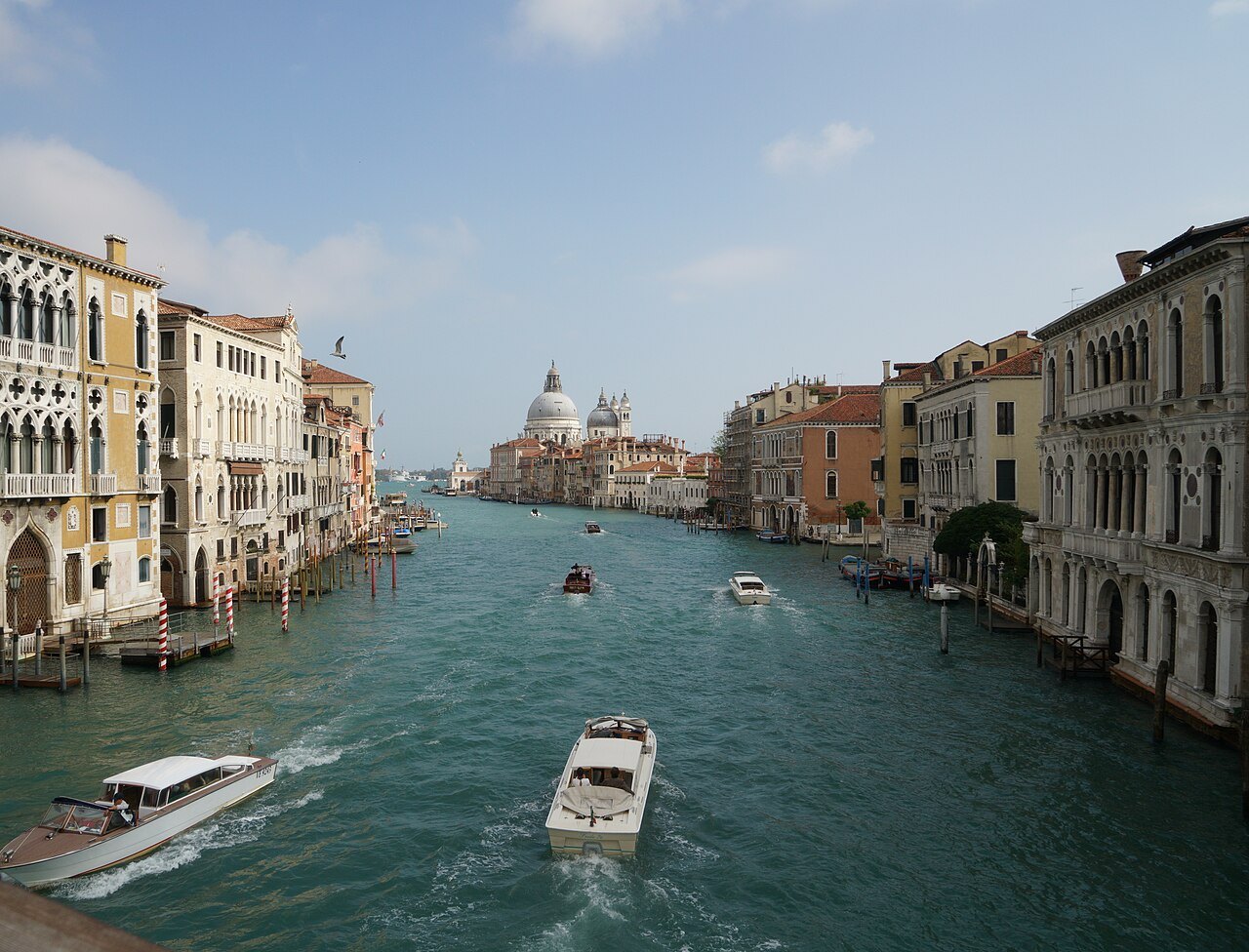
Combine the climb with the basilica and the piazza below, or come here first, before walking the rest of the city, to see from above how its streets and canals actually connect, since the belfry is the one point in the center that shows the whole shape of Venice at once.
Read nextIII
More from the journal
- St Mark's BasilicaHow do you visit St Mark's Basilica?St Mark's is a working church with four separate visits, a line that crosses the Piazza on busy days, and a golden interior that rewards knowing where to look. How the visit is divided, how to book, when to go, and a route through the church, the Pala d'Oro and the loggia of the horses.Read the piece →
- Piazza San MarcoWhy are there two columns at the water's edge of the Piazzetta?The story behind the two granite columns at the water's edge of the Piazzetta, and what their statues represent.Read the piece →
- When to ComeAcqua Alta in Venice: the Tide, the Sirens and the WalkwaysBetween autumn and spring, exceptional tides flood the lowest parts of Venice. What causes the acqua alta, how the levels are measured, what the sirens mean, where the raised walkways go, what the MOSE barriers changed, and how to plan a day around a high tide.Read the piece →