FIVE SYNAGOGUES OF THE GHETTOI
What are the five synagogues of the Venetian Ghetto?
A guide to the five historic synagogues of the Venetian Ghetto, their communities, and how to see them on a guided tour.
The answer in fullII
Read on
Five scole behind plain walls
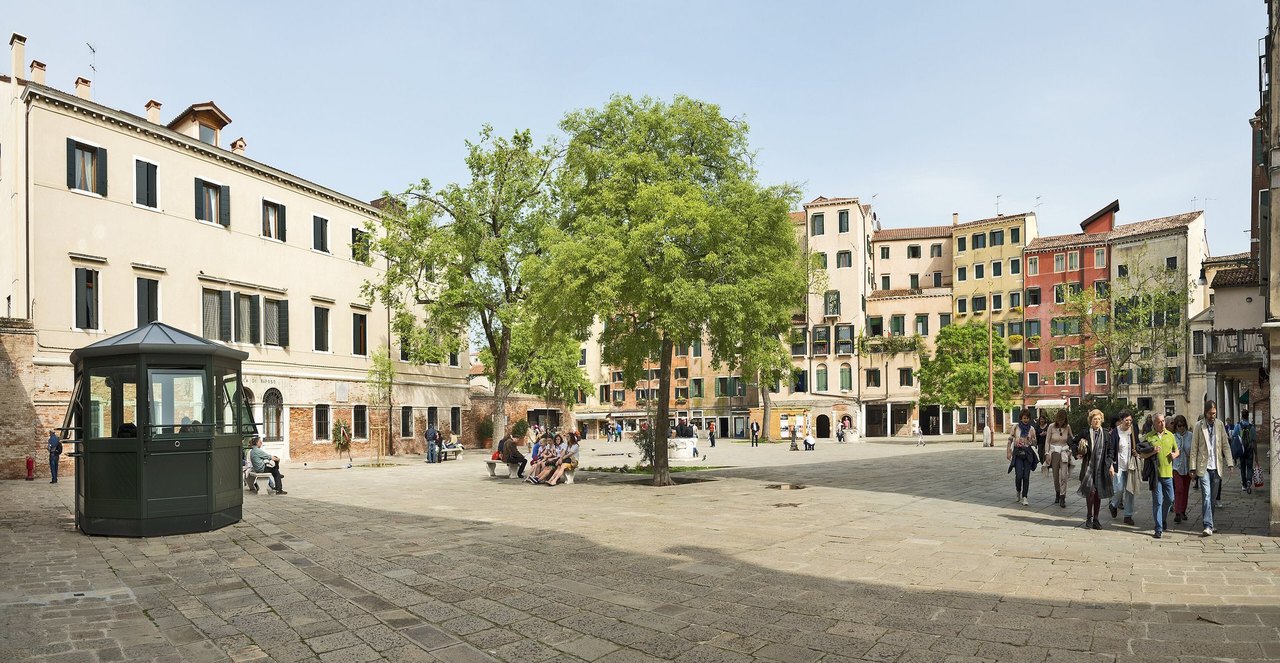
The Venetian Ghetto holds five historic synagogues, called scole, built by the different Jewish communities who were confined here from 1516. On the broad, quiet Campo del Ghetto Nuovo nothing announces them: each scola was fitted into the upper floor of an existing house rather than built as a free-standing structure, which is why visitors can stand in the campo surrounded by synagogues without noticing a single one, a deliberate anonymity that suited both the authorities who imposed the quarter and the community that worshipped inside it.
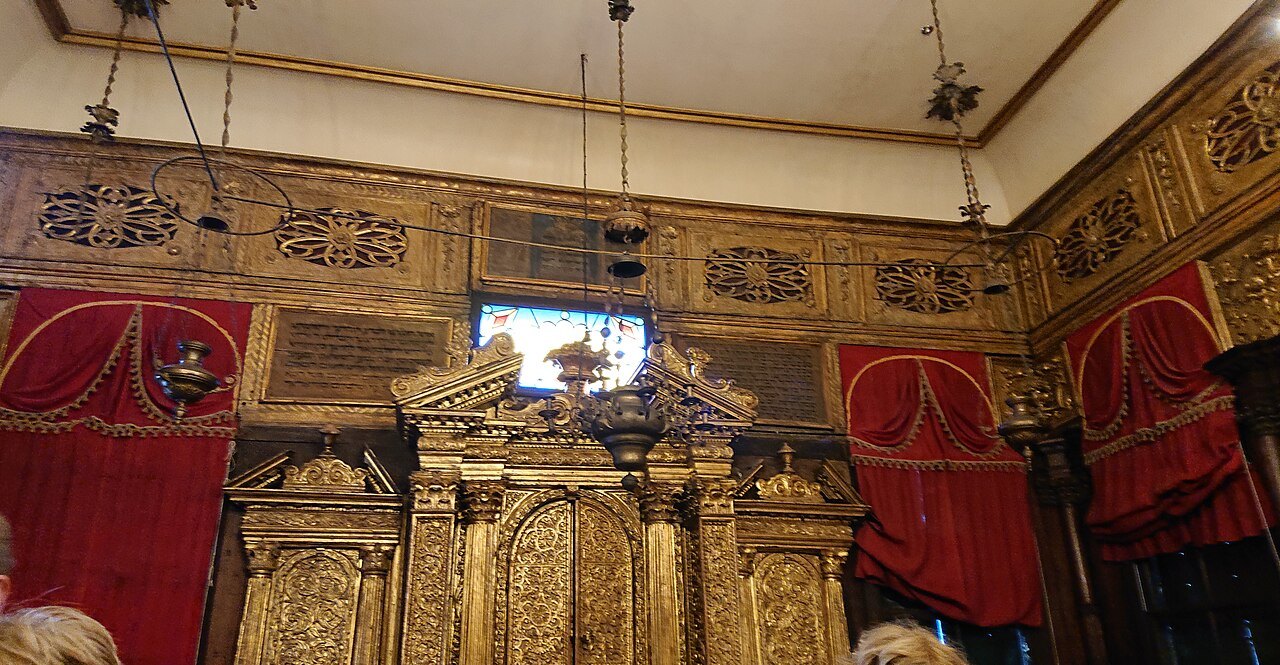
Four of the five were founded by distinct national communities, each keeping its own rite, language and customs rather than merging into a single Venetian congregation: the Scola Grande Tedesca for Jews from German lands, the Scola Italiana for Italian Jews, the Scola Spagnola for Spanish and Portuguese Jews, and the Scola Levantina for Jews from the eastern Mediterranean. The fifth, the Scola Canton, may have begun as a private synagogue.
The Ghetto grew twice to hold its communities: the Ghetto Vecchio was added in 1541, largely for Levantine Jews, and the Ghetto Novissimo followed in 1633. Because the quarter could never spread outward, its houses rose instead, some to eight stories, taller than anywhere else in the city, and the synagogues sit hidden within that same crowded, vertical fabric of ordinary buildings.
The German, Italian and Canton synagogues
The Scola Grande Tedesca serves the community of Jews from German lands, among the first required to move into the Ghetto Nuovo under the 1516 decree; even the word ghetto itself is said to carry a German pronunciation, a hard "g" given to the Venetian geto by these earliest arrivals. The Tedesca is one of the oldest of the five scole and stands within the Ghetto Nuovo.
The Scola Italiana was built by and for Italian Jews, distinct from the German, Spanish, Levantine and Portuguese congregations around it, each of which kept its own prayers and customs rather than share a single rite. Its presence in the same small campo as the Tedesca is a reminder of how many separate communities, speaking different languages, were pressed into this one confined quarter of Cannaregio.
The Scola Canton is the smallest and most uncertain in origin of the five; it may have started life as a private synagogue rather than one built for a whole community. Together with the Tedesca and the Italiana, it stands in the Ghetto Nuovo, the original island enclosed by the 1516 decree.
The Levantine and Spanish synagogues
The Scola Levantina was built for Jews from the eastern Mediterranean, a community that grew large enough to prompt the Ghetto's first expansion: the Ghetto Vecchio, added in 1541. Levantine merchants were valuable to Venetian trade, and their synagogue, like the others, is folded into the upper floor of an ordinary house rather than announced by any façade onto the street or campo.
The Scola Spagnola served the Spanish and Portuguese Jews of Venice, a community with roots on the Iberian peninsula and its own distinct liturgy and rite. Along with the Levantina, it represents the two communities that arrived later than the German and Italian Jews but became central to the Ghetto's intellectual and commercial life.
Between them, the five scole reflect how cosmopolitan the Ghetto was: its residents spoke Venetian, Judeo-Italian, Judeo-Spanish, French and Yiddish, and chose to keep separate congregations rather than form one community. Walking from one synagogue to the next, on a guided tour, is the clearest way to sense that variety today.
Scholars, printers and worship
The synagogues were the setting for a wider intellectual life. The rabbi Leon of Modena and his pupil Sara Copia Sullam, a poet who ran her own literary salon and debated contemporaries by letter, were among the figures who made the Ghetto known across Europe, alongside the glassmaker Meir Magino and the Hebrew printing houses, including the press of Daniel Bomberg, which produced the first printed Talmud.
Worship continues today. Two of the five synagogues are still used for services by the community of Venice, which now numbers around four hundred and fifty people, only a few of whom live inside the Ghetto itself; the other three are preserved and shown only as part of the museum's guided tours. Which two are in use can vary with the community's calendar, so ask the museum which synagogues the current tour includes.
The campo also holds the Ghetto's Holocaust memorials: bronze reliefs by Arbit Blatas and a tablet naming the victims of the deportations carried out between November 1943 and August 1944, when at least two hundred and five Venetian Jews were sent to the camps. Nearby stands the former Jewish rest home, from which twenty-one residents were taken, and stumbling stones set into the pavement mark their names.
Seeing the synagogues today
The only way into any of the five synagogues is through the Jewish Museum of Venice, in the Campo del Ghetto Nuovo, which runs guided tours covering a selection of the scole; independent entry is not possible. Check the museum's own site for how the tours are organized and which synagogues are included before planning a visit, since the arrangement can change.
The museum and the synagogues observe the Sabbath and the Jewish holidays, so confirm opening information directly with the museum rather than relying on a general city listing, and build some flexibility into a Venice itinerary in case a visit has to be timed around those closures, which can fall at short notice around the main festivals of the Jewish calendar.
Allow about an hour and a half for the museum and a synagogue tour together, and dress as modestly as for any working place of worship. Photography inside the synagogues may be restricted; ask the guide before using a camera. For wider context on timing a visit, see booking ahead.
Getting there
The Ghetto sits in Cannaregio, a short walk from the station along the Rio Terà Lista di Spagna and over the Ponte delle Guglie. The nearest water-bus landings are Guglie and San Marcuola; for routes and tickets see getting around. From the Ghetto it is an easy walk east through Cannaregio toward the Ca' d'Oro and the Rialto.
The quarter is both residential and a place of worship, so visitors should keep voices low, especially in the campo and on the approach to the synagogues, and avoid treating it purely as a photo stop. The guided tour format makes this easier, since a guide sets the pace and explains what is and is not appropriate.
Combine the Ghetto with a longer walk along the Fondamenta di Cannaregio, or treat it as part of a wider day exploring the sestieri beyond San Marco. Allow extra time if bridges are involved along the way, since several require climbing a short flight of steps on each side, and the quarter rewards an unhurried pace rather than a quick pass-through, since much of what matters here, from carved stone to quiet courtyards, is easy to miss at speed.
Read nextIII
More from the journal
- Getting AroundHow the Vaporetto Works: Tickets, Passes and LinesThe vaporetto is Venice's bus: numbered lines run by ACTV along the Grand Canal, around the city and out to the islands. How single tickets and time-based travel cards work, how to decide between them, how to validate, and which lines a visitor actually uses.Read the piece →
- St Mark's BasilicaHow do you visit St Mark's Basilica?St Mark's is a working church with four separate visits, a line that crosses the Piazza on busy days, and a golden interior that rewards knowing where to look. How the visit is divided, how to book, when to go, and a route through the church, the Pala d'Oro and the loggia of the horses.Read the piece →
- When to ComeAcqua Alta in Venice: the Tide, the Sirens and the WalkwaysBetween autumn and spring, exceptional tides flood the lowest parts of Venice. What causes the acqua alta, how the levels are measured, what the sirens mean, where the raised walkways go, what the MOSE barriers changed, and how to plan a day around a high tide.Read the piece →