WINNING THE SAN ROCCO COMMISSIONI
How did Tintoretto win the commission for the Scuola Grande di San Rocco?
The traditional story behind Tintoretto's commission at San Rocco, and how to see the rooms he spent twenty years filling.
The answer in fullII
Read on
A Question With a Famous Answer
Visitors who climb the staircase of the Scuola Grande di San Rocco often ask the same question: how did one painter end up covering every wall and ceiling in the building? Between 1564 and 1587, Tintoretto and his workshop, his son Domenico among them, painted more than sixty canvases here, and all of them still hang in the rooms they were made for.
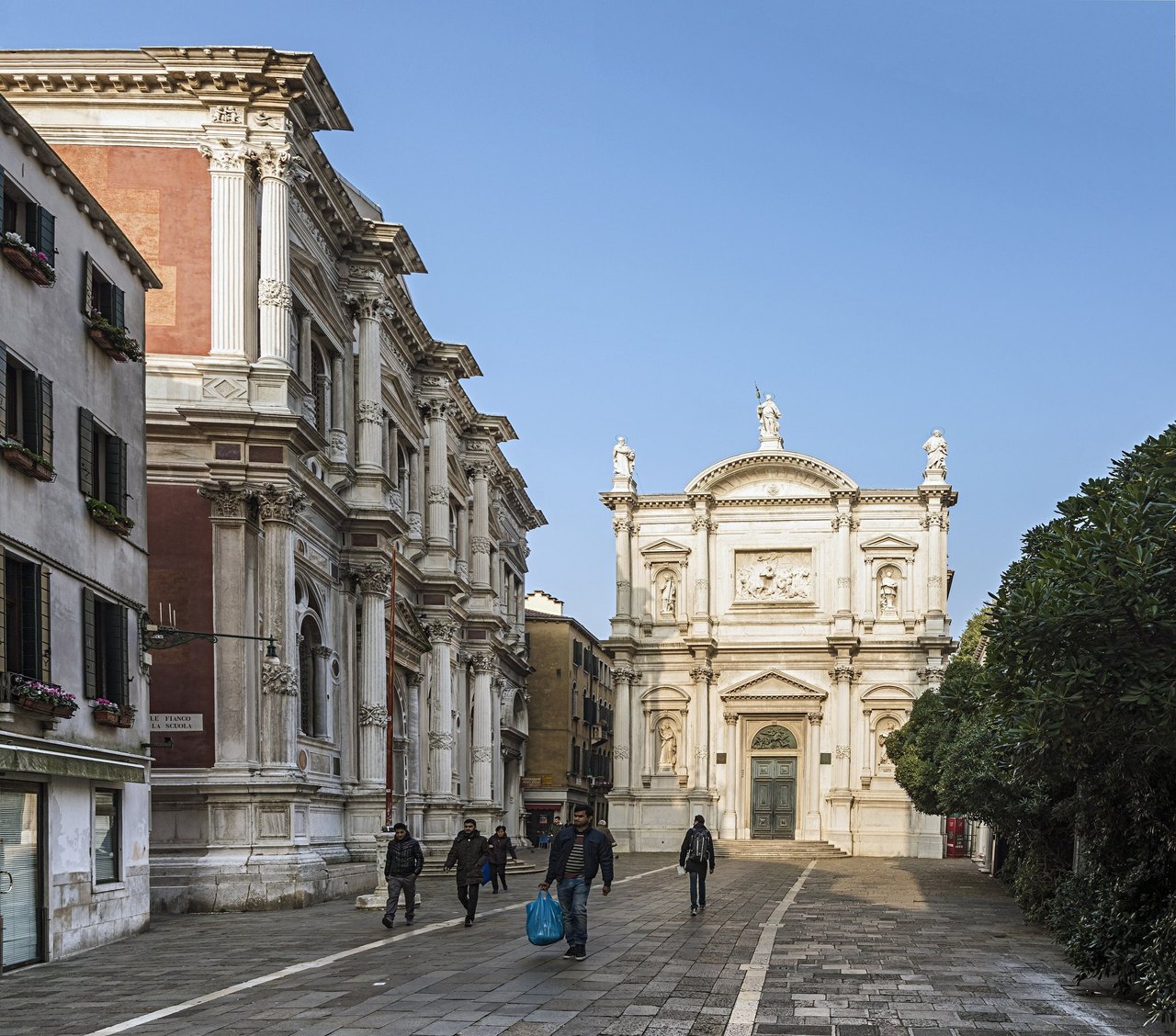
That scale is unusual. Most of Venice's scuole spread their decoration among several masters over time, commissioning one painter for a ceiling and another for the walls years later. San Rocco instead became, in effect, a single artist's life's work, carried out inside a building that had only just been completed.
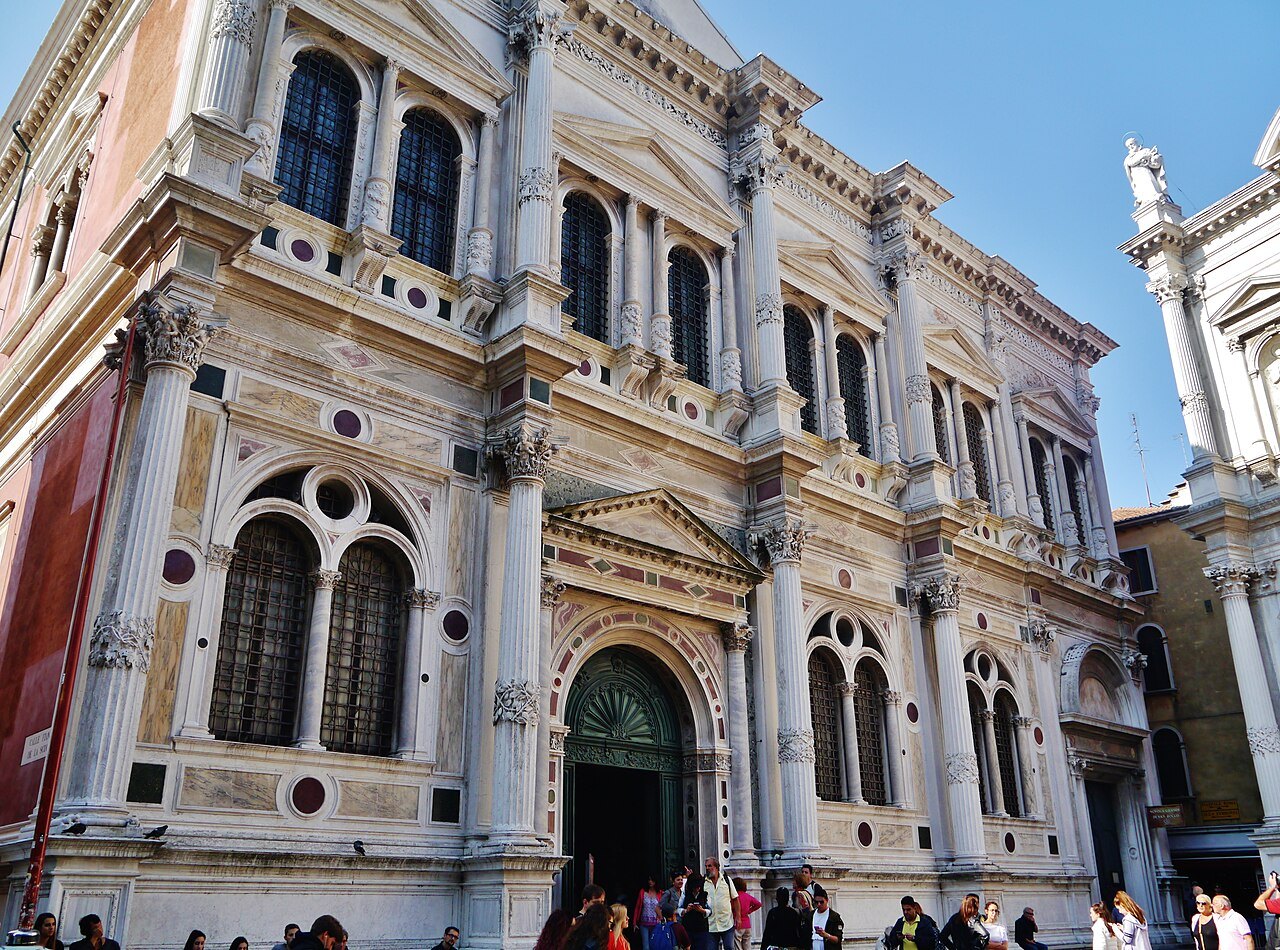
The building itself gave him the opening. It had been finished in September 1560, its halls still bare, and the confraternity that owned it was rich enough, and devout enough, to want its walls and ceilings filled with one coherent telling of its saint's story and of the Christian story behind it.
A Rich Confraternity Builds a House
The Scuola Grande di San Rocco was founded in 1478, a lay confraternity of wealthy citizens named for Saint Roch, trusted to protect Venice from plague. Its fortunes rose fast after it acquired his relics in 1485, and within a few decades it had become the richest of the city's scuole.
Its building went up slowly. Pietro Bon took on the design in January 1515, Sante Lombardo followed in 1524, Antonio Scarpagnino three years later, and Giangiacomo dei Grigi finished the work in September 1560. The plan matched other scuole: a ground-floor hall and an upper hall joined by a grand staircase, with a smaller Sala dell'Albergo beyond.
With the building complete, the confraternity needed painters to fill two enormous interiors, including the small room where its governing boards actually sat, the Sala dell'Albergo. It is at that decision, choosing who would design the room's ceiling, that the story of Tintoretto's commission is usually set.
The Story Told About the Ceiling
The traditional account, repeated in histories of the Scuola for centuries, holds that the confraternity invited several painters to submit designs for the ceiling of the Sala dell'Albergo, following the normal practice of asking for sketches before any contract was awarded, so the board could compare ideas and choose the one it liked best.
Tintoretto, the story goes, did not submit a sketch at all. Instead he had a finished canvas fitted into the ceiling opening, then offered it outright as a gift to Saint Roch, a gesture the confraternity's own charitable rules made awkward to refuse.
That is the account passed down by guides and historians rather than anything fixed in the confraternity's own displayed records, so visitors curious about the fuller version, and about how reliable it is, should ask at the Scuola or check its official site for its preferred telling.

Whatever the exact mechanics, the outcome survives overhead in the Sala dell'Albergo: the Apotheosis of Saint Roch, surrounded by allegories of Venice's other Scuole Grandi, in the same small room that holds Tintoretto's Crucifixion filling the facing wall.
Decades of Work That Followed
Having secured the room, Tintoretto kept working for the confraternity for more than twenty years. Between 1564 and 1587 he and his workshop, including his son Domenico, filled the ceiling and walls of the Sala Superiore, the ground-floor Sala Terrena, and the Sala dell'Albergo with more than sixty canvases in total.
The result is unlike a museum hang. Every painting is still in the room it was made for, inside a building that has barely changed since it was finished, so the pictures still do the job they were painted to do rather than sitting as detached objects on a wall.
The confraternity that commissioned them is also still in business. It remains active today, doing charitable work and looking after its own paintings, much as the brotherhood that first put the project in Tintoretto's hands did in the sixteenth century.
Music Followed the Paintings
Wealth and reputation built on the paintings carried the Scuola into music as well. Giovanni Gabrieli played the organ here as well as at St Mark's and wrote music for the building, part of the same confraternity culture that had commissioned Tintoretto generations earlier.
An English traveler, Thomas Coryat, described how the music performed in these halls impressed him, in his Crudities of 1611, evidence that the Scuola's reputation for spectacle, first built on its paintings, extended into sound as well.
That reputation lasted. In 1958, Stravinsky conducted the first performance of his Threni in these same halls, a reminder that the rooms Tintoretto filled have kept drawing major work to the building long after the sixteenth century ended.
Seeing the Room at the Center of the Story
Start downstairs in the Sala Terrena, where large canvases tell the life of the Virgin, from the Annunciation and the Adoration of the Magi to the Flight into Egypt and the Assumption, with two solitary saints, Mary Magdalene and Mary of Egypt, reading near the end of the sequence.
Climb the staircase to the Sala Superiore, where the ceiling carries Old Testament scenes and the walls follow the life of Christ, from the Adoration of the Shepherds through the Last Supper to the Resurrection and Ascension, the two cycles answering each other overhead and around you.
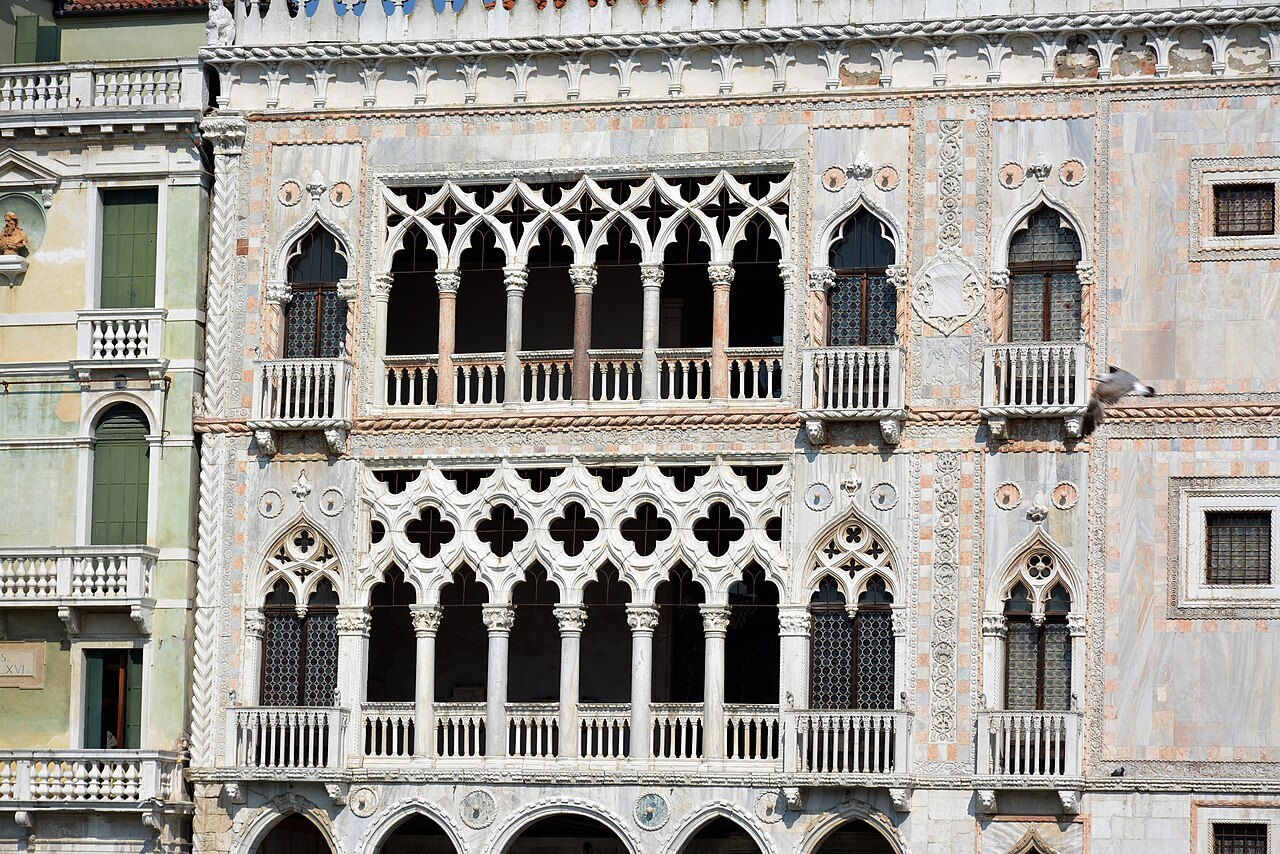
Then step into the Sala dell'Albergo itself, the smallest and most concentrated room in the building, where the Apotheosis of Saint Roch fills the ceiling and Tintoretto's Crucifixion fills an entire wall, facing Christ before Pilate and the Ascent to Calvary.
The church of San Rocco beside it holds the saint's relics, and the Frari stands a minute away across the campo; the two together begin a walk through San Polo toward the Rialto market described in the site's itineraries.
How to Visit
The Scuola opens every day of the year except Christmas and New Year's Day; confirm the current hours on its official site before setting out, where the confraternity also explains that admission fees go toward restoring its artworks and funding its charitable work. Booking ahead is not required.
Allow at least an hour and a half. The halls are high and the canvases dark with age, so give your eyes time to adjust, and look at the ceiling of the Sala Superiore in sections rather than trying to take it in all at once.
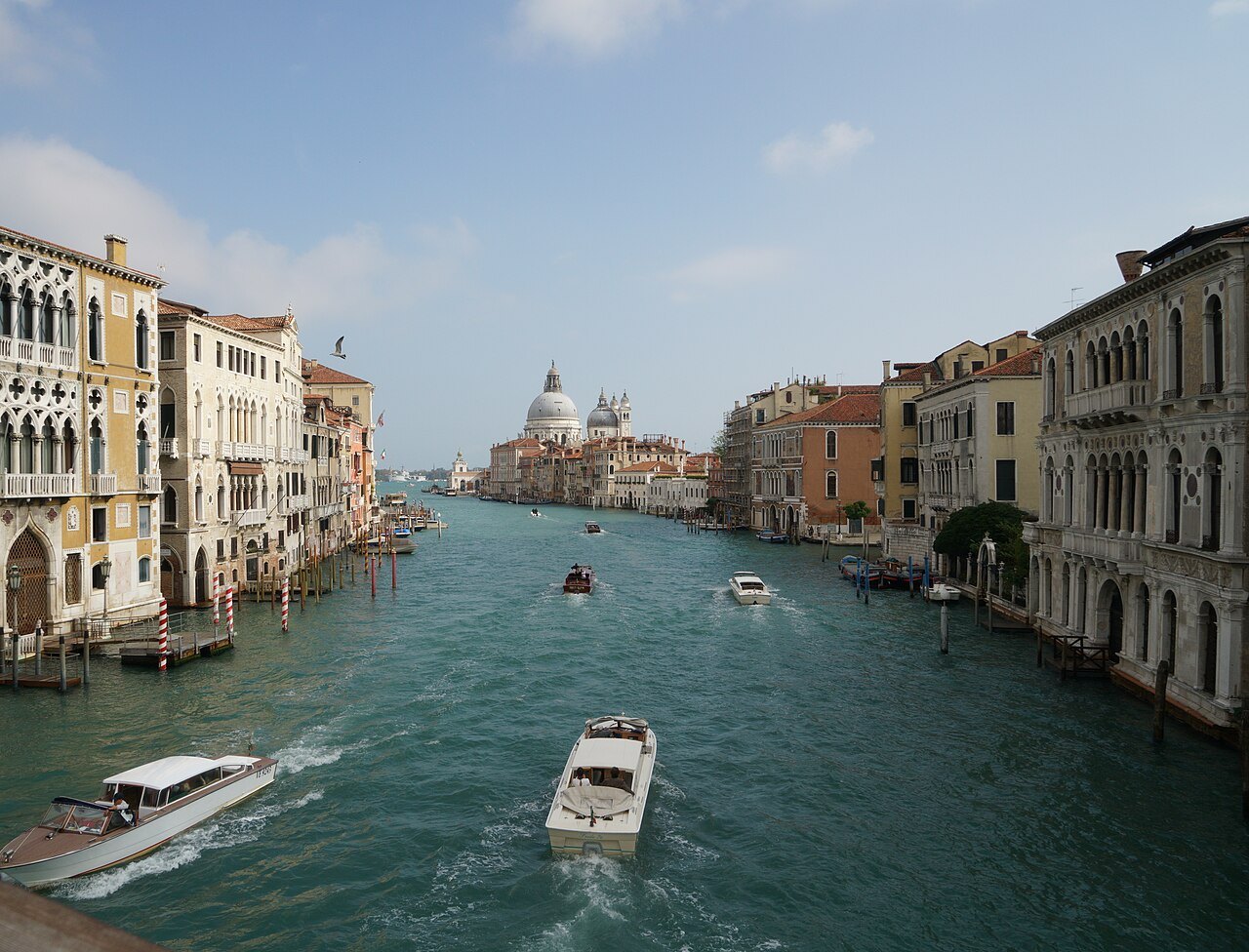
The paintings needed saving. Many have been restored with help from the World Monuments Fund, though even restored they hang high and dark, and the effect is of a whole decorated building rather than of individual masterpieces, which is exactly what makes the Scuola unlike an ordinary gallery.
Read nextIII
More from the journal
- The FrariWhat makes Titian's Assumption in the Frari so famous?Why Titian's Assumption still commands the Frari's high altar, and how to see it properly on a visit.Read the piece →
- St Mark's BasilicaHow were the gold mosaics of St Mark's Basilica made?How glass, gold leaf, and eight centuries of retouching created the golden interior of St Mark's Basilica.Read the piece →
- When to ComeAcqua Alta in Venice: the Tide, the Sirens and the WalkwaysBetween autumn and spring, exceptional tides flood the lowest parts of Venice. What causes the acqua alta, how the levels are measured, what the sirens mean, where the raised walkways go, what the MOSE barriers changed, and how to plan a day around a high tide.Read the piece →