THE MAKING OF GOLD MOSAICI
How were the gold mosaics of St Mark's Basilica made?
How glass, gold leaf, and eight centuries of retouching created the golden interior of St Mark's Basilica.
The answer in fullII
Read on
A Chapel Built to Shine
St Mark's Basilica began as the doge's private chapel, the state church of the Republic of Venice, and it remained under the doge's authority until the Republic fell in 1797; it became the cathedral of the Patriarch of Venice only in 1807. The present church, the third on the site, was begun probably in 1063 under Doge Domenico Contarini, modeled on the Church of the Holy Apostles in Constantinople.
That model gave St Mark's its Greek-cross plan, a dome over the crossing and one over each arm, later adapted with a longer nave for state processions. As first built it was a plain brick church. Over the following centuries, above all the thirteenth, its walls inside and out were sheathed in marble and precious stone, much of it plunder brought home from Constantinople.
Above that marble sheathing, the domes, vaults, and upper walls are covered in gold-ground mosaic showing saints, prophets, and scenes from the Bible. It is this covering, more than any single image, that gives the interior its glow and makes St Mark's look eastward more than any other great church in Italy.
How Gold Mosaic Is Made
Gold mosaic is built from tesserae, small cubes of glass or stone set into wet plaster. A gold tessera is made by laying a sheet of gold leaf over a base of colored glass, then fusing a thin, almost transparent layer of glass on top to protect it; the sandwich is then cut into tiny squares.
Setters pressed each tessera into the plaster while it was still workable, tilting the pieces at slightly different angles rather than laying them flat. That irregularity is deliberate: it scatters light in many directions instead of one, so the surface catches lamps and daylight unevenly and seems to move as a visitor walks beneath it.
Inside St Mark's, many of the original windows were walled up over the centuries to make more surface for mosaic. That change leaves the areas under the galleries in shadow and makes the gold blaze when the lamps are lit, an effect closer to a treasury than to an ordinary church interior.
Byzantine Hands, Venetian Hands
The model for St Mark's decoration, like its architecture, came from Constantinople. After the Fourth Crusade of 1204, Venetians stripped churches, palaces, and public monuments there of columns, reliefs, and sculpture and shipped them home; some columns were sliced into panels, others paired across the facades, a pattern of reuse that shaped the whole building outside.
Venetian craftsmen absorbed the Byzantine style so completely that they went on to copy Byzantine capitals with a skill that makes some of their work hard to distinguish from the originals. The same closeness of imitation applies to the mosaic workshops, which continued to work in a Byzantine manner long after Byzantine artisans themselves had gone home.
The mosaics visible today span some eight hundred years of work. Some panels are Byzantine masterworks from the church's early centuries; others were designed later from drawings supplied by major Venetian painters, including Titian, Tintoretto, Veronese, and Paolo Uccello, and then translated into glass and gold by mosaicists working to their designs.
Eight Centuries of Retouching
Very little of the mosaic scheme is untouched. Many sections were retouched or replaced outright as tastes changed over the centuries, and damaged panels were renewed whenever necessary, so that a single dome can mix work from several distinct periods without an untrained eye noticing where one campaign ends and another begins.
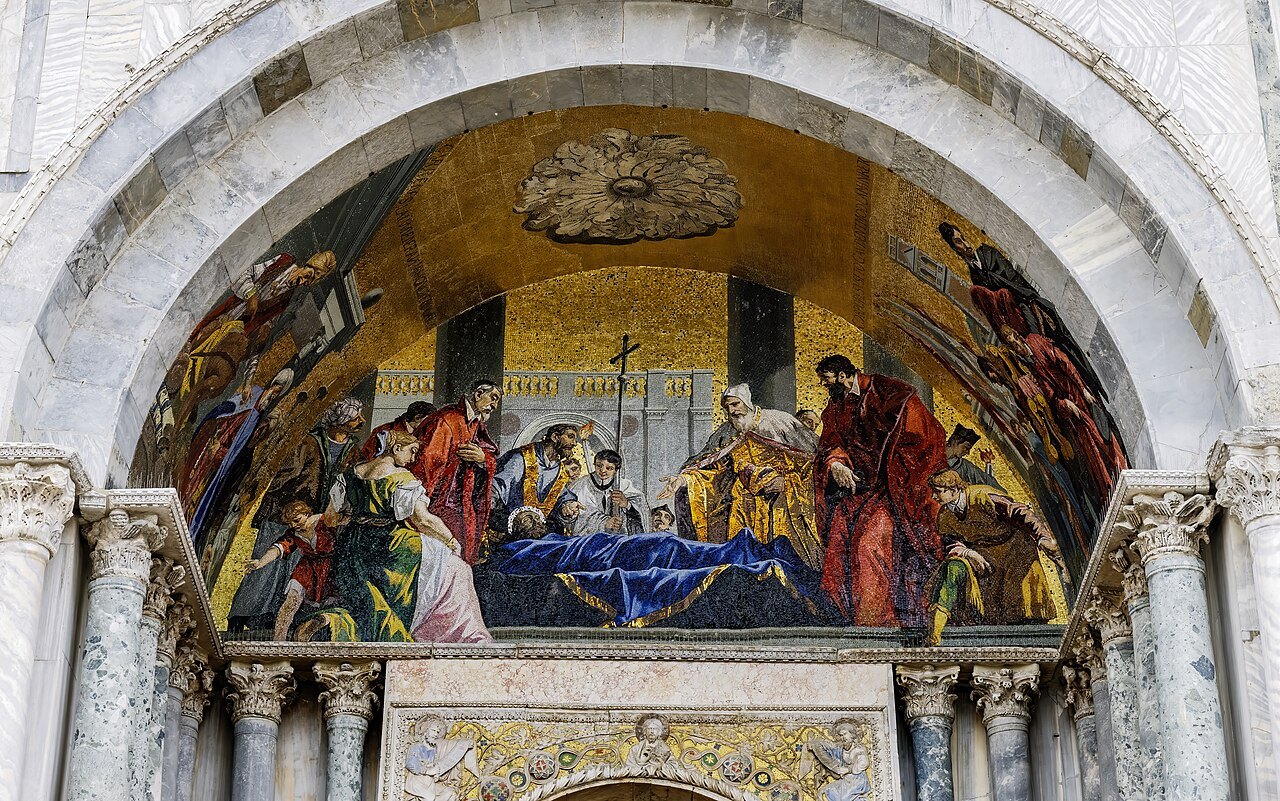
The facade shows the pattern clearly. Above the west doors, mosaics in the lunettes tell how Saint Mark's body was taken from Alexandria and brought to Venice. Only the one on the far left, showing the relics carried into the church, survives from the thirteenth century; the rest were remade between the seventeenth and nineteenth centuries.
Structural change followed the same logic. In the thirteenth century the low brick domes were given tall outer shells of lead-covered timber with lanterns on top, which is why they look bulbous from the Piazza and considerably flatter from inside, where the older, lower dome still frames the mosaic overhead.
What the Mosaics Show
Visitors enter through the narthex, the vaulted porch that runs across the front of the church. Its mosaics tell the stories of Genesis and Exodus, from the Creation through to Moses, arranged so that a visitor moving from one bay to the next reads the sequence roughly in the order it was designed to be read.
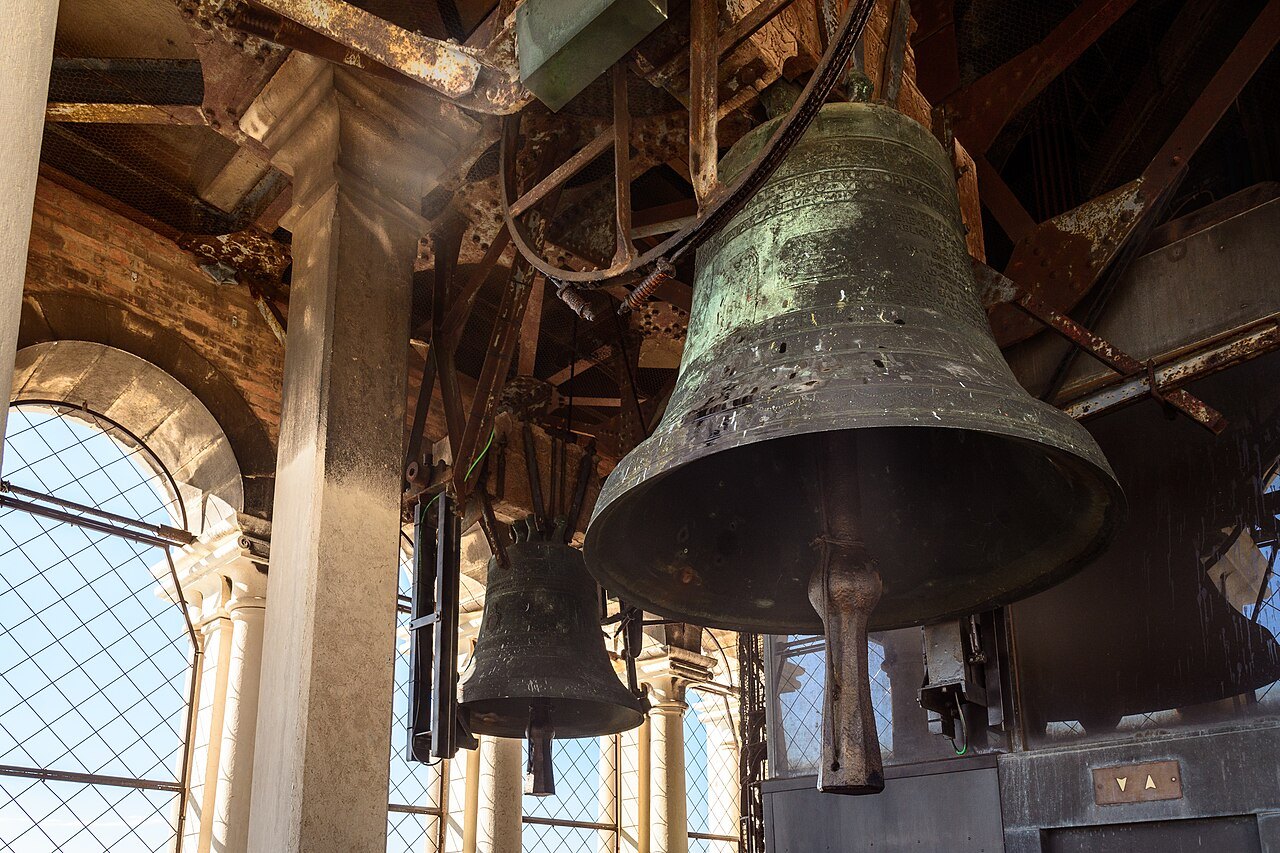
Inside the church proper, the domes, vaults, and upper walls carry saints, prophets, and scenes from the life of Christ and the life of Saint Mark, arranged in the layered hierarchy typical of Byzantine church decoration, with the most sacred images set highest and closest to the light of the lamps below.
The light itself is part of the design. It is kept deliberately low, so that the gold does not simply reflect daylight evenly but glows unevenly when the lamps inside are lit, drawing the eye toward whichever section is illuminated at that moment rather than presenting the whole scheme at once.
Seeing Them for Yourself
The basilica's own site divides a visit into separate parts: the church itself, the Pala d'Oro behind the high altar, the museum with the Loggia dei Cavalli, and the Campanile, each with its own entry point, its own separate line, and its own way of showing off the mosaics from a different angle.
Allow about an hour for the church and the Pala d'Oro, and another for the museum and the loggia. The museum is where the original bronze horses now stand, moved indoors since 1974, and its loggia is the balcony over the main portal, giving a close view of the upper facade and the Piazza below.
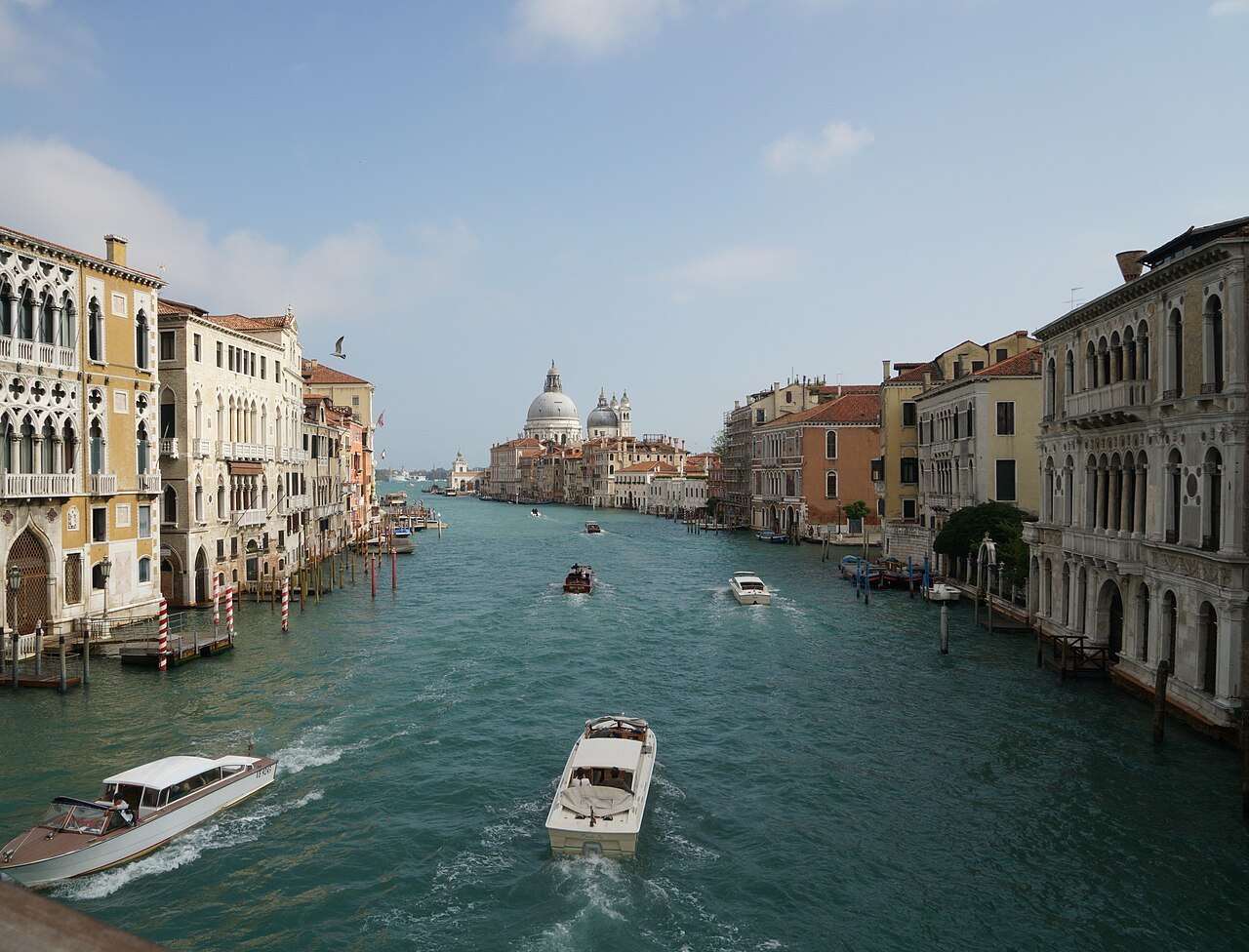
It is a working church, and services close parts of it without notice. Lines form across the Piazza on busy days; the basilica sells advance entries through its official site, which is also the only place to check the hours for the day of a planned visit; see booking ahead.
Combine the basilica with the Doge's Palace next door and the Piazza outside; together they formed the political and religious heart of the old Republic. Seeing the mosaics properly, then the palace rooms and the square itself, takes most of a morning rather than a quick stop squeezed between other sights nearby.
Myths and Honest Notes
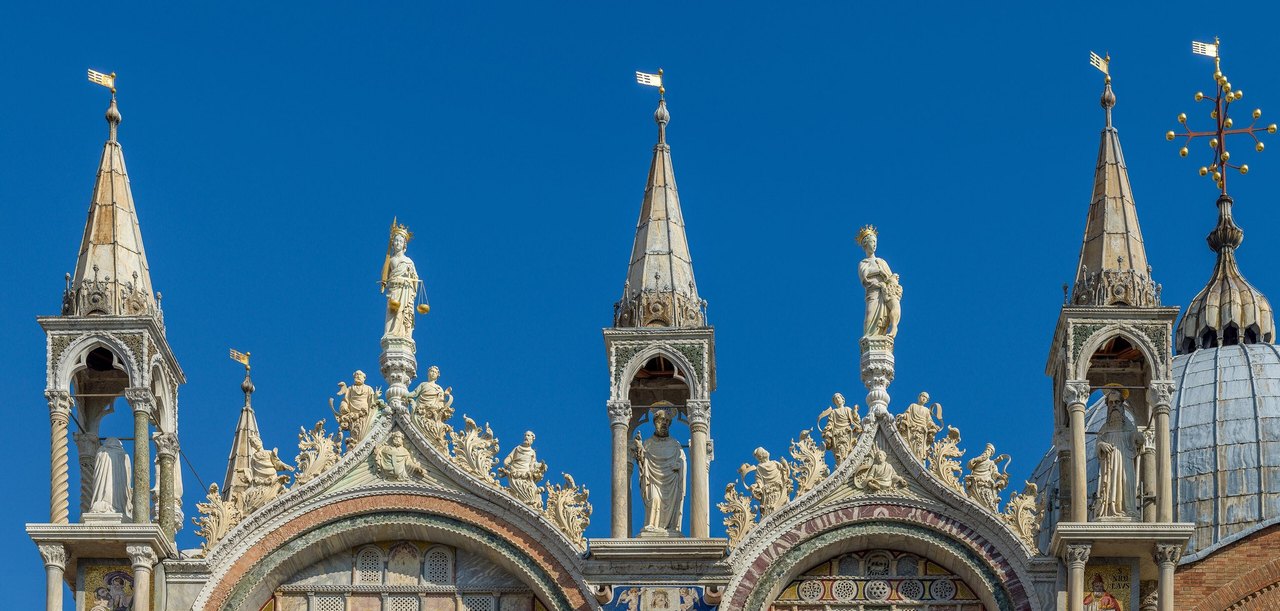
Much of the splendor around the mosaics is loot rather than local craft. The bronze horses over the main portal, the porphyry Tetrarchs set into the south facade, many columns and marble panels, and a good part of the treasury came from the sack of Constantinople in 1204, displayed afterward as trophies of Venetian power.
Napoleon had the horses taken down and shipped to Paris after conquering Venice in 1797; they were restored to their place in front of the basilica on 13 December 1815. The ones now over the portal are copies, and the originals have stood inside the museum since 1974, at close range to their own mosaic setting.
Even the relics the mosaics narrate are not free of dispute. Venice's claim to Saint Mark rests on the story of merchants taking his body from Alexandria in 828 or 829; in 1968 a portion of the relics was returned to the Coptic Church of Alexandria as a gesture of goodwill, reuniting them with the saint's head.
Read nextIII
More from the journal
- St Mark's BasilicaHow do you visit St Mark's Basilica?St Mark's is a working church with four separate visits, a line that crosses the Piazza on busy days, and a golden interior that rewards knowing where to look. How the visit is divided, how to book, when to go, and a route through the church, the Pala d'Oro and the loggia of the horses.Read the piece →
- The Doge's PalaceCan you walk across the Bridge of Sighs?Yes: the Bridge of Sighs is part of the visit to the Doge's Palace, which crosses it to the New Prisons and comes back the other way. What the bridge was really for, where the romantic name came from, how the palace route reaches it, and where to stand for the classic view from outside.Read the piece →
- When to ComeAcqua Alta in Venice: the Tide, the Sirens and the WalkwaysBetween autumn and spring, exceptional tides flood the lowest parts of Venice. What causes the acqua alta, how the levels are measured, what the sirens mean, where the raised walkways go, what the MOSE barriers changed, and how to plan a day around a high tide.Read the piece →