ART AND POWER IN CASTELLOI
Who was Colleoni, and why is his statue outside Santi Giovanni e Paolo?
Inside Venice's pantheon of doges, and the fierce bronze captain who guards its square.
The answer in fullII
Read on
A pantheon in brick
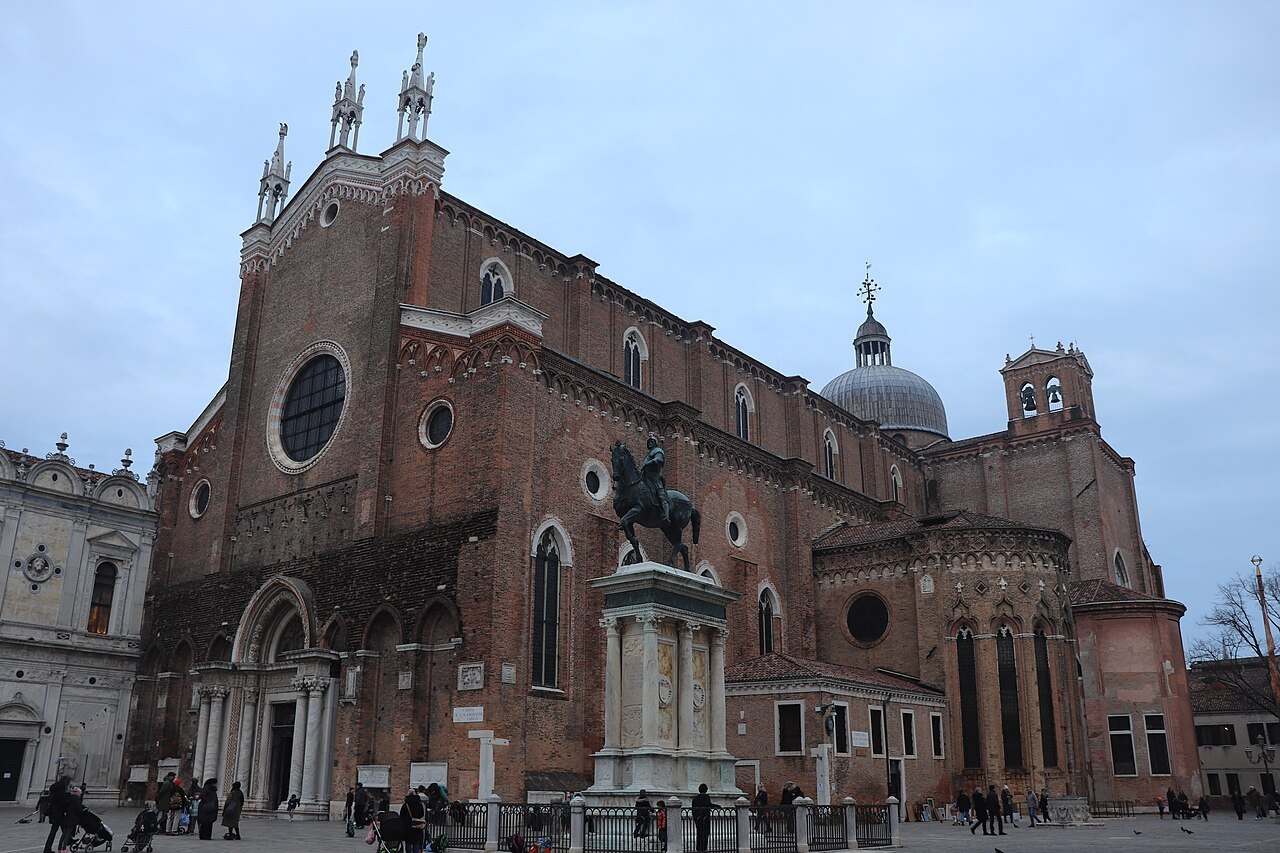
Santi Giovanni e Paolo, which Venetians run together as San Zanipolo, is one of the largest churches in Venice and the principal Dominican church of the city, a huge Italian Gothic hall of brick in the sestiere of Castello. After the fifteenth century the funerals of every doge were held here, and twenty-five doges lie inside, along with admirals, generals, painters and the heroes of the Republic's wars. It is the city's pantheon.
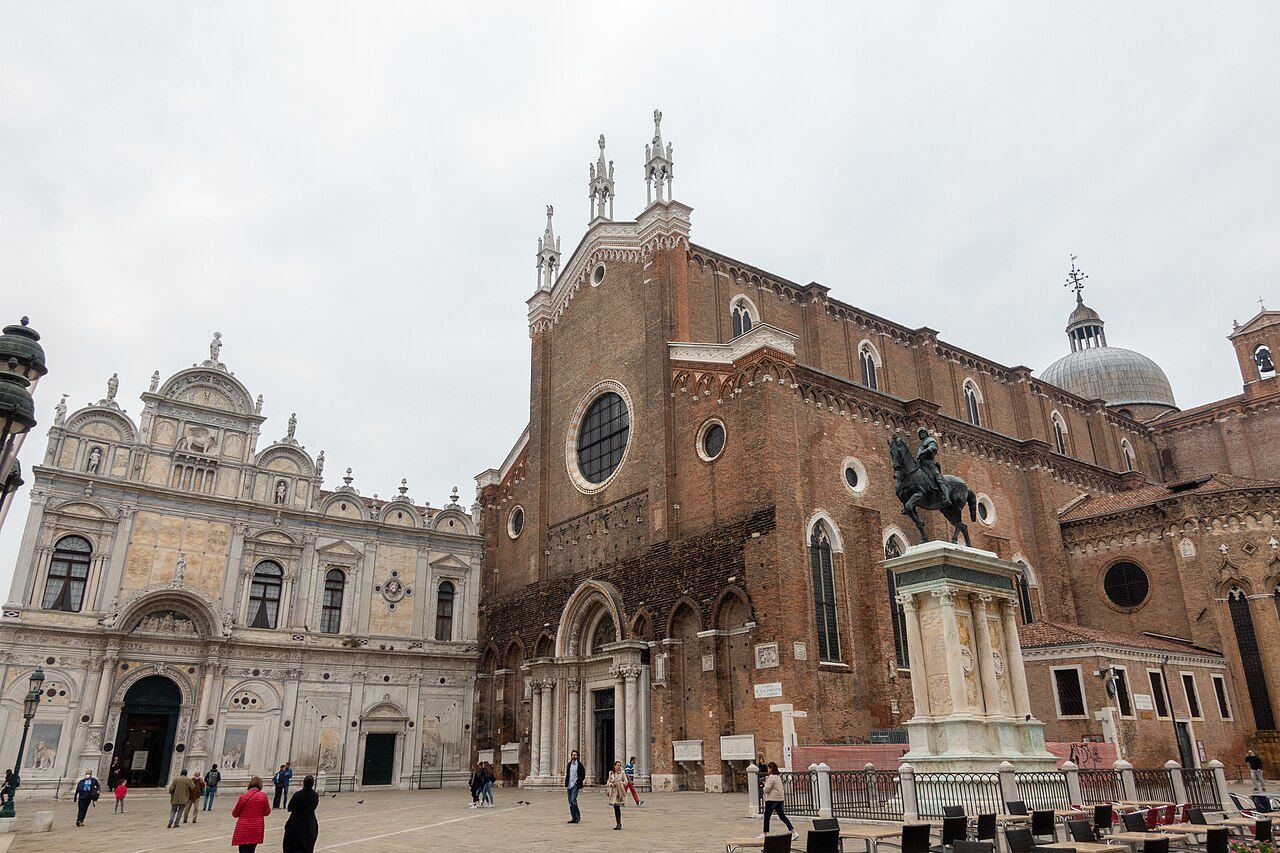
Outside, in one of the largest squares in Venice, stand two further masterpieces: Andrea del Verrocchio's bronze equestrian statue of Bartolomeo Colleoni and the marble facade of the Scuola Grande di San Marco. Few places in the city hold so much within so small a space, and the campo is noticeably quieter than Piazza San Marco.
The church sits within Castello, one of the quieter sestieri of the city, and makes a natural stop on a longer walk rather than a destination reached in isolation. It rewards visitors willing to slow down and read its monuments rather than hurry past them toward somewhere else.
A church from a dream
According to tradition, Doge Jacopo Tiepolo gave the Dominicans a piece of swampland here in 1246, after dreaming of a flock of white doves flying over it. Their first church on the site was pulled down in 1333, when the present building was begun, and work continued until it was completed in 1430.
The church is dedicated not to the apostles John and Paul but to two little-known early Christian martyrs of Rome who share their names. It was built for preaching to large congregations, which explains its scale: a long nave and aisles in the Italian Gothic style, raised entirely in brick.
The church's chief relic is a foot of Saint Catherine of Siena, kept within the building. A Byzantine image known as the Madonna della Pace, held to be miraculous, has its own chapel in the south aisle, a quieter corner worth seeking out among the grander tombs that surround it.
What you see inside
Walk the aisles and the walls become a history of the Republic. On the west wall, around the great door, is Pietro Lombardo's monument to Doge Pietro Mocenigo. In the north aisle stand the tombs of Doge Tommaso Mocenigo and of Doges Pasquale Malipiero and Nicolò Marcello. On the north wall of the choir, the monument to Doge Andrea Vendramin by Tullio Lombardo closes the view down the nave.
Among the dead who were not doges are the painters Gentile and Giovanni Bellini and Palma il Giovane, the admiral Vettor Pisani, and Marco Antonio Bragadin, the commander of Famagusta in Cyprus, who was flayed alive by the Ottomans in 1571; his tomb contains only his skin. Marino Faliero, the doge beheaded for treason in 1355, is buried here too.
The paintings rival the tombs. In the south aisle is Giovanni Bellini's polyptych of Saint Vincent Ferrer; in the south transept, Lorenzo Lotto's Saint Antoninus Giving Alms and a Coronation of the Virgin attributed to Cima da Conegliano. In the chapel of San Domenico, Piazzetta's Saint Dominic in Glory fills the ceiling above five large bronze reliefs of the saint's miracles.
The Chapel of the Rosary, built in 1582 to celebrate the victory of Lepanto, once held paintings by Tintoretto, Titian and Bellini; they were destroyed in a fire in 1867. Today its ceiling carries Veronese's Assumption, Annunciation and Adoration of the Magi, and his Adoration of the Shepherds hangs in the chapel. Veronese's Feast in the House of Levi, painted for this convent's refectory, now hangs in the Accademia.
The Colleoni statue
Bartolomeo Colleoni, a mercenary captain who had served as the Republic's captain general, died in 1475 and left much of his fortune to Venice on condition that his statue be set up in Piazza San Marco. The Republic took the money but, since no statues were allowed in the Piazza, put the statue here instead, in front of the Scuola di San Marco.
Verrocchio won the commission in a competition in 1483 and died in 1488 before it could be cast; Alessandro Leopardi finished the casting and made the pedestal, and the statue was raised in 1496. It is the second great equestrian statue of the Italian Renaissance, after Donatello's Gattamelata of 1453, and the first to stand the horse on three legs without support.
For the competition, Verrocchio made his model of wood and black leather, while his rivals worked in wax and terracotta. The rider is almost four meters tall without the pedestal, and he is not a portrait; Verrocchio is unlikely ever to have seen Colleoni, and made instead the image of a hard, ruthless commander.
The Scuola Grande di San Marco
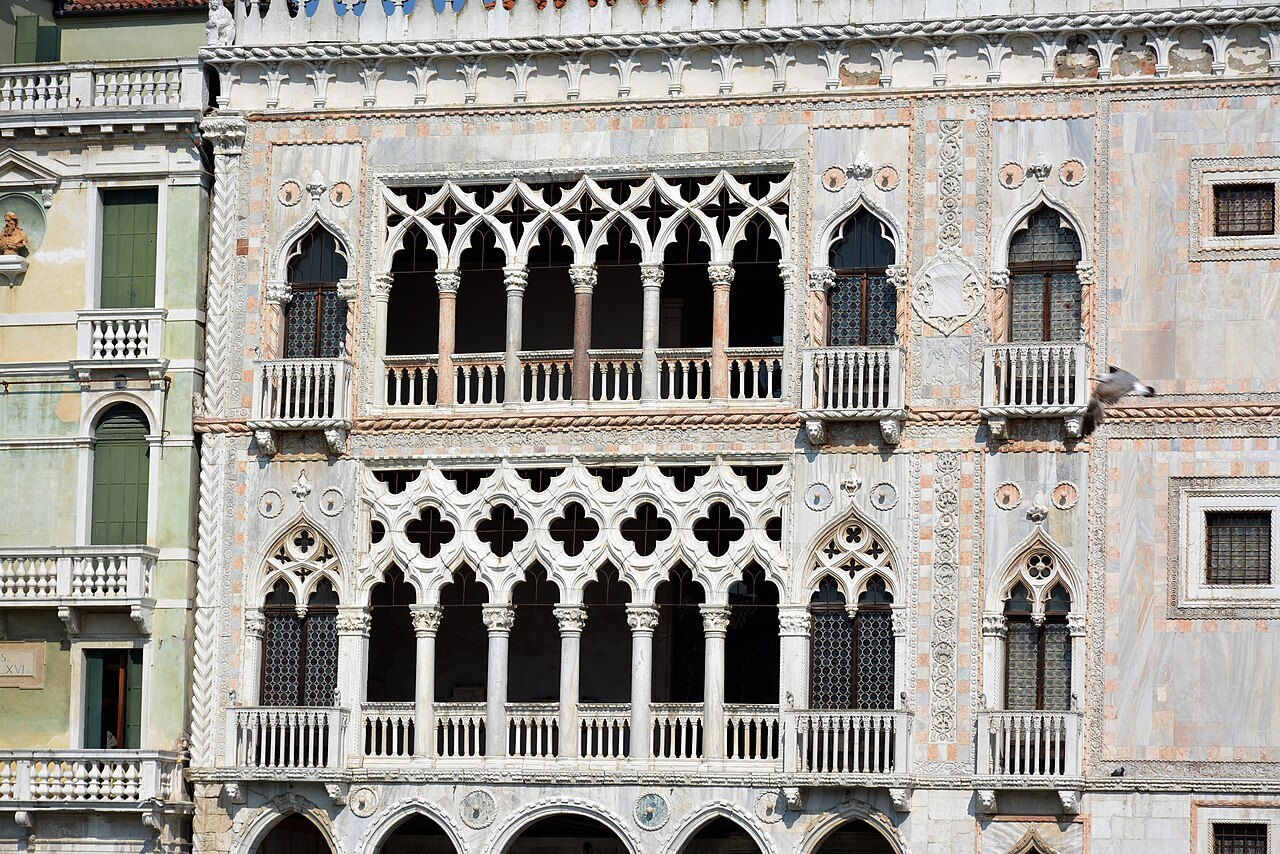
Beside the church, the Scuola Grande di San Marco, rebuilt after a fire in 1485 by Pietro Lombardo and finished by Mauro Codussi, presents a facade of niches, pilasters and white and colored marble. Its ground floor is carved with arches and portals in trompe-l'oeil, painted in stone to look like deep recesses behind the surface.
The confraternity that built it counted three of the great fifteenth-century travelers among its members: Ambrogio Contarini, Giosafat Barbaro and Alvise da Mosto. Tintoretto painted his Miracle of the Slave for the Scuola; the canvas now hangs in the Accademia, alongside other works moved there from Venice's religious houses.
The building became an Austrian military hospital in 1819 and remains the city's hospital today, a use that has continued for two centuries. Part of the complex has functioned as a museum since 2013; visitors wanting to see that section should check current arrangements with the museum directly.
Visiting the church and getting there
The church closes to visitors during services, and its official site gives current visiting times; check these before planning a visit, since they can change. Allow about an hour inside, and bring patience: the tombs and monuments are the point, not something to glance at on the way past.
The campo and the Colleoni statue are there for anyone who walks past, outside the mechanism of tickets or visiting hours that governs the church interior. Pause here even on a short walk through the neighborhood; the statue alone is worth the stop, and the square is rarely crowded.
The nearest water-bus landings are at Fondamente Nove on the north shore, a short walk from the church across a couple of quiet bridges. For current routes, lines and schedules, check with ACTV or the city's official transport pages before setting out, since timetables can change from season to season.
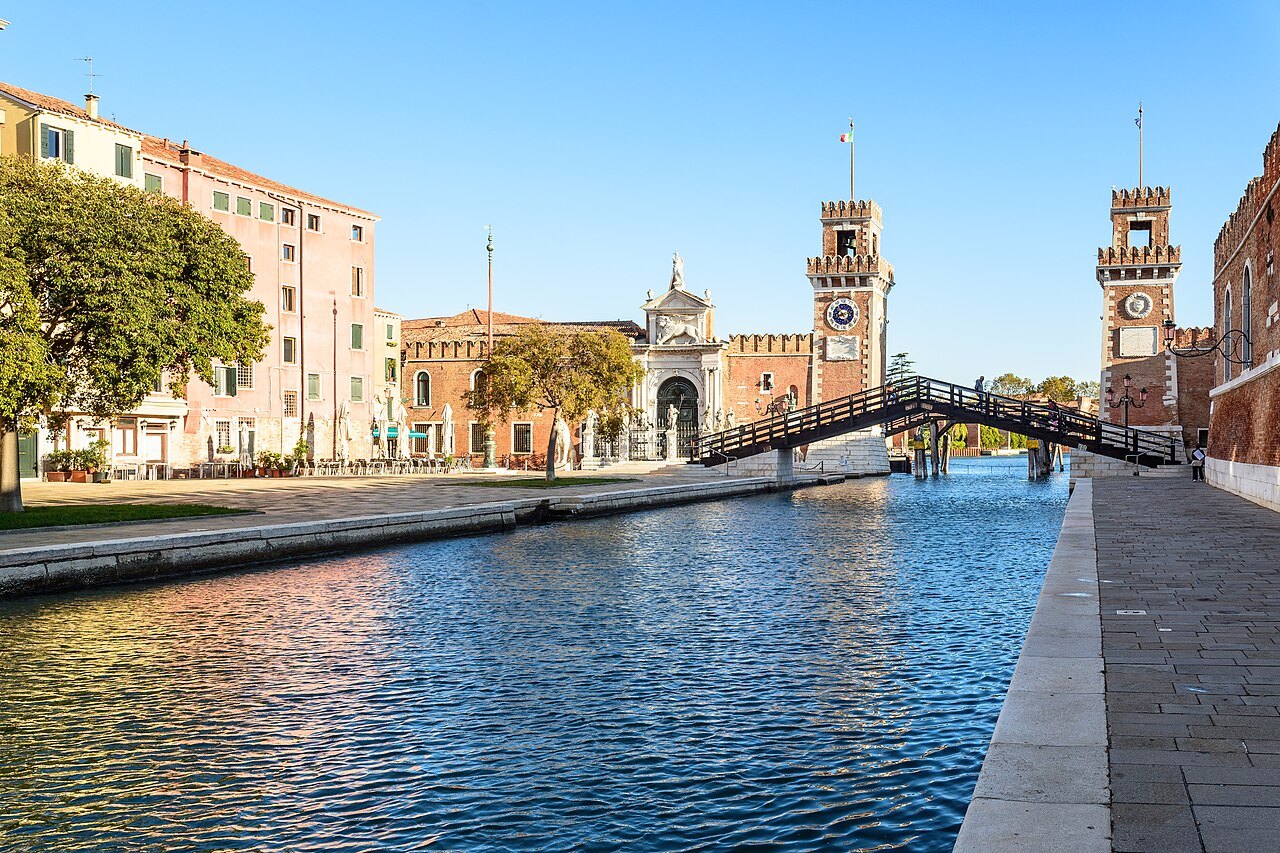
The church fits well into a longer walk through Castello toward the Arsenale, or north from the Rialto through Cannaregio. Either route turns a single visit into part of a fuller day exploring the quieter sestieri, away from the densest crowds that gather near San Marco and the Rialto throughout the day.
Read nextIII
More from the journal
- The Doge's PalaceHow was a doge of Venice elected?How Venice chose its doge, and what the Doge's Palace still shows of a power deliberately kept in check.Read the piece →
- The AccademiaWhich paintings should you not miss at the Gallerie dell'Accademia?A visitor's guide to the paintings not to miss at the Gallerie dell'Accademia, from gold-ground altarpieces to Giorgione and Veronese.Read the piece →
- When to ComeAcqua Alta in Venice: the Tide, the Sirens and the WalkwaysBetween autumn and spring, exceptional tides flood the lowest parts of Venice. What causes the acqua alta, how the levels are measured, what the sirens mean, where the raised walkways go, what the MOSE barriers changed, and how to plan a day around a high tide.Read the piece →