THE NAME BEHIND THE GOLDI
Why is the Ca' d'Oro called the golden house?
Why Venice's most ornate Gothic palace on the Grand Canal is called the House of Gold, and what survives inside.
The answer in fullII
Read on
The House of Gold
The Ca' d'Oro, officially Palazzo Santa Sofia, takes its popular name quite literally: the House of Gold. When the palace was completed in 1437 on the Cannaregio bank of the Grand Canal, its white and pale red stone facade was not left plain. Gilding picked out capitals, cornices and ornamental balls, turning the front into something closer to a jeweled object than a building, a statement of wealth meant to be read from the water.
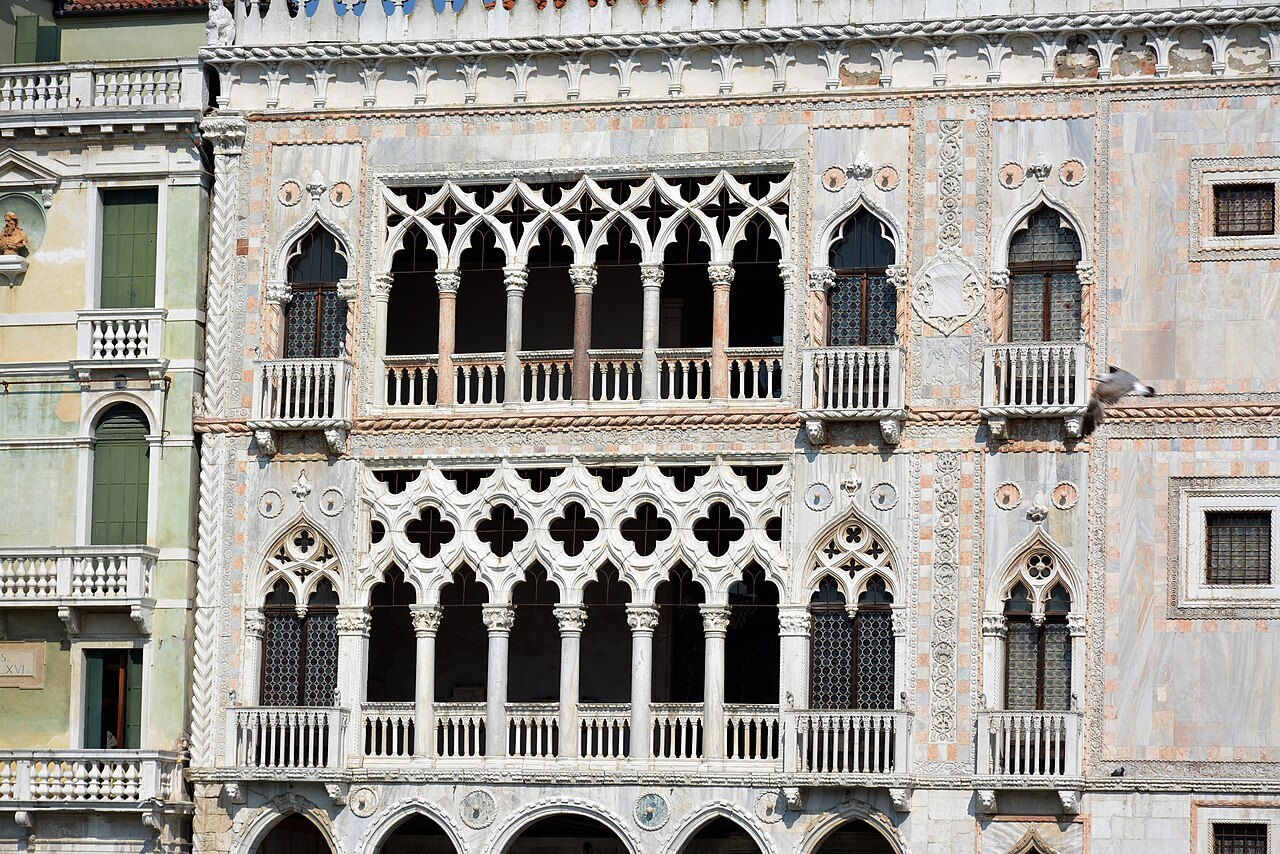
That gold did not last. By 1600 it had worn away entirely, leaving the stone and marble to speak for themselves, yet the name survived the disappearance of what it described. Visitors today see the structure and carving the gilding once decorated, not the shine itself, which is worth knowing before expecting literal gold on arrival.
Since 1927 the palace has also been one of the few grand Grand Canal residences a visitor can enter rather than only admire from a boat. It houses the Galleria Giorgio Franchetti alla Ca' d'Oro, a museum named for the man who spent decades returning the building to something like its original state.
A merchant's statement
The palace was built between 1421 and 1437 for Marino Contarini, from one of the Republic's leading families, on the foundations of an older palace belonging to the Zeno family, which came to him through his marriage to Soradamore Zeno. It replaced an existing structure rather than rising on empty ground.
Contarini was in effect his own chief designer, overseeing the whole project rather than leaving it entirely to his hired masters. His notes and accounts survive, giving scholars an unusually detailed record of how a Venetian palace of this scale and ambition was actually built, stone by stone and payment by payment.
He hired the Venetian architect and sculptor Giovanni Bon with his son Bartolomeo, who also built the Porta della Carta of the Doge's Palace, and Matteo Raverti from Milan, credited with the tracery of the main loggia. In 1431 Contarini's painter, Zoane di Franza, applied the gold that gave the house its name.
Reading the facade
The facade is deliberately asymmetrical, a choice that let light into rooms that could not take side windows because neighboring buildings stood too close. Seen from the water or the far bank, it reads as three stories, each more ornate than the one beneath, tied together by balustrades and finished with a cornice of pinnacles.
At water level a loggia of pointed arches, one wide central arch flanked by narrower ones, opens onto a gondola landing and leads into the androne, the long hall where goods were unloaded, since this was the home of a family that lived by trade. Above it runs the most ornate loggia of all, fronting the great reception hall of the piano nobile.
The stone itself was chosen for show: Istrian stone treated with white lead and oil to shine like marble, red Verona marble oiled to deepen its color, and parapet balls, finials, capitals and moldings all gilded. The mix of Byzantine, Gothic and Islamic motifs is typical of a city that looked east rather than to ancient Rome, a style that also shaped palaces farther along the Grand Canal.
Ruin and rescue
After the fall of the Republic in 1797 the palace passed through several owners and slid into decay, its fittings and upkeep neglected as the great Venetian families that had once competed to build such houses lost both the wealth and the reason to maintain them.
In 1846 Alessandro Trubetzkoi bought the palace and gave it to the ballerina Marie Taglioni. Under their ownership it was renovated so recklessly that the courtyard staircase, the balconies and other Gothic features were stripped out and sold off, a campaign that ended in imprisonment on charges of vandalism.
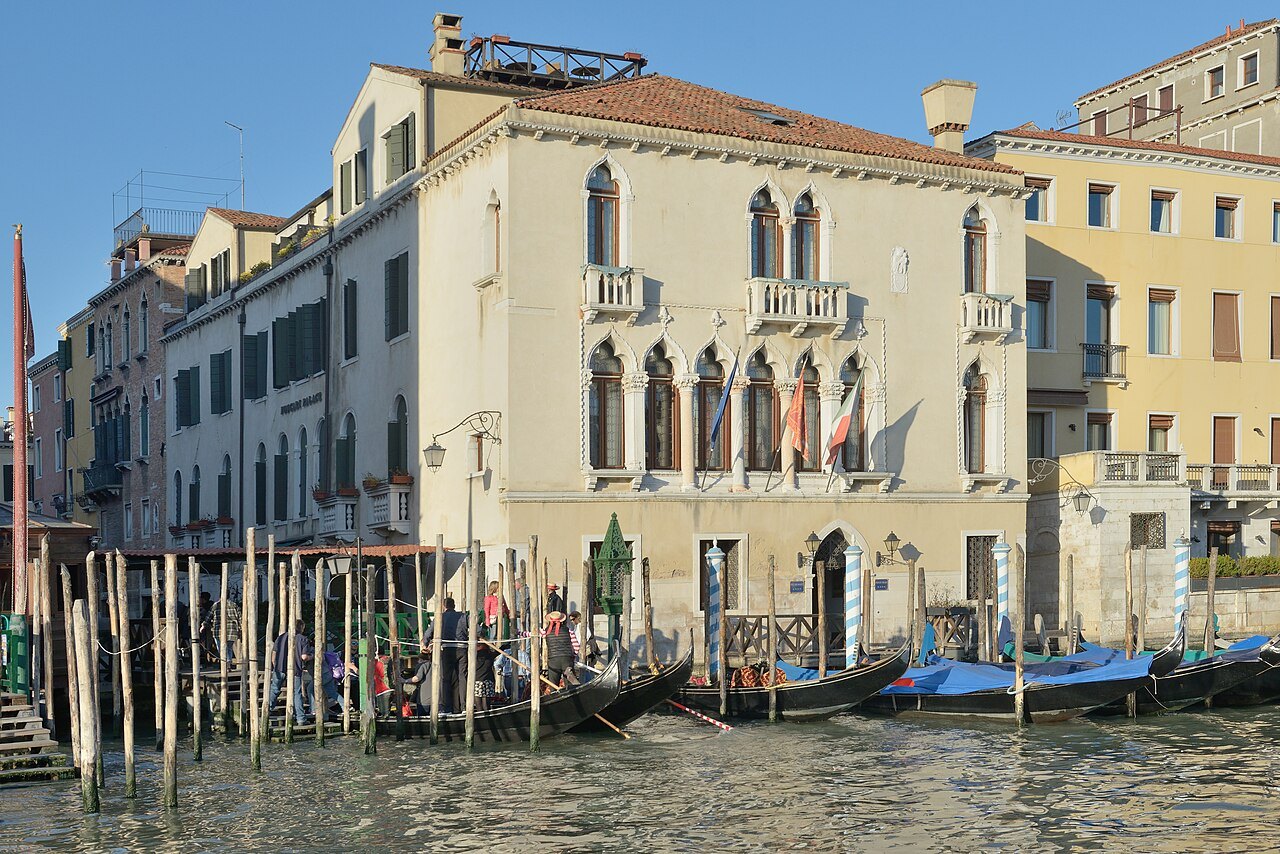
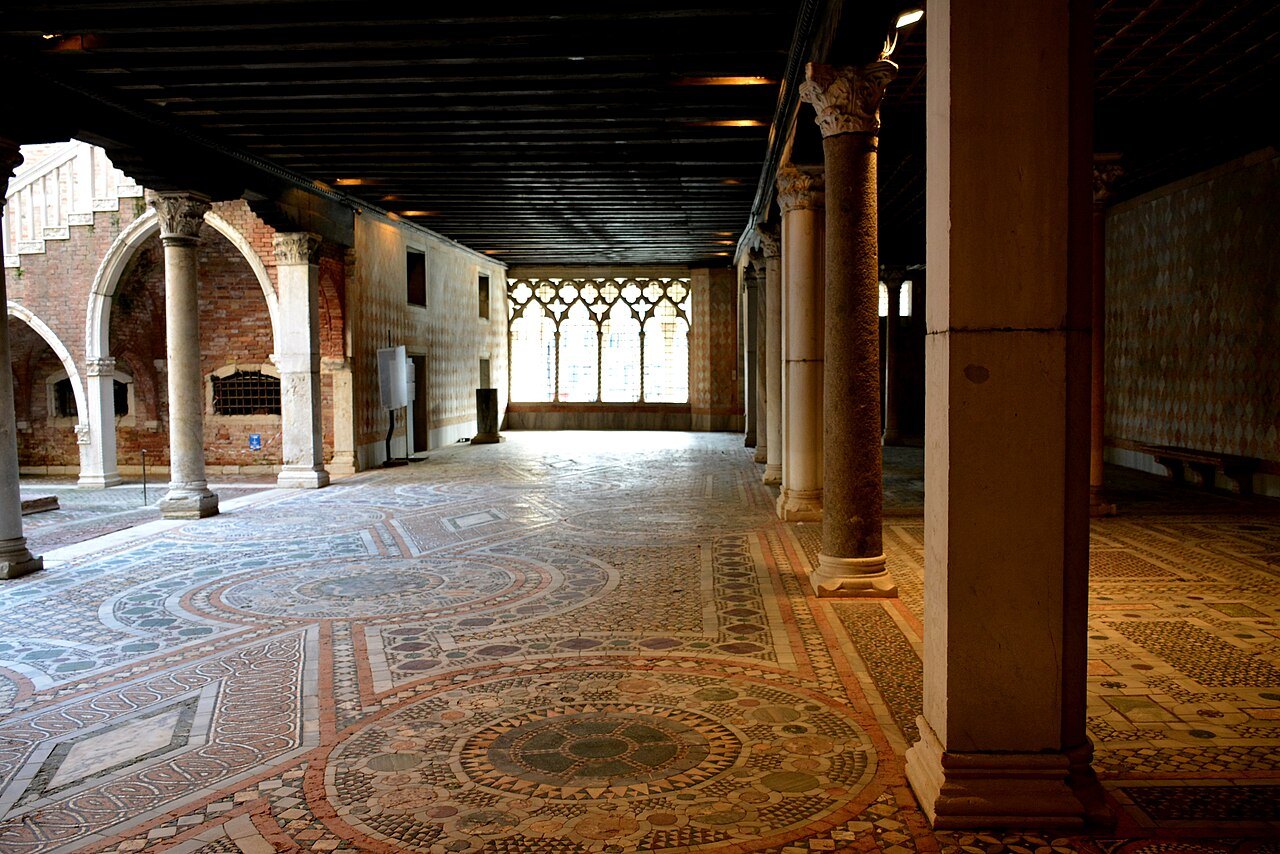
In 1894 Baron Giorgio Franchetti, the palace's last private owner, bought it and spent the rest of his life restoring it. He tracked down and bought back pieces that had been sold, above all Bartolomeo Bon's red Verona marble wellhead, rebuilt the staircase and laid the mosaic pavement of the entrance hall himself. He gave the palace and his collection to the Italian State in 1916 and died in 1923; the architect Ferdinando Forlati, whom he had brought in, finished the work, and the museum opened in 1927.
What you see inside
The visit begins at the water entrance, in the hall and the small courtyard where Bartolomeo Bon's wellhead stands beside the rebuilt staircase and a patch of garden, a quiet survival of the working trade house this building once was, before Franchetti spent years tracking down pieces that had been sold off and scattered.
Upstairs, the galleries hold Franchetti's own collection together with works later added from the state's holdings: bronzes and sculpture, Venetian and Flemish paintings, and architectural fragments salvaged from the palace's own fabric. The arrangement keeps the building itself part of the exhibit, rather than a neutral container for objects brought in from elsewhere.
The most valuable works are Andrea Mantegna's Saint Sebastian and Anthony van Dyck's portrait of Marcello Durazzo, both worth seeking out. The better moment, though, is stepping onto the loggia of the piano nobile, behind the same quatrefoils seen from the water, with the Rialto market directly opposite.
Behind the galleries the museum also keeps laboratories for conservation and restoration, a reminder that the building itself survives today largely because of decades of patient repair work, carried out first by Franchetti himself and later continued by the Italian state after he died in 1923.
How to visit
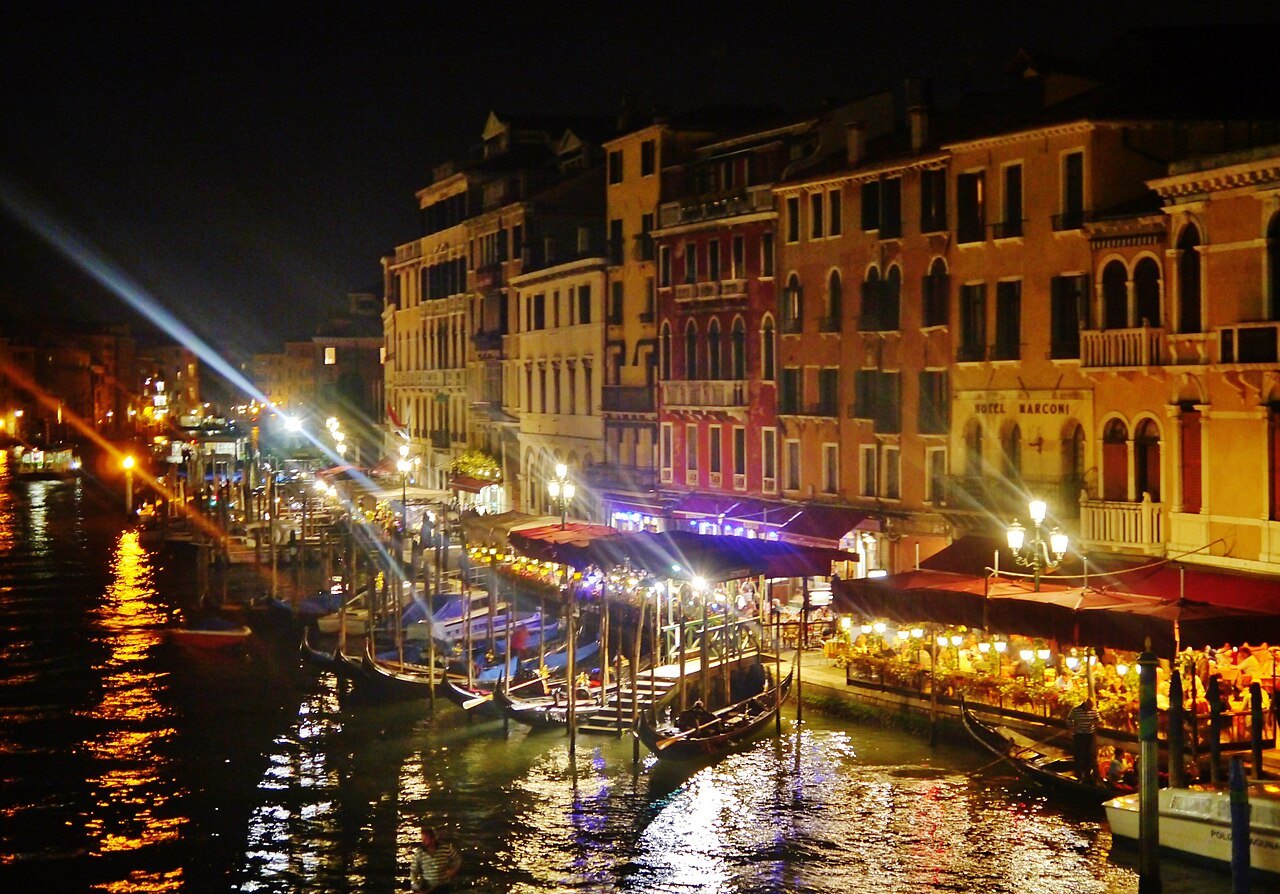
The Ca' d'Oro has its own landing on Line 1 of the vaporetto, named for the palace itself, and from the Rialto market opposite, the Traghetto Santa Sofia crosses the canal to within a few steps of the entrance, a useful route for anyone arriving on foot from that side of the canal.
Allow about an hour for the visit. The gallery is smaller and quieter than the major museums around St Mark's or the Accademia, which is part of its appeal; check current hours, tickets and any booking requirements with the museum directly, or review general advice on booking ahead for Venice's sights.
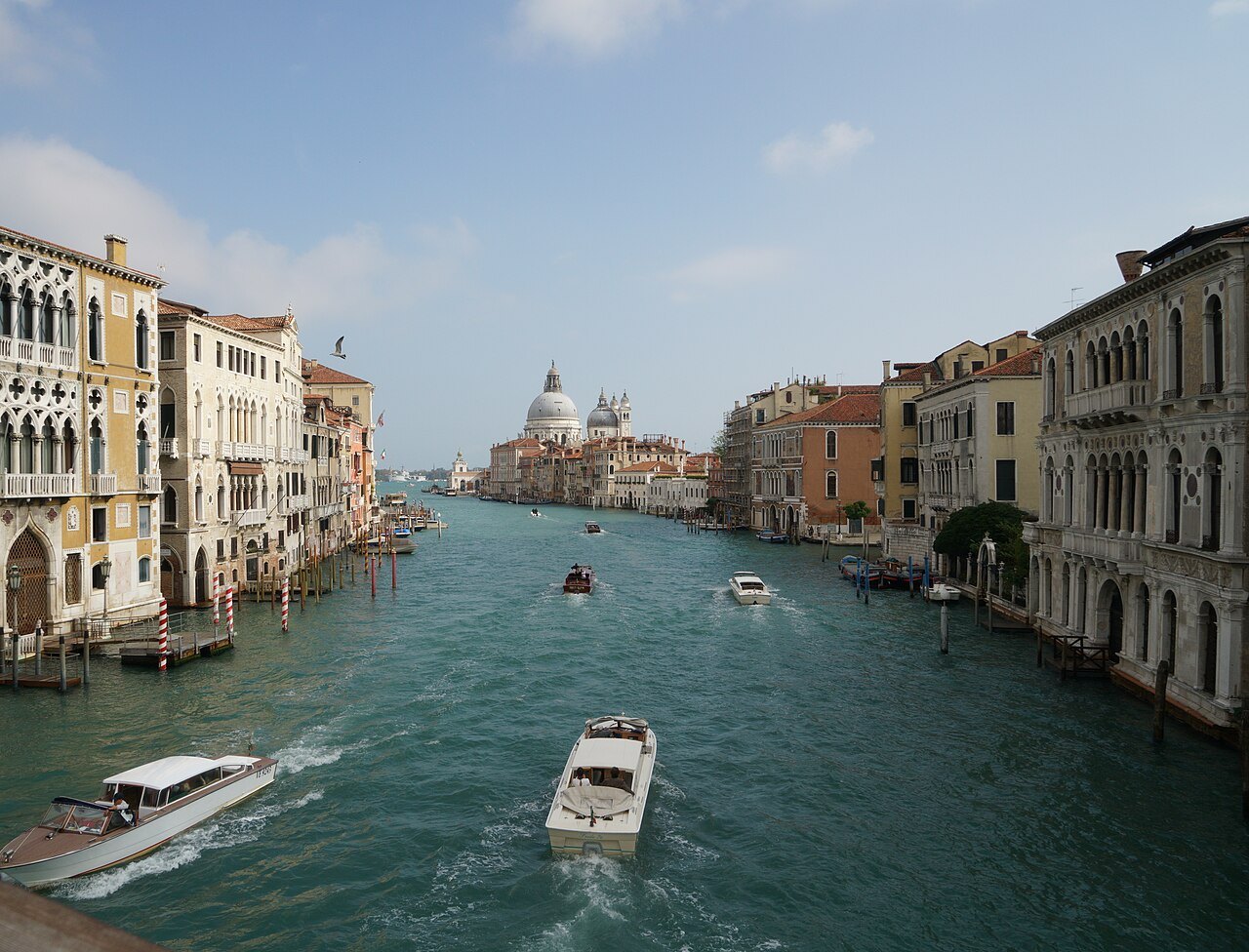
For the classic view of the facade itself, stand at the Pescaria on the far bank of the canal, where the fish market operates, or simply look back at the building from a Line 1 boat as it pulls away from the landing, when the full width of the gilded tracery comes into view.
Read nextIII
More from the journal
- The Grand CanalHow are the palaces of the Grand Canal kept standing on wooden piles?How wooden piles, Istrian stone, and brick keep the Grand Canal's palaces standing above the lagoon mud.Read the piece →
- The Grand CanalWhat will you see on a boat ride down the Grand Canal?A ride on the slow water bus down the Grand Canal is the best introduction to Venice: six centuries of palaces, four bridges, the market and the Salute, in under an hour. What to look for, stretch by stretch, from the station to San Marco, and how to make the ride.Read the piece →
- The Rialto MarketWhat fish comes from the Venetian lagoon to the Rialto market?Which fish at the Rialto Pescaria actually come from the lagoon itself, and how to spot them among the day's catch.Read the piece →