FROM THE STATION TO SAN MARCO, PALACE BY PALACEI
What will you see on a boat ride down the Grand Canal?
A ride on the slow water bus down the Grand Canal is the best introduction to Venice: six centuries of palaces, four bridges, the market and the Salute, in under an hour. What to look for, stretch by stretch, from the station to San Marco, and how to make the ride.
The answer in fullII
Read on
The short answer
Take Line 1 of the water bus from the railway station or Piazzale Roma to San Marco. It calls at almost every landing along the canal, zigzagging from bank to bank, and the ride takes up to about three quarters of an hour. Along the way you pass more than 170 buildings, most of them palaces built between the thirteenth and eighteenth centuries, which rise straight from the water and can only be properly seen from a boat.
Stand or sit at the front or the back of the boat, where the view is clear, and ride it twice if you can: once in daylight, and once at dusk, when the palaces begin to light up (see the vaporetto).
From the station to San Marcuola
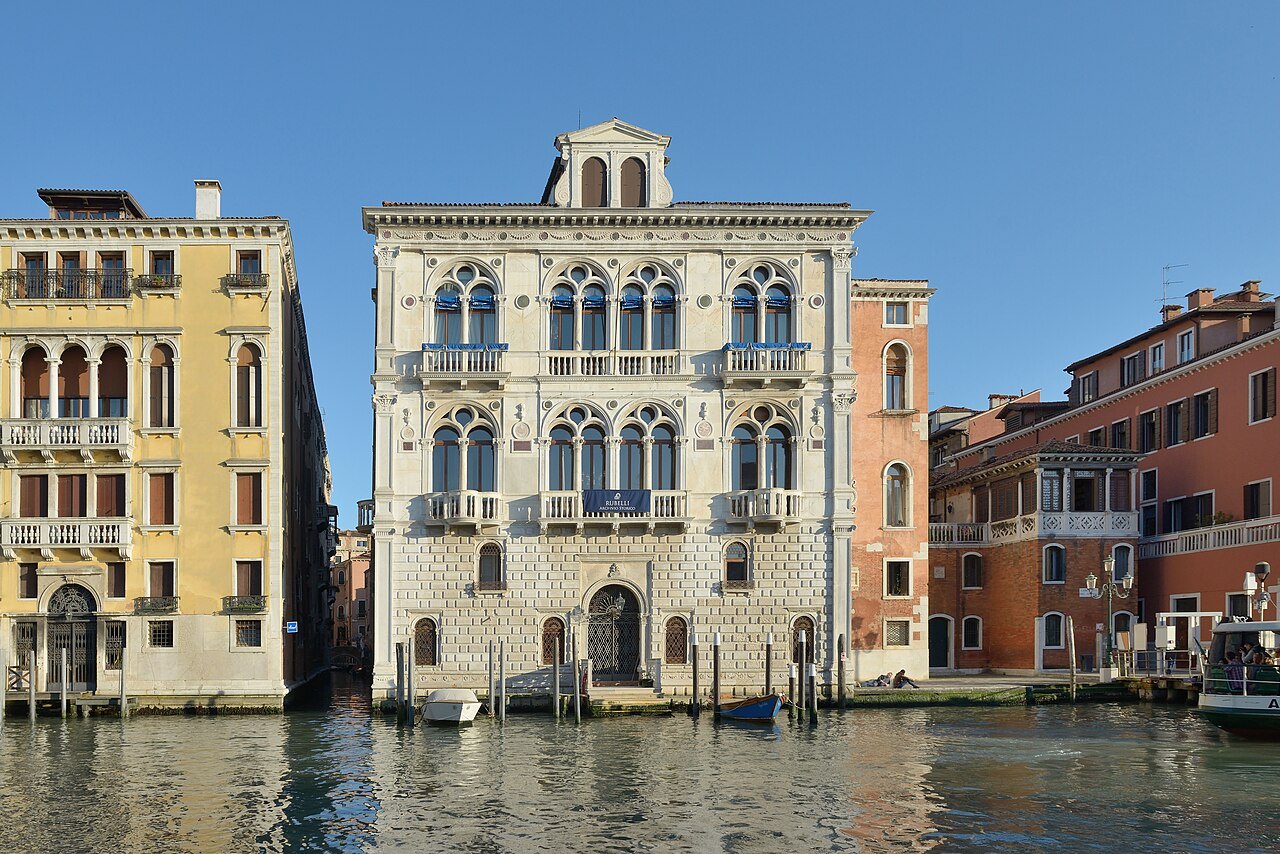
The ride begins where the modern city meets the old. Across from the railway station, which took the place of the church and convent of Santa Lucia, stands San Simeone Piccolo, an eighteenth-century church with a Corinthian portico and a tall copper-covered dome crowned by a little temple. Just downstream is the Ponte degli Scalzi, and beside it the church of the Scalzi, one of Baldassarre Longhena's buildings, with a facade by Giuseppe Sardi.
Then the canal widens into its first great bend. Look for Ca' Vendramin Calergi, one of Mauro Codussi's Renaissance palaces, and for the unfinished front of the church of San Marcuola, one of the buildings left incomplete when the Republic fell in 1797.
The merchants' stretch
The next stretch shows the canal as it began: a harbor lined with the houses of merchants. The earliest palaces were fondaco houses, warehouse and home in one, with a portico at water level where boats unloaded, storerooms behind, and a loggia above lighting the family's hall. The Republic gave foreign traders houses of their own, and the Fondaco dei Turchi, where the Ottoman merchants lived and traded, still stands on the canal with its long arcade.
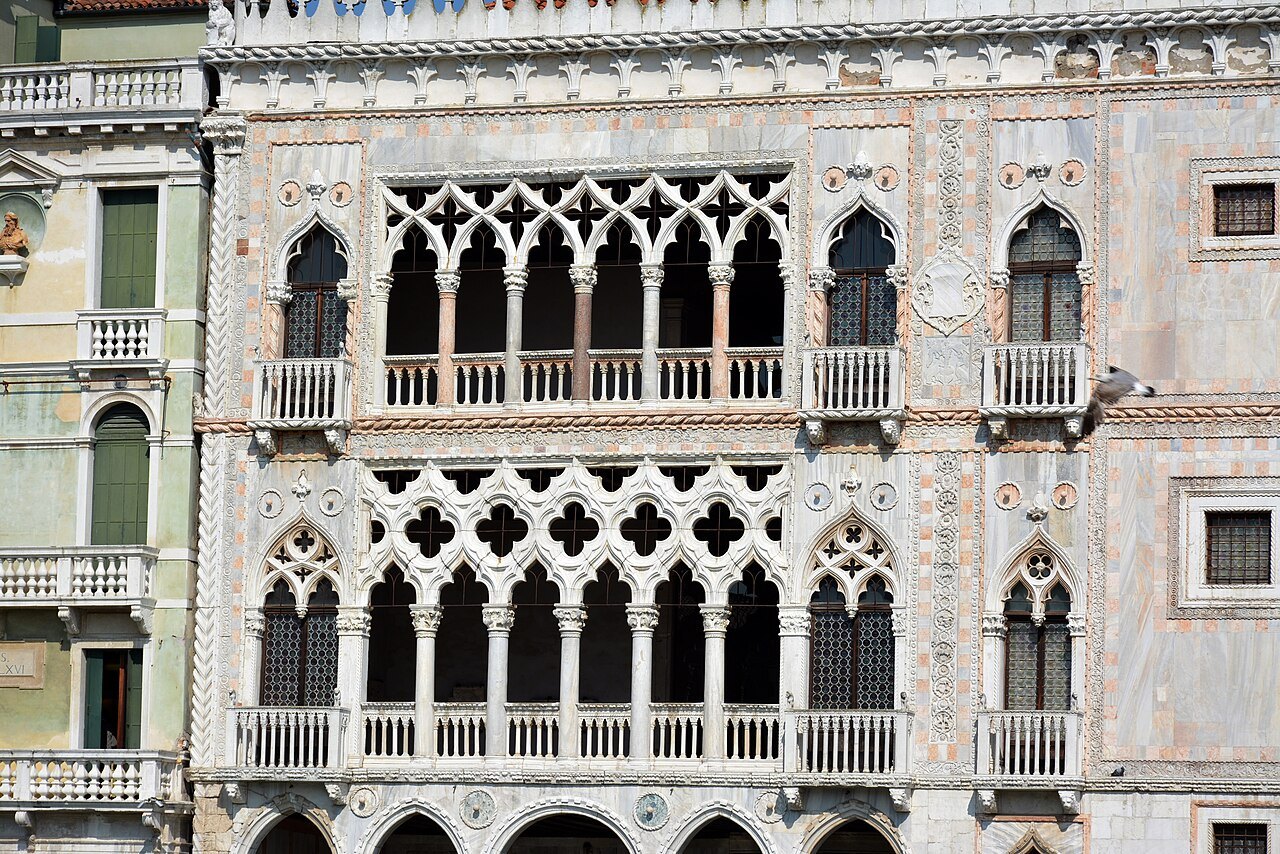
Past the church of San Stae, its facade by Longhena's follower Domenico Rossi, comes Ca' Pesaro, one of Longhena's two great palaces, finished after his death. And then the most famous Gothic front on the canal, the Ca' d'Oro, the golden house, its tracery like stone lace, built for Marino Contarini in the fifteenth century and now a gallery.
The market and the Rialto
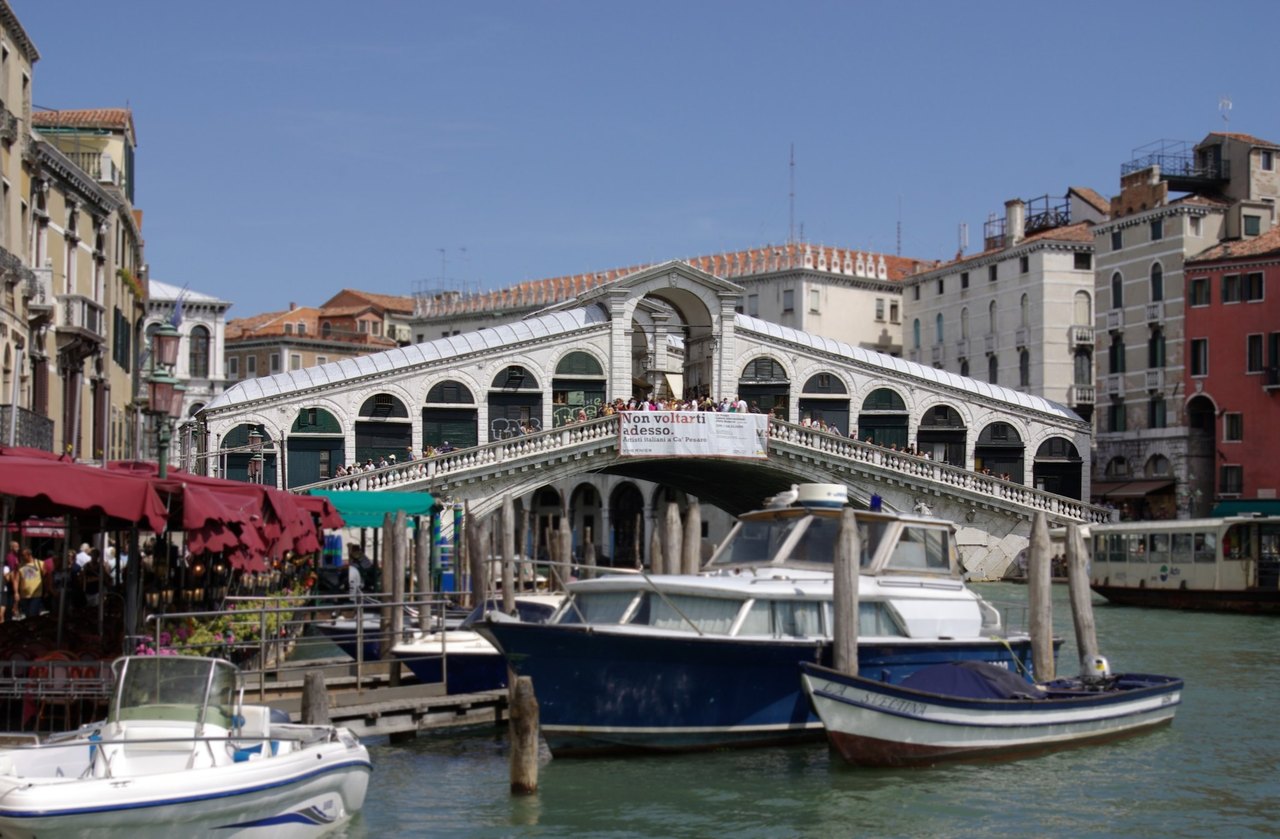
Opposite the Ca' d'Oro, the canal reaches the commercial heart of the old city. The arcaded hall on the water is the Pescaria, the fish market, built in a Gothic Revival style after Venice joined the Kingdom of Italy, and around it the stalls of the Rialto market, trading here since 1097. Across the water stands the Fondaco dei Tedeschi, the house of the German merchants.
Then the Rialto Bridge, the stone arch completed by Antonio da Ponte in 1591, which was the canal's only crossing until the nineteenth century. Just past it, look for the oldest palaces on the canal, Venetian-Byzantine houses such as Ca' Farsetti and Ca' Loredan, with their wide loggias of round arches and panels of colored marble.
The great bend
Below the Rialto the canal swings south through its great bend, the volta de Canal, and the palaces grow grander. At the turn stands Ca' Foscari, one of the finest Gothic palaces, now the seat of the university. A little farther down come Longhena's baroque Ca' Rezzonico, completed after his death by Giorgio Massari and now the museum of eighteenth-century Venice, and Massari's own Palazzo Grassi.
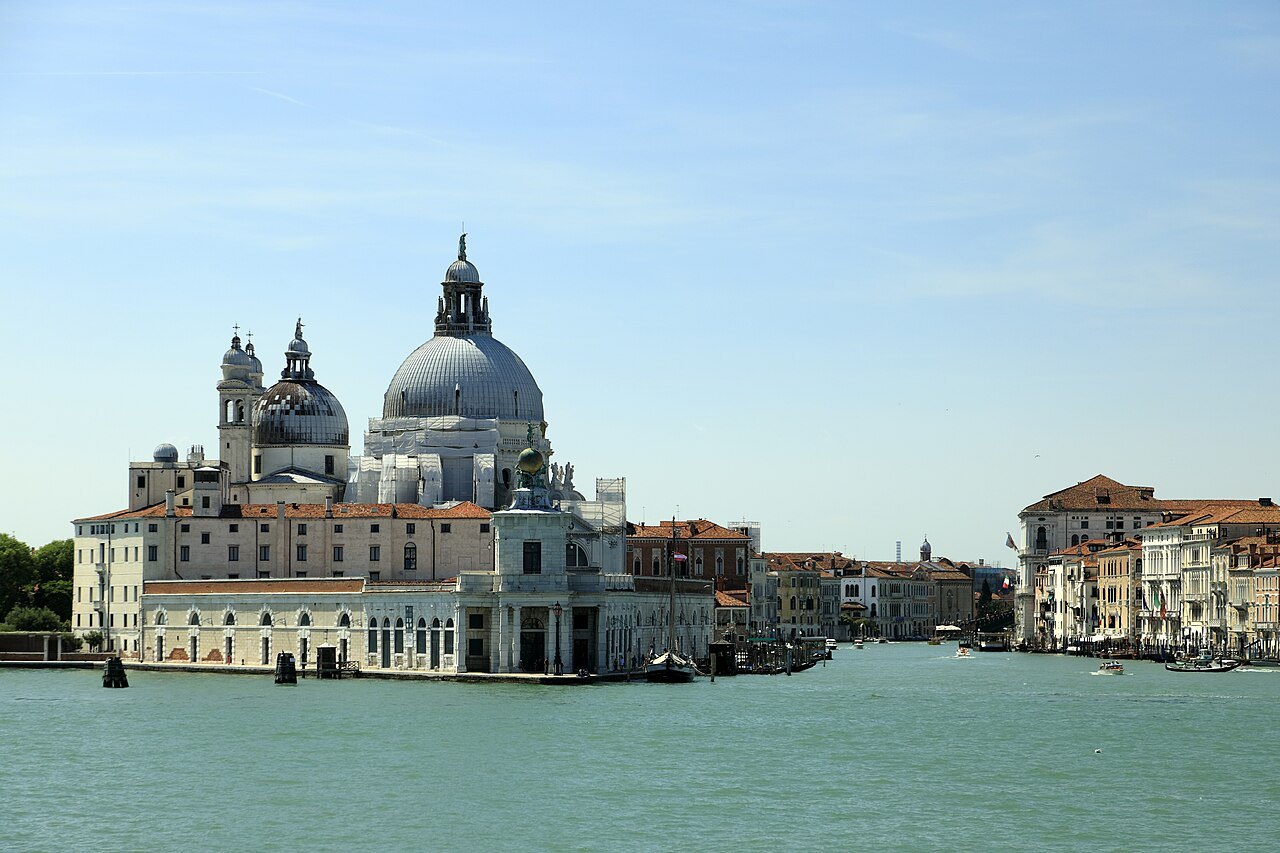
This is also the stretch where the story of Venetian building is easiest to read, in order: Byzantine loggias of round arches, Gothic windows with pointed and lobed arches, Renaissance fronts of classical columns and pediments, and the heavy, deep-carved baroque of Longhena. Many of the grandest were built in the sixteenth and seventeenth centuries, when newly ennobled families built palaces to show their rank.
From the Accademia to the Salute
The Accademia bridge marks the last stretch. Beside it, the old Scuola and church of Santa Maria della Carità now house the Gallerie dell'Accademia. Look for the Gothic Palazzi Barbaro and, on the Dorsoduro bank, the low, unfinished front of the Palazzo Venier dei Leoni, one of the buildings left incomplete when the Republic fell, and now the Peggy Guggenheim Collection.
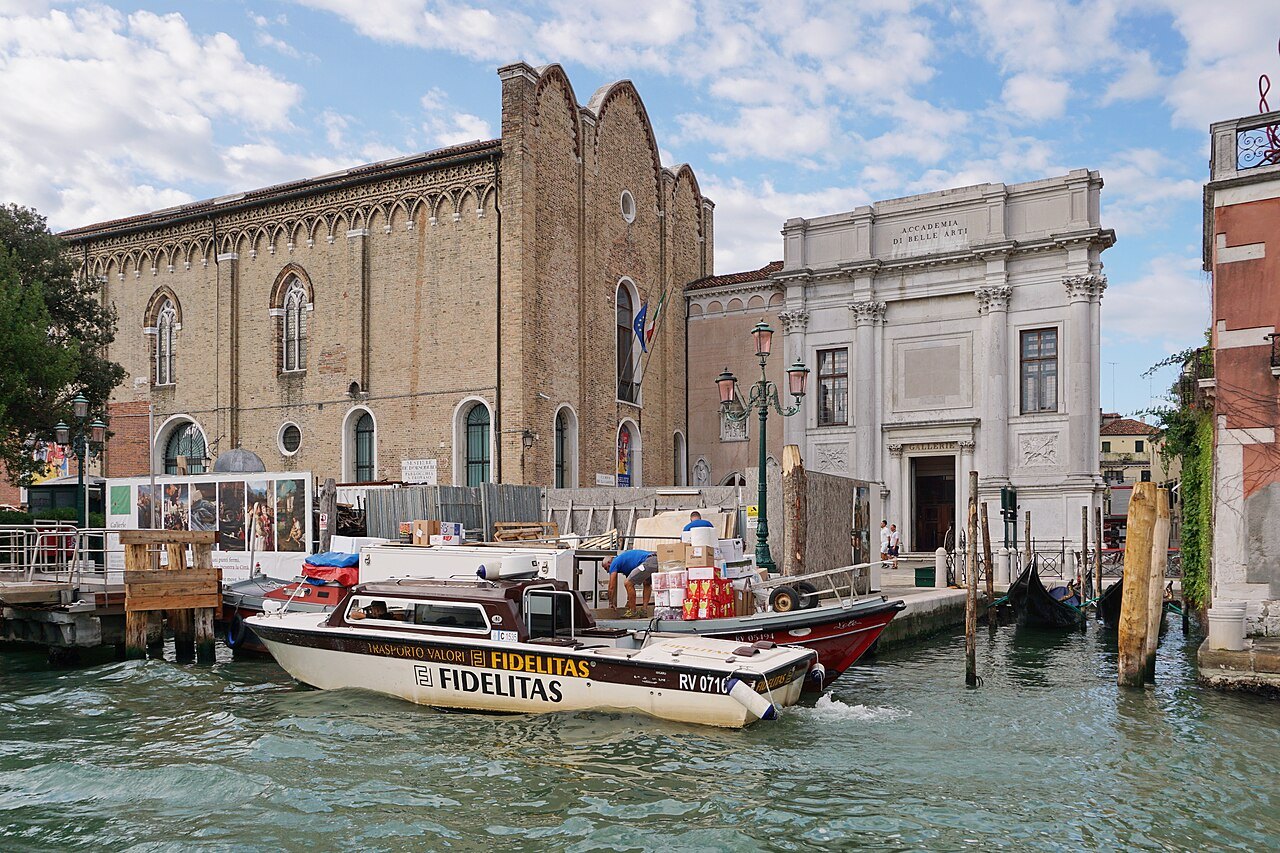
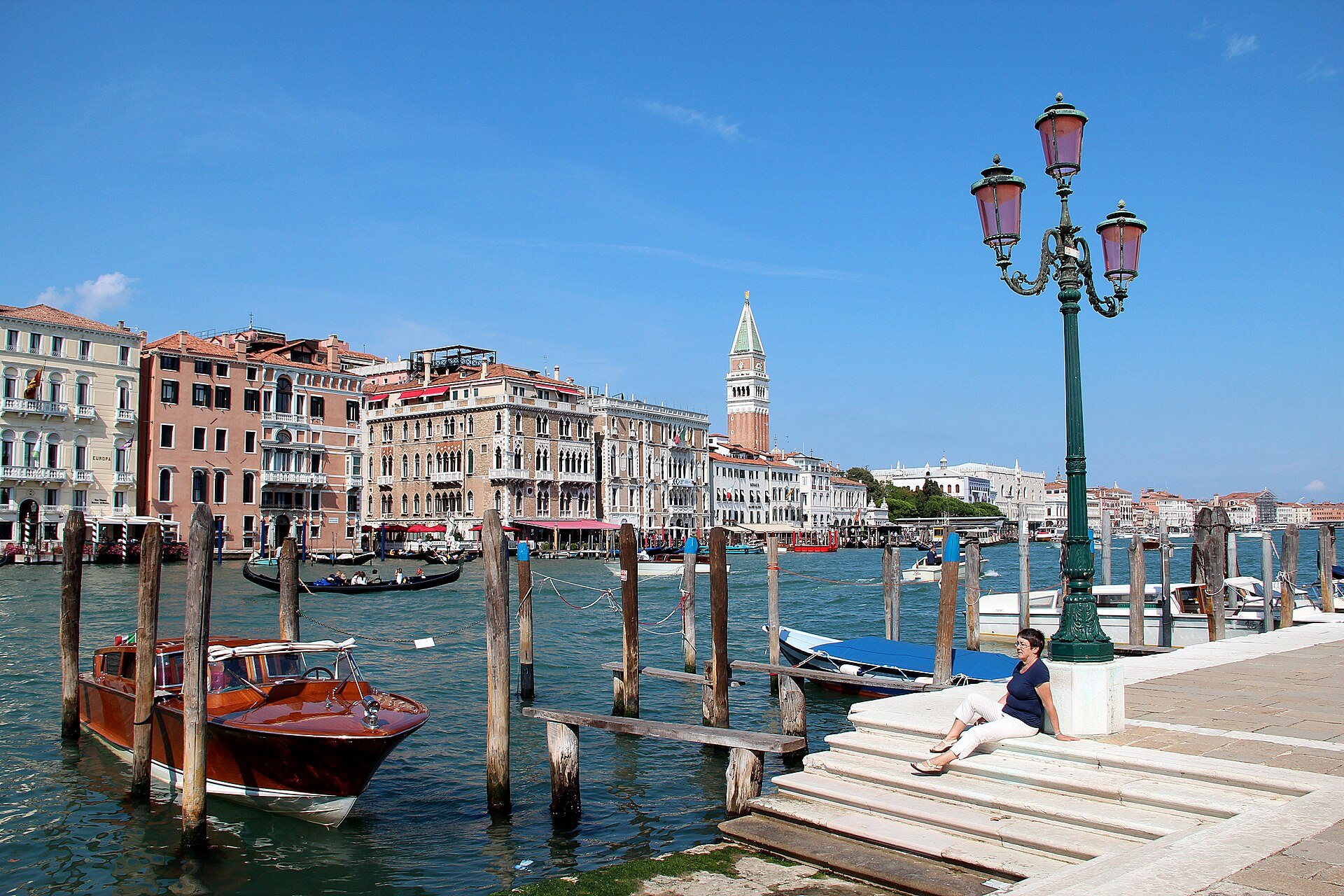
Then the canal opens toward the basin, and the white dome of the Salute, Longhena's great votive church of 1631, fills the view on the right, with the Punta della Dogana at the canal's mouth beyond it. Across the water are the Doge's Palace, the Campanile and the domes of St Mark's. Line 1 ends its run along the canal at the San Marco landings and continues out to the Lido.
The canal on its great days
Twice a year the canal becomes a stage. On the first Sunday of September the Regata Storica fills it with boats: a procession of gondoliers in costume in sixteenth-century craft, following a replica of the Bucentaur, the doge's state galley, in memory of the arrival of Caterina Cornaro, Queen of Cyprus, in 1489, and then races rowed in the Venetian style, watched by thousands from the banks and from floating stands. On 21 November, for the Festa della Salute, a pontoon bridge is laid across the canal from Campo Santa Maria del Giglio to the Salute (see when to come).
Making the ride
Board at Piazzale Roma or the station, where the boats start and you have the best chance of a place at the front or the back, and check that you are on a boat heading toward San Marco. Line 2 runs the same way faster, with fewer stops, but it is Line 1 you want for looking. The boats are busiest in the middle of the day in summer; ride early or in the evening for room to see.
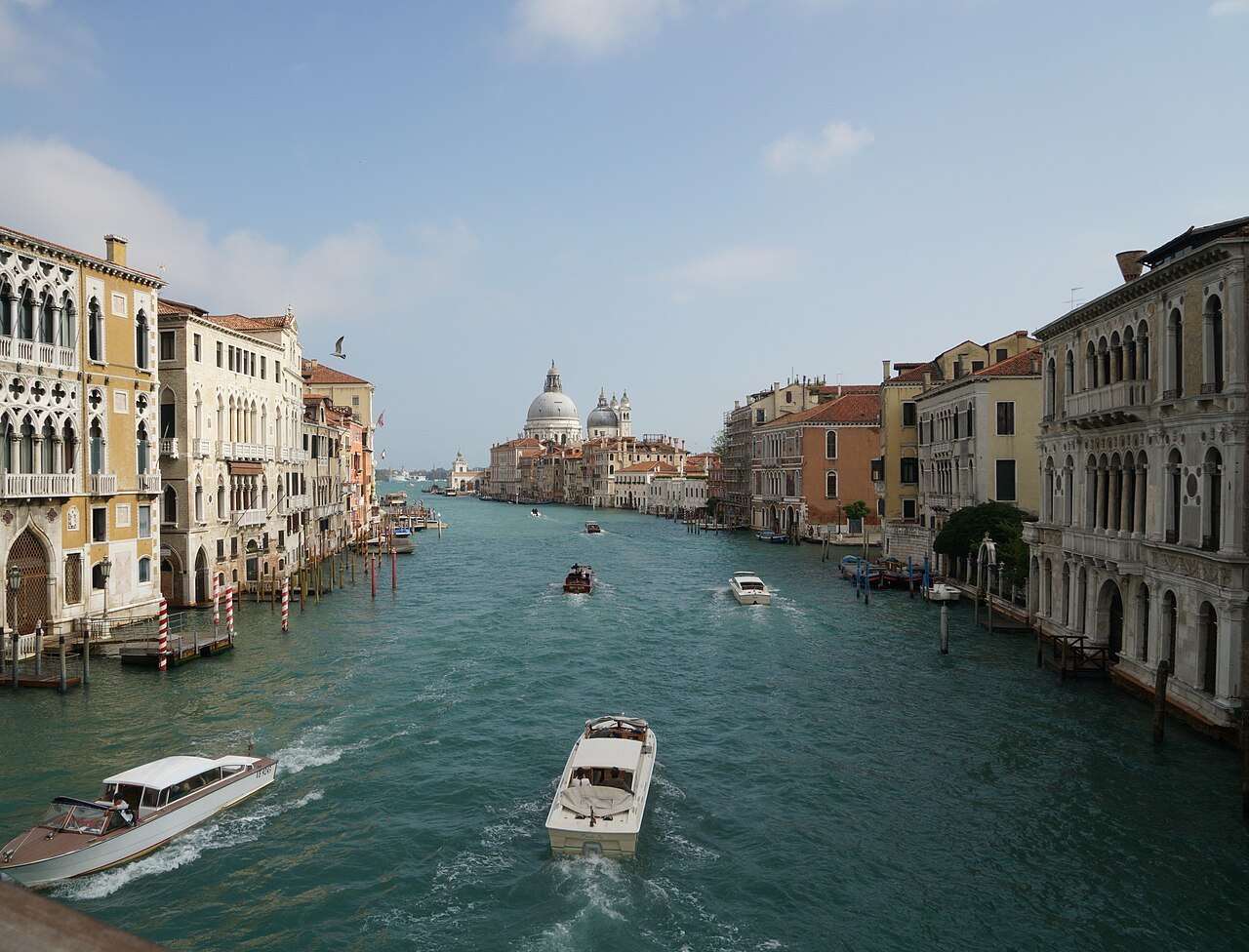
Go the other way too. From San Marco toward the station the palaces are in a different light, and the sequence reads backward, from the baroque of the Salute to the modern station. A gondola sees the canal lower and slower, but the Grand Canal is busy with water buses and barges, and the gondola is at its best in the small canals (see a gondola ride). Most of the palaces are private, but a few can be visited as museums: the Ca' d'Oro, Ca' Rezzonico and the Guggenheim among them.
Read nextIII
More from the journal
- Getting AroundOnly Four Bridges Cross the Grand Canal: Planning RoutesThe Grand Canal cuts Venice in two, and only four bridges cross it in nearly four kilometers. Where they are, why a map misleads, and how to plan walks, water-bus rides and traghetto crossings so the canal works for you rather than against you.Read the piece →
- Getting AroundHow the Vaporetto Works: Tickets, Passes and LinesThe vaporetto is Venice's bus: numbered lines run by ACTV along the Grand Canal, around the city and out to the islands. How single tickets and time-based travel cards work, how to decide between them, how to validate, and which lines a visitor actually uses.Read the piece →
- Getting AroundHow does a gondola ride in Venice work?A gondola ride is a private hire at rates set by the city, rowed by one of about four hundred licensed gondoliers. How the boat and the gondoliers work, where to find one, what to agree before you board, which route to ask for, and how it differs from the traghetto and the water bus.Read the piece →