⭐ The access fee, which is new and catches people out
Since 2024 Venice charges day visitors to enter the historic centre on selected
busy days — mostly spring and summer weekends and holidays. You register online in advance and carry
a QR code; booking early costs less than booking late.
⚠️ Overnight guests are exempt but must still register and carry the
exemption code. So does almost everyone else who is exempt — residents, children under a certain
age, students, workers. The exemption is not automatic; the registration is what proves it.
The list of charged days is published for the year ahead. Check whether your dates are on it
before you travel, not at the barrier.
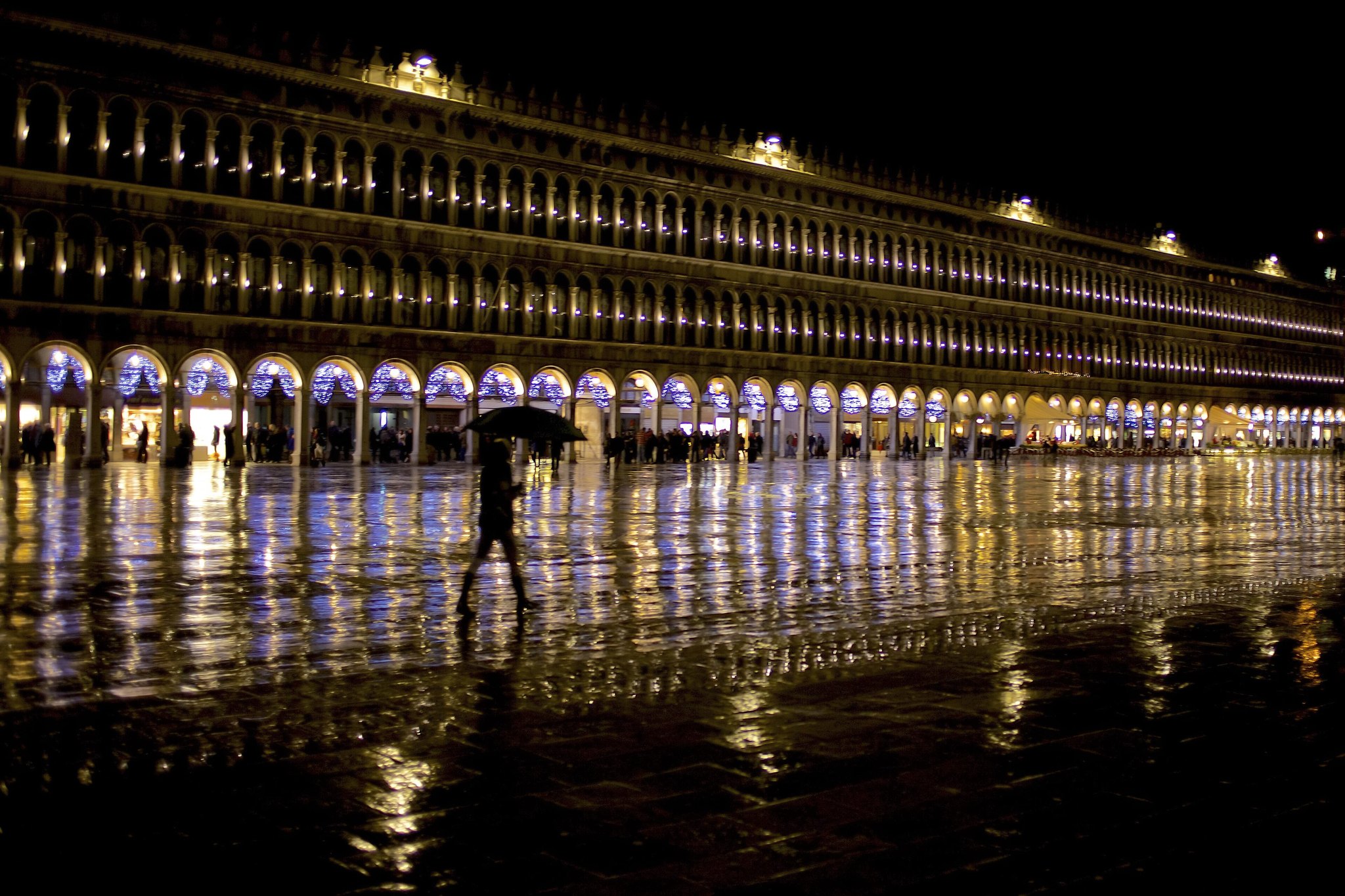
Acqua altaPhotograph by AMANO Jun-ichi, Wikimedia Commons, CC BY 3.0
High water is a tide, not a flood: astronomy plus wind plus barometric pressure, forecast days
in advance and published by the city's tide centre. It mostly happens between October and January,
usually lasts two or three hours around the peak, and then drains away.
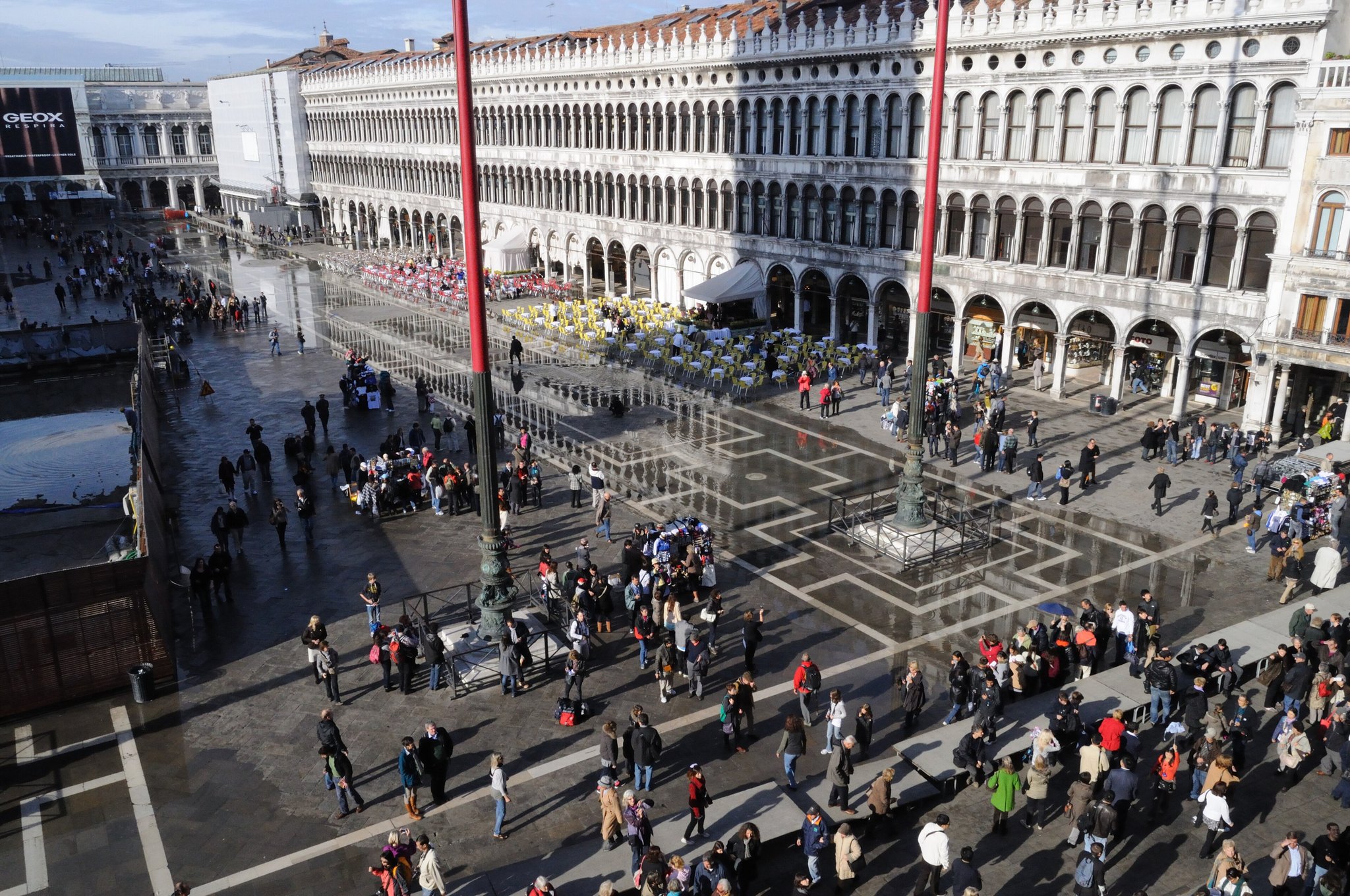
Photograph by This Photo was taken by Wolfgang Moroder . Feel free to use my photos, but pleas, Wikimedia Commons, CC BY-SA 3.0
Since 2020 the MOSE barriers at the lagoon mouths are raised when a high tide is
forecast, and they have substantially reduced how often the city floods. When water does come up,
raised walkways go down on set routes, sirens sound beforehand, and rubber boots appear in every
shop window. Piazza San Marco floods first because it is the lowest ground in the city.
Money and tickets
Euro. Cards work nearly everywhere. Buy transport and museum tickets from official machines and
offices rather than from people offering them near the queues.
The crowd calendar
Carnival in February, the Biennale from spring to autumn in odd and even years for art and
architecture, the Redentore in July, the film festival in September, and the Regata Storica in
September. Each of those fills every bed in the city. November to February, outside Carnival and
Christmas, is when Venice is most itself.
Practical odds and ends
Tap water is drinkable and the public fountains in the campi are fed from the mainland aqueduct.
Sitting on bridges and on the ground in monumental areas is fined. Swimming in the canals is
fined. And there is nowhere in the historic centre to leave a car, because there is nowhere to
drive one.
Photograph by This Photo was taken by Wolfgang Moroder . Feel free to use my photos, but pleas, Wikimedia Commons, CC BY-SA 3.0
This section is being written. The guide above is the section for now. New articles are published across the site about twice a week rather than a section being filled in a day, so this page grows steadily — it is worth looking in again. In the meantime the sixteen sight pages and the plans by trip length are finished, and they are the best place to start.
Coming next in this section
The Venice access fee: who pays, who registers, and when
Acqua alta explained: the tide, the sirens and the walkways